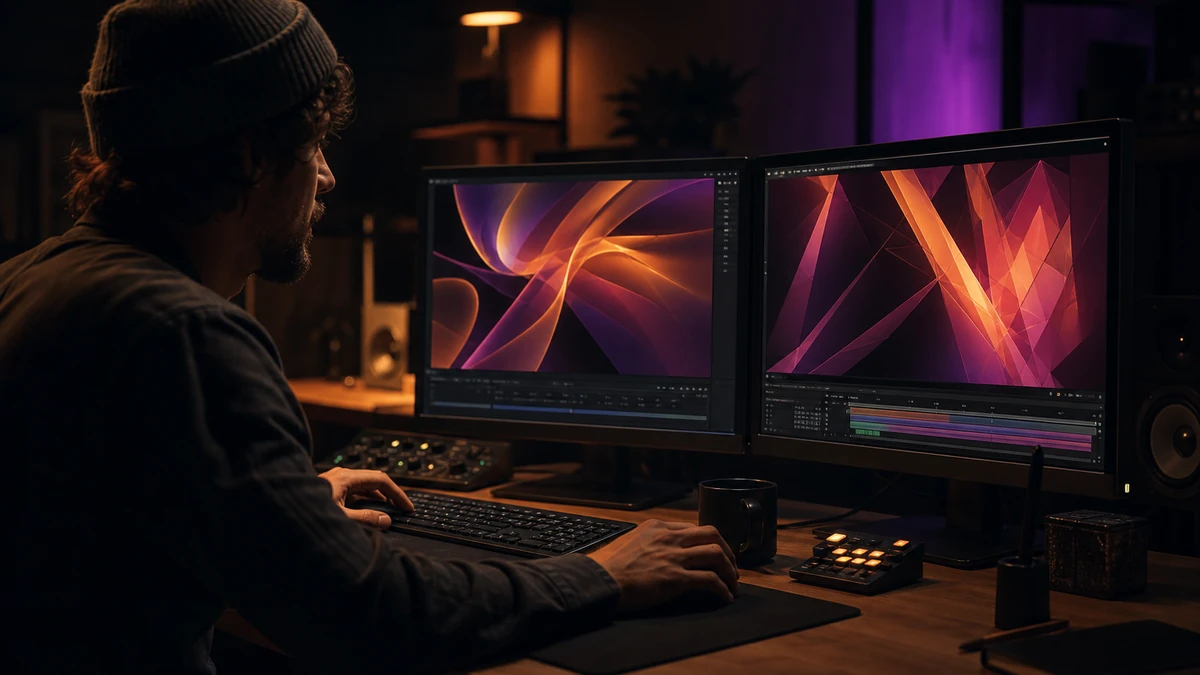
If your brand still treats motion as an afterthought — something you tack onto a campaign at the last minute — you’re leaving money on the table. A motion design agency doesn’t just make things move. The right one turns your static brand identity into a living, breathing presence across every screen your audience touches. And the brands doing this well are pulling ahead fast.
What Is a Motion Design Agency?
A motion design agency builds animated visual content that communicates ideas, products, and brand stories through movement. This goes far beyond adding a logo animation at the end of a video — the real value sits in creating a cohesive visual language that moves consistently across every touchpoint. Animated explainer videos. Social media motion graphics. UI micro-interactions. Broadcast commercial spots. Kinetic typography for digital ads. These agencies handle the full spectrum, from concept and style frames through final render and sound design.
Motion has moved from a specialty craft to a universal demand. Explainer videos still dominate at 42% of all motion design output, with social Reels and TikTok motion graphics close behind at 35%, according to Gitnux’s 2026 motion design industry report. But that third bucket — UI micro-interactions and product interface animation — is the one growing fastest, climbing to 28% of project volume. Brands aren’t just asking for videos anymore. They need motion that lives inside their products.
What distinguishes a great motion design partner from a competent one? It comes down to whether they treat motion as a standalone project deliverable — one video, one campaign, done — or whether they think about motion as another layer of the brand system itself. A motion graphics design framework built from brand rules — color, type, layout, pacing, icon behavior — produces reusable motion assets rather than one-off animations. That distinction changes everything about the long-term value you get from the investment.
Where Motion Design Fits in the Modern Brand Toolkit
Ten years ago, motion design meant broadcast commercials and maybe a YouTube pre-roll. Today it touches nearly every surface a customer encounters. Social feeds. Product pages. In-app onboarding flows. Digital out-of-home displays. Email headers that animate on open. Presentation decks that move between slides. The brands winning right now treat motion as infrastructure — not garnish.
This shift explains why the global motion graphics market, valued at $2.8 billion in 2022, is projected to reach $5.1 billion by 2030, growing at a 7.9% compound annual rate. North America alone claims 38% of that market — and the demand curve hasn’t flattened.
The Business Case for Motion Design
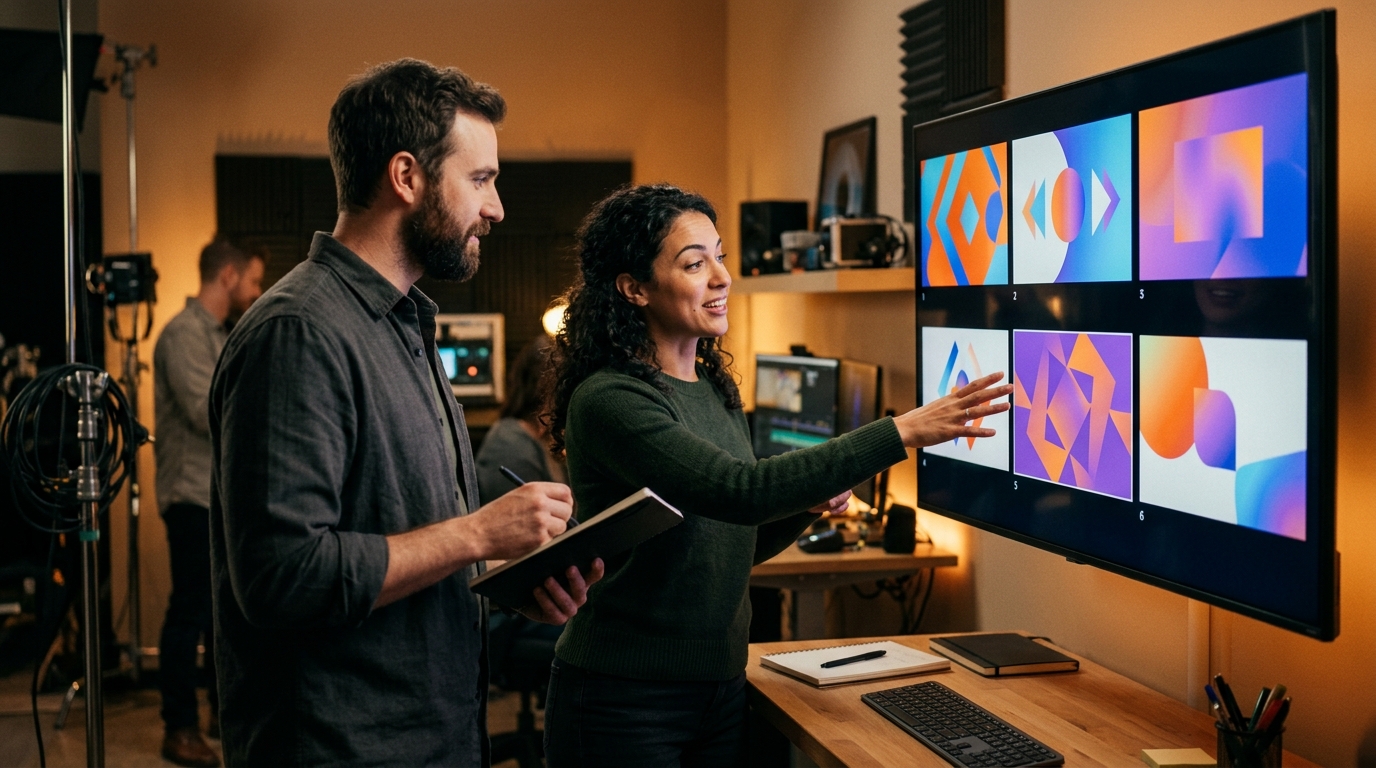
You don’t need to take anyone’s word that motion works better. The numbers tell the story clearly.
Motion ads drive up to 1.5 times more clicks than static creative across the same audiences and placements. Pair that with omnichannel campaigns that integrate motion graphics, and brands report revenue lifts as high as 49%. That’s not marginal improvement — that’s a fundamentally different return profile from static-only creative.
Then there’s the ROI figure that should stop you mid-scroll: motion design delivers an average 4.8x return on investment for brands. For every dollar spent, you get nearly five back. That kind of multiplier doesn’t come from making things look prettier. It comes from motion’s unique ability to capture attention in environments where static content has become invisible.
Almost 74% of industry professionals report higher demand for animation and design work this year compared to last. This isn’t a temporary spike. The Collision Awards’ Animation in Motion report confirms what every creative director already feels: the bar for visual communication has risen permanently, and brands that don’t move get scrolled past.
Why Static Content No Longer Cuts It
Here’s the uncomfortable truth. The average person scrolls through roughly 300 feet of content daily on their phone — the height of the Statue of Liberty. In that firehose of imagery, a static graphic registers for about 13 milliseconds before the thumb moves on. Motion buys you another second, sometimes two. In attention economics, that’s an eternity.
And the expectations have shifted downstream. Eighty percent of clients now expect mobile-first motion design by default, with 72% specifically requesting vertical video formats. If your brand’s social presence is all static cards while competitors are deploying kinetic typography and animated product reveals optimized for the portrait screen, you’re not just behind on a trend. You’re invisible to the algorithms that reward dwell time and completion rate — both metrics where motion content dominates.
The market data backs this up. Agency profit margins in motion design average 18%, reflecting strong sustained demand across sectors from SaaS and healthcare to consumer packaged goods and entertainment. When agencies are profitable at scale, it means clients are buying — and renewing.
Key Services a Motion Design Agency Provides
Not every motion design agency offers the same menu, but most full-service shops cluster their work into a few core categories. Knowing what to ask for matters — especially if this is your first time engaging motion talent for a campaign.
Animated explainer videos. These remain the highest-volume category, accounting for 42% of all motion design work. A strong explainer distills a complex product or service into 60 to 120 seconds of clear, compelling motion — scripted, storyboarded, animated, and scored to drive a single conversion action.
Social media motion graphics. At 35% of total output, social content is the fastest-growing motion category behind explainers. This includes animated post graphics, kinetic typography for TikTok and Reels, looped product demos, and motion-enhanced Stories. The key here is format-native thinking — vertical, fast-paced, designed to work without sound but better with it.
UI animation and micro-interactions. The smallest category by volume — but growing fastest. Think loading animations, button state transitions, swipe feedback, scroll-triggered reveals on product pages. These motion details don’t feel like “content” to the end user, but they shape perception of your product’s quality more than any ad ever will.
Broadcast and OTT commercial motion. Traditional TV spots and connected-TV ads still demand the highest production values. A motion design agency that handles broadcast work brings compositing, visual effects integration, and frame-accurate delivery standards that social-only shops often lack.
Brand motion systems. This is the frontier. A comprehensive brand motion system defines how your logo animates, how transitions behave, what your type does on screen, and how color shifts across contexts — all documented as reusable rules rather than one-off decisions. As the Brands In Motion report captures it, “forward-thinking designers are shifting from delivering one-off projects to creating comprehensive motion design systems that clients can implement across their organization.” The agencies investing in this capability are the ones built for the next decade.
How Motion Design Is Evolving in 2025–2026
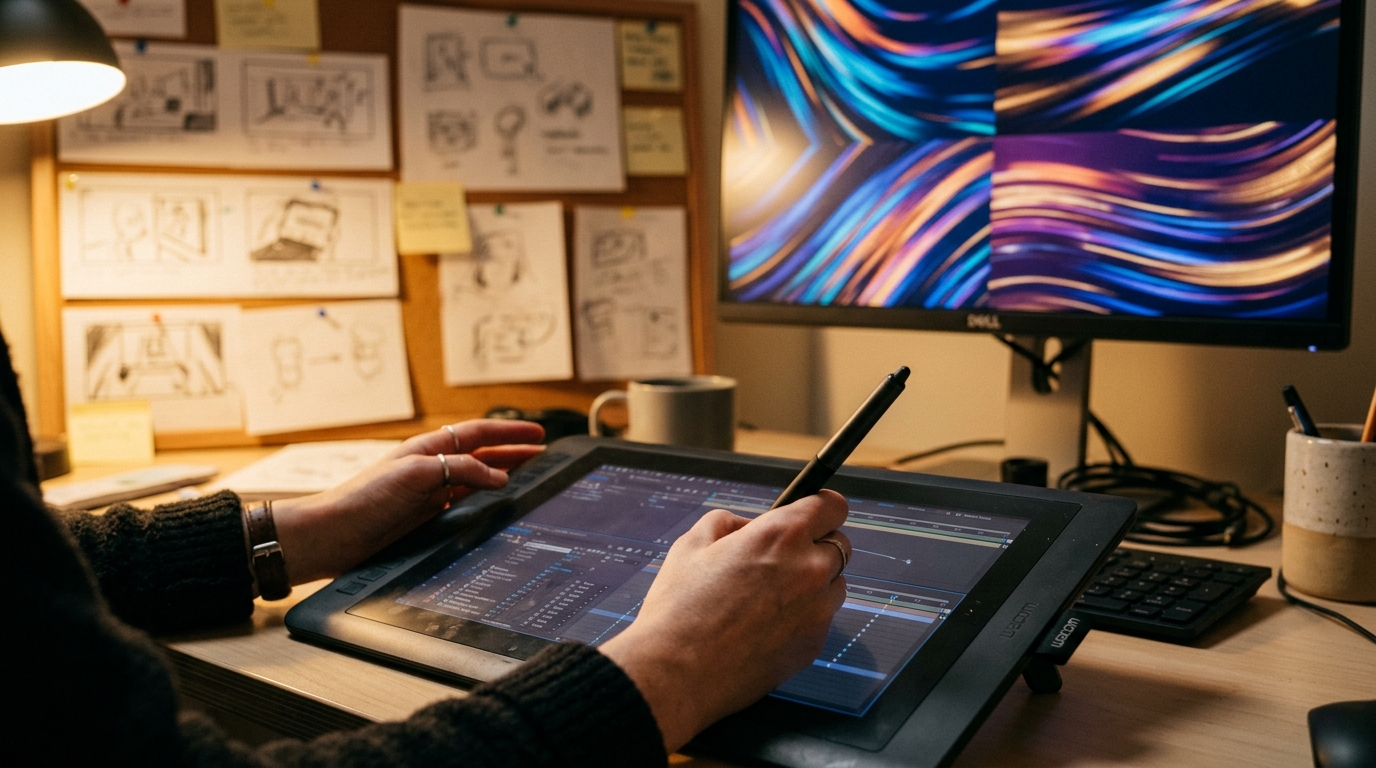
The motion design industry doesn’t look like it did even two years ago. The tools, the economics, and the expectations have all shifted — and the pace of change is accelerating.
AI and the New Production Workflow
AI has landed squarely in the motion design workflow, but not the way the headlines predicted. It hasn’t replaced motion designers. More than 56% of professionals say AI will replace specific tasks — rotoscoping, asset optimization, rough-cut assembly — but not creative roles themselves. Only 12% foresee full job elimination. The reality on the ground matches the data: when AI enters a motion workflow, 57% of professionals are using it for creative concepting — mood boards, style frame exploration, rapid prototyping — rather than final pixel delivery.
What this means for brands: the production bottleneck is loosening. Tasks that used to consume days of senior designer time now complete in hours, which lets agencies reallocate human talent to the creative decisions that actually move the needle — concept, composition, timing, and taste.
The Shift from Standalone Pieces to Brand Systems
This is the structural change that matters most. The old model — hire a motion design agency, get a single video, hand it off, start from scratch next quarter — is giving way to something more durable.
A motion design system defines the rules once and applies them everywhere. Easing curves. Color transitions. Type animations that match the brand’s verbal cadence. These rules live in a shared library that internal teams, external partners, and future agencies can all access. Rapid advances in real-time rendering engines and cloud-based collaboration platforms have made this feasible at a production level — a creative team in San Diego can review motion comps with a client in Chicago in real time, with zero rendering delays.
The tooling shift is just as significant. After Effects remains the anchor, but Rive, Lottie, Cavalry, Blender, and Unreal Engine have carved real territory. Rive and Lottie let motion assets run natively in apps and on the web at a fraction of the file size of video — which is why product teams are suddenly the biggest new consumers of motion design. A SaaS dashboard that transitions between views with smooth, branded motion feels premium. One that jarringly snaps between states feels unfinished. The School of Motion’s State of Motion Design report captures this elegantly: foundational artistic skills — “taste, the 12 principles of animation, composition, typography, color theory” — have become the ultimate differentiator precisely because AI is commoditizing the technical production layer. Taste is the new moat.
How to Choose the Right Motion Design Partner
Picking a motion design agency is different from picking a traditional creative partner. Motion is inherently more technical, more time-intensive, and more expensive to revise late in the process. Here’s what to actually look for.
Portfolio range over signature style. A motion design agency should show you variety — different industries, different formats, different visual languages. A shop with a single recognizable style works if you want exactly that style. But most brands need a partner who can adapt motion language to their existing identity, not the other way around.
Full-service capability. Motion doesn’t exist in a vacuum. The best work comes from teams that understand the upstream — what happens before the After Effects file opens. Scriptwriting. Storyboarding. Sound design. The pacing decisions that make a 60-second explainer feel like 30 seconds. An agency that only does animation but outsources creative direction, script, and audio is a relay race with four handoff points. Handoffs breed drift.
Technical depth, not just creative flair. Ask which tools they use and why they chose them for specific projects. If they can’t articulate the tradeoff between a Rive interactive animation and a rendered video export for a specific use case, they’re probably winging the technical side. Motion design sits at the intersection of art and engineering — you need fluency in both.
Evidence of system thinking. Look past the hero reel. Ask to see a brand motion guidelines document they delivered to a previous client. If they’ve never produced one, they’re in the one-off project business, not the brand-building business. Both have their place — but know which one you’re hiring.
Client retention patterns. The best motion design agencies don’t constantly chase new logos. They grow with existing clients because motion becomes embedded in the brand’s ongoing output — quarterly campaigns, product launches, social content calendars. If a shop’s portfolio is all one-and-done projects across different brands, ask why nobody came back for round two.
If you’re evaluating a partner for motion design work, approach the conversation the same way you would for full-service video production — ask to see the full pipeline, not just the final output. Quality motion starts long before any pixels move.
Frequently Asked Questions
What’s the difference between motion graphics and animation?
Motion graphics typically animate graphic design elements — text, shapes, logos, icons — to communicate information or reinforce branding. Animation (character animation, cel animation) brings illustrated characters and narrative scenes to life. Motion graphics is design that moves; animation is storytelling through movement. Most commercial motion design agencies offer both, but the distinction matters when you’re briefing a project.
How much does a motion design agency cost?
Costs vary dramatically based on scope, complexity, and duration. A 60-second 2D explainer video from a mid-tier agency typically falls in the $5,000–$20,000 range, while broadcast-quality 3D motion with compositing can run $30,000–$100,000+. The right partner will help you scope to your budget rather than pushing a one-size-fits-all package. The key is getting a detailed scope that breaks down where the time goes — concept, design, animation, revisions — so you can make informed trade-offs.
How long does a typical motion design project take?
A standard 60- to 90-second explainer video usually takes four to eight weeks from kickoff to final delivery. Social media motion graphics — shorter, simpler assets — can turn around in one to two weeks per batch. Brand motion system projects are longer engagements, typically spanning two to four months, because they involve documentation and reusable component libraries rather than a single deliverable. Always build in at least one round of revisions in your timeline.
Can motion design improve SEO?
Indirectly, yes — and significantly. Motion content on landing pages increases dwell time and reduces bounce rate, both of which Google interprets as quality signals. Pages with embedded video content are 53 times more likely to appear on the first page of search results. But the direct mechanism isn’t the motion itself — it’s the engagement metrics that motion drives. Longer sessions, lower bounce, and more social shares all push your page authority higher.
Do I need a dedicated motion design agency, or can my video production company handle it?
Many full-service video production companies do offer motion design services — Pretzel Logic Productions includes motion graphics integration in their post-production pipeline, for example. The question is depth. A dedicated motion design agency lives and breathes animation principles, kinetic typography, and interactive motion. A video production company with motion capabilities is often the better choice when motion is one component of a larger project that also involves live-action production, scriptwriting, and sound design. Pick the partner whose core competency matches the project’s primary need.
What should I prepare before meeting with a motion design agency?
Bring your brand guidelines, your best-performing existing content, and three examples of motion work you admire — with specific notes on what you like about each. Even more valuable: bring clear goals. “We need a 90-second explainer” is a brief. “We need to reduce our sales demo no-show rate from 40% to 25%” is a business problem that a motion design agency can actually solve. The second one gets you better work.
Bring Your Brand to Life with Motion
Motion design isn’t a line item anymore. It’s the difference between a brand that commands attention and one that fights for it. Whether you need a product explainer that converts, social content that stops the scroll, or a full brand motion system that scales across every channel — the right partner makes all the difference.
Pretzel Logic Productions brings motion design into every project through a full-service post-production pipeline — animation integration, motion graphics, color grading, and sound design — built around your story from script to screen. Explore our services to see how motion fits into a complete production workflow, or reach out directly to talk about your project. Your story deserves to move.