
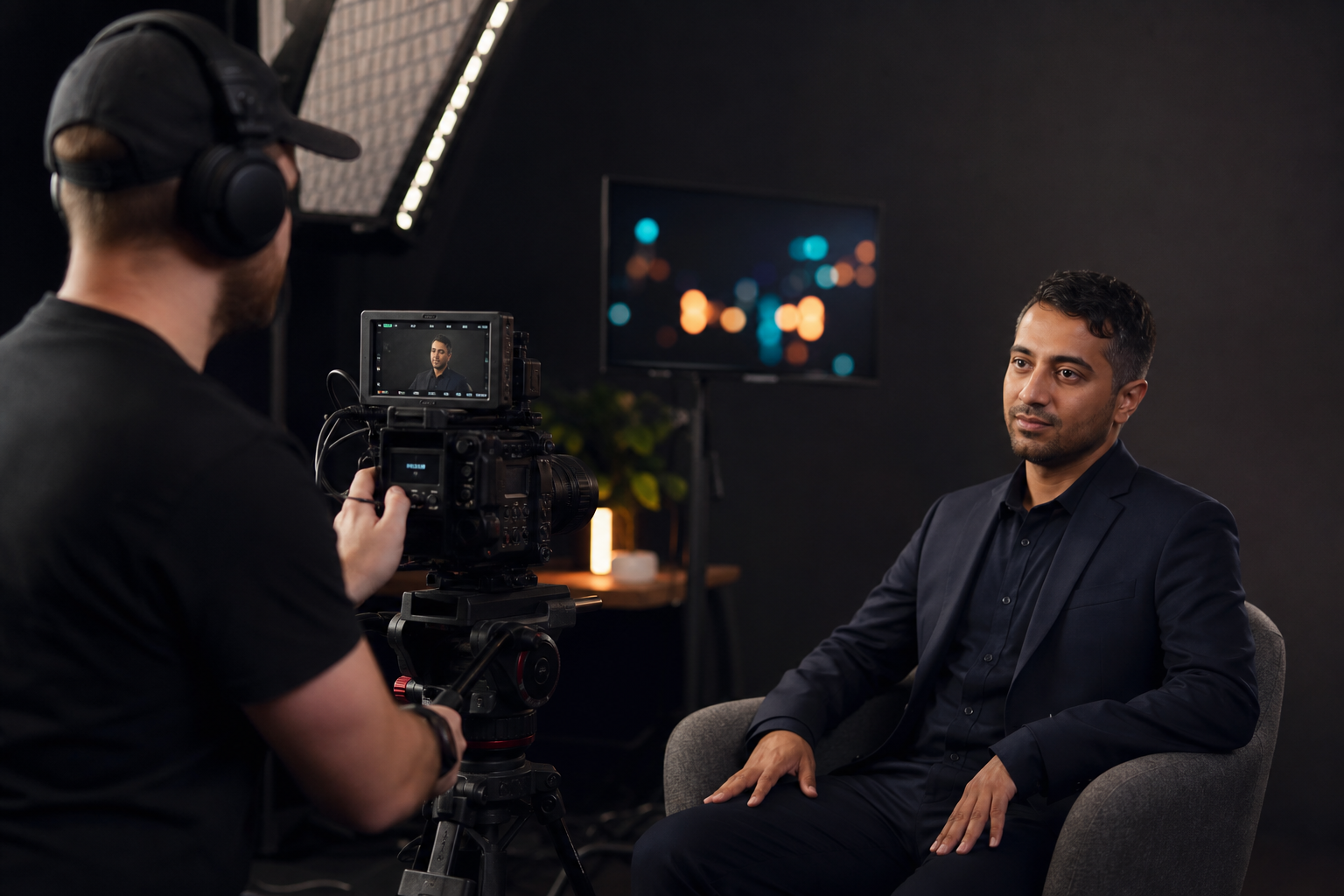
Testimonial video production captures authentic customer stories on camera and transforms them into high-converting brand assets that influence purchasing decisions at scale. Unlike static reviews or written case studies, professionally produced testimonial videos combine real emotion, verified outcomes, and cinematic storytelling — delivering a level of credibility no other content format can match. For B2B brands evaluating how to accelerate buyer trust, testimonial video production is the single highest-leverage content investment available.
If you’ve ever hesitated to trust a brand’s marketing claims, you’re not alone — and neither are your prospects. That hesitation is exactly why testimonial video production has become one of the most powerful tools in a marketer’s arsenal. According to research compiled by ElectroIQ, 92.4% of B2B customers watch testimonial videos before making purchasing decisions. Not some customers. Not most. Nearly all of them.
The numbers are impossible to ignore. And yet, most brands still treat testimonial videos as an afterthought — a shaky phone recording from a satisfied customer, awkwardly edited and buried on a reviews page that nobody visits. The difference between a video that converts and a video that disappears comes down to how it’s produced. This guide covers everything — why the data behind customer testimonials is so compelling, how the production process unfolds, and what to look for in a partner who can tell your customer’s story the way it deserves to be told.
What Is Testimonial Video Production (and Why It Works)
Testimonial video production is the professional process of planning, filming, and editing video content that features real customers sharing authentic experiences with a brand, product, or service. The goal isn’t to create an advertisement — it’s to capture genuine human stories that resonate with other potential buyers at the exact moment they’re evaluating whether to trust you.
Why does it work so consistently well? Three core reasons drive the format’s effectiveness:
Authenticity in an Age of Skepticism
Today’s buyers have developed a finely tuned radar for manufactured marketing. As SmallFilms notes, the rise of AI-generated content has made consumers increasingly skeptical of overly polished messaging — and genuine customer voices cut through that noise in a way no branded script can replicate. Approximately 30% of all online reviews are now estimated to be fake, making authentic video testimonials non-negotiable for brands serious about credibility.
Emotional Storytelling That Sticks
The most effective testimonial videos don’t lead with product features. They lead with transformation — the before and after of working with a company. Viewers watching a peer describe a real outcome feel the same emotional arc, making the brand’s value visceral and memorable rather than abstract. That’s the difference between content that informs and content that converts.
The Retention Advantage
Viewers retain 95% of a message delivered through video compared to just 10% from text. When your customer’s success story lives in video form, it stays with prospects long after they’ve clicked away — compounding the value of every production investment across every touchpoint where the video appears.
The Business Case: Testimonial Video Statistics That Prove ROI
For any marketing director questioning whether professional testimonial video production deserves budget allocation, the research makes a compelling argument.
According to analysis from ElectroIQ, 72% of marketers report that testimonial videos bring an ROI between 50% and 500%. That range reflects real variance based on production quality, distribution strategy, and audience alignment — but a floor of 50% return is notably strong for any content category.
The conversion impact data is equally striking:
- 92.4% of B2B customers watch testimonial videos before making purchasing decisions
- Testimonial videos can increase conversion rates by 80% on landing pages
- Videos featuring testimonials have a 44% higher conversion rate at the decision stage of the buyer journey
- 72% of customers trust a brand more after viewing positive video testimonials
- 87% of businesses now incorporate video testimonials into their marketing strategy — a 21% increase over two years
The shareability factor is equally significant. According to TestimonialStar, testimonial videos generate 12x more shares than text testimonials and images combined. That organic reach extends your customer’s endorsement far beyond the original audience — without additional production spend.
And the trust dimension matters in ways that go beyond conversion metrics. Research from Vidlo found that 92% of consumers trust a video testimonial more than traditional advertisements. In a landscape saturated with AI-generated content and synthetic reviews, authentic video testimonials carry a credibility weight that text-based social proof simply cannot match.
Professional video production transforms these statistics from possibilities into realities. The difference between a testimonial that builds lasting trust and one that gets skipped in the first five seconds is production quality — and the storytelling decisions that shape every frame from pre-production through final delivery.
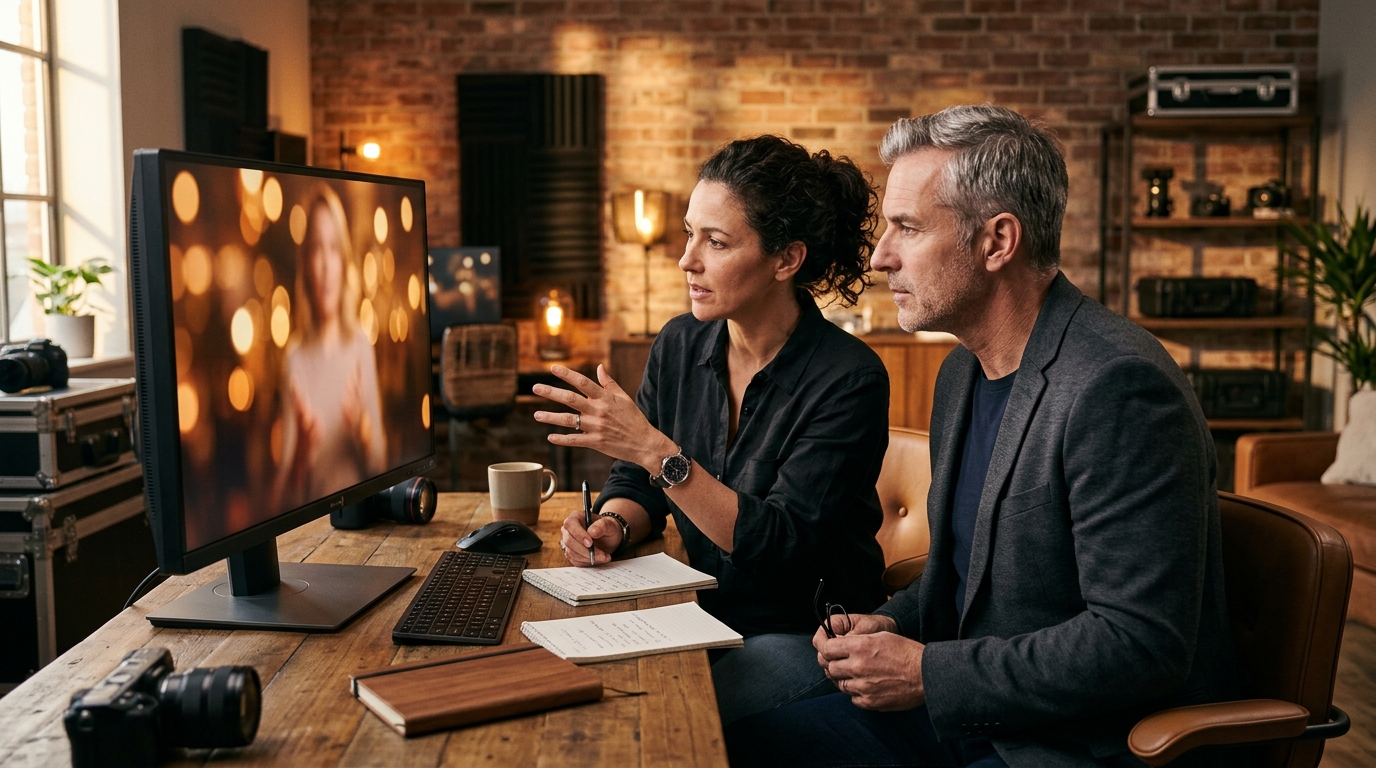
Types of Testimonial Videos: Choosing the Right Format for Your Brand
Not all testimonial video projects follow the same production structure. Understanding the available formats helps brands choose the approach that best fits their goals, their customers, and their distribution channels.
Interview-Style Testimonials
The most common format — a customer speaking directly to camera or to an off-camera interviewer. When executed well, the interview style delivers maximum authenticity and adapts easily to web, social, and sales applications. The key to an effective interview is asking questions that surface outcomes rather than features. “What changed after working with us?” creates far more compelling content than “What did you like about our product?”
Story-Driven Narrative Testimonials
These go deeper — incorporating b-roll footage of the customer’s environment, team, and operations alongside interview sound bites. The result is a mini-documentary structure that adds context and visual depth to the customer’s story. This format is particularly effective for complex B2B sales cycles where stakeholders need to understand the business problem being solved, not just hear that it was solved.
Case Study Videos
Case study videos blend testimonial content with hard data — the customer describes the challenge and outcome while on-screen text reinforces key metrics. This format works well for enterprise sales where ROI documentation is part of the evaluation process and decision-makers need evidence that can be cited internally.
Social Proof Compilation Videos
Short-form compilations pull highlight moments from multiple customer testimonials into a single punchy video. These work exceptionally well for paid advertising and top-of-funnel campaigns where brevity — 15 to 30 seconds — is essential. They require a larger library of source footage and an editor skilled at identifying the most emotionally resonant moments across multiple interviews.
Each format carries different production requirements and serves different stages of the buyer journey. A skilled production team evaluates which format best serves the goal — and often recommends a primary long-form piece alongside shorter cut-downs for multi-channel distribution, maximizing the return on a single shoot.
The Testimonial Video Production Process: From Pre-Production to Final Cut
Great testimonial video production doesn’t start on shoot day. It starts weeks earlier with strategic planning that determines whether the final video becomes a lasting sales asset or disappears into the content graveyard.
Pre-Production: The Foundation of Everything
Pre-production is where the strategic work lives. A professional production team works through several critical decisions before a single camera is set up:
Customer selection. Not every satisfied customer makes a compelling testimonial video subject. The strongest candidates share a clear before/after narrative, comfort communicating on camera (which skilled direction can significantly improve), and a story that mirrors your ideal buyer’s situation. A production team experienced in testimonial video production helps identify and prepare the right participants — including pre-interview calls that surface the most narratively rich moments before the shoot day.
Question framework development. Scripted testimonials ring false. Unguided interviews wander. The professional approach is a structured question framework designed to guide the conversation toward the most compelling moments while leaving room for authentic, unscripted language. The questions that unlock the best footage are rarely the obvious ones.
Location and environment decisions. Whether production happens at the customer’s facility or in a controlled studio environment, the visual context of the shoot shapes the story being told. A healthcare testimonial filmed in a clinical setting communicates differently than the same content filmed against a neutral backdrop. Pre-production planning addresses these decisions long before shoot day.
Shot list and b-roll planning. For narrative formats, the production team develops a visual plan in advance — identifying b-roll opportunities, environmental details, and visual metaphors that will enrich the final edit. This preparation is what separates directors who tell stories from crews who simply capture footage.
Production: The Shoot Day
A professional production shoot for testimonial videos involves far more than pointing a camera at someone and pressing record. The crew manages:
Interview direction. Helping subjects relax, speak naturally, and tell their story without sounding coached is a genuine craft skill. The best directors make subjects feel as though they’re having a conversation — not performing for a camera.
Lighting design. Controlled, flattering lighting creates visual depth, separates the subject from the background, and elevates the perceived quality of every frame. Flat or uncontrolled lighting signals low production value regardless of camera quality.
Camera positioning and movement. Decisions about angles, focal length, and framing influence how viewers emotionally connect with the subject. These aren’t arbitrary technical choices — they’re storytelling decisions.
Sound capture. Clean, professional audio is non-negotiable in this kind of production. Poor sound quality destroys credibility faster than any other production failure. A dedicated boom operator or lavalier microphone setup — rather than on-camera audio — is standard practice on professional shoots.
Post-Production: Crafting the Story
Post-production is where raw footage becomes storytelling. The editing process involves selecting the most powerful moments from hours of interview footage, building a narrative arc with a clear problem/journey/transformation structure, integrating b-roll and supporting visuals, color grading for a consistent cinematic tone, sound design and music that supports emotional engagement without overwhelming the voice, and graphics identifying the speaker and their context.
The B2B sweet spot for testimonial video length is 45 to 90 seconds for social distribution, with longer two- to four-minute versions serving landing pages, sales decks, and direct outreach. Research shows a 74% video completion rate at under two minutes compared to 49% for longer content — making disciplined editing a conversion factor, not just an aesthetic preference.
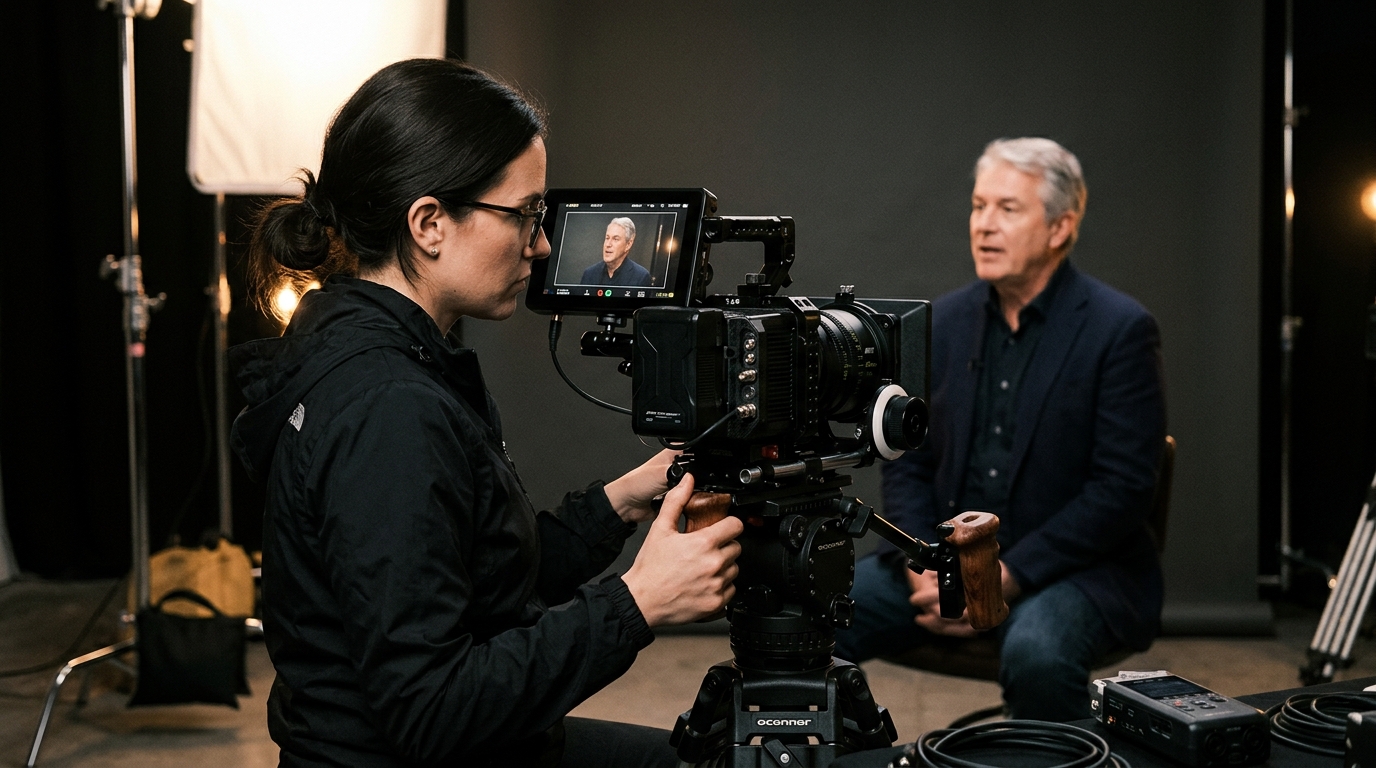
Remote vs. On-Location Testimonial Video Production
The growth of remote recording tools has expanded the options for testimonial video production — but the choice between remote and on-location production involves real trade-offs that brands should understand before committing to an approach.
Remote Testimonial Production
Remote testimonial production captures customers on their own devices via a guided recording platform or self-recording setup. The advantages include logistical simplicity and the ability to capture customers regardless of geography.
The limitations are significant, however. Remote recordings vary dramatically in quality based on the customer’s environment and equipment. Lighting is rarely controlled. Background elements frequently distract. The emotional richness that comes from an in-person production experience — the subject direction, the connection between subject and crew, the carefully designed visual environment — is absent. The result often reads as “user generated content” rather than a brand-quality asset.
On-Location Professional Production
Professional on-location testimonial video production brings a skilled crew to the customer’s environment or to a controlled production studio. The consistent advantages include higher production quality, more emotionally resonant footage, and a final video that reflects well on your brand’s standards across every channel it reaches.
The visual storytelling available on location — the customer’s actual workspace, team, product, or operations serving as living context — creates depth that remote recording cannot replicate. For complex B2B products and services, that contextual richness often makes the difference between a testimonial that clicks with prospects and one that doesn’t.
At Pretzel Logic Productions, on-location testimonial video production is built around a clear conviction: your customer’s story deserves to be told at the highest possible quality. Production quality is the signal your brand sends with every video — and viewers pick up on it immediately, whether they articulate it or not.
How to Choose the Right Testimonial Video Production Company
Choosing a testimonial video production partner is a strategic decision with long-term implications for how your brand story is told. Here’s what to evaluate:
Portfolio and Creative Range
Look for a production company whose work demonstrates versatility — different subjects, different industries, different emotional registers. A strong portfolio reveals how a team handles the core challenge of testimonial production: making real people feel and look compelling on camera across wildly different contexts.
Story-First Approach
The best testimonial video production companies lead with questions about your customer’s story — not with camera specs or technical deliverables. Creative and strategic thinking should drive every conversation before production logistics enter the room. If a production partner’s first question is about equipment, that tells you something about where their priorities live.
Communication and Project Management
Testimonial production coordinates multiple stakeholders — your internal team, your customer, and the production crew. A partner who communicates proactively, anticipates complications, and manages that complexity reliably is as valuable as any technical skill. Production runs that feel seamless from the client side are the result of meticulous behind-the-scenes coordination.
Full-Service Capability
True end-to-end production — from strategic planning through distribution-ready final deliverables — ensures consistent quality and a seamless experience for your featured customer. Production companies who handle only the shoot day leave critical work (planning, customer preparation, post-production direction) in the hands of teams who may not be equipped for it.
Pretzel Logic Productions brings this full-service, storytelling-first approach to every testimonial project. Explore the Pretzel Logic portfolio to see how client stories have been transformed into powerful, results-driving video assets across industries ranging from healthcare and casino hospitality to food and beverage and sports entertainment.
What Separates a Great Testimonial Video from a Forgettable One
The difference between customer testimonial videos that move prospects and those that get skipped comes down to a handful of craft decisions that are present or absent in every frame.
It leads with the problem, not the product. The most engaging testimonials don’t begin with the solution. They begin with the pain — the frustration, the uncertainty, or the cost the customer was absorbing before they found your brand. That resonance with viewers in the same situation is what makes a testimonial worth watching from the first five seconds.
The subject sounds like a human being, not a press release. Coached, scripted-sounding testimonials trigger instant skepticism in modern viewers. Great production direction extracts authentic language — the way customers actually describe their experience in real conversation, not the polished messaging they think you want to hear. Skilled interview direction is the craft that makes this possible.
Production quality signals brand credibility. Soft, controlled lighting. Clean, professional audio. Thoughtful framing and composition. Color-graded footage that maintains a consistent visual tone. These aren’t aesthetic extras — they are the production signals that communicate to viewers, at a subconscious level, that your brand takes quality seriously. Viewers may not consciously articulate what makes one video feel trustworthy and another feel cheap. But they feel it immediately.
It earns every second of its runtime. The best editors know what to cut — the hesitations, the re-stated points, the portions where energy dips. What remains should feel effortless, even when the editing process was anything but. A 90-second testimonial that holds attention from first frame to last is worth more than a five-minute video that loses the viewer at the two-minute mark.
It ends with a specific, scenario-based recommendation. The strongest testimonials close not with generic praise but with a precise, situation-specific recommendation: “If you’re a marketing director who’s been burned by production companies that overpromise and underdeliver, call these people first.” That level of specificity is what makes these testimonial videos a genuine conversion tool — not just a content checkbox.
Frequently Asked Questions About Testimonial Video Production
How long does testimonial video production typically take from start to finish?
A professionally produced customer testimonial video typically takes four to six weeks from initial brief to final delivery. This includes one to two weeks of pre-production planning (customer selection, question development, logistics), the shoot day itself, and two to three weeks for post-production editing and client review rounds. Thorough pre-production planning consistently reduces delays during filming and revision cycles — making the upfront investment in planning the most effective way to compress overall timelines.
How many testimonial videos should a company produce?
Most B2B companies benefit from building a library of three to six testimonial videos covering different customer profiles, industries, or use cases. This ensures that prospects across different verticals or buyer stages can find a story that mirrors their specific situation. A single hero testimonial video typically serves as the cornerstone, with shorter cut-down versions and additional customer stories expanding the library over time as the production relationship matures.
What makes a customer a strong testimonial video subject?
Strong testimonial video subjects share a few consistent traits: a clear before/after narrative with outcomes that are emotionally vivid or quantifiably meaningful, some degree of comfort communicating verbally (even if not naturally polished on camera — skilled direction closes most of that gap), and a story that aligns with your ideal buyer’s situation and pain points. Production teams experienced in testimonial video production help identify and prepare the right customers well before the shoot day, which significantly improves the quality of the raw footage.
Should testimonial videos be scripted?
Effective testimonial videos are guided, not scripted. A professional production team develops a strategic question framework designed to surface the most compelling moments from the customer’s experience — but the responses should always be genuine and unscripted. Viewers detect scripted language almost immediately, and the resulting skepticism undermines the authenticity that makes the format work. The craft lies in creating the conditions for authentic answers, not in choreographing them.
Where should testimonial videos be used after production?
Professionally produced customer videos work across every stage of the buyer journey: homepage hero sections, dedicated landing pages, sales proposals and decks, email nurture sequences, social media distribution, paid advertising campaigns, trade show displays, and direct sales outreach. The most effective production approach creates multiple cut-down versions from a single shoot — a two- to four-minute full story, a 60-second highlight version, and a 15- to 30-second social snippet — maximizing the return on each production day without requiring additional customer coordination.
How does professional testimonial video production differ from DIY recording?
The core difference is strategic and creative, not just technical. Professional production of testimonials begins with customer selection and story development before a camera is ever set up. The shoot is directed — meaning a skilled team draws out authentic, compelling language from subjects rather than simply recording what they say unprompted. Post-production transforms raw footage into a structured narrative with professional color grading, sound design, and pacing. The result is content that represents your brand at the highest quality level across every channel where it appears.
Ready to Tell Your Customer’s Story?
Customer testimonial video production is where buyer trust is built, conversion rates move, and brand credibility compounds over time. The brands that invest in telling their customers’ stories well — with professional production quality, strategic storytelling, and authentic subject direction — consistently outperform those who treat video as an afterthought.
The question isn’t whether testimonial video production belongs in your marketing strategy. The data settled that long ago. The real question is whether your next testimonial video will be produced at the level your brand — and your customer’s story — actually deserves.
Pretzel Logic Productions is a full-service video production studio built for brands that refuse to settle for generic. We bring the same storytelling craft and creative conviction to every testimonial project that we bring to TV commercials, brand films, and full-scale campaign productions.
Get in touch with the Pretzel Logic team to start your next testimonial video production project — and find out what fresh, hot, and slightly twisted storytelling can do for your brand.