
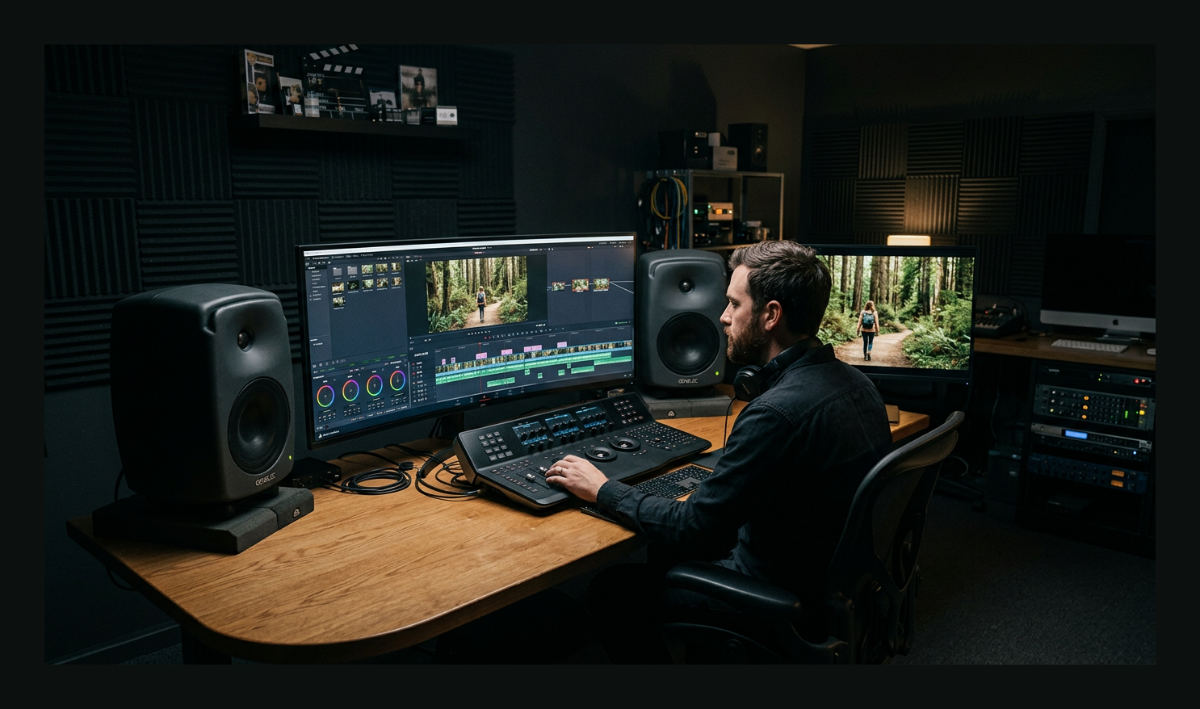
Last updated September 14, 2026
Post-production timelines vary significantly based on the format. You might spend several weeks on a commercial or many months on a feature film. Everything depends on your visual effects complexity, the number of feedback loops, and the total volume of footage captured during principal photography. Factors like a complex visual effects schedule and the depth of sound design dictate your speed.
Key takeaways
- A 90-minute feature film requires approximately 270 hours for base editing and sound assembly.
- The 60/40 rule suggests 40% of your total production budget should be allocated to post-production tasks.
- A rough cut generally requires one hour of editing work per finished minute of the film.
- Picture lock is a critical milestone that prevents expensive bottlenecks in sound and color workflows.
Prerequisites and Realistic Expectations
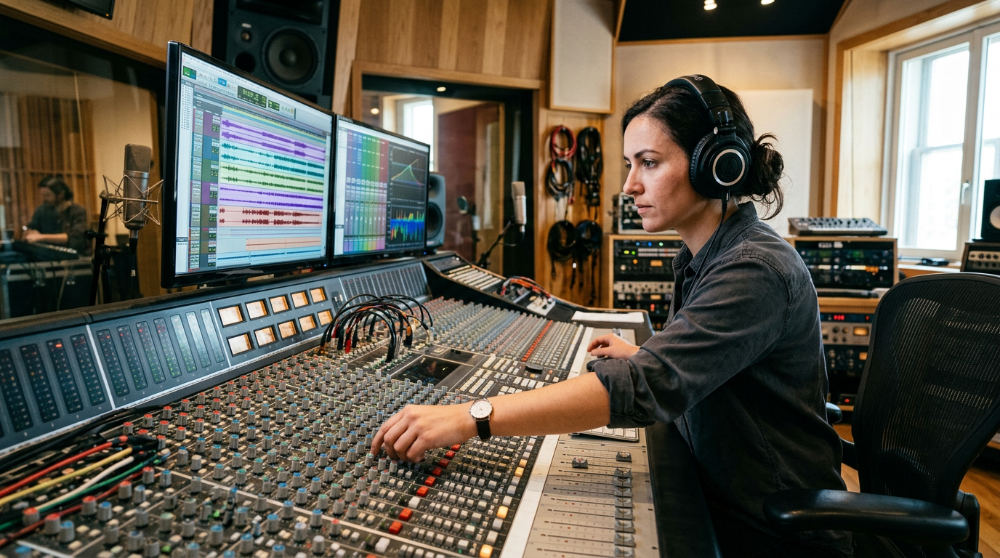
Before stepping into the edit suite, ensure all principal photography is wrapped. Organize it with clear metadata. Principal photography, or the actual filming phase, must be fully completed before most post-production tasks can begin effectively. This prevents crippling delays. At Pretzel Logic, we apply a "logical collaborator" mindset. We bridge the gap between the chaotic energy of a film set and the surgical precision of the edit. Allocate at least 40% of your total budget to post-production. Don’t skimp. Cutting corners on color and sound often ruins the work done during filming.
According to Adobe, the process spans from one month to over a year. Timelines usually break down into these categories:
- Commercials. These require a dedicated timeframe that depends largely on the number of stakeholders and brand requirements.
- Short Films. Expect a multi-month process to achieve a polished, festival-ready product.
- Feature Films. These long-form projects represent the most significant time investment in the cycle.
Total cost varies. Professional rates scale with the depth of animation and Foley requirements. When calculating your investment, consider that video production costs tie directly to the hours spent in these final stages. High-end features require a massive visual effects schedule. This involves dozens of artists working for months. Even simple brand videos require a structured video editing workflow. It ensures consistent quality across versions.
1. Organize and ingest your raw footage
The first step involves transferring data from camera cards to redundant storage servers using high-speed protocols. We never edit from source media. Instead, we create proxy files in Adobe Premiere Pro. These tools allow for smoother editing on 8K footage without taxing the hardware. At this stage, sync external audio tracks from the field recorder with visual scratch tracks for every take. It keeps dialogue perfectly aligned. Finally, categorize clips into bins by scene numbers, shot types, or the specific shoot day. No creative moment should be lost in a sea of generic file names.
2. Assemble the rough cut to establish flow
A rough cut lays out the best takes in chronological order. We do this to check for narrative consistency and pacing. It is the first version of a film where scenes are laid out in order. Plan for a significant amount of editing time for every finished minute of screen time. This can increase for high-energy brand stories. We focus on story beats here. The narrative must land before we think about polish or transitions. This is the time to identify gaps where B-roll or motion graphics might be needed. You need them to maintain viewer engagement.
3. Refine the fine cut through stakeholder feedback
Once the skeleton is built, we use collaborative tools to gather time-coded feedback from brand stakeholders. We trim individual frames to perfect the emotional timing of transitions. At Pretzel Logic, we practice Integrated Animation. We build motion graphics during this phase. This allows us to see how they interact with live-action footage in real-time. The goal is picture lock. This is the stage where the visual edit is finalized. No further cuts are made. It allows sound and color work to begin on a stable canvas. Achieving this milestone prevents expensive bottlenecks in the later sound and color workflows.
4. Layer in sound design and Foley effects
The sound mixing process involves building a sonic world from scratch. Professional sound mixing often takes as long as the visual edit. We task Foley artists with recreating organic sounds like footsteps or clothing rustles. These add tactile realism that production microphones miss. Foley artists reproduce everyday sound effects that are added to films in post-production to enhance audio quality. You must layer background ambience and room tone. It creates a consistent acoustic environment. This prevents jarring jumps in audio quality. By the time we mix the dialogue, music, and sound effects, the narrative should feel immersive. It must work on any playback device.
5. Perform color correction and creative grading
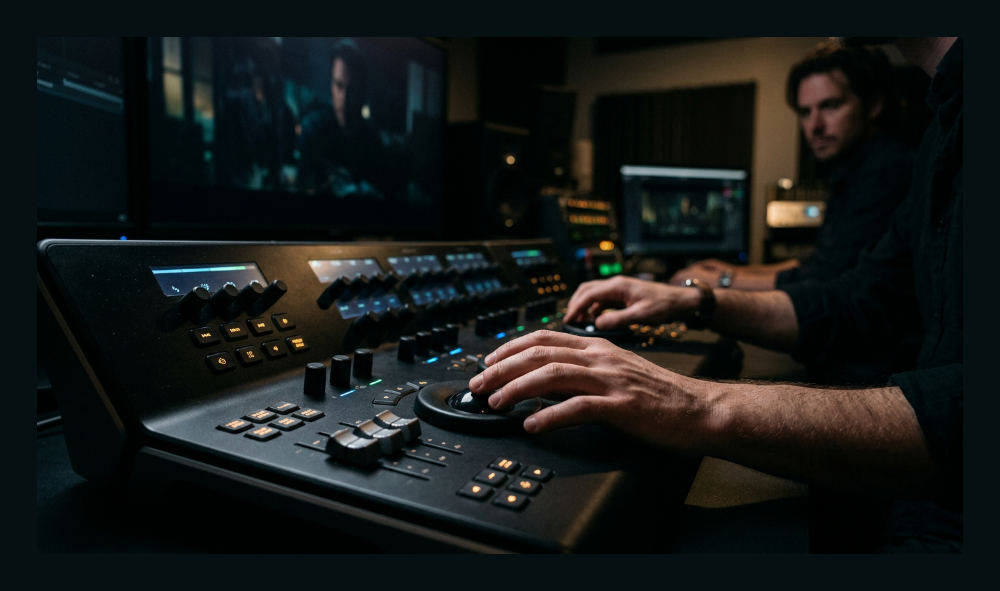
A realistic color grading timeline can range from a few days for shorts to several weeks for feature films. Color is the twist. It transforms raw footage into a cohesive brand story. We start with technical color correction to balance exposure and white balance across all shots. Once the technical baseline is set, we apply creative color grading to establish the mood. This could be a warm brand story or a moody thriller. Many clinics that offer this utilize specialized artists to provide rapid feedback. We ensure all brand colors are rendered accurately across different screen types.
6. Export and deliver for multi-platform distribution
The final stage involves exporting masters in high-resolution formats like ProRes or DNxHR. We then create specific crops and compression profiles for social media, broadcast, and theatrical release. It is vital to verify that all captions and subtitles are synchronized. Before closing the project, we review the final render one last time. We check for technical glitches or export artifacts. This ensures the steps in marketing video production are followed to completion. The result is a professional asset ready for high-traffic environments.
When the Post-Production Process Hits Roadblocks
Scope creep kills timelines. If you change the script or the structure once you reach picture lock, you effectively reset the clock for sound and color. Hiring multiple editors rarely speeds up the process. It often risks losing the cohesive Pretzel Logic twist. This leads to a disjointed final product. Underestimating the time for visual effects (VFX) is another common pitfall. It can push delivery dates back by several months if not managed early. Poor communication between departments leads to sound teams working on outdated versions of the edit. You waste both time and budget. Following established post-production industry standards is the best way to avoid these structural failures.
Common Mistakes to Avoid in Film Editing
Skipping the organization phase is a frequent error. It results in hours of wasted time searching for clips when you should be being creative. We also see brands failing to account for the technical requirements of high-end web development. If you are integrating video into a complex site, you need specific file formats and bitrates decided well in advance.
- Ignoring the sound mix. A professional-looking video that sounds amateur will always feel cheap.
- Neglecting buffer time. Always build in a time buffer for unexpected technical issues or late-stage creative pivots.
- Rushing the grade. Skipping creative grading makes your footage look like a home movie.
- Poor version control. Working on the wrong "final" file leads to disastrous export errors.
Understanding the various steps in marketing video production keeps your expectations realistic throughout the entire video editing workflow.
Frequently asked questions
How long does post production take for a movie?
A standard feature film usually requires 6 to 12 months for a complete post-production cycle. According to Cyber Film School, a 90-minute feature film requires approximately 270 hours for base editing and sound assembly alone. Short films and branded content can be finished in 4 to 12 weeks.
What are the 5 stages of post-production?
The stages include picture editing, sound design/mixing, visual effects, color grading, and final delivery/mastering. These stages are often preceded by an organization phase. Each stage relies on the previous one being finished, which is why reaching "picture lock" is a vital milestone.
How long does it take to edit a 10 minute short film?
For a 10-minute film, expect roughly 30 to 50 hours of pure editing time for the rough and fine cuts. Additional time must be factored in for sound design and color grading. This often totals 80-100 hours of labor to reach a professional standard.
Can post-production be done during filming?
Yes. Digital workflows allow editors to begin assembling scenes while principal photography is ongoing. This approach helps identify if pick-up shots are needed before sets are struck and actors are released. Many high-end productions use this method to tighten the schedule.
How does the complexity of motion graphics impact my delivery date?
High-end 3D animation or complex motion graphics can double the post-production timeline if they aren’t planned properly. Integrating animation early in the edit helps prevent bottlenecks at the end of the project.
At Pretzel Logic, we combine structured workflows with high-level creative concepts. We ensure your project stays on track without losing its soul. If you are ready to start, explore our Post-Production Services to see how we work. We bring your creative vision to life with a twist. To discuss your specific project timeline, contact us today.