
Last updated August 28, 2026
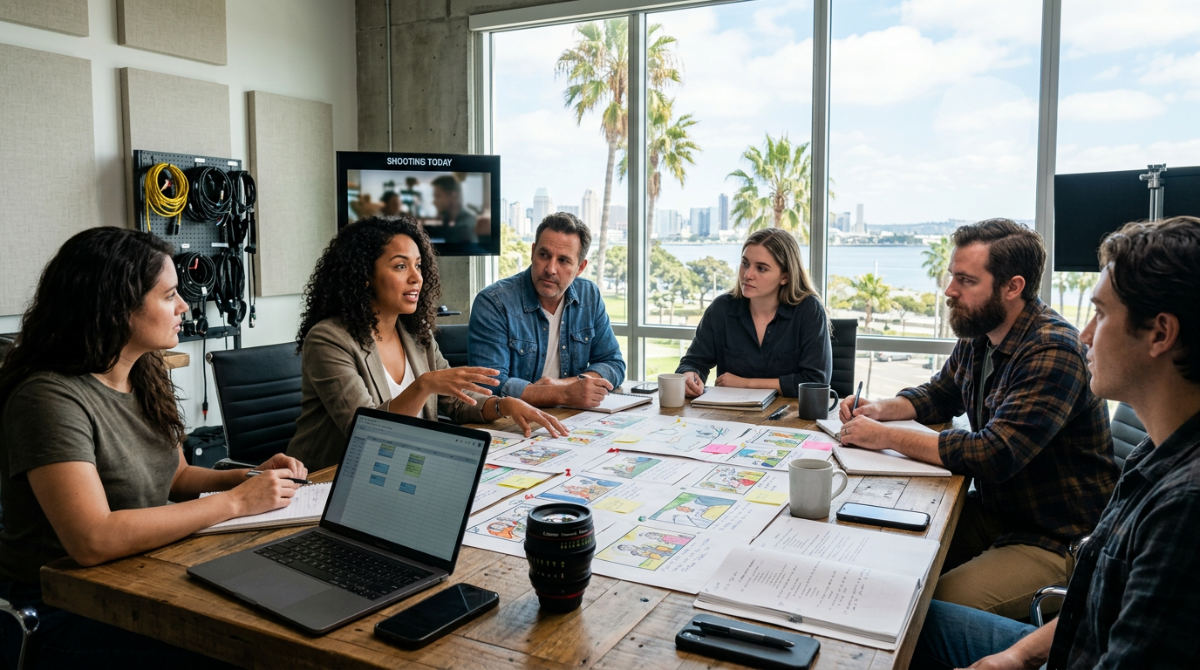
Pre production planning film is the foundational phase where a creative concept translates into a technical roadmap. It involves finalizing the script. It means securing locations and permits. You hire cast and crew. You build a detailed shooting schedule. This work ensures zero friction during the actual production process.
Key takeaways
- A locked script is the essential anchor. It serves as the legal and financial foundation for every budgetary and logistical decision made during the project.
- The ‘Pretzel Logic Twist’ uncovers non-obvious angles. Early concept development should challenge surface-level ideas to find a unique visual hook that differentiates the brand.
- Integrated Logic bridges the execution gap. Success requires a smooth, professional connection between visionary high-level concepts and ground-level technical execution.
- San Diego requires hyper-local planning. Effective logistics must account for regional micro-climates and specific permitting requirements for public spaces like Balboa Park.
- Motion-first planning saves time. Identifying animation and graphic needs during the initial script breakdown prevents costly rework in post-production.
Prerequisites for a Successful Film Launch
Before you call "action" on the streets of the Gaslamp Quarter or in a Kearny Mesa studio, you need a solid framework. According to the official definition of pre-production, this phase ends specifically when planning concludes and the cameras start rolling. For most professional commercial projects, we invest a significant portion of the total budget during this stage. We do this to ensure technical and creative readiness.
To begin, you will need the following:
- Timeframe. Allow for sufficient lead time based on the complexity of your narrative or animation needs.
- Creative Foundation. A finalized creative brief or a rough draft script is necessary to initiate the breakdown process.
- Personnel. Access to a Line Producer or Production Manager is vital for overseeing the daily logistics and budget management.
- Budget Allocation. Ensure funds are set aside for scouting, permitting, and initial talent deposits.
- Insurance. Secure a policy that covers your specific San Diego locations and gear.
Skipping these essentials is a recipe for disaster. According to StudioBinder, missing even a single step during this phase can cause legal issues and damage your professional trajectory.
1. Apply the Pretzel Logic Twist to your concept
Creative concept development is the process of pressure-testing every idea. We make sure the story serves the business objective without feeling like a dry corporate mandate. Great storytelling begins by moving beyond the obvious. Search for the creative angle your competitors are too afraid to explore. We call this finding the "twist."
Visionary Tip: Use the ‘Pretzel Logic Twist’ to find the one visual element your competitors are too afraid to show.
When we collaborate with you, we analyze the emotional hook of the story. We determine if it truly resonates. A law firm might default to a "scales of justice" cliché. We hate that. By applying a twist, we might focus on the raw human tension of a client’s recovery process to build authentic trust. This approach integrates branding goals naturally. The final product isn’t just a video. It is a strategic asset. If your team is struggling to find this spark, our tips for telling your brand story can help you identify the emotional triggers that make content memorable. We always choose the path that challenges the viewer.
2. Lock your script for final breakdown
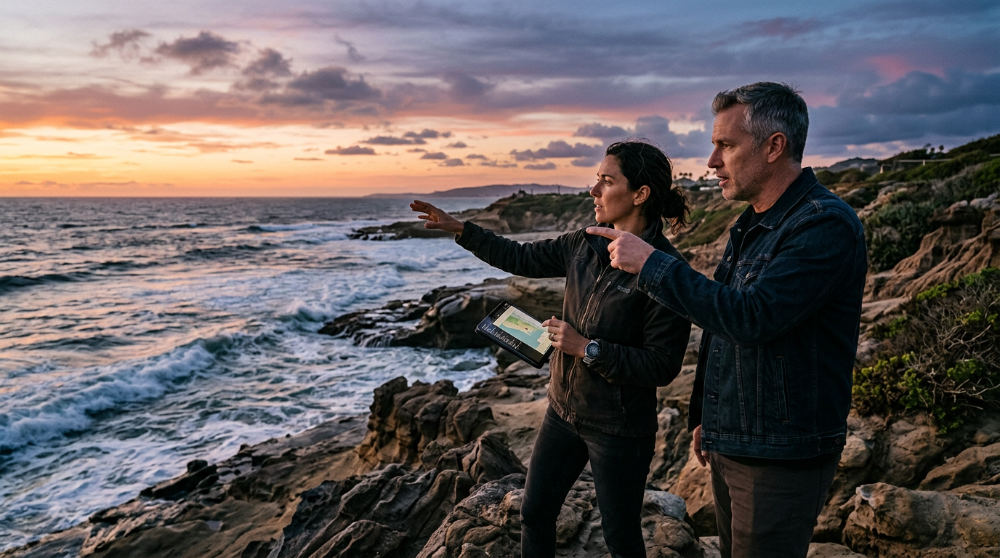
A Script Breakdown is the systematic process of identifying all elements needed for each scene. We look at everything from props to cast members. A locked script is more than just dialogue. It is the legal and financial blueprint for the entire production. Once the script is finalized, we perform a comprehensive breakdown. We eliminate guesswork. We believe in surgical precision. This ensures the Line Producer can allocate funds exactly where they are needed.
During this stage, we categorize elements into "must-haves" and "nice-to-haves." This provides the necessary flexibility to pivot if a specific location becomes unavailable. We also consult with a Production Designer early on. We need to verify that the written world is physically buildable, aesthetically aligned with the budget, and logistically sound. Finalizing all action lines now prevents the "on-set pivot." That is the leading cause of budget overruns. By adhering to our corporate video production workflows, brands can ensure the transition from paper to screen is managed without technical friction.
3. Develop a motion-first visual storyboard
Visual scripting bridges the gap between the words on a page and the images on the screen. It is a frame-by-frame representation of the story. Storyboarding involves creating a visual representation of each shot to ensure the creative vision is aligned before filming begins. We utilize a motion-first planning methodology. We identify where animation and live-action will intersect long before the cameras arrive on set.
| Feature | Standard Storyboarding | Motion-First Planning |
|---|---|---|
| Primary Focus | Composition and lighting | Integrated VFX and graphic overlays |
| Post-Prod Impact | Standard editing time | Reduced rework for animations |
| Technical Prep | Camera angles only | Precise framing for graphic "negative space" |
| Client Buy-in | Aesthetic approval | Functional and visual alignment |
This approach allows our Director of Photography to understand exactly where to leave "negative space" in a shot. We save that room for future text or motion graphics. By identifying these transition points early, we ensure technical compatibility. Reviewing these visual beats with you during pre-production secures buy-in. It prevents costly revisions after the shoot is complete.
4. Secure San Diego locations and filming permits
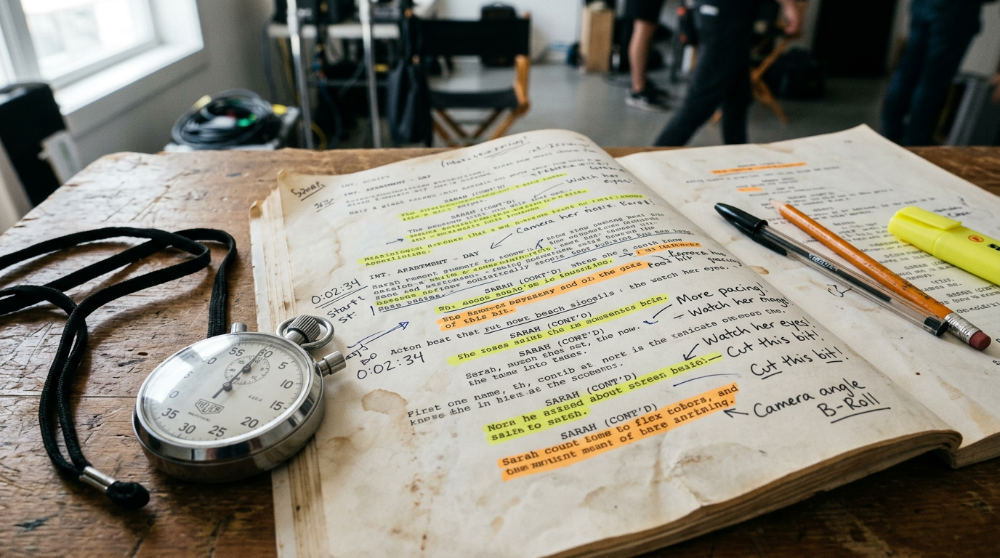
Location Scouting involves finding the ideal physical environment for the shoot. We consider both aesthetics and technical needs. Securing the right environment requires balancing the visual aesthetic of the brand with the technical needs of a professional film crew. In San Diego, this means navigating the specific permitting requirements of the San Diego Film Office. We know the rules for Balboa Park, La Jolla Cove, and the Embarcadero.
Practical Rule: Never start filming without a signed location agreement, even if the owner is a friend. Legal safety is the backbone of creative freedom.
Planning in our region also requires an understanding of local micro-climates. The "June Gloom" coastal fog can drastically change lighting conditions in Coronado. We always schedule a Tech Scout with department heads to identify potential sound interference. We watch for flight paths near San Diego International Airport. We check power limitations in older historic buildings. This visit helps identify technical challenges like lighting and power before production starts.
For businesses focused on their local digital footprint, managing a professional image is as critical as the film itself. Some brands utilize tools like Automated Sales Machine reputation management to ensure their online presence matches the high-quality visual identity we create on screen. Once the location is vetted, we ensure all location agreements are signed. We make sure insurance certificates are issued. This protects the production from unforeseen liabilities. We handle all the paperwork. You don’t have to touch it.
Effective execution starts with comprehensive pre-production planning services that treat your brand’s story with the technical respect it deserves.
5. Execute the casting call and crew hiring
A Casting Call is the process of auditioning and selecting the right talent. We ensure the best fit for the brand voice. A successful production depends on selecting a team and talent that embody the brand voice. They must also possess the technical skill required for the medium. Once the script is locked, we look for performers who can deliver lines naturally. We ensure they adhere to the established "Integrated Logic" of the project. For narrative-driven commercials, we often organize chemistry reads between lead actors. We want on-screen relationships to feel authentic.
Hiring the right crew is equally critical. We secure experienced department heads. This includes the Director of Photography, Sound Mixer, and Gaffer. Each must be briefed on the technical requirements identified during the script breakdown. By finalizing all contracts and day rates during this phase, we keep the production budget on track. We prevent the financial surprises that often derail less organized projects.
6. Build a strategic shooting schedule
A Shooting Schedule is a detailed plan of which scenes will be filmed when. It maximizes efficiency of cast and locations. Maximizing production efficiency requires organizing scenes by location and talent availability. We rarely film in chronological order. A well-crafted schedule groups all scenes taking place at a specific San Diego location together. We want to minimize "company moves." They drain time and energy. We also factor in "buffer time." You have to account for the unpredictable nature of local traffic on the I-5 or the I-15.
The final schedule must also include specific time slots for motion-graphics-heavy shots. These moments require meticulous setup. We ensure the lighting and framing match the future animation overlays. Once the schedule is finalized, we distribute a detailed Call Sheet to all departments. This happens at least 24 hours before the first shoot day. This daily document informs the crew where and when to report for production. It includes everything from the morning’s first "call time" to the nearest hospital and weather contingencies.
Common Mistakes to Avoid in Pre-Production
Commercial filming logistics fail most often due to poor communication. A common error is failing to perform a Tech Scout. This results in unexpected power outages or audio interference on shoot day. Another major mistake is proceeding without a locked script. This causes budget bloat as logistics shift constantly.
Filmmakers also frequently underestimate San Diego traffic or permit lead times. Skipping the "motion-first" planning phase is another trap. Without it, editors often receive footage where subjects are framed in a way that blocks future graphics. Neglecting to confirm talent availability against the shooting schedule is dangerous. It leads to expensive last-minute casting calls that compromise the creative vision.
Workflow Comparison: Corporate vs. Narrative Film
The core difference between these two workflows lies in how they manage the relationship between artistic vision and operational constraints. In a corporate environment, the primary goal is business continuity. The production must adapt to the physical and functional realities of a working office or storefront. Narrative film focuses on visual depth and emotional resonance. It often allows for extended setup times to perfect a specific lighting ratio or blocking sequence.
For professional services, such as a law firm, the pre-production framework must be even more specialized. We utilize bespoke industry workflows to ensure that filming does not disrupt client meetings or courtroom schedules. The case study on Alvandi legal video production shows that high-end legal video production requires a meticulous focus on brand storytelling to build immediate trust.
| Feature | Corporate/Commercial Workflow | Narrative Film Workflow |
|---|---|---|
| Primary Goal | Brand messaging and lead generation | Storytelling and artistic expression |
| Typical Timeline | Several weeks of preparation | Several months of planning |
| Permitting | Focus on private property and business licenses | Heavy use of public land and road closures |
| Crew Size | Lean, highly efficient multi-taskers | Large, specialized departments |
| Scheduling | Built around business hours and staff | Built around actor availability and light |
Understanding these distinctions is vital for a marketing manager or business owner. A restaurant shoot requires a plan that accounts for food styling and kitchen heat. A corporate office shoot might focus more on acoustics and interior design. By tailoring the corporate video production workflows to the specific industry, we ensure the final product looks like a high-end film while maintaining the efficiency of a business operation.
Frequently asked questions
What are the 4 stages of pre-production?
Pre-production is generally categorized into four distinct phases: creative development, where the concept and script are finalized; budgeting and resource allocation; logistics, which includes location scouting and permitting; and final preparation, involving crew hiring and the creation of the shooting schedule. Each stage builds upon the previous one to ensure a smooth transition into active production.
How long does pre-production usually take?
A standard commercial or corporate project typically requires four to six weeks of preparation. If the project involves complex narrative structures or integrated animations, the timeline may extend to eight or twelve weeks. Effective planning by experienced teams can often condense these timelines for agile marketing departments without sacrificing the quality of the output.
What is the most important part of pre-production?
Script locking is widely considered the most critical anchor point in the entire process. Without a finalized and approved script, all subsequent decisions regarding budgeting, scheduling, and casting are based on guesswork. A locked script provides the foundation for "Integrated Logic," ensuring that the creative vision remains balanced with technical and financial feasibility.
Can animation be planned during the standard pre-production phase?
Yes, our "motion-first" planning methodology integrates animation requirements directly into the script breakdown. By planning for visual effects early, we ensure that live-action shots are framed correctly for future overlays. This proactive approach prevents costly rework during the post-production phase and ensures that the final motion graphics feel like a natural part of the story.
What specific permits are required for filming in San Diego?
Filming on public property in San Diego requires a permit from the San Diego Film Office. Specific landmarks, such as Balboa Park or certain beaches, may have additional ecological or historical restrictions that must be addressed. Proof of a comprehensive insurance policy is a non-negotiable requirement for obtaining these local permits and securing the production site.
Effective pre-production is the difference between a high-impact visual story and an expensive technical failure. By merging creative vision with logical, field-tested workflows, we ensure your brand’s message is delivered with clarity and a unique perspective. If you are ready to move beyond generic content and apply these tips for telling your brand story, our team is here to help you navigate every step of the process. To begin crafting a professional filming plan tailored to your specific goals, contact our production team today to start your San Diego story with a twist.