
Last updated September 16, 2026
Navigating the journey from a raw concept to a polished screen masterpiece requires a disciplined, sequential workflow. We do not wing it. This guide outlines the essential phases of video production, utilizing data from industry leaders like Storyflow and NYFA. Rigorous planning during the early stages directly prevents expensive "editing room nightmares" when finishing the project.
1. Lock your script and storyboards before the camera rolls to prevent budget inflation.
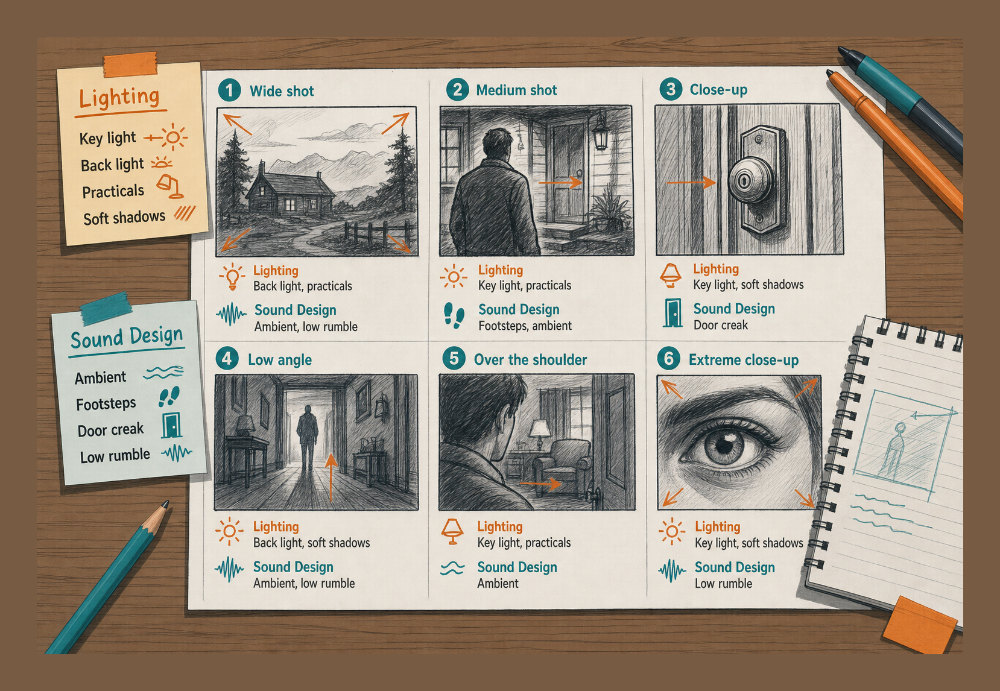
Everything begins with a locked script. This document serves as the foundation for the entire project, allowing you to identify every required asset from specific props to niche talent needs. Once the dialogue and action are set, move into creating detailed storyboards to visualize each shot. This step is non-negotiable. It ensures the director and the editor are perfectly aligned on the narrative flow before a single cent is spent on crew.
A comprehensive script breakdown is an effective way to catalog every element needed for each scene, effectively stripping away day-of-shoot surprises. By defining the visual language early, you avoid the trap of "finding the story" in the edit. That is the fastest way to drain a budget. We use these blueprints to streamline our planning and pre-production services, ensuring the creative vision is backed by a logistical roadmap that keeps the project on track.
2. Utilize a logical collaborator framework to balance creative risks with technical planning.
At Pretzel Logic, we emphasize the "Twist." This is our philosophy of blending visionary storytelling with highly logical, disciplined workflows. We function as your logical collaborator. We make sure every creative risk you take is supported by sound technical planning. This means applying specialized industry requirements during the earliest stages of the cycle.
For example, clinics that offer this service often build compliance checks directly into the script phase. Restaurants typically require specific food styling schedules to ensure the visuals look appetizing and professional. This framework relies on the "Fix it in Prep" rule. By solving technical hurdles, like lighting complexities or wardrobe mismatches, during the planning phase, you save thousands in eventual labor costs. High-level creativity thrives best when the underlying logistics are handled with surgical precision.
3. Build a comprehensive shooting schedule to maximize crew efficiency.
Efficiency on set is largely a product of how well you organize your time. A smart shooting schedule groups scenes by location rather than narrative order, which minimizes time-consuming equipment moves and lighting resets. You should also factor in "Day Out of Days" reports. These are essential for tracking talent availability and ensuring you aren’t paying actors to sit idle in trailers.
As noted by Wikipedia, pre-production formally ends when content starts being produced, so having a validated plan is vital. Professional productions coordinate closely with the First AD and Unit Production Manager (UPM) to ensure the budget aligns with the daily call sheets. This level of coordination prevents overtime costs and ensures the crew remains fresh and focused on capturing the best possible performances. Managing these moving parts effectively is what separates a professional set from a chaotic one, allowing the creative team to focus on the "Twist" that makes the story unique.
4. Secure precise locations and legal permits during the pre-production phase.
In a city as visually diverse as San Diego, location scouting is about more than just finding a pretty backdrop. You must check for specific lighting conditions at different times of day, evaluate power access for heavy equipment, and identify potential acoustic challenges like traffic noise or flight paths from Lindbergh Field. Securing these precise locations also requires obtaining the necessary filming permits and insurance to protect the production from legal shutdowns or liabilities.
It is also important to plan for outdoor variables like shifting sun positioning or the sudden arrival of coastal fog, which can drastically change the look of a scene in minutes. When we handle corporate video production, we treat the location as a character itself. We ensure every site is legally cleared and technically viable so that the shoot proceeds without a hitch.
5. Execute principal photography with a focus on high-quality raw assets.
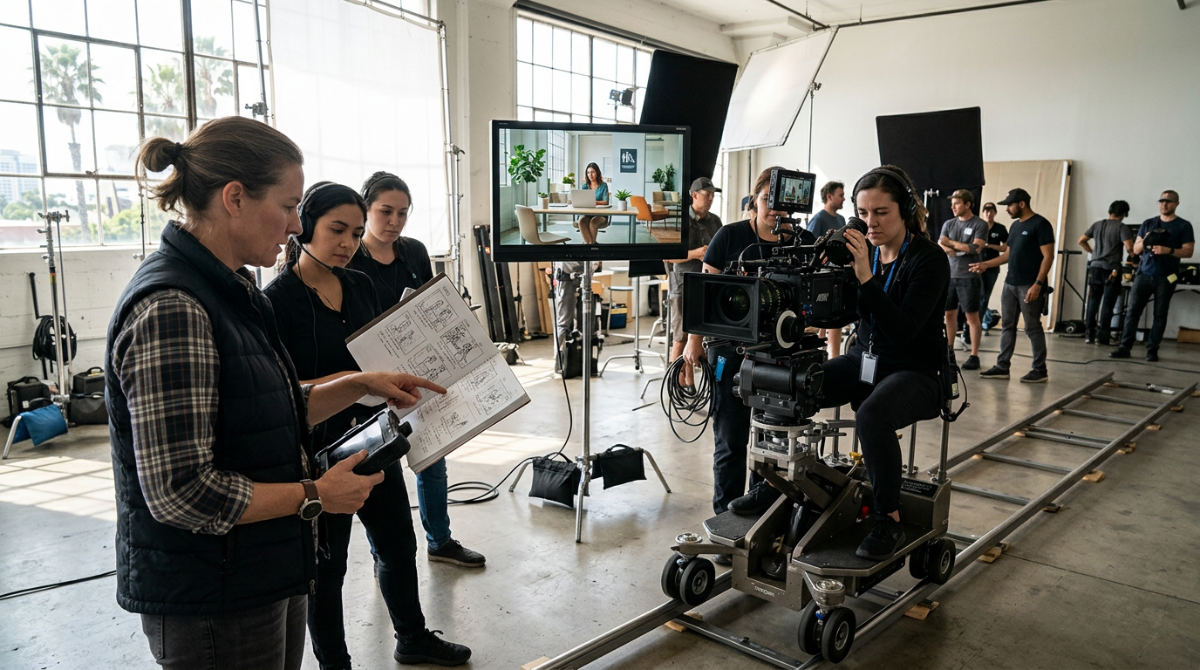
Principal photography is the phase where the majority of the footage is captured. This is the most expensive "room" in filmmaking. The goal is to capture all primary footage and sync sound exactly as defined in the pre-production shot list. Maintaining a daily production report is crucial here to track progress against the planned schedule and ensure no beats are missed.
The Director of Photography and the Sound Mixer must collaborate closely to minimize technical errors at the source. It is much easier to adjust a microphone placement on set than it is to try and scrub out unwanted noise later. By focusing on capturing high-quality raw assets, you provide the editing team with the best possible building blocks. This discipline ensures the final product maintains the high production value our clients expect, regardless of the project’s scale.
6. Assemble the ‘Rough Cut’ to establish the core narrative structure.
Once the cameras stop rolling, the post-production phase begins. The first step is assembling the "Rough Cut," where the editor selects the best takes and arranges them according to the storyboarded sequence. This stage is about identifying pacing issues early, allowing you to address narrative gaps before moving into expensive visual effects or fine-tuning.
This is the time to verify that all necessary story beats were successfully captured during production. The rough cut is the skeleton of your video. If the structure isn’t sound here, no amount of polish will fix it later. We use our post-production editing services to refine this narrative arc, ensuring the story flows logically and hits the emotional notes intended during the scripting phase. This allows us to present a clear vision to the client before we start the detailed work of color and sound.
7. Enhance visual impact through professional color grading and VFX.
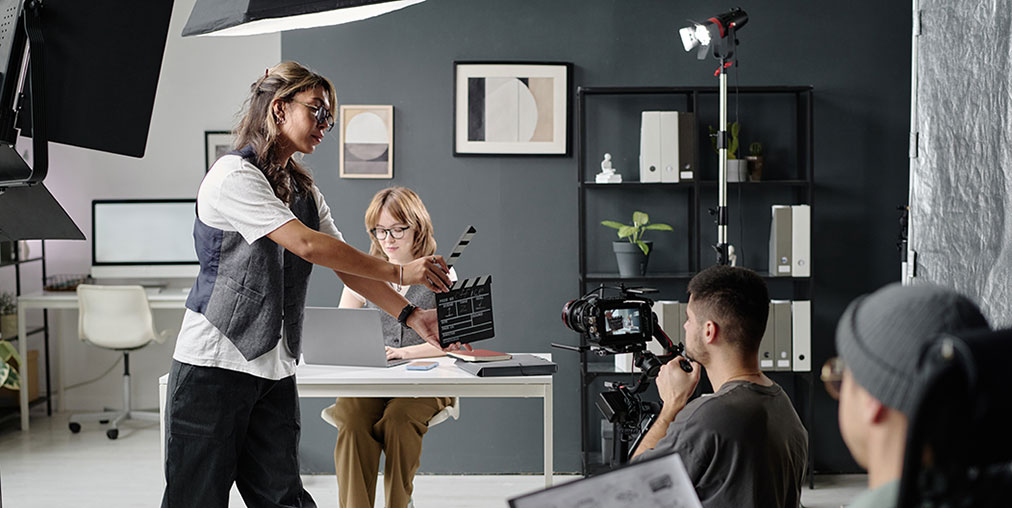
Image source: centralcasting.com
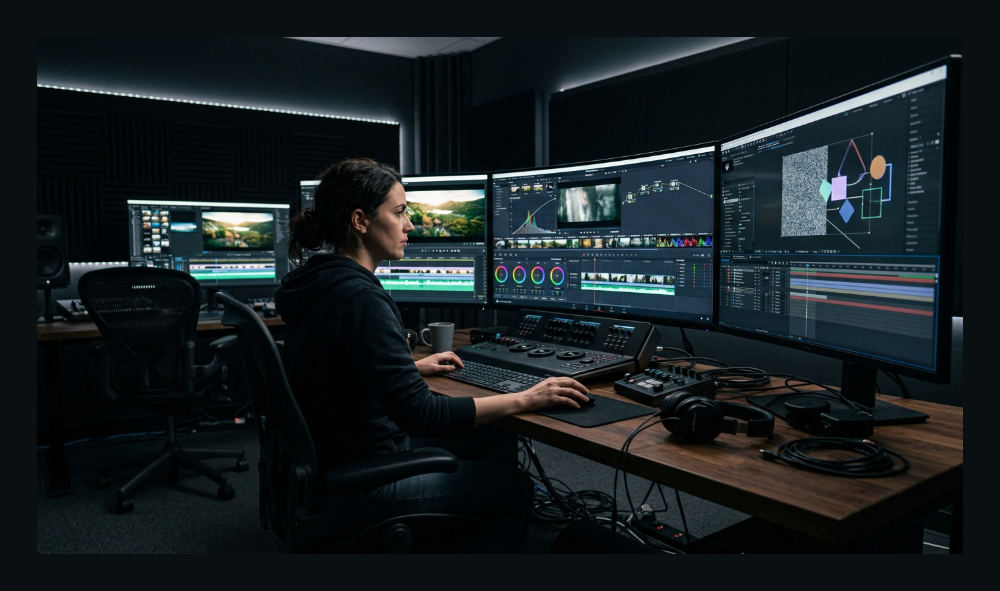
The visual refinement stage is where a project truly gains its cinematic polish. Color Grading is the process of altering and enhancing the color of a motion picture, which ensures visual consistency across different shots and lighting setups. Beyond simple correction, this step allows a brand to match the final look to their specific color palette and emotional tone (whether that is a warm, inviting glow for a restaurant or a sharp, cool aesthetic for a law firm).
To further elevate the message, teams often integrate Motion Graphics. These are digital footage or animation pieces that create the illusion of motion or rotation, making them ideal for explaining complex branding concepts or legal data that live footage cannot capture alone. By blending these visual effects with the raw assets, the production team creates a cohesive world that guides the viewer’s eye. This stage requires high technical precision to ensure that every digital element looks integrated rather than tacked on.
8. Layer sound design and music to drive the emotional resonance of the video.
Sound is often described as fifty percent of the viewing experience. We believe it is even more. During this phase, technicians clean up location audio and add Foley, which is the reproduction of everyday sound effects added in post-production to create a realistic, immersive environment. Selecting or composing a score that complements the brand’s message without overpowering the dialogue is essential for maintaining professional balance.
The final audio mix must be executed with diverse hardware in mind, ensuring the levels are optimized for both small mobile speakers and high-end TV systems. Proper administrative organization helps the production stay on track while the creative team focuses on these technical details. The goal is to create an auditory landscape that supports the visual narrative, ensuring the brand’s call to action is heard clearly and resonates with the target audience.
9. Optimize the final delivery for specific marketing and distribution channels.

The final step in the workflow is the technical handoff. A single master file is rarely enough in 2026; instead, the team must export multiple versions formatted for social media, web, and broadcast. As noted by the NYFA, this involves creating various aspect ratios and resolutions to meet the requirements of different mobile and desktop platforms.
To maximize SEO and accessibility, all metadata and closed captioning must be embedded before the final files are sent to the marketing department. This stage marks the end of the production lifecycle, moving the project from the editing suite to the distribution phase. Proper organization here ensures the marketing team can launch the campaign across all channels simultaneously without needing to return for technical adjustments. A clean handoff signifies a successful transition from a creative concept to a high-impact digital asset ready for public consumption.
The Logic of Visual Revitalization in San Diego
In a fast-moving market like San Diego, businesses often find themselves with a library of high-quality assets that no longer reflect their current messaging. Beyond embarking on entirely new shoots, professional post-production techniques can be used for the revitalization of existing footage. This allows brands to maximize past investments by re-editing older material with a fresh perspective.
For instance, integrating motion graphics into legacy assets can provide a modern, updated look without the high cost of a full-scale new production. This approach is particularly effective for businesses that have undergone a minor rebrand or wish to repurpose successful campaigns for new social media platforms. By applying new color grading or updated sound design, an older video can be made to align with current 2026 brand standards.
Pretzel Logic prioritizes efficiency by identifying which elements of a previous shoot still hold value. We treat video production as a long-term asset rather than a one-time expense. When the pre-production phase of these revitalization projects is handled with discipline, the result is a cost-effective way to stay relevant in a competitive landscape while maintaining the "Twist" of visionary storytelling.
Bridging the Gap: From Planning to Editing
The success of any video project depends on a tight handoff between the production crew and the post-production house. Any breakdown in communication during this transition can lead to data loss or creative misalignment. To prevent this, strict adherence to the initial script breakdown is required. This document ensures that the editors have exactly what they need to build a high-impact final cut without searching through hours of irrelevant footage.
Defining success metrics during the planning stage is equally vital for measuring the eventual ROI of the final edited video. Whether the goal is lead generation for a law firm or increased reservations for a restaurant, these objectives inform how the editor prioritizes certain shots. Our "logical collaborator" framework ensures every creative risk taken during filming is backed by a technical plan that makes sense in the edit suite.
The "Fix it in Prep" rule remains the most effective way to avoid "editing room nightmares." By catching narrative gaps during the storyboarding stage, you ensure the production phase captures all necessary story beats. This disciplined approach allows the post-production team to focus on enhancing the story rather than trying to rescue it, leading to a more polished and effective final product.
Frequently asked questions
What is the difference between pre-production and post-production?
Pre-production is the planning and preparation stage involving casting, scheduling, and script breakdowns. Post-production is the final stage where footage is edited, sound is mixed, and VFX are added. Pre-production formally ends when content starts being produced, while post-production begins once filming is complete.
What are the stages of video production?
The process typically includes development, pre-production, principal photography, and post-production. It also involves distribution and marketing as the final step in the lifecycle. Each stage must follow a logical sequence to maintain budget control and ensure the creative vision aligns with the final output.
What is the role of the Unit Production Manager (UPM) in budget control?
The UPM is in charge of budget management and production coordination. They oversee the daily call sheets and ensure the shooting schedule remains financially viable throughout the project. They act as the bridge between the creative vision and the financial reality of the project, preventing cost overruns.
Can you move back to the production phase if you find a gap during post-production?
While possible, reshoots are the most expensive way to fix a film and usually signify a failure in pre-production planning. The goal of a logical workflow is to catch these gaps during the storyboarding stage. Professional planning ensures all necessary story beats were captured during the initial principal photography phase.