Last updated November 22, 2026
Graphics and communications is the strategic blend of visual media, digital design, and storytelling used to deliver complex brand messages. The field currently covers video production, motion graphics, and multimedia strategies designed to grab attention and provide clarity across digital platforms for corporate audiences.
Key takeaways
- Motion graphics simplify abstract data. They turn complex workflows into easy-to-follow visual guides for stakeholders.
- AAVTC sets the benchmark. This career cluster defines high-end standards for multimedia production and visual arts.
- Professional tools are essential. Modern high-end post-production relies on industry-leading software like Adobe Premiere Pro for fluid multi-track integration.
- Workflow drives success. Effective visual communication begins with concept development and meticulous scripting.
- AI revitalizes legacy content. Modern production tools allow brands to transform older footage into modern commercial assets.
| Feature | Benefit for Brands |
|---|---|
| Motion Graphics | Increases data retention by simplifying complex concepts |
| AAVTC Standards | Ensures professional technical and creative benchmarks |
| Adobe Premiere Pro | Delivers high-end, broadcast-quality video editing |
| Visual Storytelling | Builds emotional connection and brand authenticity |
| Logical Workflow | Reduces production costs and eliminates scope creep |
Understanding the Role of Graphics and Communications in 2026
Modern graphic communications have evolved from old-school print arts into a total digital business strategy. While the field once lived on paper, it now dictates how a brand breathes on a screen. Insiders often call this a "hidden industry." It is baked so deeply into music videos, commercials, and digital photography that most people miss the technical artistry powering the final product.
Educational programs have swapped old labels like "printing" for The Importance of Graphic Communications to match the needs of digital natives. Visual media is no longer a sidecar to the business. It is the primary language. As a full-service video production company specializing in visual storytelling and motion graphics, we work at this exact crossroads.
Effective communication requires an eye for art and a handle on technical production. If we are helping a San Diego law firm explain a dense case or a national brand launch a new product, the priority is clarity. In a noisy market, a message needs a soul, not just a high pixel count. By pairing logical workflows with high-level creative concepts, we make sure every frame moves the needle on your business goals.
1. What is the Arts AV Tech and Communications cluster?
The Arts, A/V Technology & Communications (AAVTC) cluster is a professional field focused on the design, production, and distribution of multimedia content. It covers the visual arts and video production, serving as a national framework for career paths and quality in film, broadcasting, and design. This cluster ensures that digital media production stays aligned with professional standards.
This framework keeps production houses honest. It ensures high standards for brand animation and multi-track editing. We use these benchmarks so every production hits high expectations for both technical grit and creative delivery. Agencies often emphasize professional development in the latest tools to ensure their corporate video strategy remains competitive.
- Visual Arts. Focuses on design and branding using professional creative suites.
- A/V Technology. Concentrates on the technical aspects of sound, lighting, and professional gear.
- Communications. Prioritizes strategic messaging through scripting and digital media.
- Distribution. Managing the final output across social, broadcast, and internal platforms.
By following these professional AAVTC standards, we give clients the certainty that their projects sit on a foundation of industry excellence.
2. Do you work with brands across the country?
Yes. Pretzel Logic serves corporate brands and marketing agencies across the United States from our San Diego studio. Modern production workflows utilize cloud-based review systems and remote collaboration tools to ensure smooth project delivery regardless of location. We handle the full project lifecycle, from the first spark of a concept to the final screen.
Digital collaboration tools allow for real-time feedback and remote production management. We bridge the gap between our edit suite and your office using logical workflows that keep the creative vision intact for distributed teams. It doesn’t matter if you are a local San Diego startup or a national real estate agency. Our production scale shifts to fit. We bring your vision to life with precision for clients regardless of their location.
3. Implementing the Logical Workflow for Visual Media
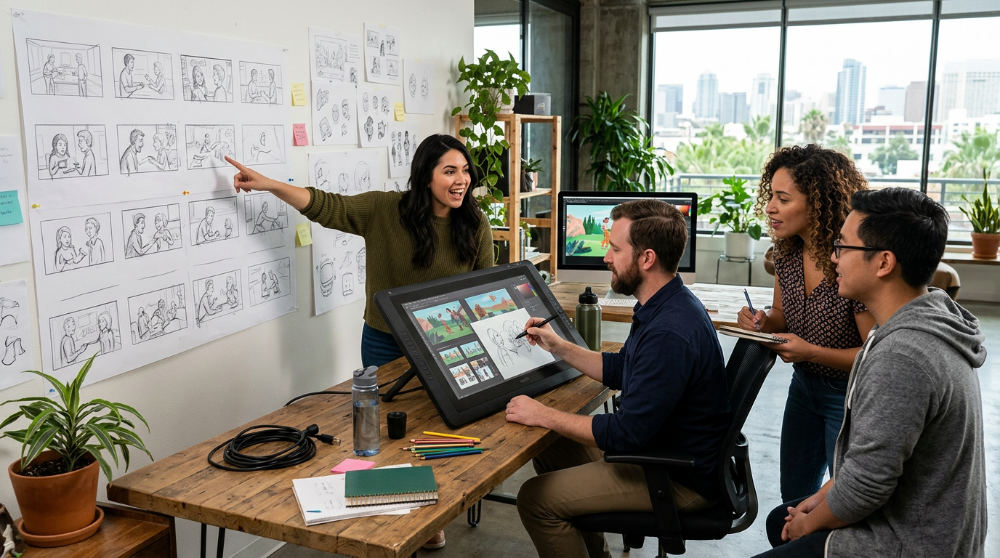
Practical Rule: Never start a video without a finalized script; a logical workflow is the only way to ensure your ‘twisted’ creative vision stays on brand and on budget.
A winning campaign is never a fluke. It results from disciplined pre-production. Every project starts with concept development and detailed scripting to put the "why" of the brand front and center. This stage balances rigid technical needs with the storytelling that makes a brand stand out. Without a script, beautiful visuals lose their way. The message gets lost in the noise.
Storyboarding acts as the visual map. It lets stakeholders see the story arc before cameras roll. This kills the need for expensive revisions during editing. At this point, we decide where we will use Motion Graphics, which is the integration of animation and design to capture audience attention and explain complex ideas. This technique allows us to break down complicated data into digestible parts.
For restaurant clients, we often emphasize visual excellence in every frame. High-end productions often incorporate specialized food styling and photography to ensure the culinary elements match the production value of the overall campaign. By treating these aesthetics with rigor, we build a cohesive brand experience that resonates with hungry consumers.
4. How to Build a Powerful Visual Communication Strategy
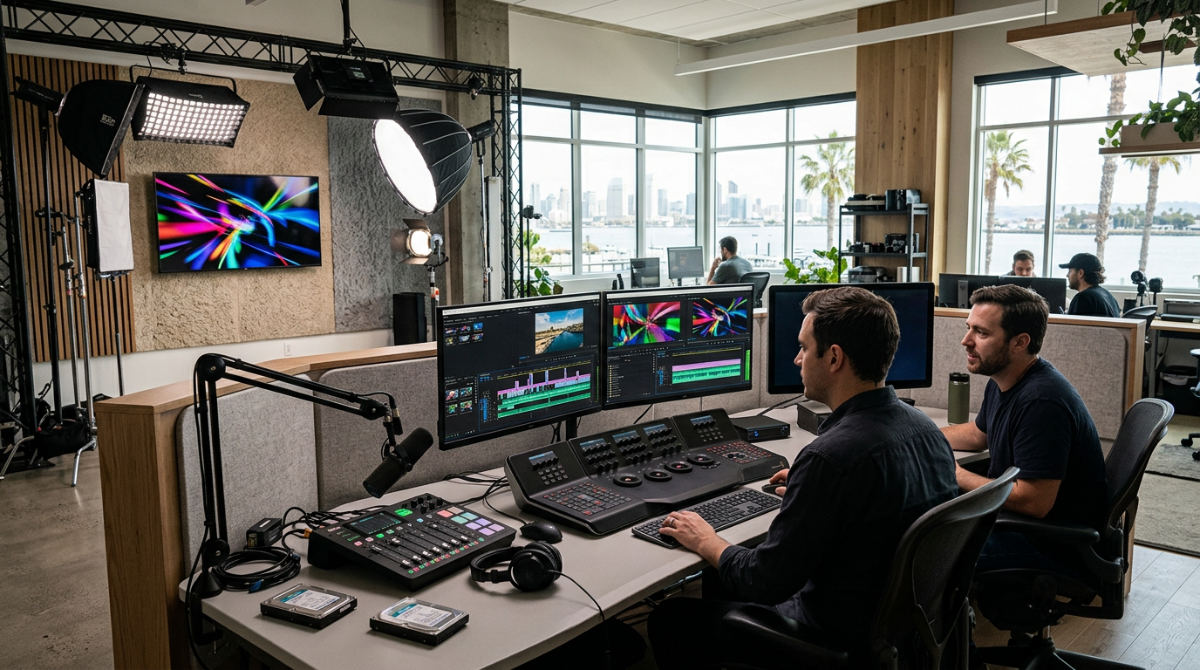
A powerful strategy begins with defining specific audience objectives and choosing the right multimedia communications channels to reach them. Strategy starts by finding the core "why" of the company. Consumers want an authentic story they can feel. Once that story is pinned down, you need the right tools. Industry-standard software like Adobe Premiere Pro allows for high-end editing to create smooth transitions between live-action and brand animation.
To stretch a budget, consider AI video tools. We use them to refresh existing footage. This gives old assets a modern edge without a full re-shoot. We would choose this route every time for clients with deep archives of high-quality legacy content that just needs a modern "twist" to stay in the game. Using these tools allows for rapid prototyping and iteration in a competitive digital landscape.
- Scalable Motion. Use graphics that stay sharp on everything from a phone to an 8K display.
- Straight Line Graphics. Turn messy corporate data into clean visual branding guides that are easy to follow.
- Authentic Voice. Make sure technical tricks always serve the brand’s unique personality.
- Platform Specificity. Tailor the aspect ratio and pacing for LinkedIn, YouTube, or internal screens.
5. How Motion Graphics improve Corporate Communication
Motion graphics help corporate communication by turning complex workflows and data into engaging, simple motion guides. Attention is the currency of the modern market. These animations turn abstract corporate talk into visual stories that people actually watch. We can visualize the invisible (such as software architecture or global logistics chains) that are impossible to film with traditional cameras.
Creative animation lowers the cognitive load on the audience. Rather than wading through a 20-page whitepaper, a stakeholder can watch a two-minute video using Straight Line Graphics to get the same info. Viewers retain data much better this way. Incorporating motion into a corporate strategy significantly increases engagement compared to flat text.
Motion is more than "eye candy." It is a tool for clarity. In many industries, animation bridges the gap between technical operations and public perception. By turning data into a story, the message sticks. We integrate these elements into a comprehensive digital media production plan for every client.
Common Mistakes in Graphics and Communications
Even big-budget campaigns fail when they hit common traps. The biggest mistake is over-complicating the design. If a video has too many moving parts, the viewer’s brain stops listening. Another error is neglecting sound. A high-end visual with thin audio always feels amateur. Brands often ignore their own guidelines. This creates a disjointed experience that confuses the customer.
Another frequent error is failing to optimize for different platforms. A graphic that looks great on a desktop monitor might be unreadable on a mobile device. Always test your visual storytelling across multiple screens to ensure the message remains clear. Avoiding these pitfalls ensures your multimedia communications efforts yield a much higher return on investment.
If you are ready to ditch the ordinary and build a campaign that resonates, we can help. Start the process by filling out the form at https://pretzellogicproductions.com/contact-us/.
CEOs and marketing directors can bring their vision to life by partnering with our creative team. Whether you are local to Southern California or across the country, we are ready to add a "twist" to your brand story.
FAQ
What are the types of graphic communications?
The main types include corporate branding, motion graphics, video production, digital photography, and user interface (UI) design. Each type serves to translate business data into visual stories.
Why is visual storytelling important for brands?
Visual storytelling builds an emotional connection with the audience. It makes complex information memorable and helps a brand stand out in a crowded digital marketplace.
How does motion graphics differ from traditional animation?
Motion graphics focus on giving movement to graphic design elements like shapes, text, and logos. Traditional animation usually focuses on character-driven narratives and cinematic storytelling.
What tools are standard for high-end video editing?
Adobe Premiere Pro and After Effects are the industry standards for professional multi-track editing and motion graphics, providing the flexibility needed for broadcast-quality content.