
Last updated September 15, 2026
Arts, audio/video technology & communications (AAVTC) is a massive career cluster centered on designing, producing, and performing multimedia content. It integrates technical skills like telecommunications and A/V tech with creative fields like journalism. The goal? Delivering complex storytelling through traditional broadcast, digital media, and emerging technologies like augmented reality.
Key takeaways
- The AAVTC cluster is categorized into six primary pathways. These include A/V Tech, Journalism, Performing Arts, Printing, Telecommunications, and Visual Arts.
- Modern digital media evolution has integrated Augmented Reality (AR) and Motion Graphics. These tools are now standard in commercial workflows to explain complex data.
- Industry-standard certifications serve as a baseline. Credentials like the Adobe Certified Associate provide the foundational technical knowledge for media production.
- High-end production requires logical collaboration. Success depends on a transition from basic technical skill to structured project management and creative vision.
- San Diego maintains a presence in the production landscape. The region serves as a notable location for movie filming and corporate video within the AAVTC sector.
Understanding the AAVTC Landscape: Where Logic Meets Imagination
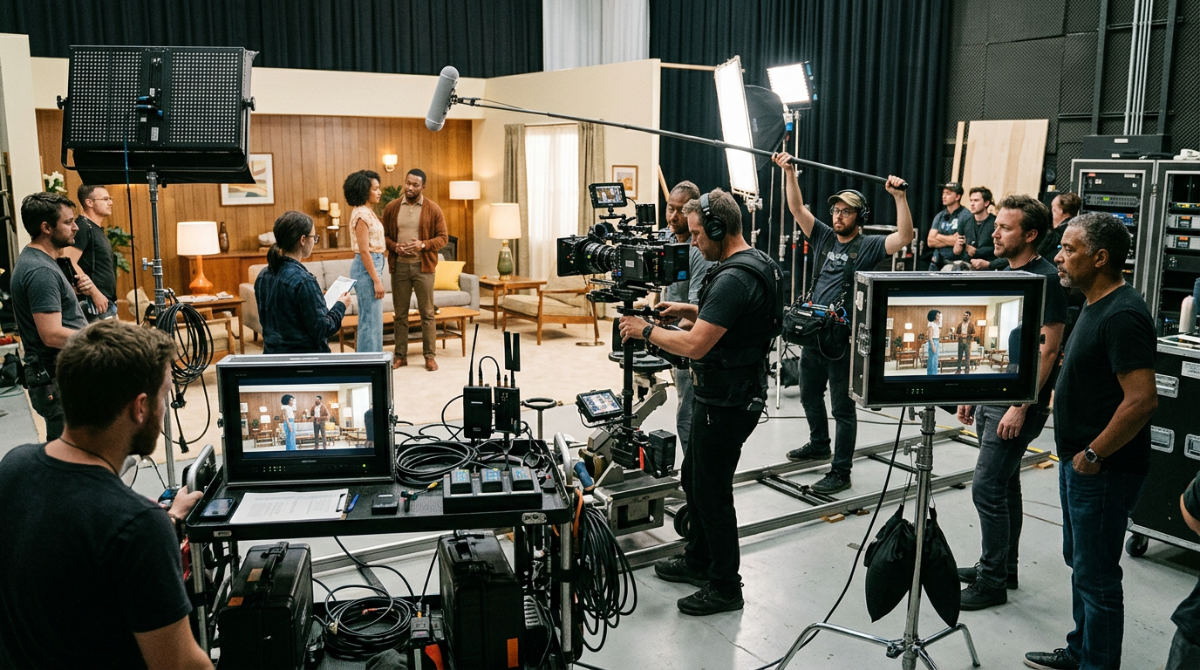
The AAVTC career cluster encompasses the full lifecycle of content creation, from initial scripting to global distribution. It is a field defined by its breadth. You design, produce, exhibit, perform, write, and publish multimedia content according to Sites. Newcomers often view this sector as purely artistic. They are wrong. Professional success requires balancing creative flair with the technical precision of audio and video technology and film.
National standards, such as those defined by Advance CTE, emphasize the convergence of technical installation and creative performance. You can’t have a successful broadcast without both a compelling script and a functional transmitter. At Pretzel Logic, we view the cluster as a bridge between abstract ideas and the concrete execution required for high-stakes commercial environments. In our experience, the most impactful visual stories are those where the "logic" of the production schedule supports the "art" of the performance.
This sector isn’t just about holding a camera. It’s about managing the ecosystem where that camera operates. You must understand the physics of light and sound just as deeply as you understand the emotional beats of a narrative. This intersection is where professional-grade media separates itself from amateur hobbyism.
The Six Pathways of Modern Digital Media Evolution
Modern digital media evolution has expanded the traditional boundaries of the AAVTC cluster into six distinct pathways. Each pathway serves a specific role in how information is packaged and delivered to a modern audience.
- Audio and Video Technology and Film (A/V Tech): This pathway focuses on the physical creation and sale of media equipment and content production. It involves the hands-on work of operating cameras, mixing boards, and lighting rigs.
- Journalism and Broadcasting: This remains the bedrock for gathering and reporting news. Today, it utilizes real-time digital streaming tools and social platforms to reach audiences instantly.
- Telecommunications: This serves as the technical infrastructure of the cluster. It involves the installation and maintenance of high-definition broadcast equipment and the complex networks that move data across the globe.
- Visual Arts: This provides the aesthetic component, covering everything from graphic design to illustration. It’s the pathway responsible for the "look and feel" of a brand.
- Performing Arts: This pathway focuses on the talent-driven components. It includes the actors, dancers, and musicians who breathe life into static media through performance.
- Printing Technology: This has evolved from traditional paper to sophisticated 3D and digital print environments. It is essential for physical brand presence and specialized manufacturing.
These pathways no longer exist in silos. A single commercial production might require a visual artist to design the assets, a telecommunications expert to set up the live stream, and an A/V technician to capture the footage. As technology advances, the lines between these roles continue to blur. Practitioners must be versatile. You need to understand multiple disciplines to survive.
Professional Standards vs. Academic Theory
Professional standards in AAVTC demand a transition from software mastery to high-level problem solving. Every creative choice must serve a measurable business objective. While a student might learn how to edit a video in a classroom, a professional editor must know how to edit that same video for multiple platforms while maintaining brand consistency. This shift from "doing the task" to "solving the problem" defines professional growth. To see how these professional standards translate into business results, you can explore our work as a corporate video production company partner.
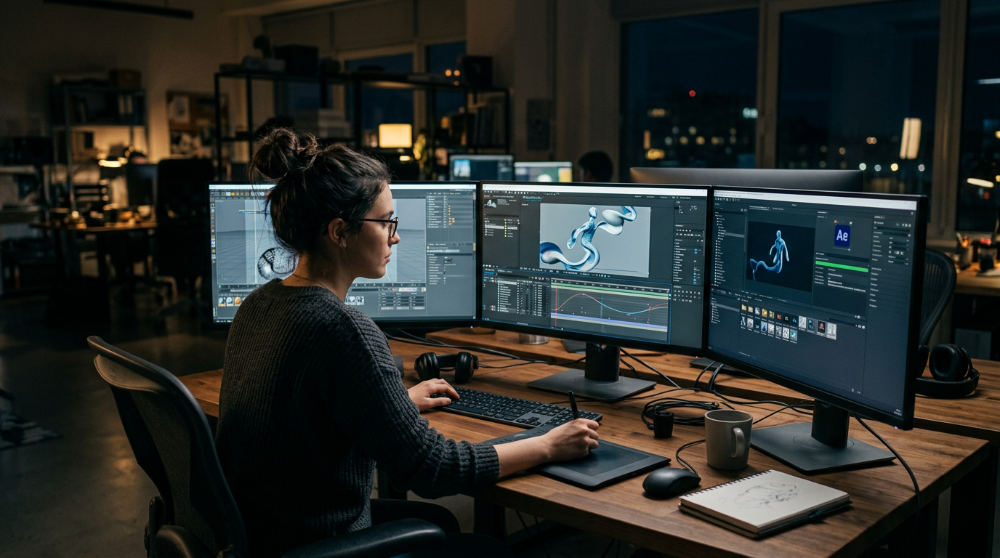
Academic programs often focus on the Adobe Certified Associate standard as a benchmark for competency. We believe professional mastery involves high-level problem solving that goes way beyond software knowledge. Knowing how to use Photoshop or Premiere Pro is essential, but the real world demands the ability to apply those tools to specific business objectives. In a professional environment, technical skill is assumed. The value lies in how you use that skill to execute a vision.
Motion Graphics is a critical component of digital media evolution used to explain complex ideas visually. It turns abstract data into digestible imagery for modern audiences. Modern Design & Digital Arts sub-clusters now integrate Augmented Reality (AR) to create immersive consumer experiences. This bridges the gap between the physical and digital worlds.
| Feature | Academic Theory / Certification | Professional Commercial Production |
|---|---|---|
| Primary Goal | Software proficiency | Audience engagement & ROI |
| Workflow | Linear project completion | Iterative logical collaboration |
| Standard | Adobe Certified Associate | Industry-specific KPIs |
| Asset Use | Single-medium focus | Multi-platform integration (AR/VR) |
The Architecture of a Professional Media Workflow
At Pretzel Logic, we utilize the "Pretzel Logic" Twist. This is a workflow where logic-driven systems ensure creative projects stay within budget and on schedule. The transition from academic AAVTC concepts to professional reality begins with deep Pre-Production Planning, which includes detailed scripting and storyboarding. Without this logical foundation, the creative vision often drifts. That leads to expensive delays during filming.
Effective marketing video production steps require a synthesis of Journalism’s research, Visual Arts’ aesthetics, and Telecommunications’ delivery. We don’t just hit record. We build a blueprint. This involves aligning the director’s vision with the editor’s technical constraints (a process we call "logical collaboration"). By establishing these boundaries early, we allow creativity to flourish within a sustainable framework.
Consider a scenario where a client needs a high-volume campaign. To manage the complex communication and asset delivery, creative agencies might utilize InnoVision Marketing Group to ensure that media assets and production workflows are tracked accurately. In our own studio, we use the following pre-production checklist to bridge the gap between concept and screen:
- Concept Development: Defining the core message and target audience.
- Scripting & Copywriting: Crafting the narrative arc and verbal hooks.
- Storyboarding: Mapping out every shot to ensure technical feasibility.
- Budget Planning: Aligning the creative aspirations with the financial reality.
- Technical Scouting: Selecting locations that meet the acoustic and lighting needs of the project.
This structured approach prevents the "creative spiral" where projects become over-ambitious and under-delivered. We inject logic into the earliest stages of the process. This ensures the final product is both beautiful and functional.
San Diego as a Hub for High-End Production
San Diego provides a variety of settings for professional video production. Diverse geography allows creators to access urban, coastal, or desert environments. This geographical versatility attracts brands seeking high production value without the logistical hurdles of multi-state travel. Beyond the scenery, the region features various tech and biotech firms that utilize media partners to translate complex data into visual stories. This demand for clear communication has contributed to the growth of San Diego film production and corporate storytelling.
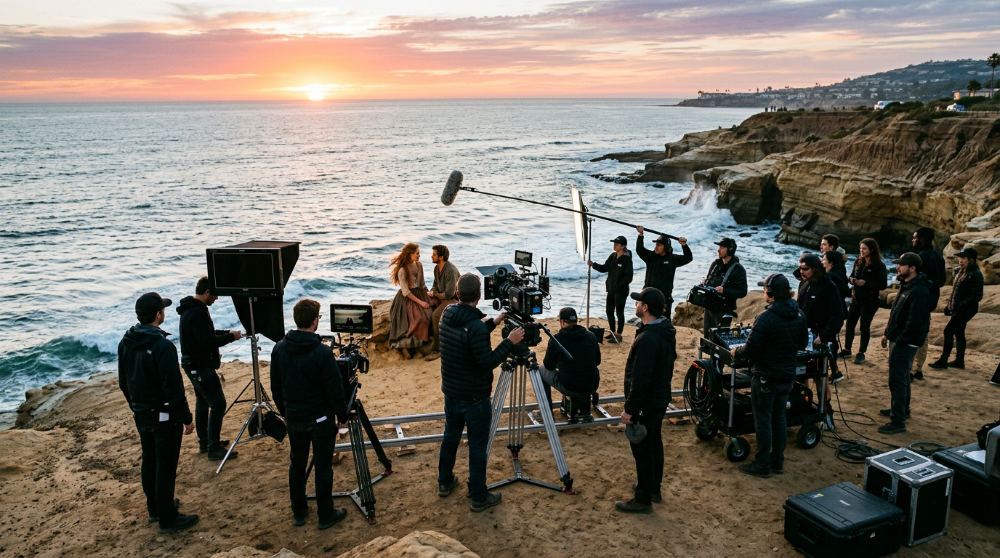
The local ecosystem in San Diego provides a useful landscape for both corporate films and high-budget movie filming. Diverse locations range from the urban density of Downtown to the rugged terrain of East County. San Diego offers a versatile backdrop that many creators find advantageous.
San Diego is home to a concentration of biotech, defense, and tech firms. These industries demand a level of sophistication in their media that traditional A/V training often overlooks. According to Southside ISD Career & Technical Education, industry certifications are the floor. San Diego’s Animation & Motion Graphics professionals help explain high-level scientific concepts through visual storytelling.
We often engage in Post-Production Revitalization, a service where we take existing client footage and elevate it to professional standards. Often, lower-tier A/V technicians create these initial assets. We fix them. This might involve color grading to fix poor lighting or adding professional sound editing to clean up muddy audio. In a market as competitive as San Diego, the difference between "fine" and "professional" can be the difference between a closed deal and a missed opportunity.
When the Creative Approach Hits a Wall
The AAVTC cluster can fail when technical precision is prioritized over the narrative. This results in "empty" visual excellence. You may have a 4K resolution image with perfect lighting, but if the story doesn’t connect with the audience, the production has failed its primary mission. Relying solely on certifications without practical, logical workflows often leads to budget overruns in complex commercial projects.
Misunderstanding the convergence of pathways can lead to fractured productions. The audio team and visual team fall out of sync. This usually happens when there is no central authority to bridge the gap between departments. For example, a visual effects team might create an incredible animation. However, if they haven’t consulted with the audio engineer, the sound design may not fit the pacing of the visuals. The result is a jarring user experience.
Transitioning from a technician to a creative visionary requires more than software knowledge. You need high-level strategic thinking. You must be able to see how a single piece of content fits into a larger marketing machine. If you find your creative projects are consistently hitting a wall, it is likely due to a lack of pre-production logic rather than a lack of artistic talent. Moving beyond these barriers requires a shift in mindset. View every creative choice as a logical step toward a specific goal.
Executing Your Vision within the AAVTC Framework
Navigating the arts, audio/video technology & communications cluster requires both a mastery of craft and a disciplined approach to project logic. Whether you are developing a brand story or a complex commercial, the goal is always to move the audience while maintaining production integrity. The technical evolution of this field, from high-definition broadcast to augmented reality, only serves to provide more tools for the modern storyteller.
The future of this field lies in the hands of those who can balance technical evolution with human-centric narratives. Look beyond the basic definitions of AAVTC. See the potential for truly innovative storytelling that stands the test of time. By merging the precision of the technician with the soul of the artist, you can create media that doesn’t just fill a screen but changes a perspective.
If you are ready to move your project from the planning stages to a professional finish, our team at Pretzel Logic is here to help. You can find us at 5961 Kearny Villa Rd, San Diego, CA 92123, where we combine logical workflows with creative vision to produce content with a twist. We look forward to helping you contact us to bring your vision to life.
Frequently Asked Questions (FAQ)
Q: What is the arts, audio/video technology & communications career cluster? A: This career cluster includes pathways focused on the creation, production, and distribution of multimedia content, including visual arts, film, journalism, and telecommunications.
Q: What are the main pathways in the AAVTC cluster? A: The cluster is divided into six pathways: A/V Technology and Film, Journalism and Broadcasting, Telecommunications, Visual Arts, Performing Arts, and Printing Technology.
Q: What kind of jobs are in the arts, A/V tech, and communications field? A: Careers range from technical roles like sound engineers and telecommunications technicians to creative roles like graphic designers, film directors, and broadcast journalists.
Q: Is the AAVTC cluster growing? A: Yes, particularly in sectors related to digital media, augmented reality (AR), and professional video production for corporate and marketing purposes.
Q: What certifications are useful in the AAVTC cluster? A: Common certifications include the Adobe Certified Associate (ACA) and industry-specific credentials in broadcast technology or sound engineering.