
Last updated November 15, 2026
A post production schedule template is a chronological roadmap that outlines the editing, sound, and color milestones required to finalize a video. This document ensures all stakeholders align on deadlines. From initial footage ingest to final quality control and delivery, it prevents costly delays.
Key takeaways
- Commercial post-production cycles typically span several weeks to ensure quality.
- The ‘picture lock’ milestone is the critical pivot point where visual edits are finalized.
- Integrated AI workflows can significantly reduce the time required for asset revitalization.
- Dedicated review buffers are essential for successful agency-level collaboration.
- Sound and color should only begin once the narrative sequence is strictly locked.
The Logic Behind a Professional Post Production Workflow

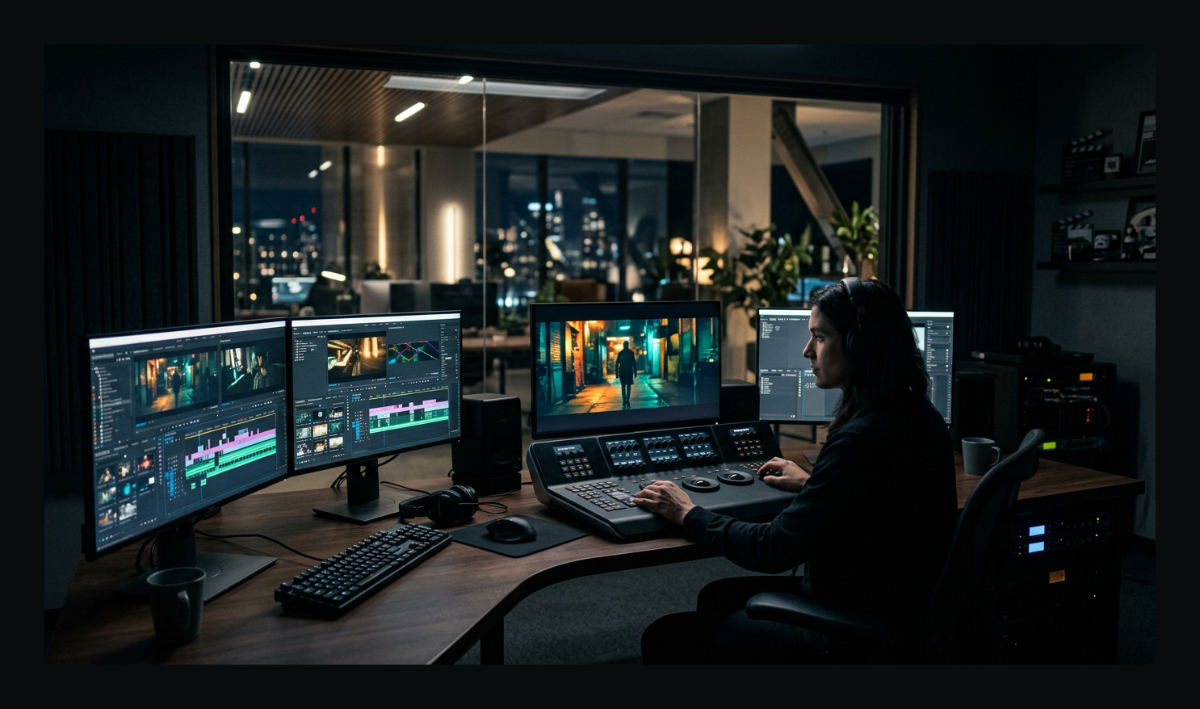
Post-Production is the visionary final stage of video production where editing, sound, and color transform raw captures into a cohesive story. At Pretzel Logic Productions, we do not just assemble clips. We build experiences. Our process relies on high-level collaboration between logical workflows and visionary creative concepts. That balance between rigid technical timelines and creative twists makes our branding videos stand out in a crowded digital marketplace.
The Golden Rule: Never begin color grading or final sound mixing until you have achieved ‘Picture Lock’. Altering the edit after these stages causes a cascade of technical errors.
First, we tackle logging and ingest. Professional editors utilize advanced non-linear editing software to organize media. A clean handoff from the set to the suite is vital. Organization is the backbone of creativity. If project files are a mess, the timeline will be too. We manage branding video production expectations by using a schedule that accounts for every stakeholder. Everyone needs to know exactly when their input is required.
Our team coordinates these workflows so the creative vision survives the technical rigors of high-end delivery. We aim to maintain the integrity of the story through every technical hurdle. It does not matter if we are working on local San Diego projects or massive nationwide campaigns. By following a structured post production video editing strategies guide, we ensure the logic of the edit supports the emotion of the brand.
How to Create a Post Production Schedule?
To create a schedule, start by identifying your hard delivery date. Work backward through the six core phases: Ingest, Rough Cut, Fine Cut, Picture Lock, Finishing (Color/Sound), and Delivery. A professional timeline for a branding spot involves several weeks of active work. Backwards-planning prevents the "crunch" that leads to errors in the final hours.
Include specific columns for ‘Phase’, ‘Assigned Lead’, ‘Review Window’, and ‘Target Deadline’. We recommend a structured breakdown:
- Organization. Sorting footage, syncing audio, and preparing the project file.
- Assembly and Rough Cut. Building the narrative structure and selecting the best takes.
- Client Reviews. Gathering feedback and aligning on the creative direction.
- Fine Cut and Lock. Polishing transitions and securing the final visual sequence.
- Color & Sound. Enhancing the visual mood and perfecting the audio mix.
- QC and Export. Final quality checks and rendering for various platforms.
A structured approach lets our team focus on the unique creative elements rather than administrative firefighting. By defining these boundaries early, you give the creative team freedom to experiment within a safe, logical framework.
How Long Does Post Production Take for a 30-Second Commercial?
Post-production for a 30-second commercial typically spans a period of several weeks. Much depends on the volume of Motion Graphics and visual effects required. While the runtime is short, the density of information is high. Pixel-perfect execution makes these projects time-intensive. A TV Commercial is a specific high-stakes video format with rigorous requirements. It often takes longer than social media content due to network specifications.
Agency Tip: Build in a buffer for high-end branding spots to allow for experimental motion graphics that elevate the final product.
High-stakes TV ads require extra time for closed captioning compliance and technical Quality Control checks. Your realistic production shooting schedule must lead directly into a post-plan that respects broadcast-specific hurdles. For marketing agencies, building in a buffer between internal reviews and client presentations is vital. It allows for internal alignment before the client sees the work.
| Phase | Estimated Time (Weeks) | Key Consideration |
|---|---|---|
| Initial Assembly | 1 – 2 | Establishing the story arc |
| Revisions & Lock | 1 – 2 | Client and stakeholder alignment |
| Color & Sound | 1 | Final aesthetic and audio polish |
| Technical QC | 1 | Legal and network compliance |
Where Can I Find a Post Production Schedule Template?
Production teams often utilize standardized templates designed to scale from simple social clips to complex branding video production. These scheduling frameworks integrate AI Video Production milestones. We use these modern tools to generate or enhance video content during the post phase. Machine learning lets us revitalize existing footage or enhance assets more efficiently than manual methods. If you are looking to stretch a budget, this is the way.
The best choice is a living document that tracks the transition from the rough cut to Sound Editing. We define this as the procedure of ensuring audio clarity, mixing music, and adding sound effects. Modern video editing services prioritize early integration of placeholder graphics. You need to know if the pacing works before expensive final rendering starts. This prevents the need for drastic changes during the finishing stage. That is where Color Grading occurs to adjust colors and create a specific brand aesthetic.
Even when working with a specialized TV commercial production company, having your own template is smart. It ensures you understand the milestones for legal and network delivery. It empowers you to ask the right questions and keep the project on track. This makes sure the final product matches the initial vision established during the pre-production planning template phase.
Common Scheduling Risks and When to Pivot
The most frequent failure occurs when color grading begins before a definitive picture lock. Don’t do it. It leads to expensive rework. If a project requires extensive motion graphics, the schedule must account for rendering and revisions. These elements are computationally heavy. They often require several iterations to get the timing exactly right.
Pretzel Logic is based in San Diego, but we serve clients nationwide. Remote teams must account for file transfer times in their daily schedules. Moving terabytes of 4K or 8K footage across the country requires high-speed infrastructure. Effective public relations often depends on timely video delivery. We coordinate with marketing teams to ensure assets align with press launches and campaign rollouts.
A pre-production planning template is the only way to avoid the ‘fix it in post’ mentality. Integrated AI workflows can notably reduce time spent on repetitive tasks. This provides more flexibility. If you find your timeline slipping, the best pivot is to prioritize the narrative lock. Do not rush into color or sound until the story is solid. If you are managing complex projects, specialized software platforms can help track how schedule shifts impact your bottom line.
If you are ready to bring your vision to life, fill out the form at https://pretzellogicproductions.com/contact-us/ to build a custom schedule tailored to your brand’s needs. We look forward to discussing how we can add a creative twist to your next campaign.
FAQ
What is the most important milestone in a post-production schedule? Picture Lock is the most critical milestone. It signifies that the visual edit is final, allowing the sound and color teams to work without the risk of the timeline changing.
How do you account for client revisions? Always build in specific review windows (usually 3 to 5 business days) for each major cut. This prevents feedback loops from delaying the technical finishing stages.
Can AI tools speed up the post-production schedule? Yes, integrated AI workflows can reduce time spent on tasks like transcription, basic color matching, and asset organization by up to 40%.
Why do commercials take longer than social media videos? Commercials require higher technical standards for broadcast, including legal clearances, specific audio levels for TV, and rigorous Quality Control checks.
What happens if we miss the Picture Lock date? Missing this date usually results in a "domino effect" where sound designers and colorists must restart their work, often leading to increased costs and delayed delivery.