Last updated November 21, 2026
Video production and post production are the final stages of the filmmaking process. Production involves the physical filming of assets on location or in-studio. Post production encompasses the technical editing, color grading, and sound design required to transform raw footage into a polished, broadcast-ready visual narrative. It is the finish line.
Key takeaways
- Pre-production planning is the foundation. A detailed roadmap ensures a smooth transition between the camera and the edit suite.
- Timeline expectations. A standard post production workflow requires a dedicated period of time to achieve a professional commercial result.
- Specialized labor. Services like food styling and AI video production significantly reduce labor during the editing phase by getting the "look" right on set or through intelligent automation.
- Strategic Workflow Integration. Logical workflows allow creative teams to balance high-level narrative "twists" with technical precision.
Understanding the Integrated Flow of Production and Post Production
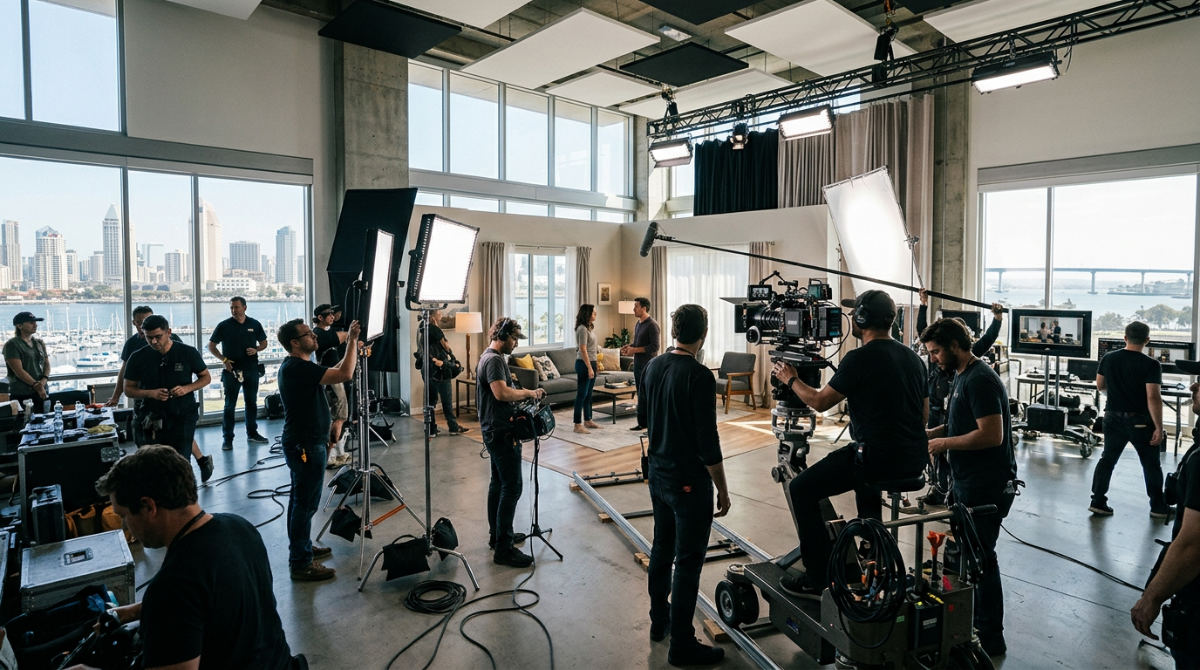
Video production and post production workflows combine physical artistry with digital refinement to create a cohesive final asset. Production serves as the technical execution phase. This is where casting calls and location scouting manifest into captured light and sound. It is the moment the script meets the lens. Post production then takes these raw files to build the story through editing, color correction, and sound engineering. Treating these as a single motion prevents a disconnect between the director’s vision and the editor’s technical delivery.
Studios that offer these services often utilize specific frameworks to bridge these stages. At Pretzel Logic, we focus on an integrated workflow. We ensure every creative "twist" captured on set is supported by the editing team’s capabilities. Without a high-quality production phase, editing becomes a salvage mission. That is a waste of time. When both teams work together, the final product feels intentional rather than assembled from fragments.
We avoid siloed workflows. When the director understands the editor’s needs and the editor respects the director’s vision, the project succeeds. This cooperation allows a San Diego-based team to produce work that competes on a national stage. We provide corporate brands with the same level of polish seen in major broadcast campaigns.
The Three Pillars of Modern Video Development
Pre-production involves mapping scripts and storyboards before a single frame is shot. This planning stage is the most cost-effective way to keep a project on track. It identifies potential hurdles before they become expensive problems on set. A well-executed pre-production video planning guide allows the crew to walk onto a set with a clear shot list. Every minute of production time is spent capturing valuable assets.
During production, specialized services like food styling ensure restaurant products look appetizing on camera. For San Diego’s vibrant culinary scene, this is a critical differentiator. By perfecting a dish’s appearance under hot studio lights, stylists reduce the need for heavy digital retouching later. Post production then acts as the final polish. Raw elements are refined into a cohesive marketing asset. This includes the initial assembly, the fine cut, and the final color pass.
The Maryland Judiciary Video Production Master Contract serves as a prime example of why large-scale entities require consistent standards. According to the 8 Key Factors for Video Post-Production, institutional projects often use master contracts to maintain visual continuity over multiple years. Integrating these pillars allows for branding production that remains authentic to a company’s core identity. It maintains high visual quality across platforms like social media, television, and web.
Comparing Production and Post Production Workflow Elements
Successful marketing video production requires a balance of physical artistry and digital precision. While the production phase focuses on the "what" and "where," post production focuses on the "how" and "why." The technical layers added after filming turn a simple recording into a professional film.
Color grading adjusts footage color and contrast to achieve a consistent look across the project, according to CineSalon. Similarly, sound design involves creating sound effects, music, and dialogue to enhance visuals and establish tone. Audio mixing ensures the clarity and consistency of different audio tracks by balancing levels throughout the project. This makes sure the narrator’s voice isn’t drowned out by the background score.
| Workflow Phase | Key Activities | Primary Goal |
|---|---|---|
| Production | Filming, Casting, Lighting, Sound Recording | Capturing high-quality raw assets |
| Post-Production | Editing, Color Grading, Sound Design, VFX | Refining assets into a finished story |
| Technical Tools | Cameras, Lenses, Mics, Gaffer Gear | NLE Software, AI tools, Mixing Consoles |
| Outcome | Raw Footage & Audio | Broadcast-Ready Master File |
The Evolution of AI Video Production and Technical Workflows
AI Video Production utilizes specialized algorithms and machine learning tools to automate technical tasks like rotoscoping, noise reduction, and color matching. By integrating these tools, teams can streamline the development of commercials and visual assets. This allows editors to focus on the emotional narrative rather than repetitive manual adjustments. This evolution does not replace human creativity. Instead, it supplements traditional high-end production to achieve faster turnaround times and higher visual fidelity across complex digital campaigns.
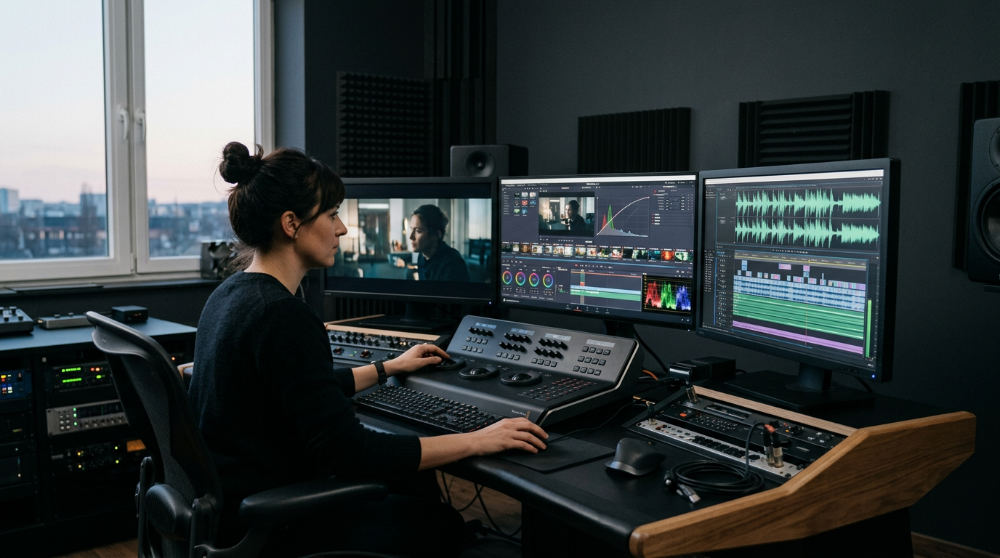
A standard post production workflow begins with footage organization. This is followed by the assembly edit, fine cutting, and visual effects (VFX). As the project moves through these stages, technology becomes more prominent. Innovisionmarketinggroup provides an excellent example of how diverse creative perspectives can influence the final aesthetic of a campaign. Even with advanced tools, the human element remains the most important part of the process.
Strategic use of AI can also assist in footage revitalization. This service focuses on breathing new life into a brand’s legacy assets through intelligent upscaling and re-editing. By taking older, lower-resolution videos and running them through modern AI enhancement tools, a full-service video production company can make ten-year-old footage look like it was shot yesterday. This saves the client the cost of a full re-shoot. We highly recommend this for brands with large archives of 1080p footage that need to look sharp on 4K displays.
Navigating the Limits of High-End Production
High-level tv commercial production offers the most impact for a brand. However, it may be the wrong choice for companies needing high-volume, low-cost social media filler. Not every video requires a forty-person crew and a specialized edit. The most dangerous mistake a brand can make is over-reliance on post production to "fix it in post." This mindset leads to ballooning budgets and lost creative integrity. The editor is forced to spend hours correcting mistakes that could have been fixed in seconds on set.
Failing to conduct thorough pre-production planning can lead to gaps in footage. Even the most skilled editor cannot bridge those gaps. For instance, if a crucial transition shot is missed during the filming of a tv commercial production company project, the editor may be forced to use awkward jump cuts to hide the error. We suggest avoiding siloed workflows where the director and editor do not communicate. This leads to a disjointed final product.
Understanding these risks allows brands to choose a partner who manages the entire lifecycle of the project. By maintaining a single point of contact from the first script meeting to the final file delivery, you ensure the original vision is never diluted. This integrated approach is vital for complex branding production where the voice of the brand must remain consistent across multiple deliverables.
Transforming Concepts into Visual Realities in San Diego
Effective video production and post production require a team that understands both the creative "why" and the technical "how." At Pretzel Logic, we combine San Diego’s vibrant creative energy with logical, repeatable workflows to deliver thought-provoking stories. Every brand has a story worth telling. It takes a specific blend of logic and imagination to make that story stick in the minds of viewers.
The integration of these processes is the key to lasting impact. Our post-production services take the raw energy of a shoot and distill it into something truly special. A collaborative approach to filmmaking can strengthen your brand’s voice, turning simple ideas into broadcast-quality realities.
To start your next project, fill out the form at https://pretzellogicproductions.com/contact-us/ or visit our team in San Diego at 5961 Kearny Villa Rd, San Diego, CA 92123. If you are ready to move beyond generic corporate content and create something with a "twist," we are here to help. Reach out today to bring your vision to life with a team that values both the art of the camera and the logic of the edit.
Frequently asked questions
What are the 3 stages of video production?
The three stages are pre-production (planning), production (filming), and post-production (editing). Each stage is dependent on the success of the previous one to ensure a high-quality final video. For example, a project cannot enter the production phase without a finalized script and storyboard from the pre-production team.
What is the difference between production and post-production?
Production is the active phase of capturing footage, audio, and performances on a set or location. Post-production is the digital phase where that footage is cut, colored, and layered with sound and graphics. While production is about capturing reality, post-production is about shaping that reality into a narrative.
How long does post-production take?
A standard corporate or commercial video typically requires a significant period of time for a polished final cut. Timelines vary based on the amount of footage, complexity of VFX, and the number of revision rounds required. Projects range in duration from a few days for simple interviews to several weeks for high-end commercials.
Do you work with brands across the country?
Yes, while based in San Diego, Pretzel Logic Productions serves corporate brands and marketing agencies across the United States. We manage both local filming on location in California and remote post-production workflows for clients nationwide. Our digital infrastructure allows for easy collaboration regardless of your physical office location.
What is the standard post-production workflow?
A typical workflow involves raw footage organization, the assembly edit, and fine cutting. Once the structure is approved, the process concludes with color grading, sound design, audio mixing, and final file delivery. This linear progression ensures that technical polish is only applied once the story beats are firmly established.