
Last updated September 14, 2026
Pre-production video planning is the process of mapping out every creative and logistical element before filming begins. It includes concept development, script breakdowns, storyboarding, and location scouting. Effective planning ensures a smooth workflow, prevents budget overruns, and aligns visual storytelling with your primary marketing objectives for professional results.
Key takeaways
- Multi-month timelines. Pre-production can span from a few weeks for commercials to a year for feature films.
- Accurate budgeting. A logical script breakdown is the foundation for accurate budgeting and scheduling.
- Technical risk mitigation. Technical location scouts are essential for preventing audio and lighting failures.
- Creative synergy. This approach balances rigid brand requirements with creative storytelling.
- Cost efficiency. Strategic planning reduces post-production costs by eliminating redundant filming.
The Logical Foundation of Creative Video Planning
Pre-production is the most critical phase where we bridge the gap between abstract ideas and executable tasks. A casual observer might think movie-making starts with "Action!" The reality is different. The quality of the final export is determined long before the cameras arrive on set. According to Adobe, pre-production for full-length films can last from three months to a year. For corporate projects, we streamline this timeline to maintain market agility.
We bring your creative vision to life, but with a twist. This ensures every creative choice serves a specific business objective while maintaining high visual energy. Our philosophy dictates that even the most avant-garde visual must be tethered to a logical marketing goal. Skipping these foundational steps leads to "fixing it in post." That is an industry trap. It spikes your final bill because digital reconstruction is always more expensive than proper physical execution.
Success in this phase requires a clear project goal, a defined target audience, and a preliminary budget range. Depending on the scale—a simple interview series versus a multi-location commercial—budgets vary significantly based on the scope of work. Establishing these parameters early allows the creative team to build a world that is both imaginative and financially viable.
1. Develop the Creative Concept and Strategy
Effective creative development starts with collaborative blueprinting. We ensure the video aligns with your multi-channel marketing campaigns. Our team refuses to look at the video in a vacuum. We look at how it lives alongside your social ads, email headers, and landing pages. This phase is about defining the "twist." It is the unique visual or narrative element that separates your brand from the sea of generic corporate content flooding 2026 feeds.
Production teams often utilize modern digital tools for rapid concepting and mood board generation to visualize the aesthetic before hiring a full crew. Stakeholders can see the color palettes, lighting styles, and pacing before a single dollar is spent on equipment rentals. You must incorporate your industry-specific needs. High-stakes legal storytelling requires a tone of gravity and trust. High-sensory restaurant visuals need to prioritize appetite appeal and vibrant movement. You can explore our planning and pre-production services to see how we translate these raw ideas into structured campaign strategies that convert.
2. Perform a Comprehensive Script Breakdown
A script breakdown is the process of identifying every element needed from the written script. You must identify every "element," including talent, costumes, and specialized equipment like gimbals or drones. If the script calls for a "busy café," the breakdown must list the number of background actors, specific coffee props, and the permits needed to film in such a space.
Categorizing these requirements by scene allows you to create a realistic production schedule that maximizes your crew’s time. For instance, if three different scenes take place in a kitchen, you should film them back-to-back regardless of their order in the script. It is also wise to estimate your total investment early using a video production cost guide to avoid cutting scenes during production. A meticulous breakdown prevents common disasters, like arriving on set without a key prop. As noted by StudioBinder, missing even one step during pre-production can lead to legal issues and damage a filmmaker’s career.
3. Visualizing the Narrative through Storyboarding
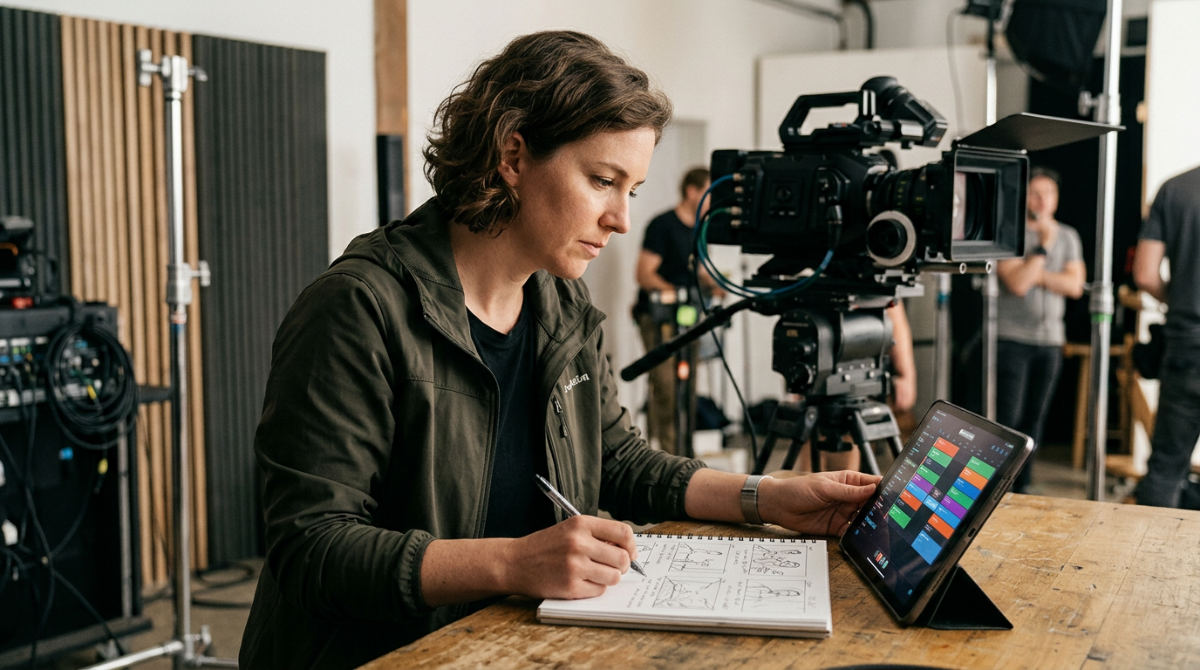
 Storyboarding turns the written word into a visual roadmap. It guides the director of photography and the client. By drawing out each shot, we move from the "what" of the script to the "how" of the cinematography. Live-action storyboards focus heavily on blocking (where actors move) and lighting. Motion graphics storyboards focus on timing, typography, and transition paths between digital elements.
We use storyboarding to confirm that the "twist" identified in the concept phase is physically achievable on camera. If the plan involves a complex camera move through a small office, the storyboard will reveal if walls need to be moved or if a different lens is required. It is often helpful to share these visuals with external partners like InnoVision Marketing Group to ensure brand consistency across all digital assets. Collaborative feedback at this stage is much cheaper than changing the visual direction once the cameras are rolling. Moving a pencil sketch costs nothing. Moving a 30-person crew because a shot "doesn’t feel right" is a budget killer. I would always choose to spend three extra days in the storyboard phase to save one hour on a live set.
4. Execute a Technical Location Scout in San Diego
A tech scout involves visiting potential sites to assess power availability, natural lighting shifts, and ambient noise levels that could ruin audio. Even a beautiful room is a bad location if it sits directly under a flight path or has windows facing a flickering neon sign. Many San Diego productions seek out unique local architecture and industrial textures to provide premium aesthetics without the inflated costs of Los Angeles sets.
| Feature | Importance | Risk if Ignored |
|---|---|---|
| Acoustics | High | Unusable dialogue due to echo or traffic. |
| Power Supply | Critical | Blown circuits from high-wattage cinema lights. |
| Natural Light | Medium | Changing shadows that ruin shot continuity. |
| Accessibility | High | Delays in unloading heavy gear and equipment. |
Tech scouts are non-negotiable for restaurant shoots. You have to plan filming around service hours without disrupting the business. You need to know exactly where the "hero" shots of signature dishes will be filmed to ensure the kitchen workflow remains safe and hygienic. Document each location with photos to help the grip and electric team prepare. For corporate films, check our corporate film production guide to see how location choices impact the professional tone and perceived authority of your brand.
5. Assemble the Crew and Finalize the Call Sheet
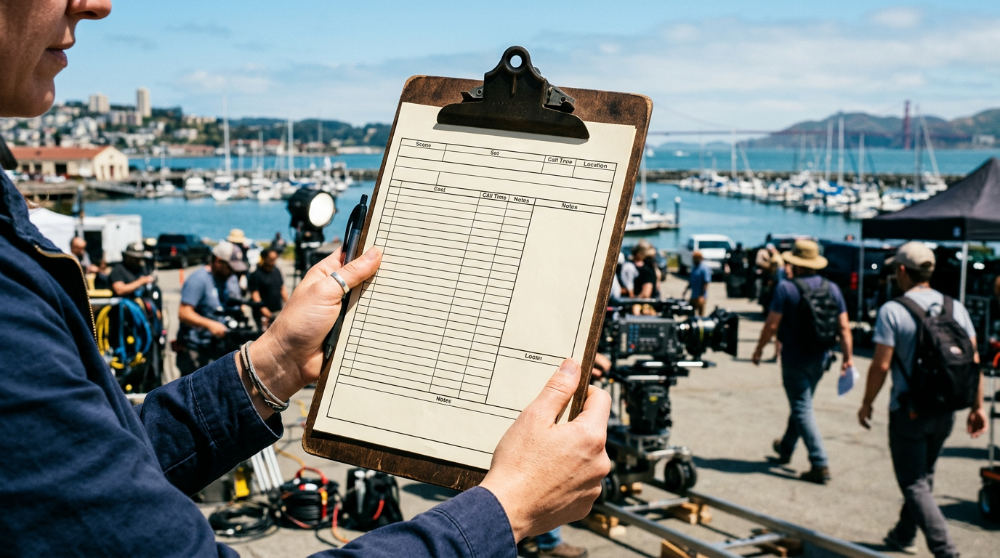 The final logistical step is selecting a crew based on the specific technical needs identified in your script breakdown and tech scout. If your project relies heavily on visual effects, you need a VFX supervisor on set. If it’s a lifestyle piece, your wardrobe stylist becomes the most important hire. Cast for authenticity by prepping both professional actors and your own employees for their time in front of the lens. We find that for many corporate projects, a blend of professional leads and real-staff extras provides the most believable brand voice.
Draft a Call Sheet once the team is set. This is the holy grail of production documents. It lists every location, contact, and time requirement for the day. It ensures the makeup artist isn’t arriving at the same time as the lighting crew, preventing crowded hallways and wasted hourly rates. To ensure these complex logistics are handled by experts, you can contact us to oversee the entire planning process from start to finish.
Comparing Production Workflows by Industry
Different industries require vastly different pre-production priorities to achieve a high-impact result. Legal marketing, for example, requires high-concept branding that emphasizes trust and authority. A great example of this is the Alvandi "Never Fear" case study, which used a cinematic, dark-toned aesthetic to differentiate the firm from the bright, cheesy commercials typical of the personal injury sector.
- Restaurant production. Focuses on high-sensory B-roll and extreme close-ups. Pre-production involves coordinating with chefs so food is styled and "camera-ready" exactly when the lighting is peaked.
- Corporate strategy. This involves balancing multiple stakeholders. The planning phase must include time for legal and compliance teams to review scripts to ensure brand guidelines are followed across every frame.
- Motion graphics. These projects prioritize design-heavy pre-production over physical location scouting. The focus is on style frames and asset libraries rather than light meters and permits.
- Non-profit storytelling. Often involves capturing raw, emotional interviews. Pre-production focuses on "pre-interviews" to build rapport with subjects so they feel comfortable on camera.
The goal of pre-production remains the same: to eliminate uncertainty before the first "action" is called. If you are managing multiple assets, tools like Pollaroo can help keep your creative subscriptions and project costs organized during the planning phase.
Common Mistakes in Video Pre-Production
- Permit procrastination. Underestimating the time needed for permits and insurance, especially for public San Diego locations like Balboa Park or the waterfront, can shut down a shoot before it starts.
- The "Generic" Trap. Failing to plan for "the twist" leads to a generic video that doesn’t capture the audience’s attention in a crowded digital marketplace.
- Audio oversight. Neglecting the audio environment during the tech scout results in expensive post-production sound cleanup or the need for total dialogue replacement (ADR).
- Over-ambitious scripting. Creating a script that is too ambitious for the allocated budget leads to rushed filming, stressed crews, and poor overall quality.
- Siloed planning. Excluding the marketing team from the storyboarding process causes late-stage creative pivots that can double your production time and costs.
Effective pre-production is the difference between a video that looks like a home movie and one that drives real business growth. By following these steps, you ensure that when the lights go up, your team is ready to execute a vision that is both logically sound and creatively brilliant. For more information on the final stages of the process, visit our post-production services page.
Pretzel Logic Productions 5961 Kearny Villa Rd San Diego, CA 92123
FAQ
What is the most important part of pre-production?
The script breakdown is often considered the most important part because it translates creative ideas into a list of tangible needs. Without it, you cannot build an accurate budget or schedule.
How long does the planning phase take?
For high-quality corporate videos, planning typically takes several weeks. Larger commercial or film projects can require months of coordination to secure permits, talent, and specialized equipment.
Can I skip storyboarding to save money?
Skipping storyboarding usually costs more in the long run. Without a visual guide, production takes longer as the crew struggles to understand the director’s vision, often leading to overtime costs and missed shots.
What is a tech scout?
A tech scout is a site visit where the director, director of photography, and key crew members check for technical challenges like poor acoustics, limited power, or difficult lighting conditions.
How do I budget for pre-production?
In the video production industry, it is common to see roughly 10-20% of a total budget dedicated to the pre-production phase. This covers scriptwriting, location scouting, casting, and administrative logistics.