
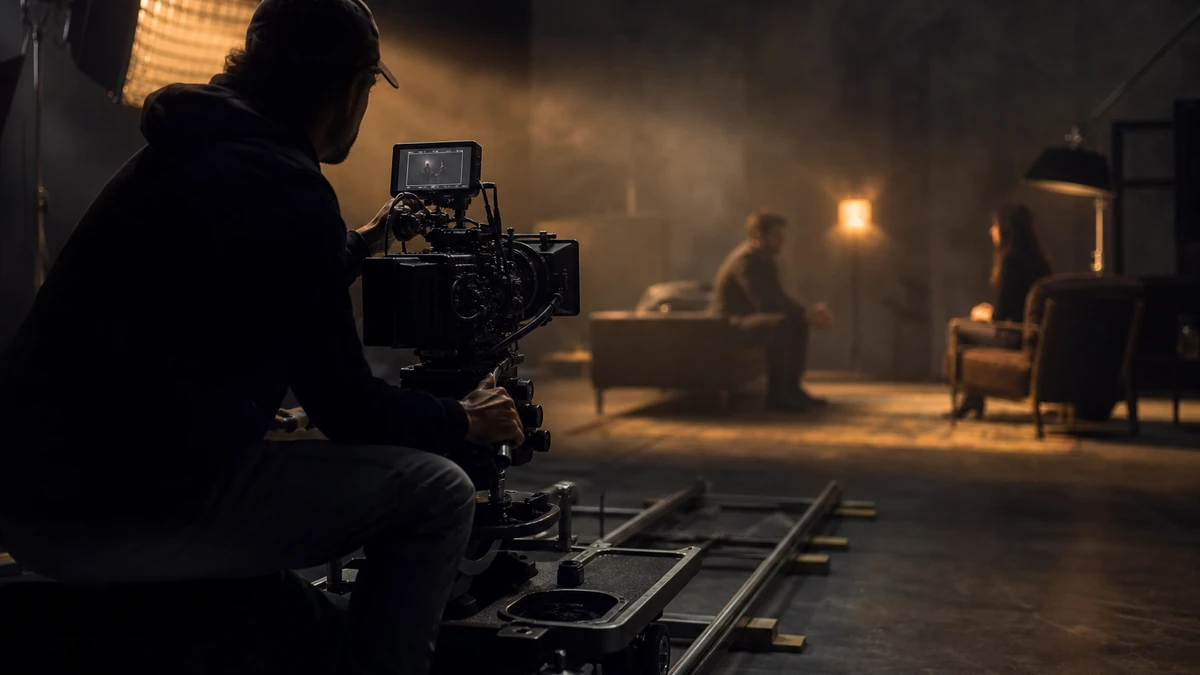
The video you saw last night — the one that made you stop scrolling. It wasn’t an accident. There’s an architecture behind great commercial work, and the best commercial video production companies understand every beam and joint of it.
Commercial video production is a complex, high-stakes process that requires strategic thinking, logistical rigor, and creative precision. The global commercial production market hit $195 billion in 2023 and is projected to reach $260 billion by 2030, according to WorldMetrics. That’s not just growth. That’s a signal that businesses in every vertical are betting hard on video as their primary audience-building tool.
What Commercial Video Production Companies Actually Do
Strip away the jargon and you’re left with this: a commercial video production company takes a brand’s message and turns it into moving images that get people to act. Watch. Click. Buy. Call. Whatever the conversion is.
That sounds simple. It’s not.
The companies seeing real results aren’t simply producing more videos. They’re building a system — clear strategy, repeatable production, platform-first formats, and measurement that ties content back to revenue, as Further Studios puts it.
The Core Services You Should Expect
A full-service shop handles the entire arc. Concept first — what’s the story and why should anyone care? Then scripting, storyboarding, casting, location scouting, principal photography, editing, color grading, sound design, and final delivery in whatever formats the campaign needs.
Some houses specialize. One might own the post-production pipeline but outsource the shoot. Another might have in-house directors but rent studio space per project. The most effective commercial video production companies don’t all share the same model. What matters isn’t whether they do everything under one roof. What matters is whether the pieces connect without you playing project manager between them.
Beyond the Camera — Strategy, Writing, and Creative Direction
The camera is the easy part.
What separates good commercial video production companies from the rest is what happens before anyone touches a lens. Strategy. A disciplined, transparent production process designed to manage complexity at scale. As the team at MyPromoVideos notes, a successful outcome doesn’t hinge on a single brilliant idea — it depends on a predictable production process.
Scriptwriting is where most projects find their voice or lose it entirely. A script that reads well on the page can die on camera. A script that feels thin on paper might come alive with the right actor and the right pace. Companies that invest in the writing phase — that treat it as the creative backbone rather than a box to check — produce work that feels inevitable, not assembled.
The best commercial video production companies don’t just shoot what you ask for. They push back on the brief when it needs pushing. They bring creative ideas you hadn’t considered. That’s the difference between a vendor and a partner — and it shows in the final product every time.
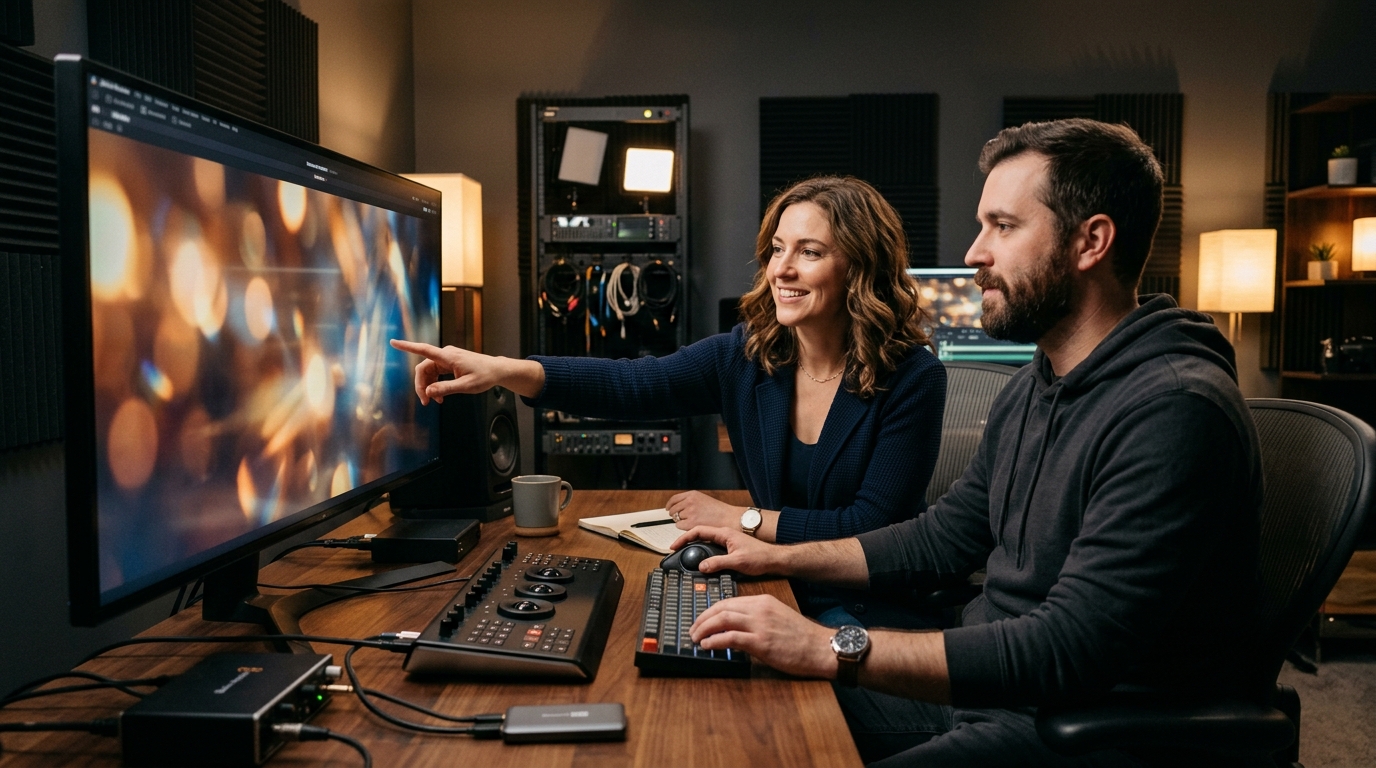
The Commercial Video Production Market — Size, Growth, and Where the Money Is
The numbers tell a story of their own. The Commercial Video Production Service Market was valued at $10.54 billion in 2024, with projections reaching $15 billion by 2035 at a 3.2% CAGR, according to WiseGuyReports. That’s the service market alone — the broader commercial production ecosystem is far larger.
Market Numbers That Matter
Global commercial video production output increased by 9.2% year-over-year in 2023, reaching 3.8 million hours. The Advertising Video Production Market specifically is projected to reach $102.91 billion by 2034 from $70.42 billion in 2025 — a 4.86% CAGR, according to The Insight Partners.
North America holds the majority share at roughly $4 billion in the commercial video production service segment. The Movie and Video Production industry reached $102.2 billion in 2025, with 14,589 companies operating in the space. Revenue per employee? $711,652.
These aren’t abstract figures. They reflect a world where video isn’t just “another content format” anymore. It’s a core growth lever.
Why Demand Keeps Climbing
Three forces are at work.
Viewers retain about 95% of a message in video but only 10% in text, according to research cited by OneStream. That stat alone rewrites budget allocations.
The platforms demand it. LinkedIn native video earns roughly five times the engagement of a link post. TikTok, Instagram Reels, and YouTube Shorts have created an insatiable appetite for short-form commercial content. You can’t show up on these channels with a static image and expect results.
And AI has rewritten the economics. More on that in a moment — it deserves its own section.
How AI Is Reshaping Commercial Video Production
AI tools for scriptwriting and storyboarding are now used by roughly 72 to 75 percent of production companies, according to WorldMetrics. Cloud-based software adoption in production houses has jumped from 55 percent in 2020 to 82 percent.
That’s not a trend. That’s an industry-wide replumbing.
What AI Means for Budgets and Timelines
AI has fundamentally changed the economics of commercial production. Neverframe Studio captures this plainly: AI makes broadcast-quality work accessible at budgets that previously could only afford social-grade content.
The tools are real. AI-assisted pre-visualization lets directors show a client what a scene will look like before the crew arrives. Generative rotoscoping cuts hours from post-production timelines. Automated transcription and rough-cut assembly shrink the edit-to-delivery window.
For brands hiring commercial video production companies, this means the gap between what you can afford and what you can achieve has narrowed dramatically. A project that once required a six-figure budget and a six-week timeline can now move faster, leaner, and with more creative iteration along the way.
What AI Doesn’t Replace
Taste. Judgment. The instinct to frame a shot three degrees to the left because it feels better.
AI can generate a storyboard. It cannot tell you which story will resonate with your audience. It can edit footage to a beat. It cannot decide that the third take — the one with the imperfect line reading but the genuine smile — is the keeper.
The best commercial video production companies treat AI as a force multiplier, not a replacement. They use it to compress budgets and accelerate timelines. They do not use it to replace the creative decisions that separate good work from great work.
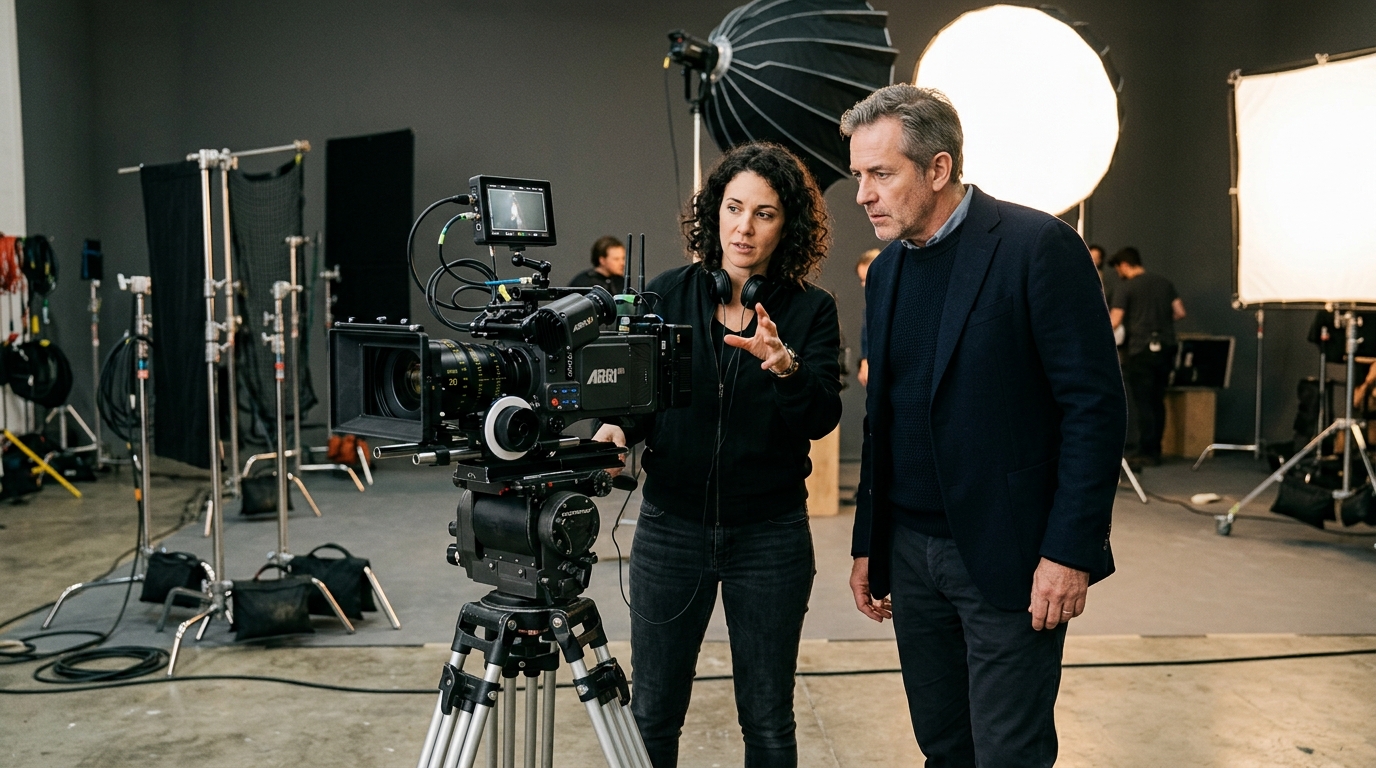
What to Look for When Choosing a Commercial Video Production Partner
Creative Vision Over Equipment Lists
Every production company has cameras. Most have decent lighting packages and a post-production suite.
What they don’t all have is taste. A point of view. A creative instinct that can read your brand, absorb your brief, and bring back something you didn’t expect — something better than what you pictured.
Look at their portfolio. Not the highlight reel on the homepage — the actual project pages. Does each video feel like its own thing, or do they all share the same visual DNA? A versatile portfolio means the company adapts their approach to the brand, not the other way around.
Process Transparency
Ask any production company how they work. The ones worth hiring will tell you — in detail — what happens from kickoff to delivery. They’ll walk you through pre-production milestones, review cycles, revision policies, and what happens when the shoot runs long or the edit needs an extra round.
Companies that are vague about process are hiding something. Usually it’s disorganization. Sometimes it’s inexperience.
Corporate video production for business isn’t about bland talking heads or lifeless boardroom shots. It’s about creating strategic, story-driven content that connects. People buy from brands they trust, and you can build that trust through an authentic emotional connection. Logic makes people think. Emotion makes them act, as JV Studios frames it. That transformation doesn’t happen without a disciplined process supporting it.
The Agency Integration Advantage
Here’s something most buyers overlook. A production company that operates inside a full-service agency ecosystem brings advantages a standalone shop can’t match.
Consider the difference. A standalone production house gets hired for the shoot. They execute the creative brief and deliver the files. That’s the job — and for many commercial video production companies, that’s where the relationship ends.
A production company integrated within a full-service marketing agency — like Pretzel Logic Productions operating as the dedicated video production studio of InnoVision Marketing Group — brings a fundamentally different value proposition. The brand strategy, the campaign architecture, the multi-channel distribution plan — those conversations are already happening. Video isn’t an isolated project. It’s part of a larger brand system, built in concert with the research, the creative strategy, and the paid media plan.
That integration eliminates the handoff gaps that derail creative work. No “the agency said X but the production team interpreted it as Y.” No last-minute scramble to align brand guidelines with production constraints. The strategy feeds the creative. The creative feeds the shoot. The shoot feeds the campaign. It’s a closed loop.
The Production Process — Pre-Production, Filming, and Post-Production
Every commercial video project moves through three phases. Skip any one of them and the final product shows it.
Pre-Production
This is the phase most people want to rush through. Don’t.
Pre-production covers concept development, scripting, storyboarding, casting, location scouting, and budget planning. It’s also where stakeholder alignment happens — the single most critical phase for enterprise-level work.
A thorough pre-production process surfaces creative disagreements before they cost money. It locks decisions that prevent scope creep during the shoot. It ensures that when the cameras roll, everyone on set knows exactly what they’re trying to capture and why.
Filming
The production phase is where the plan meets reality. Weather changes. Talent runs late. The shot that looked perfect on a storyboard doesn’t work on location.
Experienced commercial video production companies treat the shoot as a problem-solving exercise, not a paint-by-numbers execution of the pre-pro plan. They adapt. They find the shot. They protect the creative vision while dealing with the practical constraints of the day.
Post-Production
Editing, color grading, sound design, motion graphics, and final delivery. This is where the footage becomes a commercial.
Modern post-production also includes format adaptation. Today, you can’t just produce one video and expect it to fit everywhere. Vertical video for TikTok and Reels. Square cuts for LinkedIn and Instagram feeds. Horizontal for websites and YouTube. Accessibility features like captions and audio descriptions. Each format requires its own edit, its own framing decisions, its own pacing.
Brands that repurpose one video into three or more platform-specific versions see 4.2 times higher total engagement, according to a Clutch survey cited by GreenFrogLabs. Format adaptation isn’t optional anymore. It’s table stakes.
How Much Commercial Video Production Costs (and Why)
The median budget for a corporate video that drives measurable business results is $12,000, according to Clutch’s 2024 survey of 500 marketing decision-makers. Companies spending below $5,000 per video report 41 percent lower satisfaction with results.
Finished corporate video typically runs from $1,000 to $10,000 per finished minute, depending on complexity. Roughly 40 percent of marketing teams plan to increase video spend this year, Moonb reports. AI video creation platforms offer an alternative at $0 to $500 per month, according to StoryKit — useful for specific use cases, though they don’t replace the creative direction an experienced team brings.
These ranges are wide because the variables are many. Location fees. Talent. Number of shoot days. Post-production complexity. Motion graphics. Music licensing. Format count. Revision rounds.
The best commercial video production companies don’t hide from the budget conversation. They ask what you need to accomplish, then tell you honestly what it takes to get there — and what corners you can cut without sacrificing the work.
The Future of Commercial Video Production — Trends to Watch
Short-form is eating the industry. User-generated content, livestreaming, interactive videos, and VR/AR technologies are redefining viewer expectations. The Video Production market is growing at an 11.7 percent CAGR through 2031, according to OMR Global.
Connected TV ad spending is growing at twice the rate of traditional broadcast. The Corporate Video Production Services Market is projected to reach $12.73 billion by 2032, growing at 7.37 percent annually.
But here’s the through-line. The winning play isn’t “make more content.” It’s “make the right content, with the right partner, distributed the right way.”
Frequently Asked Questions
What’s the difference between a commercial video production company and a corporate video production company?
Commercial video production companies focus on content that sells — TV spots, digital ads, brand spots, and promotional videos designed to drive a specific audience action. Corporate video production often refers to internal communications, training videos, and company overviews. In practice, most full-service shops handle both. The distinction matters less than whether the company understands your audience and your distribution channels.
How long does a typical commercial video production take?
A standard commercial project runs four to eight weeks from kickoff to final delivery. Pre-production typically takes one to two weeks, filming one to three days, and post-production two to four weeks depending on complexity. Rush timelines are possible but cost more and limit creative exploration.
Should I hire a local production company or can they work remotely?
Local has advantages — familiarity with locations, crew networks, and the ability to meet in person during creative development. But most commercial video production companies work nationally. The key question is whether they have a process for remote collaboration that includes clear review cycles and structured feedback. The creative relationship matters more than geography.
What should I have ready before contacting a production company?
Come with your objective. Not just “we need a video” — but what the video needs to accomplish. Who’s the audience? Where will it run? What’s the single thing you want viewers to do after watching? A rough budget range helps too, even if it’s broad. The more you can articulate what success looks like, the more precise the proposal you’ll get back.
How do I know if a production company is the right creative fit?
Watch their work. Then call them. The phone conversation will tell you more than the portfolio. Do they ask good questions about your brand? Do they push back on assumptions or just agree with everything? The best partnerships start with creative tension — a company willing to challenge your thinking is usually the one that will push the work further.
Are AI-generated commercials a real alternative to traditional production?
AI video generation tools are improving rapidly but remain best suited for specific use cases — social media cutdowns, concept testing, and rapid iteration — rather than full broadcast-quality campaigns. Most commercial video production companies now integrate AI tools into their workflow to accelerate pre-visualization and post-production, but the core creative decisions still require human judgment. AI is a collaborator, not a replacement for an experienced production team.
Ready to Tell Your Story?
The right commercial video production company doesn’t just execute your brief. It invests in your brand. It challenges your assumptions. It brings creative energy to every phase — from the first whiteboard sketch to the final color grade.
At Pretzel Logic Productions, that’s exactly how we’re built. As the dedicated video production studio of InnoVision Marketing Group, we operate at the intersection of creative ambition and strategic discipline. We bring the full weight of the agency behind every project — brand strategy, audience research, campaign architecture — so the video doesn’t just look good. It works.
What sets Pretzel Logic apart from other commercial video production companies isn’t just the gear or the reel. It’s the fact that we function as a creative partner, not a vendor. We work on a client-by-client basis, taking your brand on as our own — investing the same creative energy we’d pour into our own identity. That’s the difference between footage that checks boxes and footage that actually moves people.
Start the conversation. No obligation. No pitch deck. Just a real talk about your brand and what it could become on screen.