
Every video shoot that runs smoothly on set got there because someone spent the real hours before anyone yelled “action.” Pre-production planning video work is what separates chaotic, over-budget productions from the kind where the crew actually breaks for lunch on time. It’s not glamorous — storyboards, schedules, and script breakdowns rarely are — but it’s the difference between capturing exactly what you need and praying you got enough coverage in the edit bay. And for anyone who’s ever walked off a set at 11 PM wondering where the day went, the cure was always the same thing they skipped: real pre-production planning video preparation that treats the invisible work as seriously as the visible result.
What Pre-Production Actually Is (And Why It Saves Your Shoot)
Pre-production is every decision, document, and logistics puzzle you solve before a single frame gets filmed. It spans concept development through final equipment checks — basically anything that happens between “let’s make a video” and the first slate clap. Skip it and you’re gambling. Do it right and you walk onto set knowing exactly what every person needs to do next.
The numbers back this up. Projects that spend adequate time in pre-production are 50% more likely to stay on budget and 70% more likely to hit their deadlines, according to Storimatic Studio’s 2026 production planning research. Every hour invested in pre-production saves roughly 3-5 hours during production and post. Productions with detailed pre-production planning video workflows typically save 20-30% compared to ones that rush straight to filming.
Those aren’t abstract productivity stats. They’re the cost of reshoots, overtime, and footage that doesn’t cut together because nobody storyboarded the transitions. Pre-production is insurance you buy with time instead of money. Fettle Digital puts it bluntly: good pre-production means having a Plan A, a Plan B, and even a Plan C — because fixing issues in post-production is exponentially more expensive than getting it right from the start.
The 6 Phases of Pre-Production Planning
Most guides overcomplicate this. Pre-production breaks cleanly into six phases that move you from high-level concept to camera-ready. Each one feeds the next — skip a phase and you’ll feel the gap by Phase 4.
Phase 1: Concept and Goal Definition
Before any creative work starts, lock in the fundamentals. Who is this video for? What action should they take after watching? What’s the one thing they need to remember?
Nail these answers before writing a single script line. A corporate brand video targeting procurement directors needs entirely different pacing, language, and visual language than a social media spot for Gen Z consumers. TechSmith’s guide to pre-production frames this as the moment you define your project by asking the right questions: who is the target audience, what is the video’s purpose, what are the measurable objectives, what’s the actual story, and what resources can you realistically access. Skip this step and you’ll end up making a video that pleases nobody because it was built for everybody.
Phase 2: Creative Development
This is where ideas become documents. The core deliverables here are the script and the storyboard.
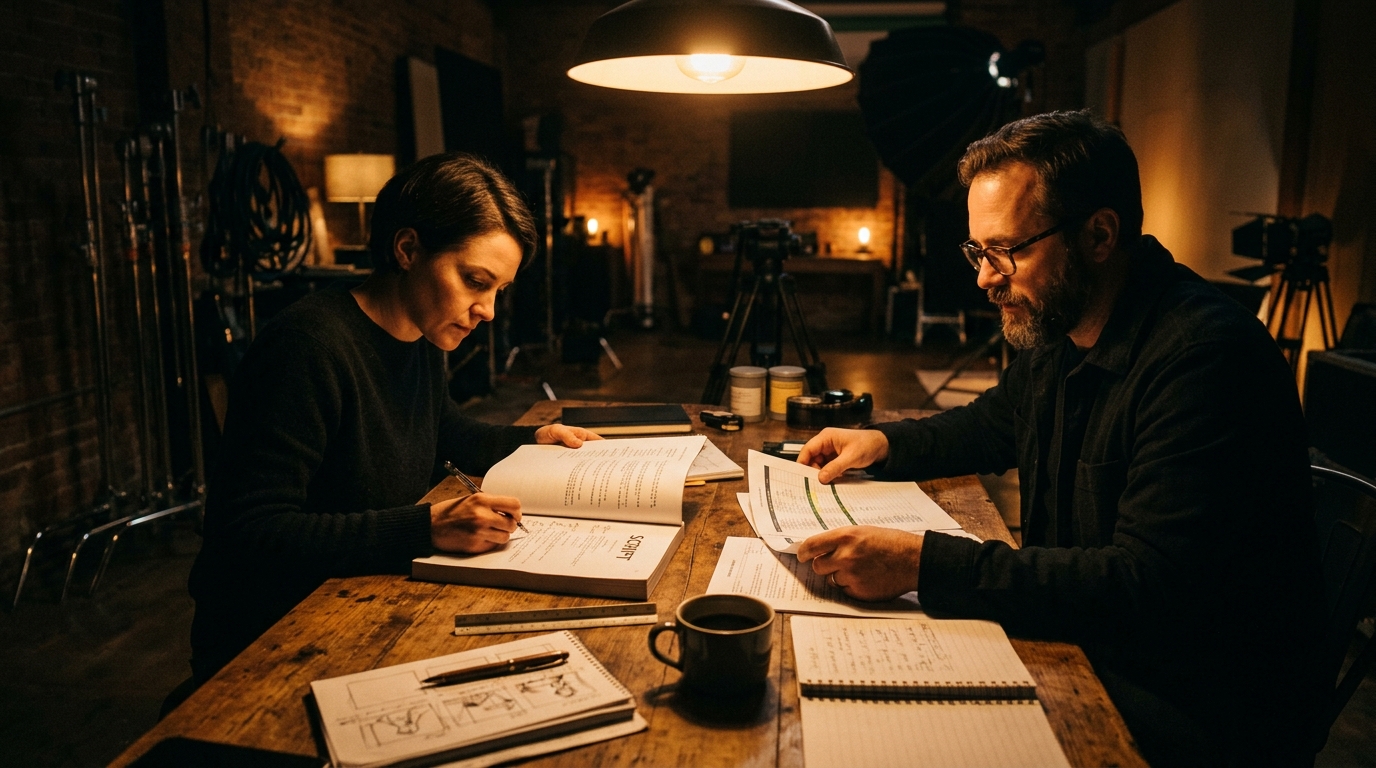
Scriptwriting for video isn’t prose writing. Use a two-column AV script format — audio on the left, visual notes on the right — broken into shot-by-shot rows. This format, recommended by SpotOn Productions, maps dialogue and voiceover directly to what the camera sees for every second of runtime. It forces specificity. You can’t write “establishing shot of the office” without asking: which office, what time of day, who’s in frame?
The average script goes through roughly ten drafts before it’s ready, according to Pond5’s step-by-step pre-production guide. That’s normal. Let it bake.
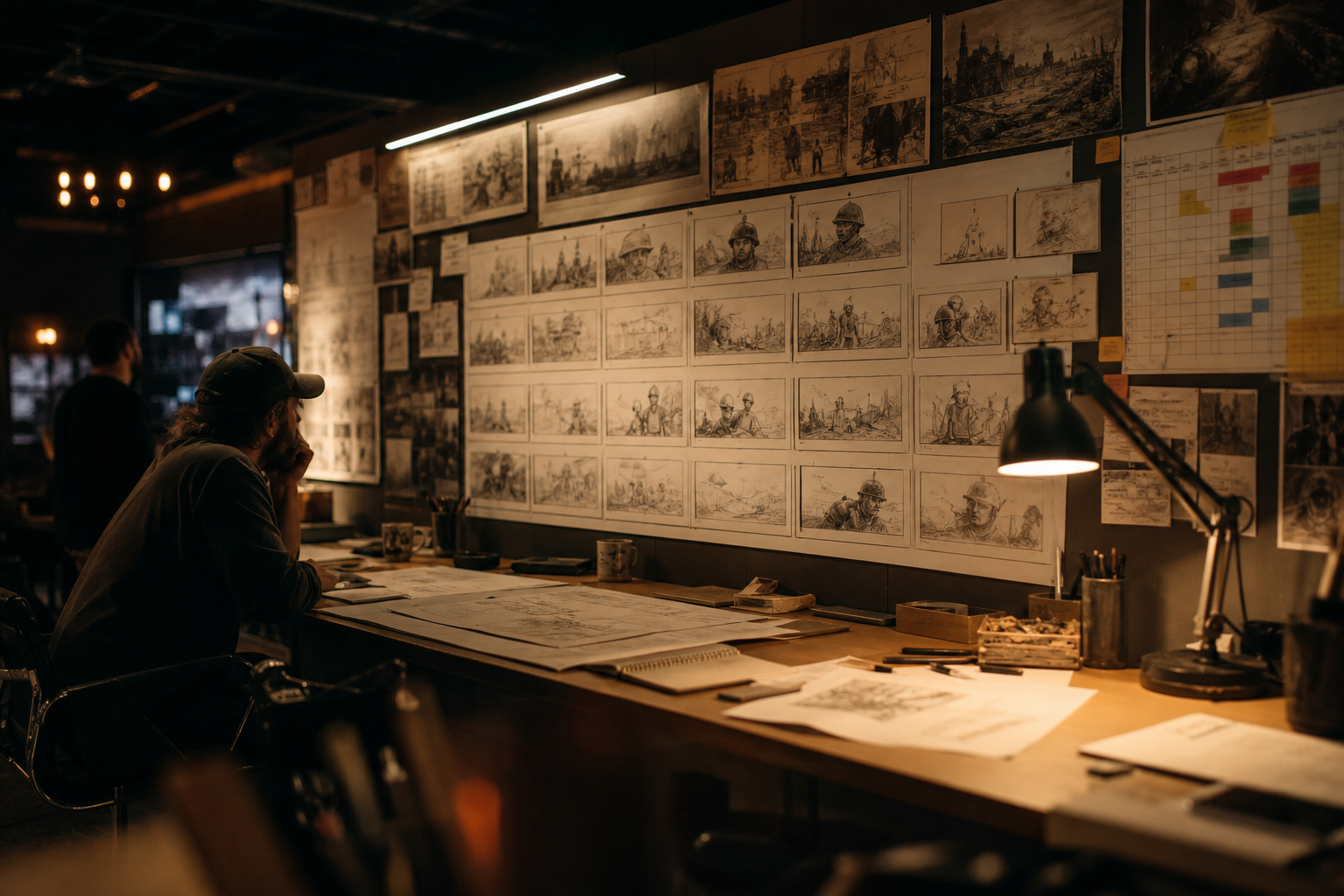
Storyboarding follows. Even rough stick-figure frames are infinitely more useful than no visual plan at all. Storyblocks recommends treating storyboards as your production memory — they spare the headache of trying to remember, six hours into a shoot day, whether Scene 4 was supposed to be a wide shot or a closeup. Every department uses them: camera for framing, lighting for setup, art department for props and set dressing.
Phase 3: Script Breakdown
This is the unglamorous spreadsheet work that makes everything else possible. A script breakdown extracts every production element from every scene: cast members, props, wardrobe, set requirements, special equipment, time-of-day needs, and any location-specific logistics.
StudioBinder’s definitive pre-production guide notes that in film scheduling, one script page translates to roughly one minute of screen time. Most productions target about five pages per day of shooting. Breaking the script into eighths of a page lets you estimate segment timing with real precision — a technique developed in Hollywood that works equally well for corporate and commercial productions. A script breakdown is what transforms “we’ll shoot this scene sometime Tuesday” into a schedule where every crew member knows their call time days in advance.
Phase 4: Logistics and Scheduling
Now you’re building the actual production calendar. This covers location scouting, crew hiring, equipment rentals, talent booking, permits, insurance, and a detailed shoot schedule that accounts for setup time between setups.
A thorough pre-production planning video timeline should begin six to eight weeks before the shoot date for most professional video projects. That window gives you room for the creative work — script revisions, storyboard iterations — plus the logistics chain (venue confirmations, crew availability), and technical prep (gear testing, camera tests). PS Studios breaks this into a ten-step process that covers defining goals, developing concepts, writing scripts, creating storyboards, planning budgets, assembling teams, securing locations and permits, scheduling the shoot, preparing shot lists, and running a pre-shoot checklist.
Budget contingency belongs here too. Allocate 10-15% of the total project budget for unforeseen circumstances — weather delays, equipment failures, additional shoot days. Projects that skip the contingency almost always find they needed it.
Phase 5: Technical Preparation
The week before the shoot is for testing. Camera and lens packages, audio gear, lighting rigs, monitoring setups, media management workflows — everything gets checked.
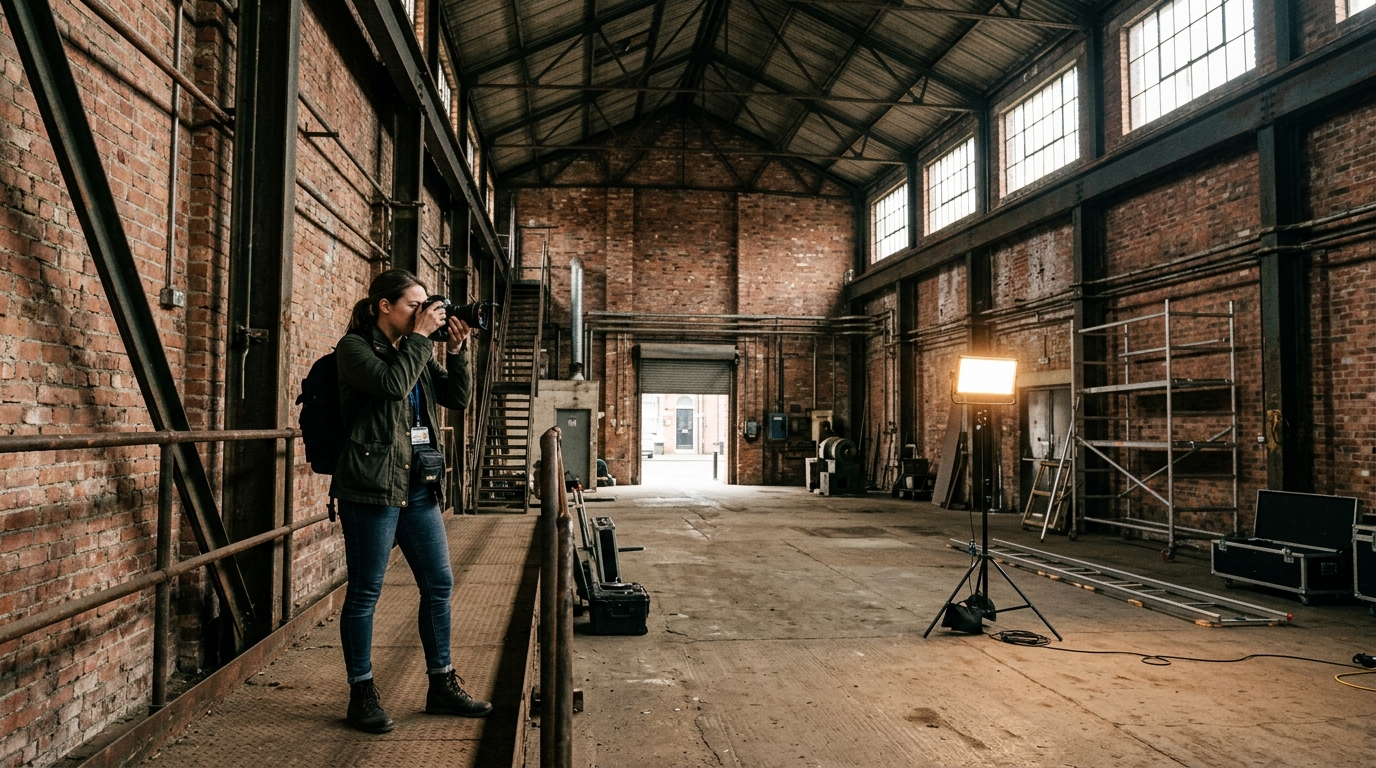
This phase includes the tech scout, where the director, DP, and key department heads walk through every location together. They confirm camera positions, flag potential audio issues — that HVAC hum nobody noticed during the first scout — check power availability, and assess natural light conditions at the actual shoot time. StudioBinder’s 15-category pre-production checklist identifies the tech scout as one of the single highest-ROI pre-production steps. Catching a location problem on the tech scout costs nothing. Catching it on shoot day costs everything.
Call sheets finalize here. Every crew member and cast member gets a document that spells out: call time, location address with parking instructions, scene schedule, weather forecast, and emergency contacts. Precision at this stage is a professional courtesy that sets the tone for the entire production.
Phase 6: Final Confirmations
The last 48 hours before the shoot are for confirmations, not changes. Confirm talent call times. Confirm equipment pickup windows. Confirm location access. Print hard copies of scripts, shot lists, and schedules — batteries die, cloud storage goes down, but paper doesn’t crash.
Do a final gear check. Run through the shot list one more time and ask: does anything on this list depend on an assumption that hasn’t been verified? Weather, talent comfort, equipment compatibility — assumptions are what unravel shoots.
The Pre-Production Toolkit: Documents Every Production Needs
Professional pre-production planning video projects run on paperwork. Each document below serves a specific function. Skip one and that function falls through the cracks.
The Production Brief
This is the master roadmap. It captures project scope, objectives, target audience, creative direction, and budget in one place. Everyone from the client to the PA references it. SpotOn Productions calls it the foundational document that aligns every stakeholder before creative work begins — it’s the single source of truth when somebody on set asks “wait, what was the original ask?”
The Shooting Script
Locked and distributed. Not a draft. Not “we’ll figure out this scene on set.” The shooting script is the final creative document that every department uses to plan their work. Scene numbers are locked so that script breakdowns, storyboards, shot lists, and schedules all reference the same structure. A locked script is what makes everything downstream predictable.
The Storyboard
Frame-by-frame visual plan. Storyblocks notes that storyboards don’t need to be beautiful — they need to communicate framing, camera movement, and blocking clearly enough that the DP and director are aligned before anyone sets up a light. They’re the visual handshake between creative intention and technical execution.
The Shot List
The DP’s battle plan. Every setup, every lens choice, every camera move, organized in shooting order — not chronological story order. Shooting order groups setups by location and lighting to minimize equipment moves. A shot list turns “we’ll grab some coverage” into a specific, executable sequence. StudioBinder’s corporate video production guide emphasizes that the critical path — the longest sequence of dependent tasks that must finish for the project to complete — determines your hard deadlines.
The Production Schedule
This maps every shoot day to specific scenes, locations, and call times. Built from the script breakdown, organized to minimize company moves between locations. Production planning and scheduling software improves visibility of every step — particularly when the schedule shifts mid-week and everyone needs to know what changed instantly.
Call Sheets
Distributed 24-48 hours before each shoot day. Every person on set knows exactly where to be, when to be there, and what scenes are on the docket. A good call sheet includes parking instructions. A great one includes the nearest good coffee.
Pre-Production for Different Video Types
The core phases stay the same, but the emphasis shifts depending on what you’re making. A commercial, a corporate piece, and a documentary all need pre-production — they just need different flavors of it.
Commercial and Brand Videos
Brand video pre-production lives and dies on the creative brief. The client’s brand guidelines, messaging hierarchy, and visual identity rules need to be baked into every creative decision. Two-column AV scripts are particularly valuable here — they let the client see exactly how messaging maps to visuals before a single frame gets shot.
For a typical two-minute employer branding video, plan one to two full shoot days with a standard crew of three: director/editor, camera operator, and production assistant. That’s the baseline crew Moving Image’s production planning research suggests for professional brand content. Producing a typical video takes four to six weeks total, with hands-on work spanning about two weeks: two to three days on concept, one to two days prep, two shoot days, and three to five days of post-production. Review cycles and client feedback add extra time you can’t schedule around.
Corporate and Internal Videos
The logistics here are often trickier than the creative. Filming in an active office, hospital, or manufacturing floor means working around real business operations. Location scouting takes on outsized importance — confirming power access, ambient noise levels, and shooting permits well in advance prevents the day-of scramble that derails corporate shoots. Platform Executive’s comprehensive production planning guide recommends allocating 10-20% contingency for corporate shoots where access windows are tight and rescheduling is difficult.
Short Films and Documentaries
These formats demand heavier pre-production on casting, location agreements, and rehearsal schedules. Documentary pre-production includes pre-interviews, research, and building a shooting outline flexible enough to adapt when real life doesn’t follow the plan. StudioBinder’s pre-production blueprint walks through the full film workflow: lock the shooting script, break it down, hire key department heads, cast talent, scout and tech scout locations, secure permits and insurance, and finalize equipment rentals. Film productions also add stripboards (color-coded scene scheduling boards), table reads, and rehearsal blocking to the pre-production checklist — steps that commercial work can sometimes skip but narrative work can’t.
Common Pre-Production Mistakes (And How to Avoid Them)
Everyone makes these once. The goal is to not make them twice. Each of these four mistakes has killed more shoot days than any equipment failure ever could.
Locking the Schedule Before the Script
Setting a shoot date before the script is finished forces every creative decision to fit the calendar instead of the story. The schedule should serve the creative, not the other way around. Lock the script first. Then build the schedule backward from the delivery deadline with realistic time estimates for each phase. When the timeline looks tight, cut scenes — don’t compress the prep.
Skipping the Tech Scout
Walking a location once during the initial scout is not enough. The tech scout brings the DP, gaffer, and sound recordist to the location at the actual shoot time. They find the buzz in the electrical circuit. They notice the airport flight path that kicks in at 3 PM. They realize that beautiful window light everyone loved disappears behind the building across the street by 10 AM. Missing one step during pre-production can mean disaster on set, legal issues, and damage to your career trajectory — and the tech scout is the step most teams convince themselves they don’t need.
No Contingency Budget
Things go wrong on set. Weather shifts. A piece of gear fails. A talent cancellation forces a reshoot day. A 10-15% contingency fund turns a crisis into an inconvenience. No contingency turns an inconvenience into a phone call asking for more money — which is never a fun conversation to have mid-production.
Vague Shot Lists
“We’ll figure out coverage on the day” is the fastest way to run over time and end up in the edit bay with gaps. A specific shot list — lens, framing, camera movement, lighting notes — lets the crew work efficiently because they know exactly what’s next without a huddle before every setup. WeVideo’s shooting script guide emphasizes that a proper script breakdown during pre-production planning video projects — the kind of disciplined pre-production planning video prep that keeps small teams on schedule — identifies every element needed for every scene, which directly feeds into the shot list the DP builds. Skip one and the other falls apart.
Frequently Asked Questions
How long should pre-production take for a typical brand video?
Six to eight weeks is the sweet spot for most professional brand video projects. This allows time for concept development, scriptwriting (and revisions), storyboarding, location scouting, casting, crew booking, and equipment prep. Rushing to a four-week timeline is possible but increases the risk of scheduling conflicts and creative compromises. For shorter social-media-focused content, a compressed two-to-three-week pre-production cycle can work — but only if the creative brief is tight and locations are already confirmed.
What’s the most commonly skipped pre-production step?
The tech scout. Many productions do an initial location visit and call it done. But the tech scout — where the director, DP, and sound recordist visit at the actual shoot time — catches electrical issues, ambient noise problems, and lighting changes that the initial scout missed. Fixing these on shoot day costs time and money in ways that compound across every subsequent setup. It’s the ten-minute investment that routinely prevents ten-thousand-dollar problems.
Do small teams really need full pre-production?
Yes — arguably more than large productions. Small teams have less margin for error. When you’re a three-person crew with two shoot days, there’s no room to reshoot a scene because the light was wrong or the audio had a hum nobody caught. A scaled pre-production process (condensed timeline, fewer formal documents) still covers the essentials: locked script, basic storyboard, confirmed locations, tested gear. Flixier’s complete beginner’s guide walks through the five stages even solo creators should follow: audience definition, brainstorming, script writing, storyboarding, and production prep. Nobody’s too small to plan.
How detailed should a script be before the shoot?
Locked. Not “mostly done” or “we can tweak dialogue on set.” A locked shooting script means scene numbers are final, dialogue is final, and every department can build their plans against a stable document. Small ad-libs and performance adjustments happen on set, but structural changes during production are expensive and rarely improve the final product. If you discover a script problem during the tech scout, fix it before call sheets go out — not after.
What’s the difference between a shot list and a storyboard?
A storyboard communicates the visual plan frame by frame — what the audience sees. A shot list communicates the technical execution plan setup by setup — how the crew captures it. The storyboard is for creative alignment (director, client, art department). The shot list is for production efficiency (DP, camera team, AD). Both are essential, and they serve different audiences. A production with one but not the other is flying with half a map.
When should pre-production begin relative to the delivery deadline?
Work backward from the delivery date. For a project delivering in ten weeks, reserve roughly four to five weeks for post-production, one to two weeks for production, and six to eight weeks for pre-production. The ratio isn’t equal — pre-production is the largest time investment because decisions made here prevent expensive problems everywhere else in the timeline. Fixon Media Group’s pre-production guide frames it as a nine-step alignment process: budget, strategy and script, script breakdown, labor planning, insurance and permits, talent and location agreements, stripboards and storyboarding, shot lists and location scouting, and table reads — each step dependent on the one before it.
Ready to Plan Your Production?
Pre-production planning video work is the invisible scaffolding that holds up every great final product. The audience never sees it. They just see a video that flows, that feels intentional, that makes them feel something and take action. That’s the whole point.
Pretzel Logic Productions has built its reputation on pre-production that leaves nothing to chance. Our team handles everything from concept through final delivery — scriptwriting, storyboarding, location scouting, casting, crew assembly, and logistics — so that when the cameras roll, they’re rolling toward exactly the story you want to tell. Fresh, hot, and slightly twisted — we bring your creative vision to life, but with a twist.
Ready to tell your story? Start the conversation or explore how we approach pre-production planning and full video production at Pretzel Logic Productions.