
Last updated November 11, 2026
Video production equipment includes the hardware and software tools, such as cinema cameras, lighting kits, stabilization gear, and audio recorders, required to capture and process professional visual stories. For commercial results, these tools must integrate into a structured workflow that translates raw creative concepts into polished, broadcast-quality final media.
Key takeaways
- Cinema-grade cameras. Professional camera systems provide the high dynamic range and color depth necessary for advanced color grading.
- High-speed storage. Modern post-production utilizes high-speed NVMe storage and RAID arrays to handle large, high-resolution files without playback lag.
- Specialized food tools. For restaurant marketing, specialized tools are used to ensure products look appealing and fresh on screen.
- Accurate lighting. Professional LED panels are designed to provide accurate color rendering to ensure skin tones and textures remain natural and consistent.
- Strategic planning. The most important gear is actually pre-production planning, which dictates every technical choice made on set.
Essential Hardware for Professional Filming
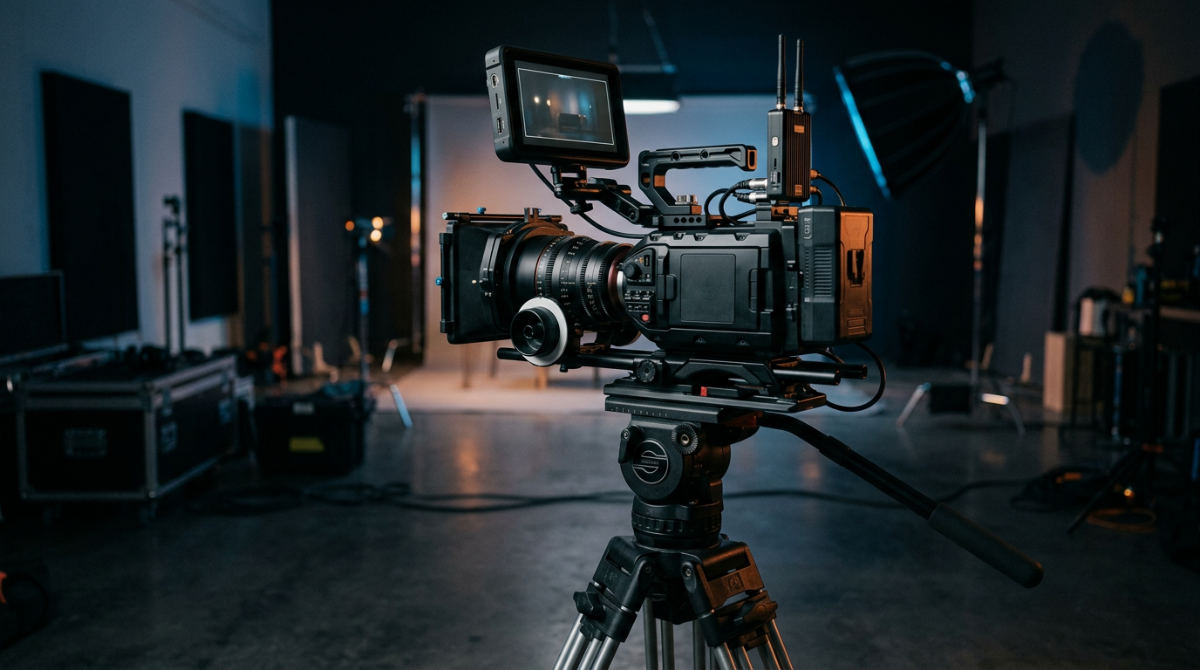
High-end commercial results require a clear distinction between enthusiast mirrorless setups and cinema-grade hardware. We define this primarily by bit depth and color science. Many cameras capture video. However, the high-level productions we lead utilize specialized cinema cameras to capture massive amounts of data in every frame. This gives our editors the latitude to push colors and shadows during the grade. Modern mirrorless systems remain a staple for brand video production. Their low-light performance and autofocus capabilities allow for efficient shooting without sacrificing image quality. We choose them for agility.
Stabilization is non-negotiable for achieving cinematic quality. Professional production standards typically involve the use of fluid heads for smooth, controlled tripod pans. We also use stabilizer vests and gimbals for dynamic moving shots. These tools eliminate the distracting micro-jitters common in amateur footage. Precision matters. Lenses are often more significant than the camera body itself. Commercial quality is frequently defined by the use of sharp prime lenses with wide apertures to create a distinctive shallow depth of field. To capture expansive, high-altitude perspectives that ground-based rigs simply cannot replicate, we incorporate specialized aerial platforms into our visual strategy.
To manage these complex technical assets, a robust equipment inventory system is essential. It keeps us organized. This ensures that every battery, cable, and lens is accounted for before heading to a remote location. Tracking these assets allows the crew to focus on the creative execution rather than troubleshooting missing components. High-performance recording media, such as CFexpress or SD UHS-II cards, handle the high bitrates generated by professional cinematography equipment. Without these high-speed storage solutions, the camera’s ability to record high-frame-rate 4K or 6K footage would be dead in the water.
The Strategic Role of Post-Production Workflow
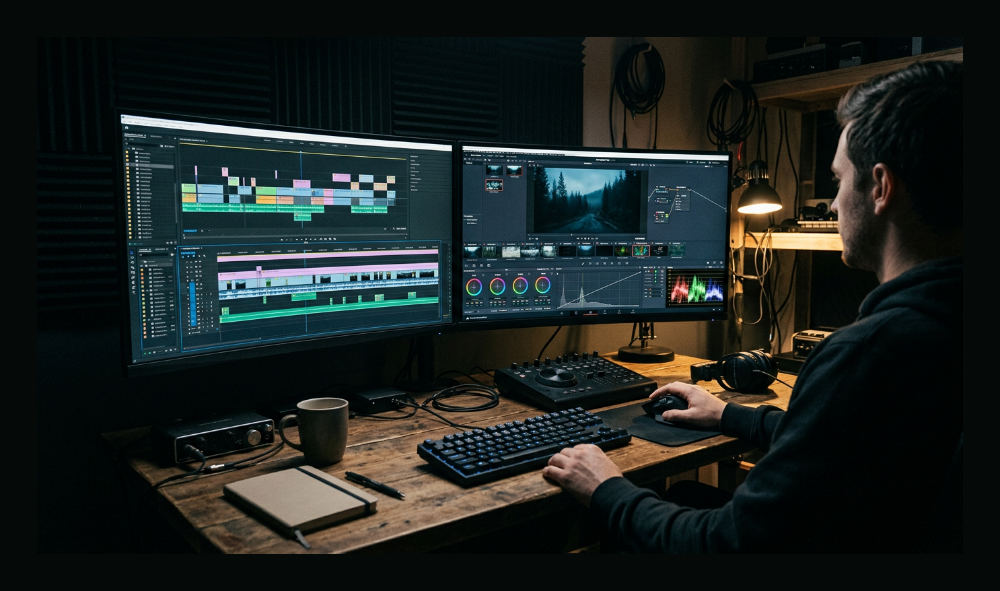
A post-production workflow is the logical sequence of editing, color grading, and sound design that follows the filming stage. This process is where we sculpt raw data into a cohesive narrative that aligns with your brand’s voice. High-level editing requires heavy-duty hardware. Specifically, we use RAID storage arrays and high-performance GPUs capable of real-time playback of high-resolution professional codecs. These prevent the editor from being slowed down by technical bottlenecks. Speed is vital.
We emphasize a collaborative bridge. The gear used on set is selected based specifically on the requirements of the final color grade. For example, if a client needs a vibrant, high-contrast look, we ensure the lighting and camera sensors are configured to capture the necessary dynamic range. Successful post-production workflows also integrate motion graphics and animation to explain complex brand ideas that live action alone might miss. This structured approach ensures the conceptual quality of the shoot is enhanced during the final export phase. The result feels intentional.
The sound design portion of the workflow is equally critical. It involves the layering of foley, ambient textures, and licensed music. High-fidelity studio monitors and digital audio workstations are the primary tools used here to ensure the mix translates well across everything from phone speakers to theater systems. Professional sound designers use specialized software to remove background noise and enhance the clarity of voiceovers recorded during production. This final polish creates an immersive experience that complements the high-definition visuals.
Specialized Gear for Commercial Niches
Commercial niches often require highly specific tools. These go beyond standard cameras and lights. Food Styling is a specialized procedure involving specific techniques and tools used to make dishes look physically appealing and fresh for restaurant and commercial videos. When filming a restaurant spot, we use these tools to manage reflections and keep steam rising from a dish for hours. It makes every frame look delicious.
Other niches demand different technical priorities. Law firm and corporate testimonials prioritize high-quality audio kits. This includes hidden lavalier microphones and acoustic baffling gear to ensure the speaker sounds authoritative and clear. In contrast, commercial video production often demands higher-spec gear like external monitors and wireless video transmitters. These allow the director and client to monitor the feed in real-time from a distance. We pair these logical gear choices with disruptive creative concepts. Every piece of niche-specific equipment serves a narrative purpose. It is never just a technical checkbox.
For industrial and manufacturing videos, macro lenses and heavy-duty protective gear for cameras are essential. These tools allow the crew to capture the intricate details of a production line without risking damage from heat or debris. High-speed cameras are also frequently used in these environments to slow down fast-moving machinery. This makes mechanical processes visible to the human eye. This level of technical specificity allows us to tell the story of a brand’s craftsmanship in a way that standard lenses never could. By matching the equipment to the specific challenges of the site, we ensure a safe and successful shoot.
National Brand Collaboration and Remote Logistics
Pretzel Logic works with brands nationwide by leveraging cloud-based collaboration tools to bridge the geographic gap. We use high-speed, frame-accurate review platforms. This allows clients in any time zone to provide feedback on specific frames of an edit. A marketing director in New York can collaborate with our San Diego-based team as if they were in the same room. Distance is irrelevant.
Our logistics strategy involves shipping specialized gear to various locations or coordinating with our network of verified local crews. We maintain technical standards regardless of the shoot location. The pretzel logic of our gear philosophy prioritizes the creative concept over the kit. We ensure that the tech never hinders the brand story. For clients reaching diverse audiences, including the Hispanic market, partnering with specialized agencies like InnoVision Marketing Group helps align our gear and messaging with specific cultural nuances. By combining top-tier equipment with a remote-first mindset, we bring your vision to life with a twist. It does not matter where your office is located.
Maintaining technical consistency across multiple locations requires a standardized cinematography equipment list. Every crew member follows it. This list acts as a blueprint, ensuring that the lighting ratios and camera settings are identical whether we are shooting in a studio or on a busy street corner. By removing the guesswork from the technical setup, we leave more room for creative improvisation. This balance of rigid technical standards and creative flexibility is why national brands trust us.
Comparing Commercial and Social Media Equipment
While the creative concepts overlap, the delivery requirements for TV versus social media differ significantly. Hardware and software settings must adjust. TV commercials require high resolution and adherence to industry color space standards for broadcast compliance. Social media content often utilizes a vertical 9:16 aspect ratio. This requires camera cages that allow for easy vertical mounting. We also use specific framing guides on our monitors.
| Equipment Category | Commercial/TV Standard | Social Media Standard |
|---|---|---|
| Resolution | 4K to 8K RAW | 1080p to 4K |
| Aspect Ratio | 16:9 or 2.39:1 (Widescreen) | 9:16 (Vertical) or 1:1 |
| Audio | Multi-channel boom & lavalier | High-quality lavalier or internal |
| Color Space | Rec. 709 / Rec. 2020 | Rec. 709 (sRGB optimized) |
| Stabilization | Heavy-duty tripods & dollies | Gimbals & handheld rigs |
Integrating Emerging Tech into the Toolkit
Our specific AI video production workflow integrates traditional filming with emerging generative tech. This provides faster delivery cycles without losing the human touch. AI tools are now a core part of our equipment stack. We use them for smart masking, sophisticated noise reduction, and upscaling older archival footage to match modern 4K standards. This hybrid approach allows us to maintain the highest technical standards while reducing the time spent on repetitive, manual post-production tasks.
Effective gear usage is impossible without comprehensive pre-production planning to map out where AI and traditional film intersect. We view technology as a logical collaborator. It supports the heart of the visual story rather than replacing it. By planning for these integrations before the first camera is even turned on, we can capture footage specifically designed for digital enhancement. This creates a fluid final product that feels both modern and timeless.
Beyond AI, the integration of virtual production sets using LED volumes is becoming more common. These systems allow us to place subjects in any environment without the need for a green screen. They provide natural reflections and lighting that were previously impossible to achieve in a studio. This shift requires a new breed of technical expertise. We blend traditional cinematography with real-time 3D engine knowledge. As these technologies evolve, our goal remains to use them in a way that serves the human story at the center of the video.
Moving From Concept to Screen
Investing in the right video production equipment is the first step toward bringing a professional creative vision to life. For a law firm, a restaurant, or a national brand, the combination of gear and overarching strategy determines the ultimate ROI. The best camera in the world cannot save a weak concept. Conversely, the right equipment in the hands of a visionary team can make a great concept unforgettable. The technical aspects of a shoot should eventually become invisible. This leaves the viewer to focus entirely on the emotional impact of the story being told.
Pretzel Logic is here to help you navigate these technical choices to tell an authentic, compelling brand story that resonates with your audience. We combine technical precision with the disruptive twist your brand needs to stand out in a crowded market. If you are ready to see how our gear and creativity can work for your next project, fill out the form at https://pretzellogicproductions.com/contact-us/ to start the conversation.
Frequently asked questions
What equipment is needed for video production?
Basic needs include a camera body, lenses, a tripod, a shotgun or lavalier microphone, and a 3-point lighting kit. Commercial kits also require external recorders, monitors, and specialized stabilization like gimbals or vests to ensure the footage meets broadcast standards.
Best video production cameras for beginners?
The Sony A7S III and Blackmagic Pocket Cinema Camera 6K are industry-standard entry points for high-quality video. Mirrorless cameras are generally preferred for beginners due to their compact size and dual-purpose photo/video capabilities, allowing for a faster learning curve.
How long does the post-production workflow usually take?
A standard commercial post-production workflow varies in duration depending on the complexity of graphics and revisions. This timeline includes 3 primary stages: the rough cut, the fine cut (including color and sound), and the final delivery export.
Essential gear for corporate video production?
High-quality audio recorders and lapel mics are essential to capture clear, authoritative executive interviews. Softbox lighting is preferred to create flattering, professional illumination that reduces harsh shadows on subjects, ensuring a clean and corporate look.
Do you work with brands across the country or just in San Diego?
Pretzel Logic serves brands across the entire United States, utilizing remote collaboration tech to bridge the geographic gap. We coordinate national shoots by deploying our core team or managing verified local partners to ensure consistent quality from coast to coast.