
Last updated November 11, 2026
Professional audio production for video requires more than a clear recording. It demands a logical post-production workflow that blends technical precision with creative flair. Sound is not an afterthought. This guide explores essential techniques, from frequency balancing to spatial sound design, using industry standards to ensure your brand’s voice resonates across every platform in 2026.
1. Pretzel Logic Productions integrates audio strategy into the pre-production planning stage to ensure brand consistency.
The biggest mistake a creator can make is treating sound like a "fix it later" problem. It isn’t. At Pretzel Logic, we use a collaboration framework that balances creative concepts with rigid technical execution from the start. By mapping out the sonic landscape during the storyboard phase, we ensure every auditory element serves the brand’s narrative. For restaurant brands, this means we offer specialized food styling and audio integration. We capture the specific sizzle and crunch of a signature dish. These are the details competitors often overlook.
When you treat audio as a core component of your initial strategy, you avoid the disjointed feeling of a video where the visuals and sound fight for attention. Our process ensures that whether you are filming a high-stakes corporate message or a localized commercial, the audio supports the visual beats. You should define your "sonic logo" and key sound triggers before the cameras roll. This proactive approach saves time in the edit. It creates a cohesive final product.
Source: Mastering Pre Production Planning
2. Advanced audio processing corrects common on-set recording flaws through noise reduction and EQ.
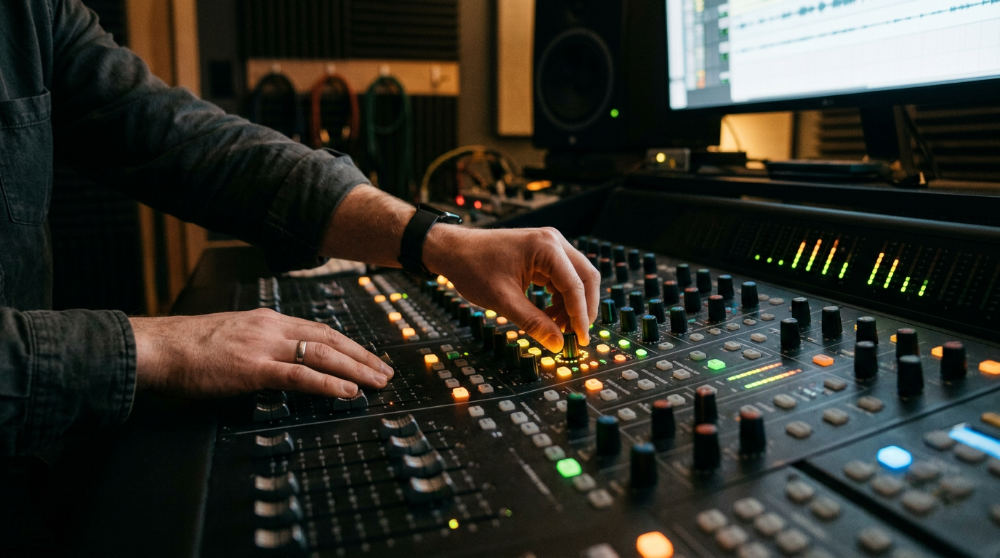
Even the best sets encounter environmental hurdles. Advanced audio processing ensures your dialogue remains the focus, regardless of where you filmed. Noise reduction is the first line of defense. It surgically removes background hums or sudden interference like an air conditioner or distant traffic. Once the "muck" is cleared, we use Equalization (EQ) to balance frequencies. This step is vital for ensuring a speaker’s voice is clear and intelligible across all playback devices, from high-end headphones to tiny smartphone speakers.
We apply compression to stabilize volume levels. This prevents the jarring experience where a viewer has to constantly adjust their volume because a whisper is too quiet and a shout is too loud. In the context of branding production, these technical corrections separate an amateur social post from a broadcast-ready asset. I would always choose spectral repair tools for high-stakes projects to remove specific artifacts without compromising the vocal quality. Don’t settle for less.
Source: Advanced Audio Processing Techniques
3. Professional audio editing software is required for sophisticated multi-track layering.
To achieve a cinematic twist in your storytelling, you cannot rely on basic video editors for your final mix. Professional software allows for complex layering, providing independent control over dialogue, foley, and the musical score. This separation is crucial. It lets us adjust the mood of a scene by shifting the balance of background textures without muffled voices. At Pretzel Logic, we emphasize non-destructive editing in our post-production workflow. We keep original field recordings intact while we experiment with different creative soundscapes.
Professional tools allow for stereo and surround sound panning. By placing sounds in a 3D environment, we draw the viewer deeper into your brand’s world. If a subject walks off-screen to the right, their voice follows them. This level of detail builds an immersive experience that keeps audiences engaged longer. If you are looking to scale your content, consider how sophisticated layering can turn a simple interview into a dynamic narrative piece.
Source: Advanced Audio Processing for Video – YouTube
4. Mastering for various platforms ensures your message is heard clearly everywhere from TV to mobile.
Mastering is the final polish that prepares your video for the real world. Modern standards for loudness are strictly monitored by streaming and broadcast platforms. We apply loudness normalization to meet specific broadcast and social media requirements. This ensures your commercial doesn’t sound significantly quieter or louder than the content surrounding it. Your message might be skipped simply because it’s an auditory irritant.
Limiting is another essential mastering step. It prevents digital clipping, which causes the harsh distortion often heard on small mobile speakers used by on-the-go consumers. We also perform mono-compatibility checks. Since many mobile devices and smart speakers still output in mono, you must ensure your audio doesn’t "phase out" or disappear when summed together. If you want your campaign to succeed across the country, your mastering must be as versatile as your distribution plan. You can see how we handle these technical hurdles by exploring our post-production services for national brands.
Source: Advanced Audio Processing Techniques
5. Synchronized audio workflows prevent technical drift during the editing phase.
Technical drift is a silent killer of professional video quality. If your audio and video are even a few milliseconds out of sync, the viewer feels a subconscious "uncanny valley" effect. It erodes trust in your brand. We use precise alignment techniques to ensure that high-fidelity audio samples match video frames exactly. This is especially important for high-stakes industries like law firms or corporate marketing teams where a lip-sync error looks unprofessional.
To maintain this precision, we keep a consistent sample rate throughout the duration of video projects. Mixing different sample rates leads to unwanted pitch shifting or gradual sync loss during long exports. We strictly manage phase alignment when using multiple microphones for a single source. If two mics are slightly out of time with each other, the result is a thin, hollow sound that EQ cannot fix. Always verify your hardware settings before the shoot.
Source: Advanced Audio Processing for Video – YouTube
6. Strategic sound design highlights key actions within your visual story through Foley and stings.
Sound design is where the logic of the edit meets the twist of creativity. Foley effects (the reproduction of everyday sounds) add a layer of realism to subtle physical movements. Whether it is the sound of a pen on paper or the soft click of a door, these details make the visual experience feel more tactile and expensive. For many of our clients, we use sound "stings" to emphasize brand logos or specific call-to-action overlays. It drives viewer retention.
Ambient textures fill the "dead air." Complete silence rarely exists in the real world. Adding a subtle room tone or city atmosphere makes the production feel professional and intentionally cinematic rather than empty. When planning your next project, think about the specific sounds that represent your business. If you need updated visuals to match this high-end sound, you might also consider updating your team’s professional presence by booking corporate headshots to use in your marketing materials.
Source: Music Production Tutorial – Techniques and Concepts – YouTube
7. Audio ducking makes room for the narrator over background music tracks.
Nothing is more frustrating for a viewer than a powerful narration drowned out by a loud music track. Audio ducking is the technical solution to this struggle. We use specialized compression to automatically lower the music volume whenever the narrator speaks. This ensures the dialogue sits "on top" of the mix. It remains perfectly audible without the music feeling cut off abruptly.
We precisely set "release times" so the music swells back up naturally during pauses in the speech, maintaining the energy of the video. While automated tools exist, we often use manual keyframing for our commercial video production services. This provides the surgical control required for broadcast TV adverts. Manual oversight ensures the music hits its emotional peaks exactly when the dialogue allows.
Source: Advanced Audio Processing for Video – YouTube
8. Consistent music production techniques establish a brand’s unique sonic identity.
Music is not just background noise. It is a primary emotional driver. To establish a unique sonic identity, we apply consistent music production techniques across all assets in a campaign. This involves using specific rhythmic concepts that match the visual pacing of the edit. If your brand is energetic and modern, the music should utilize sharp transients and upbeat tempos. If you are a heritage law firm, a more melodic, harmonic structure evokes the necessary trust and authority.
Maintaining soundstage consistency is also vital. If one video sounds like it was recorded in a concert hall and the next sounds like it was in a small office, the brand feels fragmented. By choosing a specific "color" for your music and sticking to it, you create a recognizable brand sound. Audiences will associate it with your company before a single word is spoken. Treat your music selection with the same rigor as your color palette.
Source: Music Production Tutorial – Techniques and Concepts – YouTube
9. Dialogue de-essing and plosive removal clean up voiceovers for broadcast clarity.
The human voice can produce harsh frequencies that are amplified by sensitive microphones. De-essers are standard tools used in our post-production workflow. They target high-frequency "s" and "t" sounds that can be piercing or "whistly" to the ear. We use high-pass filters to remove "plosives." These are the low-end thumps caused by bursts of air hitting the microphone during words starting with "p" or "b."
For the highest level of polish, we utilize spectral repair to surgically remove unwanted noises that occur during a perfect vocal take. If a phone rings in the background of a great interview, we can often "paint" that sound out without needing a re-record. This ensures your voiceovers are smooth and broadcast-ready. When your dialogue is clean, your audience doesn’t have to work to understand you. They spend more time absorbing your actual message.
Source: Advanced Audio Processing for Video – YouTube
10. The use of spatial reverb creates a convincing sense of physical location for viewers.
Reverb is the "glue" that makes a recording sound like it belongs in a specific space. We use advanced reverb processing to mimic environments like marble halls, cozy offices, or industrial warehouses. These tools utilize sonic profiles from real-world locations. By adjusting the decay time, we ensure the audio matches the visual size of the room shown on screen. If the reverb doesn’t match the room, the viewer’s brain flags the video as "fake."
We carefully manage the wet/dry mix to ensure that while the voice sounds like it is in a room, the dialogue stays "up front" and intelligible. This spatial awareness gives a video its cinematic depth. Without it, your audio sounds "flat" and disconnected from the visuals. For brands looking to create high-end storytelling, spatial reverb is the secret ingredient. It makes a studio-recorded voiceover sound like it was captured on a breathtaking location.
Source: Music Production Tutorial – Techniques and Concepts – YouTube
11. Soundstage panning guides the viewer’s attention across the frame for better engagement.
Panning is the art of moving sound across the horizontal plane. By moving audio sources from left to right to follow a subject’s movement, we guide the viewer’s attention exactly where it needs to be. If an actor walks across the frame, their footsteps and voice should travel with them. This creates a logical connection between what the eyes see and what the ears hear.
We also use width processing to make a brand’s theme music feel "larger than life," creating a wide, epic sound that wraps around the listener. We always keep the center channel isolated for dialogue. This ensures that even in a complex soundscape with loud music and effects, the narrator’s voice remains grounded and clear. Proper panning turns a 2D screen into a 3D experience. It significantly boosts the professional feel of your marketing content.
Source: Music Production Tutorial – Techniques and Concepts – YouTube
12. Metadata tagging protects audio assets throughout the national distribution chain.
The final step in a professional workflow is often the most overlooked: metadata. For commercial projects, we embed tracking codes to monitor music usage in broadcasts. It ensures all licensing is compliant. Metadata tagging also includes adding descriptive labels to your sound libraries, which speeds up future editing and ensures that your assets are easily searchable for years to come.
Copyright markers are essential for protecting your intellectual property as your video moves through the national distribution chain. By including these tags, you ensure proper attribution. You protect your brand from unauthorized use. In an era where content is shared and repurposed across dozens of platforms, having "smart" audio files is a necessary safeguard for any serious corporate marketing team.
Source: YouTube Music
Implementing a Professional Post-Production Workflow in San Diego
A logical post-production workflow is the backbone of any successful video campaign, moving methodically from the assembly cut to final mastering. This structured approach ensures every creative decision is supported by technical excellence. Professional cycles for commercial-grade audio and video are scheduled to allow for thorough quality revisions and precision in sound design.
What does a professional post-production workflow look like?
A professional workflow follows a logical path from the assembly cut and color grading to the final sound mix and mastering for broadcast. This sequence ensures that visual changes are finalized before the delicate work of sound engineering begins.
| Phase | Duration | Focus |
|---|---|---|
| Assembly Cut | Professional Review | Narrative structure |
| Fine Cut/VFX | Iterative Polish | Visual polish |
| Sound Mix | Strategic Balancing | Audio & Foley |
| Mastering | Technical Delivery | Delivery specs |
San Diego brands benefit from local expertise that understands the fast pace of Southern California marketing cycles. By working with professionals who offer commercial video production, companies can ensure their assets meet global standards. Pretzel Logic Productions caters to high-stakes industries like law firms and corporate marketing teams who require polished, broadcast-ready sound. Utilizing a conversion-focused strategy helps integrate these high-quality audio-visual assets into a broader lead-generation funnel that delivers measurable results.
Why High-Quality Audio is the Twist Your Brand Needs
Audio is often the twist that makes a video truly memorable, turning a standard corporate message into an inspiring visual story. While viewers might forgive a slightly grainy image, poor sound quality can immediately undermine even the most expensive visual effects. Professional sound editing builds trust and authority. It signals to the audience that the brand is meticulous and reliable.
How does audio production enhance video quality?
Audio production enhances video by providing emotional cues, clarifying the narrative through EQ, and creating an immersive environment with spatial effects. Clear audio significantly improves viewer retention and brand recall in commercial settings.
| Element | Impact | Best Practice |
|---|---|---|
| Clear Dialogue | Trust | Use de-essers |
| Balanced EQ | Clarity | Cut low-end mud |
| Music | Emotion | Match visual pace |
| Foley | Realism | Layer subtle sounds |
Whether you are producing a national TV advert or an internal training video, the integration of Foley and EQ ensures a professional finish. Our specialized AI video production service allows for the rapid creation of commercial-grade audio-visual content with a modern twist for 2026. By following a logical collaboration framework, Pretzel Logic Productions ensures your technical execution matches your creative ambition. This balance of logic and creativity is what allows a brand to stand out in a crowded digital landscape.
If you are ready to command attention with sound, we invite you to fill out the form at https://pretzellogicproductions.com/contact-us/ to start your next project and see how our logical workflow can bring your vision to life.
FAQ
What are the benefits of professional audio production for business videos?
Professional audio production ensures clarity, builds brand authority, and enhances emotional engagement. It prevents technical issues like background noise and inconsistent volume that can distract or alienate potential customers.
How does audio impact viewer retention?
High-quality audio keeps viewers engaged by making the content easier to consume. Clear dialogue and professional sound design reduce the cognitive load on the viewer, allowing them to focus entirely on the brand’s message.
What is the role of Foley in video production?
Foley adds a layer of realism by recreating everyday sounds that microphones might not capture clearly on set. These sounds, like footsteps or the rustle of clothing, make the visual experience feel more immersive and high-end.
Why is mastering important for social media videos?
Mastering ensures your audio is optimized for the specific loudness requirements of platforms like Instagram, LinkedIn, and YouTube. It prevents distortion on mobile speakers and ensures your video doesn’t sound quieter than competing content.
How does Pretzel Logic Productions handle audio for complex projects?
We integrate audio strategy during the pre-production planning stage. This involves mapping out the sonic landscape and using professional post-production workflows to ensure the final mix is balanced, clear, and aligned with the brand’s creative vision.