
Last updated November 15, 2026
Pre-production planning for video film and multimedia is the foundational phase where concepts are stress-tested before cameras roll. This expert-led guide breaks down 10 logistical steps, from scripting to scouting, providing a framework for successful execution. At Pretzel Logic Productions, we use these workflows to turn visionary concepts into high-stakes reality.
1. Define your specific learning objectives and project outcomes to anchor the creative vision.
To define your learning objectives, you must narrow the focus of the project to one clear idea. Identify whether your goal is to inform, entertain, or persuade. Every successful project starts with a sharp focus rather than a vague idea. Before you worry about lens kits or lighting grids, make sure the outcomes for the viewer are not just achievable, but memorable. Identifying your goal serves as the backbone of every creative decision you will make. Without this anchor, projects often drift into "scope creep." The message becomes diluted.
You should determine specific metrics for success early on. Are you aiming for increased brand awareness? Or is this a deep dive into product education? By setting these benchmarks during pre-production planning for video film and multimedia, you create a North Star for the entire crew. At Pretzel Logic, we thrive on these high-level creative concepts. We ensure that the logical purpose of the video never gets lost in the visual flair. A project only succeeds when its objectives are met with precision.
Source: Georgia Tech Library
2. Establish your production scope by auditing available budget, equipment, and talent.
Establishing your production scope requires creating a comprehensive inventory of accessible equipment and studio resources. You must ground your visionary concept in reality. A visionary concept is only as good as the resources available to execute it. Once your goals are set, ground them. This is also the time to assess your talent requirements. You must decide early between hiring professional actors or using internal company spokespeople. While internal staff can lend authenticity, professional talent often reduces time on set. They have experience with complex blocking.
It is vital to balance your creative ambitions against the hard constraints of time and financial resources. You do not want to plan a cinematic masterpiece only to realize halfway through that the budget cannot cover the necessary post-production editing. The ultimate guide to pre-production emphasizes this audit phase to prevent logistical headaches later. Whether we are managing a shoot in San Diego or coordinating nationwide logistics, we ensure the scope aligns perfectly with the available assets. This keeps the project on track.
Source: Georgia Tech Library
3. Draft a detailed script to serve as the foundational roadmap for the shoot.
Drafting a detailed script involves writing dialogue and voiceovers that directly reflect your primary project objectives. Scripting is where your ideas take a tangible, written form. This document is more than just a list of lines. Use the script to finalize the story flow before any cameras are rented or crew members are booked. If the narrative doesn’t work on paper, it certainly won’t work on screen. A script is the essential written roadmap for dialogue and narrative flow.
Getting all stakeholders to approve the written word at this stage is a non-negotiable step. Mid-production changes to the narrative are incredibly expensive. They derail your timeline. A finalized script allows the production team to understand the pacing and tone required for each scene. Video production consists of three distinct phases (pre-production, production, and post-production). A solid script is the bridge that connects them all. Our team at Pretzel Logic excels at crafting these narratives. We ensure every word serves the larger brand story.
Source: Lone Star College
4. Develop a visual storyboard to bridge the gap between script and screen.
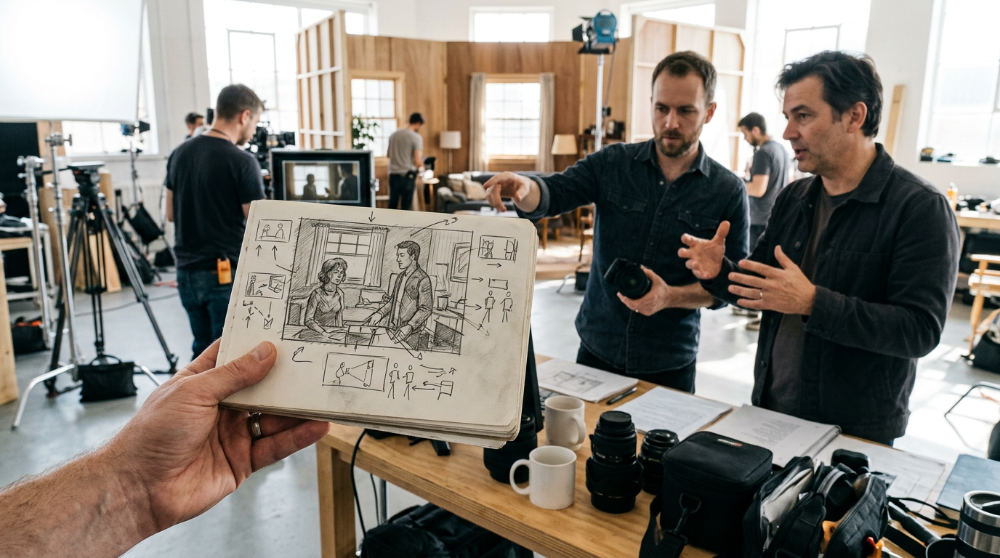
Storyboarding is a visual mapping of the script to guide the production team. It provides a frame-by-frame representation of each scene. If the script is the soul of your project, storyboarding is the skeleton. By mapping out the script visually, you can identify complex shots that might require specialized equipment. This includes drones or custom motion graphics. It allows the director and the client to see exactly how the story will unfold. This ensures the narrative matches the intended emotional impact of the brand.
Effective storyboarding also helps in identifying potential technical hurdles. If you are planning real estate video production, a storyboard helps you visualize how to move through a property to highlight its best features without wasting time on site. This phase is about validation. It is where we confirm that the visual language aligns with the creative twist we are known for. This step is essential for organizing logistical details. It ensures that the transition from a logical plan to a visionary screen reality is fluid and professional.
Source: Georgia Tech Library
5. Conduct thorough location scouting to manage environmental variables.
Location scouting is the process of finding and vetting physical sites for filming. You visit potential sites to evaluate lighting, background noise, and space. You should never walk onto a set for the first time on the day of the shoot. A beautiful room might have terrible acoustics. A public park might have restrictive permits that you haven’t yet secured. This is the time to nail down those permissions for both public and private property usage to avoid legal delays.
Beyond the aesthetics, you must handle the practical logistics. This includes planning for power access, crew movement, and equipment truck parking. If you are filming a high-stakes commercial, environmental variables can make or break your schedule. By vetting these sites early, you can adjust your lighting plan or sound strategy before the expensive gear arrives. At Pretzel Logic, we handle these site visits with a practitioner’s eye. We make sure every location is technically sound and visually compelling.
Source: Lone Star College
6. Build a production schedule that accounts for setup and breakdown time.
Building a production schedule involves mapping out a precise timeline. This goes from the first equipment load-in to the final wrap. A common mistake is forgetting to include buffer time for weather delays or technical troubleshooting. If a camera fails or a storm rolls in, your schedule needs the flexibility to absorb that hit. This logical project management is what keeps high-concept creative visions from turning into logistical nightmares.
You also need to coordinate the arrival of talent to minimize idle time on set. Keeping actors or corporate executives waiting for hours while you set up lights is a waste of both time and money. The pre-production stage is often the most time-intensive because it requires aligning these technical constraints with creative goals. At Pretzel Logic, we use our planning & pre-production services to build these schedules with surgical precision. We account for every minute. The production phase must move forward with efficiency.
Source: Lone Star College
7. Organize audio assets with the same priority as video files.
Audio is frequently treated as a secondary concern. This is a mistake. Sound constitutes half of the viewer’s experience. During the scripting phase, you must plan for sound effects, field recordings, and specific interview requirements. Identifying where music metadata or specialized audio licenses are needed early prevents legal hurdles during the final stages of the project. If your narrative relies on a specific emotional beat, the music choice should be baked into the plan. Never let it be an afterthought.
Technical environmental checks are equally vital. You must determine if the chosen filming environment requires external microphones or specialized dampening to combat echo. Organizing these assets with the same rigor as visual files ensures a high-quality finished product. By treating sound as a foundational logistical item, you avoid the common pitfall of capturing beautiful footage that is ultimately unusable due to poor audio clarity. For projects requiring high-end studio environments, resources like Lightz Out Studios can provide insights into professional acoustic setups.
Source: Georgia Tech Library
8. Finalize your video resolution and technical delivery specifications.
Technical specifications must be locked in before the first frame is captured. You need to decide on delivery formats, such as 4K, 1080p, or vertical orientations for social media platforms. This ensures the framing is appropriate for the final destination. This decision influences your choice of camera sensor size and lenses. These are essential for achieving a specific cinematic look. A TV commercial requires a different technical lens than an Instagram Reel. Your equipment choices must reflect that reality.
Aligning these specs with the distribution platform prevents resolution loss or awkward cropping during the editing phase. Technical planning is a core component of pre-production video planning. Whether you are aiming for a high-definition corporate presentation or a stylized social campaign, defining these parameters early allows the director of photography to compose shots that look professional across every intended screen.
Source: Georgia Tech Library
9. Plan for accessibility including captions and high-contrast visuals.
Modern video production requires a proactive approach to accessibility. Rather than treating it as a post-production task, incorporate accessibility into the storyboarding phase. This involves planning for text-safe zones within your framing. You need to accommodate closed captions without obscuring vital visual information. If a speaker’s face or a product logo is covered by subtitles, the impact of the scene is diminished.
Visual accessibility also includes ensuring that color palettes used in motion graphics meet readability standards. High-contrast visuals and clear typography are essential for broad audience engagement. This foresight ensures the content is inclusive. It reaches the widest possible demographic. Taking these steps during the planning phase demonstrates a commitment to quality. It ensures the message is accessible to everyone.
Source: Georgia Tech Library
10. Execute a pre-production kickoff meeting with the full creative team.
The final logistical step is the kickoff meeting. This is where the finalized script, storyboard, and schedule are distributed to all departments. This meeting serves to clarify individual roles. The Director, Director of Photography, Sound Engineer, and Wardrobe must all be in sync to prevent on-set confusion. When everyone understands their specific responsibilities and the timing of the day, the production flows much more smoothly.
This is also the moment to conduct a final walk-through of the creative twist that makes the video unique. This alignment allows the team to execute the concept to screen process with high efficiency. By ensuring every department head is on the same page regarding both the logical workflow and the visionary goals, you minimize the risk of expensive errors. The final product must match the original intent.
Source: Lone Star College
Bridging Logic and Creativity in San Diego
At Pretzel Logic Productions, we utilize the Pretzel Logic approach. This is a methodology where rigid logical collaborative workflows meet thought-provoking creative twists. We believe the most impactful videos are born from a perfect balance of discipline and imagination. For high-stakes sectors, we offer specialized pre-production planning for law firms and medical device companies. These industries require a different level of scrutiny. Every word of the script must be vetted for legal and medical standards before filming begins.
Our San Diego-based team manages nationwide logistics from our headquarters. We coordinate complex shoots for corporate brands across the country. Whether we are filming in a local studio or at multiple sites across different time zones, we apply the same rigorous standards to every project. Effective planning ensures that Post-Production is efficient and targeted. This is the final phase where editing, color grading, and sound design occur. By doing the heavy lifting during pre-production, we ensure the final product is not only visually stunning but also strategically aligned with your brand’s goals. For projects involving physical products, we often collaborate with specialists in food styling and photography. Details matter.
Avoiding Common Pre-Production Pitfalls
One of the most frequent mistakes in video production is over-scoping. This leads to budget fatigue and unfinished projects. To avoid this, use a refined planning workflow. Stay within your resource limits. Keep your creative ambitions grounded in reality. The integration of AI video production in modern commercial planning can also streamline concept development and storyboarding. This allows for faster iterations during the early stages of a project.
Specific industries also require unique planning lenses. For example, restaurant-centric planning requires expertise like integrating food styling into the early staging phases. This ensures the product looks appetizing under studio lights. Similarly, specialized property production requires careful coordination of lighting and property access. Do not neglect the handoff to the final editing stages. Make sure your data management plan is part of the initial logistics. By anticipating these needs early, you can focus on the creative storytelling that truly moves the needle for your brand.
Frequently asked questions
What is pre-production planning for video, film, and multimedia?
Pre-production is the first phase of the video process involving all planning and preparation before filming begins. It typically includes brainstorming, scripting, storyboarding, and organizing all logistical details to ensure a smooth transition to the set. A successful stage involves balancing logical project management with high-concept creative vision.
| Term | Definition | Key Deliverable |
|---|---|---|
| Pre-Production | Initial planning phase | Production Schedule |
| Scripting | Narrative roadmap | Approved Dialogue |
| Storyboarding | Visual mapping | Shot List |
Do you work with brands across the country?
Yes, Pretzel Logic Productions serves corporate brands and businesses nationwide from our San Diego base. We manage 100% of the logistics from concept development through final delivery for clients regardless of their physical location. Our team specializes in managing remote stakeholder approvals and multi-site production schedules.
What is the difference between branding video production and marketing video production?
Branding focuses on the ‘who’ and the core identity, often serving as a long-term foundational asset for a company. Marketing videos are typically designed for 1-2 specific campaigns with the intent to drive immediate conversions or actions. Both require distinct scripting and storyboarding lenses to ensure the messaging hits the intended ROI targets.
How long does the pre-production stage typically last?
The duration varies by project scope, but it is often the most time-intensive phase, requiring significant time to ensure the concept to screen process is professional and to prevent costly errors during active production. High-level planning services are essential for high-stakes industries to align creative goals with technical constraints.
If you are ready to transform your complex message into a compelling visual narrative, our team is here to guide the process. Please fill out our contact form to start your pre-production planning with Pretzel Logic Productions today.