
Last updated September 9, 2026
A high-impact video requires more than just a camera. It demands a logistical and creative blueprint. Based on industry standards and data from Milanote and StudioBinder, this guide provides the essential templates used to bridge the gap between initial concepts and final deliverables. These tools ensure your production remains on schedule and under budget.
Direct Answer: What are the best pre-production templates for 2026?
The most effective pre-production workflows utilize six core templates: a Centralized Planning Hub for project management, a combined Storyboard and Shot List for visual mapping, a Stripboard Shooting Schedule for time optimization, a Visual Moodboard for tone, a specialized Crew Contact Sheet for logistics, and a comprehensive Production Checklist for task accountability. Using cloud-based versions of these tools allows for real-time updates and seamless team collaboration.
Key Takeaways
- Centralization is Key: Use a master hub to keep moodboards, shot lists, and call sheets in one accessible place.
- Visual Alignment: Storyboards and moodboards prevent creative drift and ensure stakeholders agree on the look before filming starts.
- Efficiency Saves Money: Stripboard-style scheduling and detailed script breakdowns prevent costly overtime and last-minute gear rentals.
- Logistical Precision: Digital contact sheets and checklists ensure no permit, insurance requirement, or crew detail falls through the cracks.
1. Centralize your creative vision with a master Pre-Production Plan hub.
A successful project starts by consolidating moodboards, shot lists, and call sheets into a single central hub to ensure team-wide accessibility. Using a visual-first layout allows you to track project development from the initial spark through full execution without losing track of crucial assets. At Pretzel Logic, we believe a solid pre production planning template should be more than a static document. It acts as a living ecosystem for your story. We integrate logical workflows with high-level creative twists to ensure your planning isn’t just about ticking boxes but about maximizing storytelling impact. Utilizing a variety of core templates helps ensure that planning, logistics, and task accountability remain consistent throughout the project.
For complex projects, you should include integrated checklists for specialized workflows and gear requirements (such as anamorphic lenses or specific lighting rigs). This centralized approach guarantees that all stakeholders, from the director to the client, can access what they need in one place. By adopting this structure, you eliminate the friction of digging through email threads to find the latest version of a schedule. Furthermore, having a Visual Pre-Production Hub Template allows remote teams to collaborate on storyboards and location photos instantly, which is vital for high-speed commercial productions.
Source: Milanote
2. Use a Storyboard and Shot List to map the visual transition from script to screen.
Translating script pages into a tangible visual plan requires a Shot List that specifies lens choice, camera angle, and movement for every single setup. When you combine this with a storyboard, you create a definitive map for the crew. We recommend using tools where you can drag and drop note cards or illustrations into a template to visualize blocking before you ever step foot on set. Because our comprehensive pre-production planning services involve detailed visual mapping, we often share these storyboards with the editor early.
Clinics and studios that offer this service help align the project’s rhythmic structure and pacing long before the first frame is captured. For marketing agencies, this phase is the best time to provide feedback on brand placement and visual tone. Getting these details right early prevents costly reshoots and ensures the creative vision is preserved throughout the process. During a Script Breakdown, you identify every character and prop needed for these shots, ensuring the art department is ready when the camera rolls. Detailed storyboards serve as the ultimate insurance against misunderstood creative directions between clients and directors.

Source: Milanote
3. Implement a Stripboard-style Shooting Schedule to optimize production time.
Efficiency on set is largely determined by how well you organize your days. Instead of filming in chronological order, many productions use a stripboard template to organize scenes by location and cast availability. This method often involves visual markers to represent different scenes, making it easy to see where you can batch shots together to save time on lighting setups. You must calculate estimated shoot times for each scene to prevent overages on set, which is a major factor in managing budgeting and video production costs.
Ensure the 1st AD has a live, cloud-based version of the schedule to adjust for real-time production delays or weather changes. In a fast-moving environment, having a flexible schedule that updates instantly across the crew’s devices is vital. Proper scheduling prevents the team from rushing through the final shots of the day, which often results in lower quality footage. It is the backbone of a professional production, keeping the energy high and the creative output consistent. A well-organized stripboard allows the producer to see exactly where travel time between locations can be minimized.
Source: StudioBinder
4. Establish a Visual Moodboard to define the creative language early.
Before a single light is placed, you must establish a cohesive visual language. A moodboard allows you to use a built-in image library or upload custom references to define color palettes and lighting styles. By cropping and arranging images visually, you convey the emotional feel of the video to stakeholders in a way that words simply cannot. We often include video references alongside still images to demonstrate specific camera movement expectations or editing styles we intend to use. This visual alignment is one of the most important steps of marketing video production.
This ensures the brand’s identity is correctly represented. The moodboard serves as the North Star for the art department and the cinematographer, whether you are building a campaign for a boutique restaurant or a large law firm. It sets the standard for the entire production, ensuring that every frame contributes to the desired atmosphere and brand message. When everyone from the client to the gaffer understands the intended look, you reduce the risk of aesthetic disagreements on set. This visual guide is essential for maintaining consistency across a multi-day shoot with different locations.

Source: Milanote
5. Organize logistics with a specialized Film Crew Contact Sheet template.
Clear communication is the heartbeat of any set, and a specialized film crew contact sheet is the primary tool for maintaining it. You should keep a comprehensive list of every cast and crew member’s contact information in a single, shareable document to prevent data silos. To maximize efficiency, categorize these contacts by department, such as directing, producing, or the art department. This organization allows for rapid communication during emergencies or last-minute location changes.
Many producers choose to link this contact sheet directly to their Call Sheet builder for seamless distribution. This ensures everyone from the lead actor to the production assistant has the right numbers at their fingertips. In an industry where time is quite literally money, searching through emails for a phone number is an avoidable waste. Centralizing these details ensures that logistics remain fluid, whether you are coordinating transport for equipment or confirming arrival times for background talent. A digital sheet also allows for quick updates if a new crew member joins the production mid-shoot.
Source: StudioBinder
6. Follow a Pre-Production Checklist to ensure every detail is managed.
For those managing their first production, the sheer volume of details can be overwhelming. A structured pre-production checklist provides a step-by-step sequence to ensure no logistical details like insurance or municipal permits are overlooked. According to a case study on first-time music video management, using a structured framework allowed a beginner producer to manage a full team effectively without missing critical gear or location requirements. This checklist should cover everything from location scouting to the distribution of the final Call Sheet.
This template works best when you assign specific tasks to team members within the document to maintain accountability. It is particularly useful for managing larger crews and complex equipment lists that require early booking. By following a standardized path, you transform a chaotic list of "to-dos" into a manageable timeline. This systematic approach reduces stress for the director and allows the crew to focus on the creative execution rather than scrambling for missing paperwork or gear. Consistency in using a checklist ensures that the production values remain high regardless of the project’s scale.
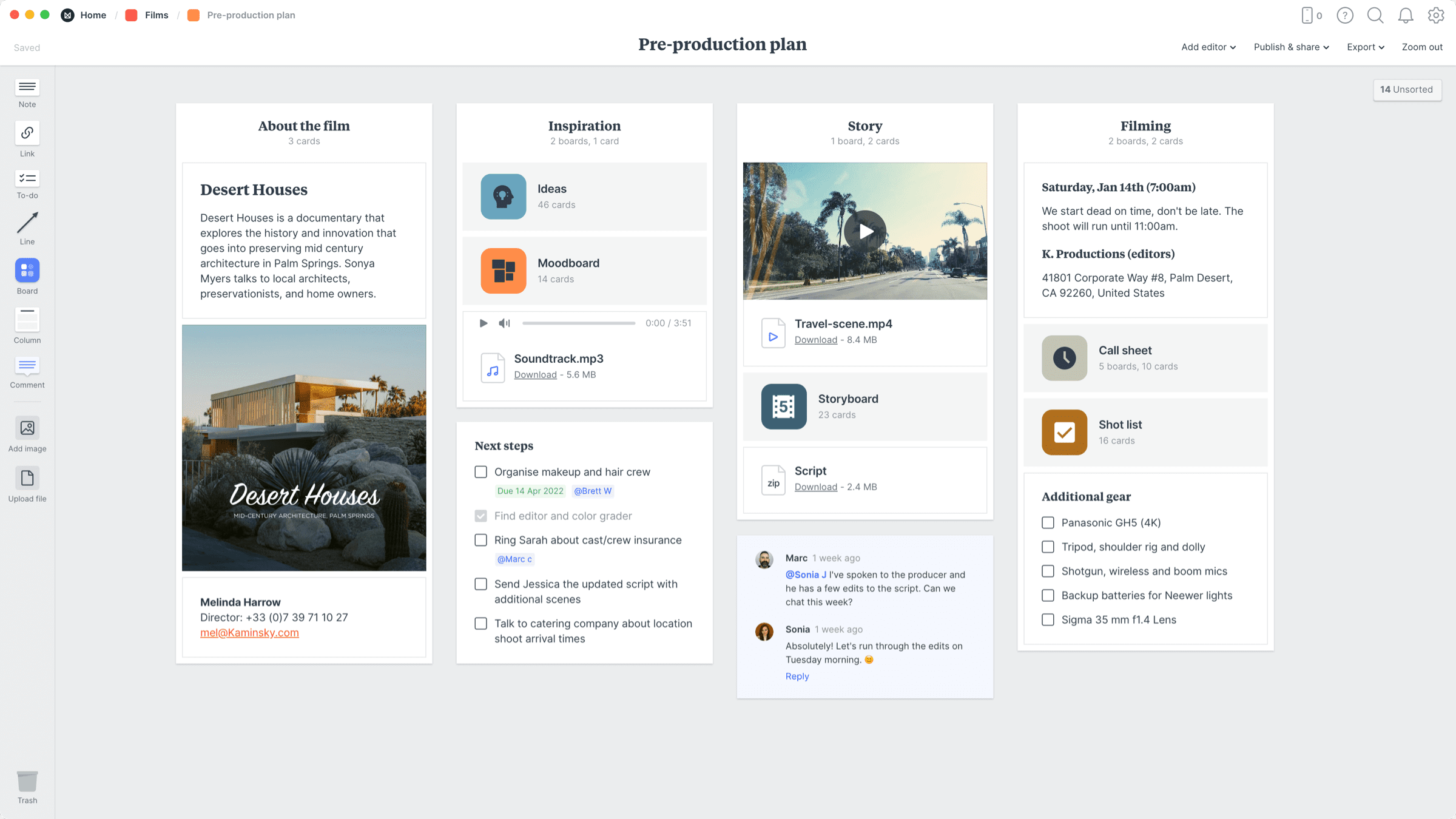
Image source: milanote.com
Source: Notion
Transitioning Templates to the Production Environment
A pre production planning template is only as good as its execution. In a dynamic market, variables like coastal weather or specific municipal permits require flexible documents. At Pretzel Logic, we integrate logical workflows with high-level creative twists to ensure planning isn’t just about checkboxes but about storytelling impact. We recognize that a legal firm’s video needs a different pacing than a restaurant’s promo.
Specialized planning in the industry often includes templates that address legal and location-based requirements to ensure all local regulations are met. Moving from a static PDF to a live environment requires real-time updates. You should ensure your shot list and call sheet are accessible via mobile to keep the crew synchronized during high-pressure shoots. If you are filming at a specialized facility, your planning must account for specific stage dimensions and power requirements ahead of time.
Collaborating with a partner for technical needs can further bridge the gap between your video assets and your digital presence. For example, working with web development experts ensures your planned content fits the technical specifications of its final hosting platform. This holistic view ensures that the templates you fill out today serve the marketing goals of tomorrow. Proper data handling within these templates ensures that even the most complex permit requirements are tracked and satisfied before the production trucks arrive on site.
Measuring ROI and Finalizing Your Workflow
Pre-production is where money is saved. By investing time in a script breakdown template, you identify prop and cast needs early, preventing costly day-of rentals or overtime fees. We approach pre-production with specific consulting on campaign strategy and budgeting, ensuring your marketing spend is optimized for maximum reach. Common mistakes in script breakdowns often include overlooking background talent or specific lighting requirements. Using a detailed template forces these considerations into the light.
Our pre-production phase aims to create a seamless transition into post-production and animation workflows. This creates a clear handoff from the director to the editor, as all assets are already categorized and noted. If you are looking to elevate your brand, choosing comprehensive pre-production planning services can be the difference between a generic clip and a high-conversion campaign. The efficiency gained allows for more time spent on the creative performances of the cast.
The ROI of pre-production is measured by the lack of friction on set. Every hour spent refining a shooting schedule or a moodboard saves multiple hours in the editing room. Ready to move beyond basic checklists? Follow established industry standards to ensure your project delivers both emotional resonance and technical excellence. Accessing Free Film Production Documents gives your team a baseline for professional documentation. By grounding your creative ambition in logistical reality, you ensure your vision reaches the screen exactly as intended.
If you are ready to turn your concept into a professional reality, request a consultation today regarding your upcoming video project. We take the stress out of logistics so you can focus on the story you want to tell your audience.
FAQ

Q: Why is a shot list more important than just a script? A: A script tells the story, but a shot list tells the crew how to capture it. It details the technical requirements (lenses, angles, and movement) needed to translate words into visuals. A Script Breakdown helps by listing every item required in that specific shot.
Q: How do these templates save money? A: They prevent "decision fatigue" on set and eliminate downtime. By batching shots by location and identifying gear needs early, you avoid overtime costs and expensive last-minute rentals. Efficient planning ensures that cast and crew are only on the clock when they are actually needed.
Q: Should I use digital templates or paper? A: Digital, cloud-based templates are superior. They allow the entire crew to see updates in real-time, which is essential for managing weather changes or schedule shifts. Using tools like a digital Call Sheet builder ensures everyone receives the same information simultaneously.
Q: What is the most overlooked part of pre-production? A: Communication logistics. Using a proper crew contact sheet and a centralized hub ensures everyone is looking at the same version of the plan, preventing errors during the shoot. Often, forgetting to verify location power limits or parking permits can derail an entire production day.