
Last updated September 14, 2026
A post production house is a specialized studio that handles the final stages of video creation, including editing, color grading, sound design, and motion graphics. These facilities bridge the gap between raw footage and a finished broadcast-ready asset, ensuring technical compliance and high-level creative storytelling for various distribution channels.
Key takeaways
- Comprehensive finishing. Post production includes offline editing, color correction, VFX, and sound mixing to transform raw files into cinema-quality assets.
- Strategic collaboration. The "Logical Collaborator" framework balances technical execution with creative vision to ensure a project remains both imaginative and deliverable.
- Asset revitalization. Existing brand footage can be revitalized to create new, high-impact social and broadcast assets without the cost of a new shoot.
- Boutique advantage. San Diego boutique houses offer more collaborative, focused environments than high-volume, transactional LA firms.
- Technical mastery. Final delivery requires specific formats to ensure broadcast compliance for theatrical or streaming platforms.
Understanding the Role of a Modern Post Production House
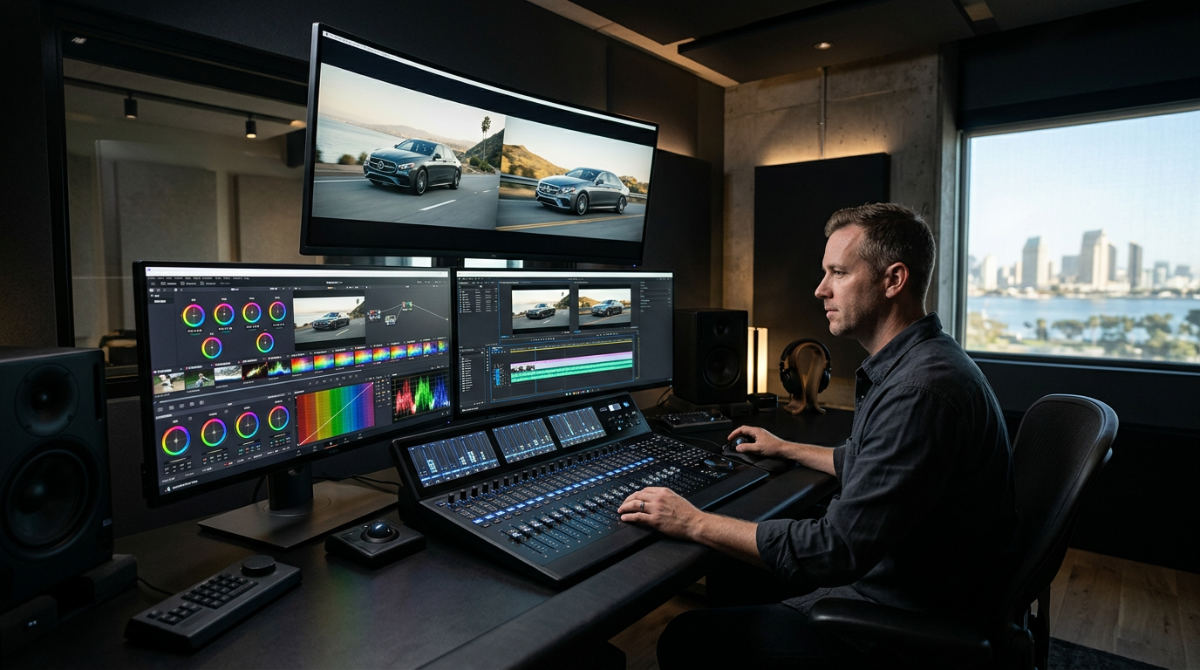
A modern post production house acts as the laboratory where the creative editorial "twist" happens. It’s the place where standard cuts become narrative drivers that actually hold an audience’s attention. In recent years, the industry has largely transitioned from traditional film labs to digital-first environments. Now, massive computing power allows editors to manipulate 8K files and complex visual layers in real time. At Pretzel Logic, we operate as Logical Collaborators. We use a workflow that keeps high-level creative concepts grounded in what is technically possible. This prevents the nightmare scenario where a visionary idea becomes impossible to render or export by the client’s deadline.
Big LA firms are the default for many brands. We think that’s a mistake. A shift toward specialized hubs is happening for a reason. Our San Diego location provides a boutique experience for those seeking an alternative to high-volume post production houses. Our team dedicates deeper creative energy to each individual frame because we aren’t juggling a hundred simultaneous projects. We choose quality over volume. This lets us implement sophisticated editing and post-production strategies that smaller boutique firms often overlook. It is the right environment for brands that want video content to feel like a bespoke film rather than a mass-produced corporate asset.
The Anatomy of a Full Service Post Production Studio
A full service post production studio provides a centralized hub for visual storytelling, technical mastering, and multi-format delivery. These facilities house specialized suites designed for critical viewing and acoustic accuracy. According to Buffalo 8, modern services must include conform and color correction across various delivery formats to meet diverse distribution requirements. This ensures the final video maintains visual integrity across theatrical screens and mobile devices alike.
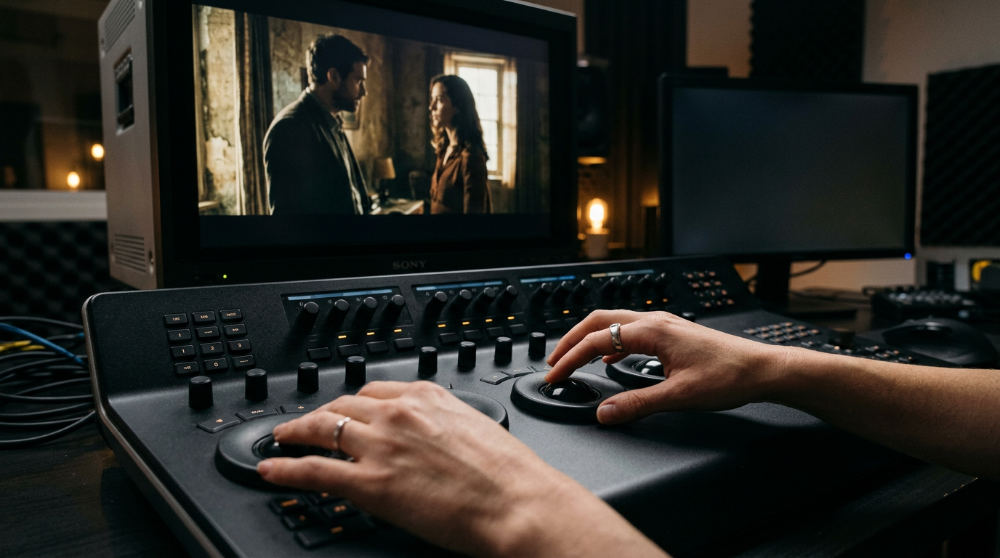
A dedicated facility is divided into specialized zones. It starts with edit suites designed for offline storytelling. This is where the pacing and emotional arc live. These rooms are built for comfort and critical viewing, giving editors and directors space to experiment with narrative paths. Visuals are only half the battle. A sound design company integrates dialogue enhancement and foley to create an immersive auditory experience. We strip away background noise and add subtle layers, like footsteps or the hum of an office, to ground the viewer in the scene. Simultaneously, specialized workstations handle Motion Graphics. Motion Graphics are animated graphic design elements used to explain complex ideas or enhance branding within a video.
How to Revitalize Your Existing Brand assets
You can breathe new life into underutilized footage through re-editing and modern color correction. It effectively doubles your content library without you ever picking up a camera. We call this Footage Revitalization. Pretzel Logic evaluates your archives and identifies ways to adapt them for modern social campaigns. A 2024 brand anthem can be re-cut into five distinct TikTok ads just by applying a high-energy edit and refreshing the color grade to match current trends.
Revitalization works exceptionally well for legal and corporate archives that usually sit on a hard drive gathering dust. We apply a "Pretzel Twist" to these assets. Using creative motion graphics and rhythmic editing makes technical or historical records visually engaging for a 2026 audience. Professional workflows include technical requirements for upscaling and conforming older video formats; otherwise, they look blurry on 4K displays. Modern post-production techniques allow editors to integrate older clips with new high-definition material so they look like they belong together.
Navigating Technical Delivery and Final Mastering
Finalizing a project involves preparing specific files for theatrical screenings or digital platforms. Every distribution channel has its own set of rules. A TV commercial requires different loudness levels and color profiles than a YouTube video. A professional post production company manages these diverse delivery specs. We ensure your corporate films production looks and sounds perfect on a smartphone or a jumbo-tron.
Modern delivery also covers quality assurance (QA) and accessibility. As noted by Ajax Creative, this includes audio description for the visually impaired and precise subtitling for global audiences. Don’t overlook the importance of secure archival for long-term data safety. Standard hard drives often fail after a few years. Professional archiving solutions are recognized for providing a stable, long-term storage solution, supporting the retrieval of raw project files well into the future. If you need help coordinating these large-scale brand initiatives, InnoVision Marketing Group offers strategic guidance and management.
1. Organize and Ingest the Raw Assets
Organization begins with the secure transfer of high-resolution footage to redundant servers and the creation of lightweight proxy files for efficient editing. This step protects the master files while allowing editors to work quickly without hardware lag. During this stage, we sync external audio recordings with the visual takes to ensure the foundation of the project is technically sound. By organizing media by scene, take, and shot type, the editor can navigate thousands of clips to find the perfect performance in seconds.
2. Execute the Creative Editorial and Offline Cut
Creative editorial is the process of selecting the most impactful performances and arranging them into a cohesive narrative structure. This stage focuses on story, emotion, and pacing rather than technical finishing. During this "offline" phase, the editor and director refine the flow to ensure the brand message resonates. Once the story is finalized, the team reaches picture lock, which is the point where no further changes are made to the timing or duration of the clips.
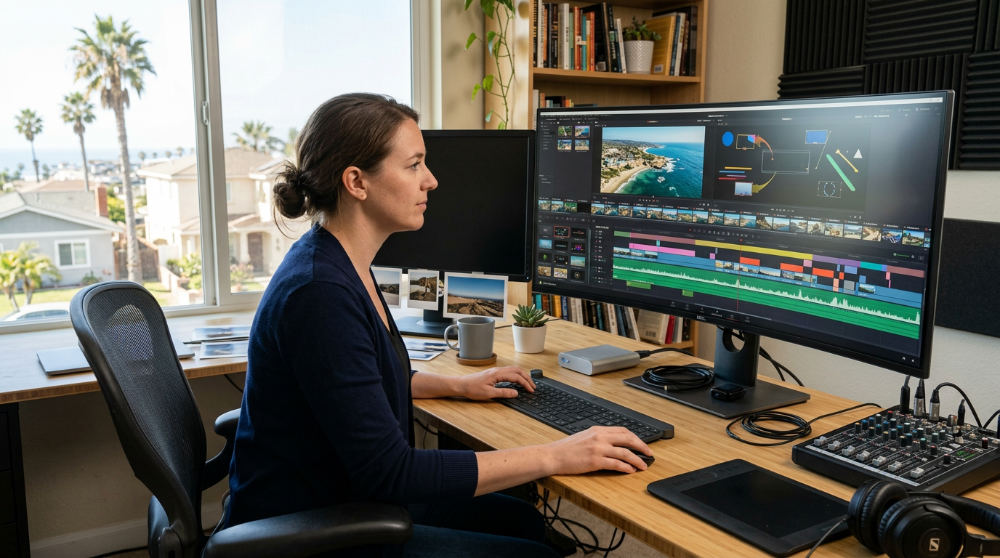
We use iterative review cycles. You provide feedback on the timing and flow before any permanent changes are made. The goal is to reach "picture lock." Once a film is locked, the duration is finalized and no further timing changes occur. According to the Massachusetts Film Office, this stage is critical. It prevents expensive rework in the sound and color departments later in the chain.
3. Apply Color Grading and Visual Finishing
Visual finishing involves the technical correction and creative enhancement of every frame to ensure visual consistency and emotional impact. A color grading studio first balances exposure and white balance across different shots to create a uniform look. After establishing a baseline, the colorist applies a stylistic grade that reinforces the brand’s identity, whether that requires warm, inviting tones or a sleek, high-tech aesthetic.
This stage also involves integrating VFX and polished motion graphics to highlight brand messages or hide unwanted background elements. Many studios utilize color-accurate workflows for cinema and various high-dynamic-range formats to ensure the video maintains its integrity across all screens. This technical finishing ensures the final product meets the high standards expected by broadcast networks and cinema houses.
4. Master the Sound Design and Final Mix
The final step is mastering the audio. We clean up location dialogue and address any clarity issues that may have occurred during the original recording. Our sound designers then layer in music and sound effects (SFX) to drive the emotional pacing. A professional mix balances these elements so the voiceover is clear while the music stays powerful in the background.
We mix audio levels to meet specific broadcast and streaming loudness standards. This prevents your ad from being too quiet or unpleasantly loud compared to other content. The process wraps up by integrating the final licensed music tracks and mastered voiceovers. If you are ready to see how a professional finish transforms your brand’s story, start your project with our team to discuss your technical and creative needs.
Common mistakes in post-production
- Skipping the proxy workflow. Attempting to edit raw 8K files directly leads to system crashes and sluggish creative decisions.
- Ignoring sound until the end. Sound is 50% of the viewing experience. Waiting until the final day to address poor audio results in a "cheap" feeling product.
- Lack of picture lock. Making structural changes after color grading has begun is a recipe for budget overruns and technical errors.
- Poor file naming conventions. If assets are named "IMG_001," finding a specific shot in a massive library becomes an expensive waste of time.
- Neglecting the archive. Failing to store a clean, text-less version of your film makes it impossible to update graphics or language for future campaigns.
Frequently asked questions
What does a post-production house do?
A post-production house handles the entire lifecycle of a video after the cameras stop rolling. This includes creative editing to build the story, color grading to set the visual mood, and sound design to ensure audio clarity. They also manage technical tasks like motion graphics, visual effects, and preparing the final files for broadcast, social media, or cinema distribution.
How much does it cost to hire a post-production company?
Costs vary based on the project’s complexity, the amount of visual effects required, and the length of the final edit. Most houses charge based on day rates for specialized talent, such as senior editors or colorists, combined with flat fees for technical finishing services like master file creation or digital archival. A simple corporate interview costs much less than a VFX-heavy commercial.
What is the difference between production and post-production?
Production is the physical act of filming, involving cameras, lights, actors, and location management. Post-production is the digital assembly and refinement of that footage. While production captures the raw ingredients, post-production is where the "cooking" happens, editing the scenes together, adding music, and polishing the image until it is ready for public viewing.
Can a post-production house work with footage I already have?
Yes, many studios specialize in footage revitalization to refresh existing brand assets. We can take older commercials or internal videos and re-cut them for new platforms like Instagram Reels. By applying modern color grading and updated motion graphics, we make years-old footage look like it was shot recently, saving you the expense of a new production.
What is the difference between offline and online editing?
Offline editing is the creative phase where the editor uses low-resolution "proxy" files to determine the story’s structure and pacing. The goal is to reach a final narrative flow called "picture lock." Online editing is the technical finishing phase where the low-res files are replaced with the original high-resolution footage for color grading, visual effects, and final mastering.
For businesses looking for a partner that combines technical precision with a creative "twist," Pretzel Logic Productions offers a full suite of finishing services. Feel free to contact us or visit our studio to see how our post-production services can improve your next brand campaign.