
Last updated September 12, 2026
Effective editing and post production transforms raw footage into a visual masterpiece. It merges logical workflows with creative flair. Based on industry standards from Adobe and Avid, this guide covers the six distinct stages, from ingestion to delivery. We ensure your brand’s story is told with precision, authentic voice, and cinematic quality.
1. Leverage non-linear editing (NLE) systems to maintain a non-destructive workflow.
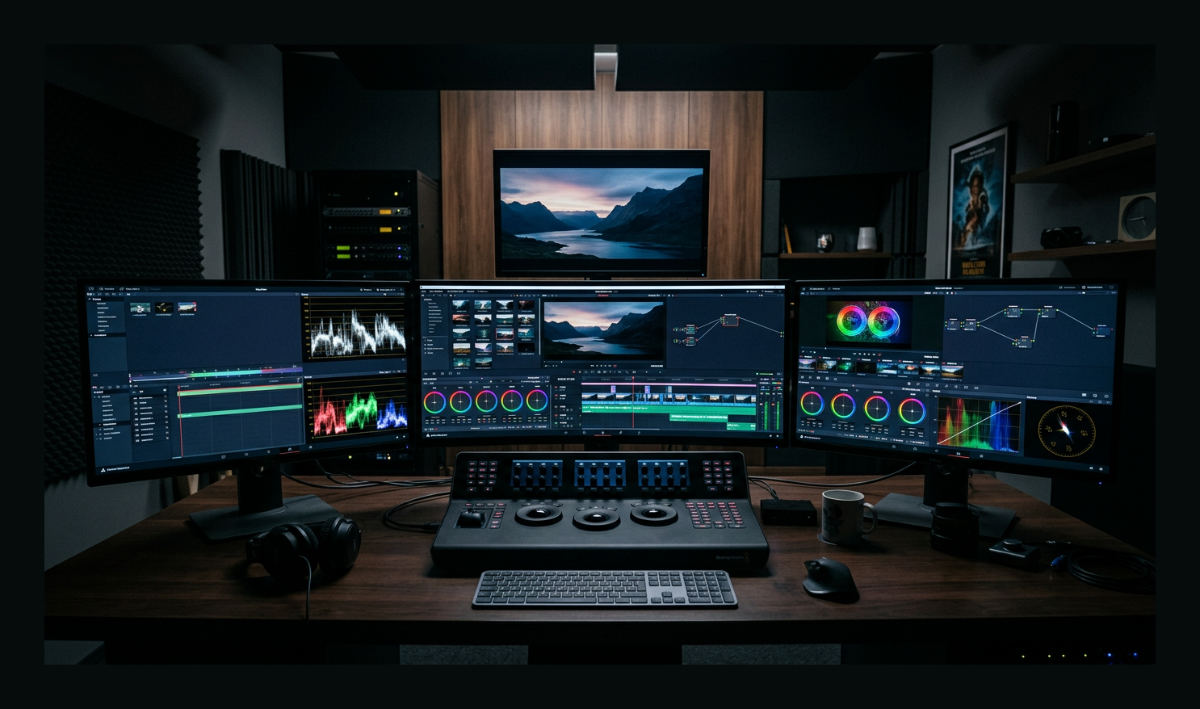
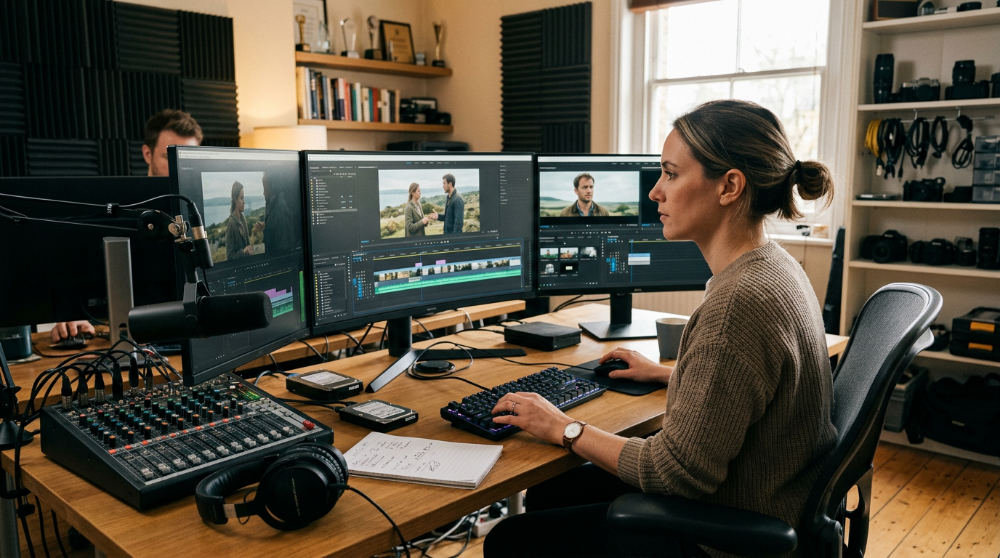
The transition from a "wrap" on set in San Diego to a finished commercial starts with data. Modern NLE systems like Avid Media Composer and Adobe Premiere Pro allow editors to access any frame of a video clip regardless of its sequence. This is the backbone of non-linear editing. Most modern editing workflows utilize these platforms to enable real-time experimentation. Because the process is non-destructive, editors can test bold creative choices without ever altering the original raw files stored on the server. This flexibility is vital during the ingestion and organization phase. Metadata helps ensure that thousands of clips remain searchable. According to Avid, the standard post-production workflow consists of six distinct stages: Ingestion, Editing, Color, Sound, VFX, and Delivery. By maintaining a clean NLE environment, you ensure that the logic of your organization supports the creativity of your edit.
2. Secure your story’s foundation by reaching ‘Picture Lock’ before moving to technical effects.
Picture lock refers to the stage where the sequence of shots is finalized. The timing of every cut is set. You shouldn’t start heavy color work or complex graphics until this milestone is hit. Narrative flow must be perfect first. Ensuring the flow is right before color grading or VFX prevents costly rework on shots that might eventually be discarded. This milestone acts as the point of no return. It allows audio and visual departments to work on a stable timeline without the rug being pulled out from under them. According to Adobe, post-production can take anywhere from a month to a year depending on the project’s complexity. Reaching picture lock early helps you manage that timeline. If you are developing a narrative for your brand, you can learn more about building a tight sequence in our efficient short film narration guide, which highlights the importance of timing in storytelling.
3. Apply color correction first to ensure consistency, then use color grading to establish a cinematic mood.
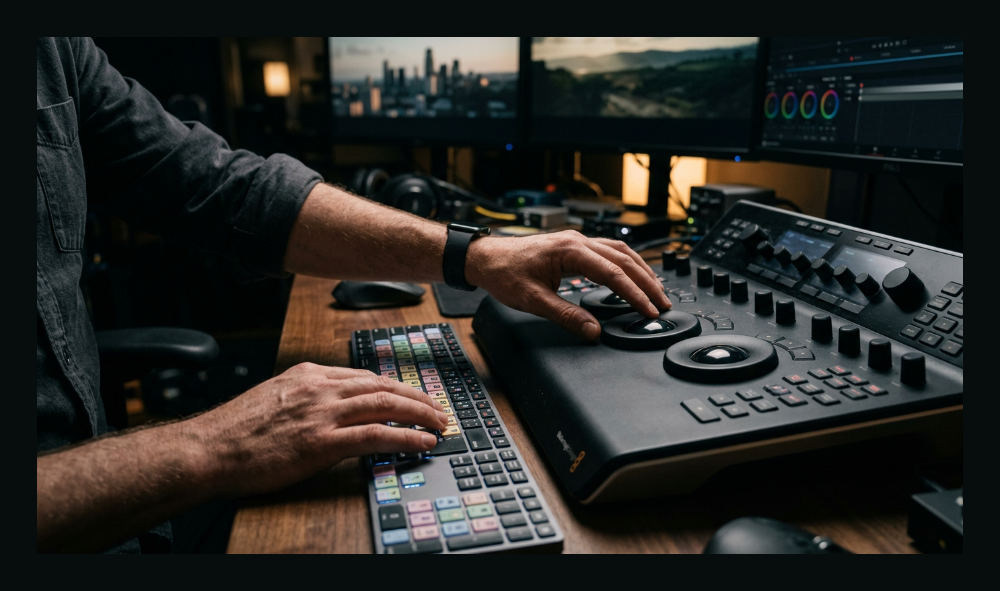
Many people confuse correction with grading. They serve different masters. Color correction is a logical step that fixes technical issues like exposure, white balance, and contrast. The goal is to make footage look uniform across different cameras so the viewer isn’t jarred by a sudden shift in lighting. Once the baseline is set, color grading becomes the creative process used to evoke emotion. You might use warm tones for nostalgia. You might use cool, desaturated tones for a clinical, high-tech feel. Professional tools allow for precise control over these distinct stages to maintain brand integrity. As noted by Gigantic Studios, this magic behind movie editing is what separates a home movie from a professional brand film. At Pretzel Logic, we treat color as a psychological tool that guides the viewer’s feelings toward your brand.
4. Incorporate Foley artistry and sound mixing to create a realistic, immersive environment.
Sound is half the experience. Yet it is often the most overlooked part of editing and post production. Foley artists record everyday sound effects, like the specific click of a pen, the rustle of a suit jacket, or footsteps on a sidewalk. These are added in post to enhance the audio’s texture. Once the sounds are captured, audio mixing balances dialogue, music, and sound effects to ensure nothing competes for the viewer’s attention. Syncing audio files with high-resolution video is a critical technical step. We recommend that you don’t just settle for library sounds. Real Foley artistry adds a layer of authenticity that makes your brand’s world feel lived-in and tangible. When your sound mixing is crisp, it keeps the audience focused on the message. They won’t struggle to hear dialogue over the background track.
5. Utilize remote collaboration tools to bridge the gap between production and post-production teams.
The days of needing to sit in the same room as your editor are largely over. Cloud-based editing software like Avid’s Edit on Demand allows editors in different locations to work on the same project simultaneously. Because post-production is inherently collaborative, teams need instant access to various versions. Effective digital asset management prevents the "lost footage" syndrome that often occurs after principal photography ends. According to Avid, these collaborative environments are essential for maintaining a fast-paced delivery schedule in a global market. If you are managing multiple marketing assets, using a tool like Pollaroo can help streamline your logistical overhead. Bridging the gap between the shoot and the final export requires a central digital hub. All stakeholders must be able to provide feedback in real-time.
6. Use motion graphics and animation to clarify complex data in corporate videos.
Animation can be used to explain abstract concepts. Live-action footage cannot always easily capture the details. If your brand deals with software, logistics, or complex data, motion graphics act as a visual bridge for the audience. Visual effects (VFX) also include cleaning up backgrounds or adding digital elements via green screen compositing. These tools make a scene look more expensive than it was. Integrating these graphics late in the process ensures they align perfectly with the finalized picture lock timing. As pointed out by UCLA Extension, professional training in these visual tools is essential for navigating the complex modern landscape. For brands that need to explain their value proposition clearly, we often suggest looking into a corporate video production company workflow that prioritizes motion design early.
7. Streamline delivery by automating export presets for various social and broadcast platforms.
The final stage of post-production involves exporting the project into specific formats. These codecs are required for TV, web, or cinema. A common mistake is using a one-size-fits-all export. This leads to distorted graphics or poor compression on social media. Properly formatted titles and closing credits must be the final layer added before the final render. According to Avid, managing digital assets through cloud-based tools allows for faster remote review and approval cycles. You should establish a library of export presets that match the specifications of your target channels. This ensures that the cinematic quality you worked so hard to achieve in color grading remains intact. For a brand to truly scale, the technical execution of the delivery must be as flawless as the initial creative vision.
Transitioning from Logical Planning to Creative Post-Production in San Diego
At Pretzel Logic, we believe the best films balance a structured workflow with a creative twist. The logic begins with digital asset management. We keep files organized so your creative energy isn’t wasted on searching for clips. When files are named and tagged correctly, the editor can move freely between ideas without technical friction. Post-production workflows often incorporate versatile tools to blend standard edits with bold visual effects. We turn a simple interview into a compelling narrative by experimenting with pacing and rhythm.
Always review how editing and post production impacts viewer engagement metrics. A well-paced cut keeps eyes on the screen. A sluggish one leads to drop-offs. Managing your budget effectively is also easier when you use a tool like Pollaroo to track project expenses alongside your creative milestones. Balancing the ledger is just as important as balancing the audio levels. By treating the post-production phase as a continuation of the storytelling process, you ensure the final product resonates. The transition from the logic of ingestion to the magic of the final render is where a brand’s unique identity is forged.
How to Measure Post-Production Success for Your Brand
Success in editing and post production is measured by how well the final product retains the brand’s authentic voice. If the personality of your business is lost under too many filters, the audience will feel the disconnect. For law firms, managing post-production for legal-specific content requires different standards for depositions versus promotional films. One requires absolute transparency. The other demands a more cinematic approach to build trust.
San Diego businesses should look for post-houses that integrate AI-driven tools. These speed up tedious tasks like transcription and rough cuts. This efficiency allows more time for high-level creative decisions. Compare your final output against your initial video production digital marketing plan to ensure the story aligns with your conversion goals. If the video looks beautiful but fails to drive the intended action, the edit may need to be tightened. Check out how we approach storytelling in minutes to see these workflows in action. By reviewing performance data, you can refine your post-production strategies for future campaigns.
Mastering the Modern Workflow with Pretzel Logic

We bring your creative vision to life with a comprehensive post-production suite. It includes everything from color grading to sound editing. Whether you are looking for a corporate video production company or a partner for high-end commercials, the workflow remains the key to quality. Our team specializes in revitalizing existing footage using motion graphics and animation to breathe new life into older assets.
We offer full-scale post-production editing services that handle the technical complexities. You can focus on the big picture. From the first frame of ingestion to the final export for broadcast, we ensure every detail is polished to industry standards. If your current assets feel outdated, our team can re-edit and enhance them with modern visual effects to re-engage your target audience. Connect with us today to take your project from a wrap to a masterpiece.
Frequently asked questions
What are the 5 steps of post-production?
The core stages typically include Ingestion, Editing (Offline), Sound Design, Color Correction/Grading, and Delivery. At Pretzel Logic, we integrate VFX and Motion Graphics as a critical additional layer to ensure a polished final product that stands out in a crowded digital marketplace.
Is editing part of post-production?
Yes, editing is the central pillar of post-production where the story is actually built from the raw footage. It includes both non-linear editing for the narrative structure and technical adjustments for sound and visuals, transforming hours of raw material into a cohesive and engaging final film.
How long does post-production take after filming?
Post-production can take anywhere from a month to a year depending on the complexity. Corporate videos may have a faster turnaround, while feature films or complex VFX-heavy projects require significantly more time for sound mixing, color grading, and rendering high-resolution digital assets for various platforms.
What is the difference between color correction and color grading?
Color correction is the logical step of fixing technical errors like exposure and white balance to achieve a natural, consistent look. Color grading is the creative step of applying a specific look or mood to the footage, such as high-contrast noir or warm sunset tones, to evoke emotion.
Ready to transform your raw footage into a professional visual story? Reach out to our team and get started on your next project today.