
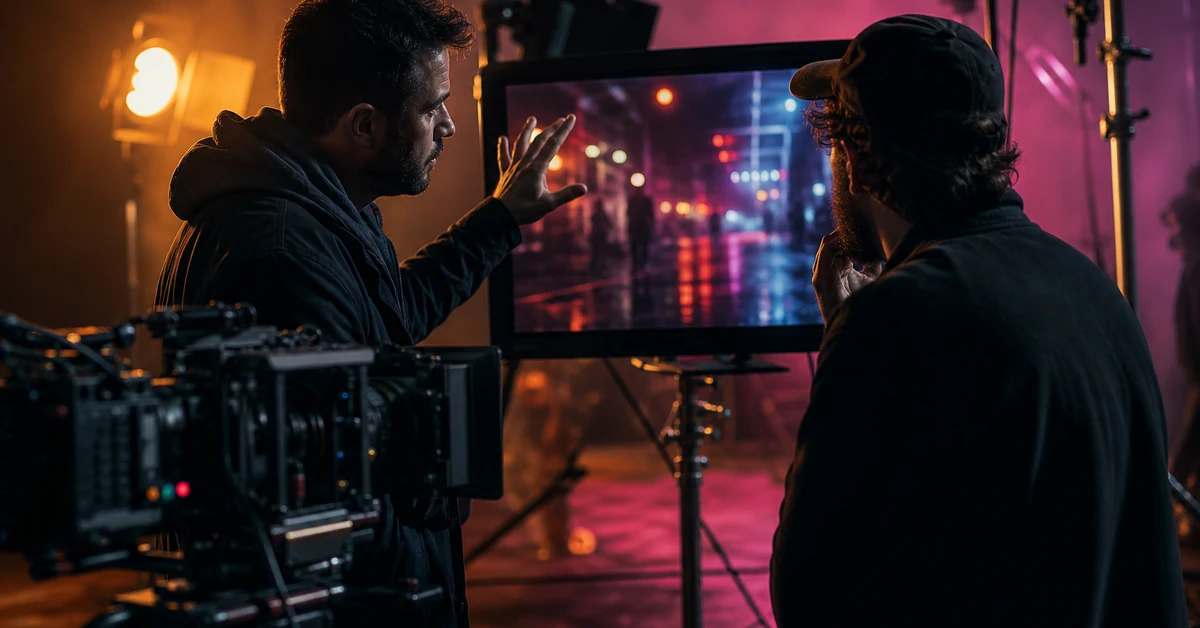
Every video project starts with an idea. But the distance between an idea and the final cut — that’s where pre-production planning video separates the professionals from the hobbyists. It’s the phase where creativity meets logistics, where your story gets its bones before the cameras ever roll.
If you’ve ever watched a shoot descend into chaos — wrong gear, missing permits, a script nobody fully understood — you already know the cost of skipping the plan. Pre-production isn’t an optional warm-up lap. It’s the single biggest lever you can pull to stay on budget, hit deadlines, and protect the creative vision you set out to capture.
What Is Pre-Production Planning? The Foundation Every Video Needs
Pre-production planning video is the structured process of preparing everything your shoot requires before a single frame is recorded. StudioBinder describes it as the “blueprint phase” — the point where you transform an idea into an actionable production plan. It covers concept development, scripting, storyboarding, budgeting, casting, location scouting, scheduling, equipment selection, and crew assembly.
Rob Pinney Studio puts it simply: “Pre-production is the planning stage that happens before filming begins.” It’s where creative vision meets practical execution. Without it, you’re guessing. With it, you’re executing.
For a comprehensive pre-production planning video approach, Pretzel Logic’s pre-production services cover everything from scripting to call sheets before the crew arrives on set. The process isn’t glamorous. It’s spreadsheets, schedules, and dozens of small decisions. But each of those decisions prevents a crisis later — and that’s the entire point.
What Pre-Production Covers
A complete pre-production planning video workflow includes concept definition, scriptwriting and revisions, storyboarding and animatics, budget allocation and approval, casting and talent coordination, location scouting and permitting, equipment selection and rental, crew hiring and scheduling, production design and art direction, and final call sheet distribution. Some productions also build shot lists, schedule table reads, and run camera tests before the first official shoot day.
Storyblocks frames it well: during pre-production planning video, you map out your strategy, define concepts with your team, and start shaping the video through storyboarding and scripting. The decisions you make here set the tone for everything that follows. That might sound like overkill for a two-minute brand video. But projects that skip these steps pay for them later — a missing permit kills a shoot day, a vague script wastes hours of talent time, gear that wasn’t tested creates footage that can’t be fixed in post.
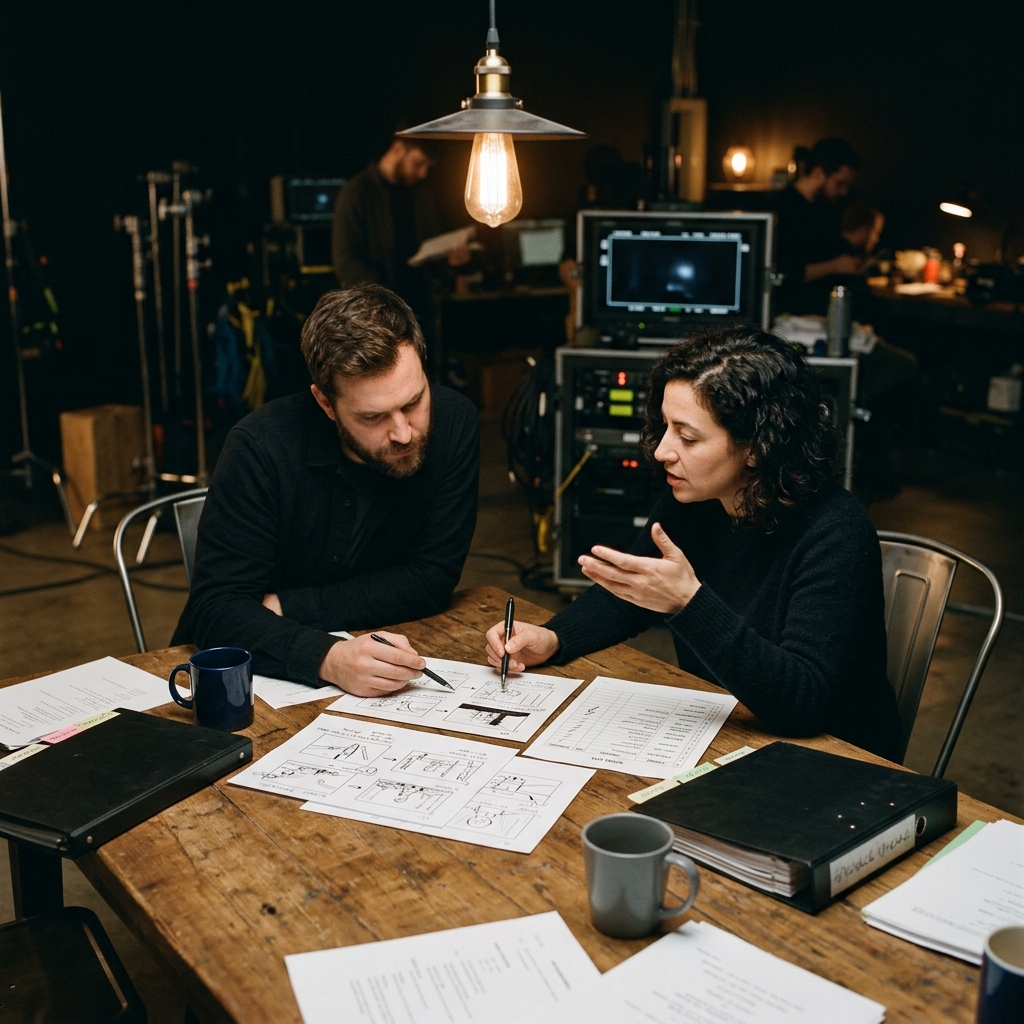
Why Pre-Production Planning Makes or Breaks Your Video Project (With Data)
The numbers are blunt. Storimatic Studio’s research found that projects spending adequate time in pre-production planning video are 50% more likely to stay on budget and 70% more likely to meet deadlines. Projects with detailed pre-production plans typically save 20 to 30 percent compared to those that rush straight into production.
That’s not a rounding error. On a $30,000 shoot, that’s $6,000 to $9,000 back in the budget — money that could fund an additional edit, better music licensing, or a second deliverable cut. When you multiply those savings across a year of regular video production, the discipline of pre-production planning video pays for itself many times over.
Benjamin Franklin’s old line — “If you fail to plan, you are planning to fail” — lands differently when you’ve seen a shoot day unravel. Videomaker captured it: “In the world of video production, no other saying is more accurate.” Pre-production planning video doesn’t just save money and time. It protects the creative process itself.
The Creative Upside Nobody Talks About
Most people frame pre-production planning video as risk management. And it is. But it’s also a creative amplifier. When you’ve already locked locations, cast, and gear, the director can focus on performance and shot composition instead of solving logistics on the fly. The DP can light with intention rather than reacting to surprises. The talent gets clear direction because the script was actually finished before the shoot.
Videomaker’s reporting gets this right: working out the story on paper — or in a storyboard — is far cheaper than discovering it doesn’t work on set. Pre-production planning video is where you find the problems before they cost real money. As Videomaker also noted, it’s a lot less expensive to work out the story or message of your production on paper than in front of the lens.
The Professional Divide
“A well-managed pre-production process lays the groundwork for a smooth production phase and distinguishes professionals from amateurs,” Videomaker notes. “Reaching this level requires discipline, communication, organization, and effective team and crew management.”
You feel the difference immediately on set. Crews that invested in pre-production planning video move with purpose. They know the shots. The schedule holds. Lunch breaks happen on time. The alternative — a shoot where the director is rewriting scenes between takes while the DP waits — bleeds energy and money in equal measure. And when you’re paying talent and crew by the day, those wasted hours aren’t just frustrating. They’re expensive.
The Pre-Production Process: 6 Phases From Concept to Call Sheets
Every production house has its own workflow, but the core pre-production planning video process follows a predictable arc. StudioBinder walks through it step by step — from locking the script to sending out call sheets. Here’s how it breaks down in practice, and what each phase demands from your team.
Phase 1: Concept Development and Briefing
TechSmith puts it first for a reason: defining your project is the most critical step in the pre-production planning video process. This is not about choosing a subject — it’s about setting clear vision and direction. Who is the target audience? What’s the video’s purpose? What are the measurable objectives?
SpotOn Productions emphasizes the production brief as the “roadmap for the entire pre-production phase.” This single document aligns every stakeholder on scope, creative direction, budget, and timeline. Skip it, and you’ll chase alignment through endless email threads instead of building toward a shoot date. For Pretzel Logic’s full-service video production, the brief is where every project begins — because clarity at this stage prevents confusion at every stage that follows.
Phase 2: Scriptwriting and Storyboarding
The script is the spine of any pre-production planning video workflow. Every scene, every line, every transition flows from it. For narrative and commercial work, storyboarding adds a visual layer — translating words into frame compositions so the director and DP share the same mental picture before arriving on set.
Georgia Tech’s video production guide nails it: “Know the end before you begin. When planning your video, concentrate on one clear idea, topic, or focus point.” A script that tries to cover three messages delivers none. A script with one sharp idea — that’s what separates a video someone remembers from one they scroll past. For beginners, Flixier’s complete guide to video pre-production covers scripting, storyboarding, equipment selection, and crew assembly in a practical, no-jargon format.
Phase 3: Budgeting and Resource Allocation
StudioBinder reports that most productions aim to shoot roughly five pages of script per day, with one page equaling about a minute of screen time. That ratio becomes your budgeting backbone — it tells you how many shoot days you need, how much talent time to book, and what equipment rentals cost day-by-day.
Budgeting in pre-production planning video also covers locations (permits, fees, insurance), crew rates, set design and props, wardrobe, craft services, and post-production allocation. The line items are unglamorous. The discipline is what keeps the creative ambition grounded in reality. Storyblocks makes this point directly: when you’re creating video, skipping the planning stages can be tempting — but rushing through pre-production planning video inflates costs during production and post, and the data proves it.
Phase 4: Casting and Crew Assembly
Casting shapes everything. The right talent elevates a script beyond what’s on the page. The wrong talent — even with a perfect script — creates footage that needs to be rescued in editing. Crew selection follows the same logic: a DP who understands your visual language, a sound recordist who catches what others miss, a production designer who builds the world the script lives in.
Phase 5: Location Scouting and Logistics
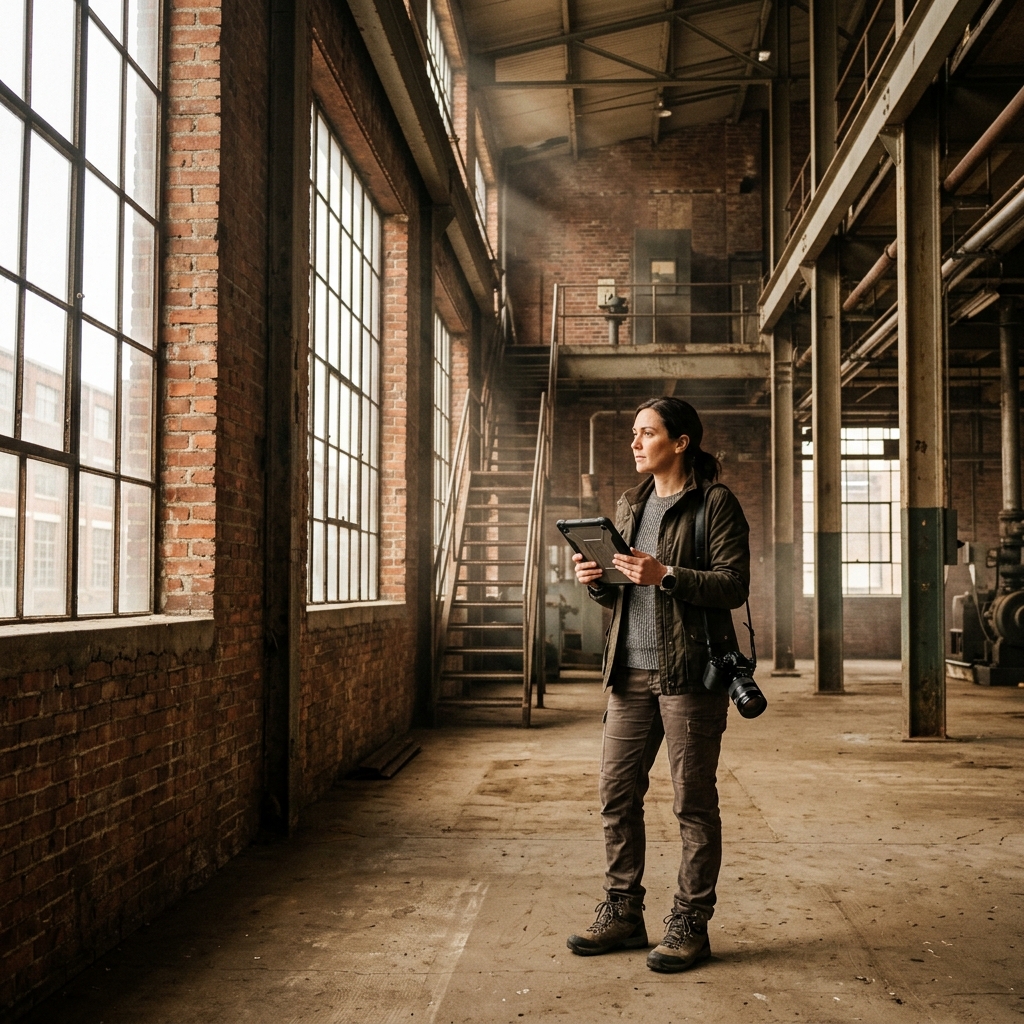
Location scouting isn’t just finding a pretty backdrop. It’s verifying power access, natural light angles at shoot time, sound challenges (nearby traffic, HVAC systems, ambient noise), parking and load-in logistics for the crew, and permit requirements with the relevant jurisdiction. Platform Executive’s guide to planning a video shoot emphasizes that these practical and legal steps require authority and confidence — not guesswork. Miss a permit, and the shoot doesn’t happen. Miss a sound check, and your hero dialogue is buried under an air conditioner hum that post-production can’t fully remove.
Phase 6: Scheduling and Call Sheets
The final pre-production planning video deliverable is the call sheet. Every crew member, talent, and stakeholder gets a document that answers: where to show up, when to show up, what to bring, and what scenes are shooting that day. StudioBinder calls this “the complete roadmap from green-light to cameras rolling.” When the call sheet is detailed enough that nobody needs to text the producer with questions, pre-production is complete. The cameras can roll.
Pre-Production for Small Teams: How to Do More With Less
Big productions have dedicated producers, line producers, and production coordinators. Small teams often have one person wearing all those hats — and that person is frequently also the director, the DP, or both.
Videomaker’s guide to modern pre-production planning video workflow for small teams makes the case that smaller crews can now create studio-level content. Modern mirrorless cameras and DSLRs produce footage accepted across the professional industry. Collaboration tools keep distributed teams in sync. Cloud-based script and storyboard platforms replace physical production binders.
The constraints are real — smaller budgets, shorter timelines, leaner crews — but pre-production planning video becomes more critical at this scale, not less. When you can’t afford to lose a single shoot day, the planning has to be tighter than it would be for a big-budget production with slack built in.
What to Prioritize When Resources Are Thin
If you’re running a two-person production team and can only do four pre-production steps instead of twelve, focus on the script, the shot list, the location confirmation, and a realistic schedule. Those four items prevent the failure modes that kill small shoots: unclear creative direction, gear that arrives at the wrong location, and schedules that collapse before lunch.
The University of Hull’s pre-production guide reinforces this: pre-production planning video involves brainstorming ideas, scripting, creating a storyboard, and organizing all the details needed to effectively produce your video. You decide what story you want to tell, how you want to tell it, and what resources are needed. For a small team, this clarity is the difference between a production that feels professional and one that feels like a scramble.
AI and Modern Tools That Compress the Timeline
AI-powered pre-production tools are changing the math on small-team efficiency. Shootsta reports that modern tools can compress a traditional two-week pre-production planning video process into two to five working days. That doesn’t mean cutting corners — it means automating the administrative parts so creative energy goes where it matters.
Lumira Studio’s workflow optimization guide outlines ten practical changes that halve video production time without dropping quality — covering pre-production, post-production, feedback cycles, and distribution. The common thread: the largest time savings happen before the cameras roll.
StoryTrack emphasizes the essential phases: concept, scripting, storyboarding, budgeting, logistics, and final prep. The tools change, but the process holds. Templates, cloud collaboration, and AI-assisted scheduling reduce busywork without replacing the creative judgment that only comes from an experienced producer. A pre-production planning video workflow powered by modern tools is faster, but it’s not automatic — the creative decisions still require a human who understands what makes a shot work.
The Best Pre-Production Tools, Templates, and Checklists for 2026
The pre-production planning video toolkit evolves quickly, and keeping current matters. QuickFrame provides a 15-point production planning checklist covering budget allocation, target audience definition, creative brief structure, timeline milestones, and equipment logistics. Fettle’s pre-production checklist organizes the essential steps by production phase — from creative brief to final logistics. Online Optimism’s checklist covers everything from concept approval and scripting to location scouting, gear prep, and crew coordination.
What separates a useful checklist from a generic one: specificity. A checklist that says “scout location” is noise. A checklist that says “confirm power drop within 25 feet of camera position, test ambient noise with A-weighted meter at 10 AM, verify parking for 4 vehicles within 200 feet” — that saves a shoot day. The best checklists are granular because the problems that derail productions are granular.
Essential Template Categories
Every pre-production planning video toolkit should include a creative brief template, a script format template, a storyboard template (paper or digital), a budget spreadsheet with line-item categories, a location scout checklist, a casting brief, a shot list template, and a call sheet template. Start with these eight. Customize as your process matures. Swap out templates that don’t fit your workflow. The format matters less than the discipline — what counts is that every production uses the same system so nothing slips through.
Which Tool Fits Which Team Size
Solo creators and two-person teams can run pre-production planning video from a shared Google Drive with spreadsheets and templated docs. Mid-size production crews benefit from dedicated platforms like StudioBinder or StoryTrack that centralize scripts, schedules, and shot lists. Large commercial productions need the full stack — plus a producer whose only job is keeping the planning process on track. SNO Sites puts it plainly: budgeting time for pre-production planning can make the difference between a smooth shoot and a chaotic one. The tool you pick is secondary. The time you reserve is what actually moves the needle.
Frequently Asked Questions
How long should pre-production planning take for a video project?
It depends on complexity. A simple brand video might need a week of pre-production planning video preparation. A commercial production with multiple locations, talent, and complex lighting setups typically needs two to four weeks. Storyblocks advises that rushing pre-production inflates costs during production and post — the data proves it. Build the schedule backward from the shoot date and protect the planning time. If your shoot is in four weeks, pre-production starts now.
What is the most common pre-production mistake?
Starting production with an incomplete script. When the creative direction is still unsettled on shoot day, everything else fractures — schedule, budget, crew morale, and final quality. TechSmith emphasizes defining the project clearly before anything else moves. Lock the script first. Everything downstream depends on it. A script that’s “close enough” isn’t close enough when you’re paying a crew to stand around while decisions get made.
Do I need a storyboard for every video project?
Not every project needs a full illustrated storyboard. But every project benefits from a shot list — a written description of each planned frame, camera angle, and movement. For narrative work and commercials, storyboards become critical because they align the director, DP, and client on the visual plan before expensive production time begins. Georgia Tech recommends visualizing the story before shooting, in whatever format your team can execute.
What should a pre-production checklist include?
A thorough pre-production planning video checklist covers: script locked and approved, budget finalized, locations scouted and permitted, crew hired and scheduled, talent cast and confirmed, equipment reserved and tested, storyboard or shot list complete, insurance in place, and call sheets distributed to every stakeholder. QuickFrame and Fettle both publish practical checklist templates organized by production phase that you can adapt to your workflow.
Can AI replace traditional pre-production planning?
AI accelerates parts of pre-production planning video — script formatting, scheduling, auto-generating call sheets from shot lists — but it doesn’t replace creative judgment. Shootsta’s reporting shows AI tools compress timelines significantly. Lumira Studio’s workflow research demonstrates that the combination of AI tooling plus experienced human oversight produces the best results. Let AI handle the administrative busywork so producers and directors can focus on story, performance, and visual language. Pre-production is still a human creative process — AI just removes some of the friction.
How do I know when pre-production is truly complete?
You’re ready when every crew member can answer basic questions about the shoot without asking. They know the location. They know the call time. They know which scenes are shooting and in what order. They’ve seen the script and the shot list. If you’re still clarifying creative direction via text messages the night before the shoot, pre-production planning video isn’t done. When the only conversation on set is about creative execution — not logistics — you planned well enough.
Ready to Plan Your Next Production?
Pre-production planning video is the difference between a shoot that runs smoothly and one that runs over — over budget, over schedule, and over everyone’s patience. The numbers back it up: 50 percent better budget adherence, 70 percent better deadline performance, and 20 to 30 percent cost savings for projects that plan before they shoot.
Storimatic Studio’s research puts it plainly: effective pre-production planning saves time, money, and stress while maximizing creative potential. Thorough planning prevents costly surprises, reduces overtime, and optimizes every resource you allocate. Coursera’s structured pre-production course reinforces this — successful video projects are built on planning, not luck.
At Pretzel Logic Productions, we build pre-production planning video into every project because we’ve seen what happens without it — and because we want your shoot day to feel like the creative payoff, not the crisis point. Whether you’re producing a TV commercial, a brand film, or a social campaign, the plan comes first. The cameras come after.
Ready to tell your story? Let’s plan it together.
er.