
Every great brand story starts somewhere. For thousands of businesses, it starts with a 30-second window — a TV commercial video production that turns viewers into customers. The global commercial production market was worth $195 billion in 2023, projected to reach $260 billion by 2030. That’s not hype. That’s millions of brands betting their growth on the power of video storytelling.
But here’s what most guides won’t tell you: great TV commercial video production isn’t about having the biggest budget or the fanciest gear. It’s about having the right process, the right partner, and a creative team that genuinely understands your brand’s story. As Froth & Fur — rated #1 on Clutch’s top NYC and LA commercial production leader matrix — puts it, the best work comes from teams that treat every project as a chance to build something distinct.
Let’s walk through exactly what that looks like, from concept to broadcast.
What Is TV Commercial Video Production?
TV commercial video production is the end-to-end process of creating broadcast-quality advertising — from the first creative concept through the final delivery of a polished, air-ready spot. It covers every discipline: scriptwriting, casting, location scouting, principal photography, editing, motion graphics, sound design, and color grading. Every step matters. Every detail lands on screen.
In 2026, “TV” means more than network television. It means broadcast, cable, streaming, connected TV (CTV), and over-the-top (OTT) platforms. A TV commercial today might premiere during a live sports broadcast, then run as a six-second YouTube pre-roll, then retarget viewers on Hulu. The production approach has to account for all of it — shooting with framing flexibility, cutting multiple durations from the same session, and mastering for screens of every size.
The numbers are staggering. Over 5.2 million TV commercials were produced globally in 2023, with commercial video production output increasing 9.2% year over year to 3.8 million hours. The average 30-second U.S. spot cost $105,000 — up 7% from the year before. But those numbers don’t capture what brands are actually buying. They’re buying attention. The kind that builds trust, shifts perception, and moves product off shelves.
The best TV commercial video production doesn’t feel like advertising at all. It feels like a story someone wanted to tell you. That’s the bar. Everything else is just noise.
The TV Commercial Production Process: From Concept to Broadcast
Professional TV commercial video production follows a three-phase structure refined over decades. Skip any phase, and you’ll feel it in the final product — rushed creative, logistics that weren’t thought through, or post-production that’s scrambling to fix what planning should have prevented.
Pre-Production: Building the Blueprint
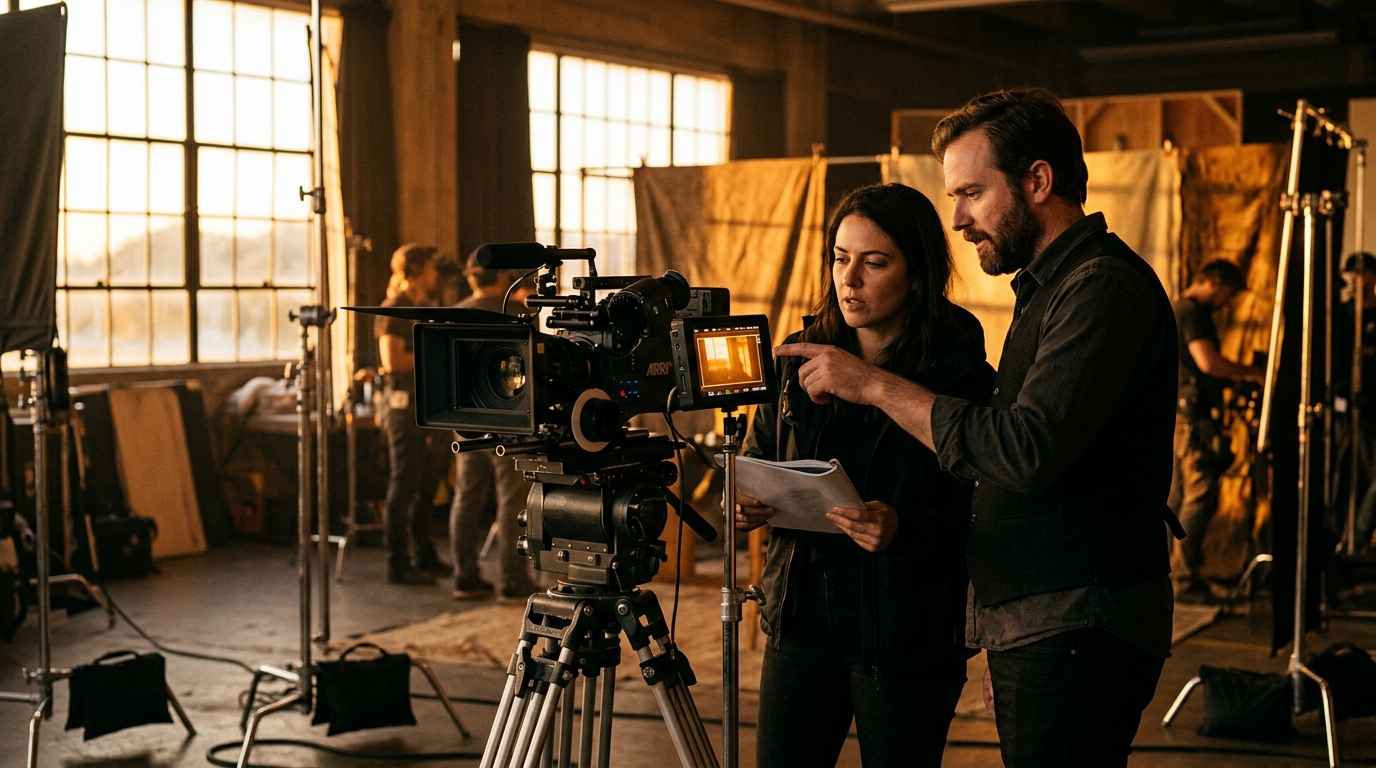
Pre-production is where projects are won or lost. It covers concept development, scriptwriting, storyboarding (including animatics), budget planning, casting, and location scouting. The goal: nail every creative and logistical decision before anyone touches a camera.
Levy Production Group, with four decades of commercial production history, describes this as the phase where scripts become shoot-ready plans through storyboarding, casting, and location work. The more choices you lock in before the cameras roll, the fewer expensive surprises you face on set. That sounds obvious. But in practice, it takes discipline most teams don’t have.
Scriptwriting deserves special attention. A 30-second spot gives you roughly 75 to 80 words. Every single one has to earn its place. The best commercial scripts don’t describe the product. They dramatize what the product makes possible. They show a problem, a moment of tension, and a resolution that lands with emotional weight — all in less time than it takes to order coffee.
Location scouting is another underrated piece. The right location does half the visual storytelling for you. The wrong one fights the camera every frame and forces the DP to work around problems instead of toward a vision. Professional TV commercial video production means finding — or building — environments that serve the story, not the other way around.
Production: Lights, Camera, Action
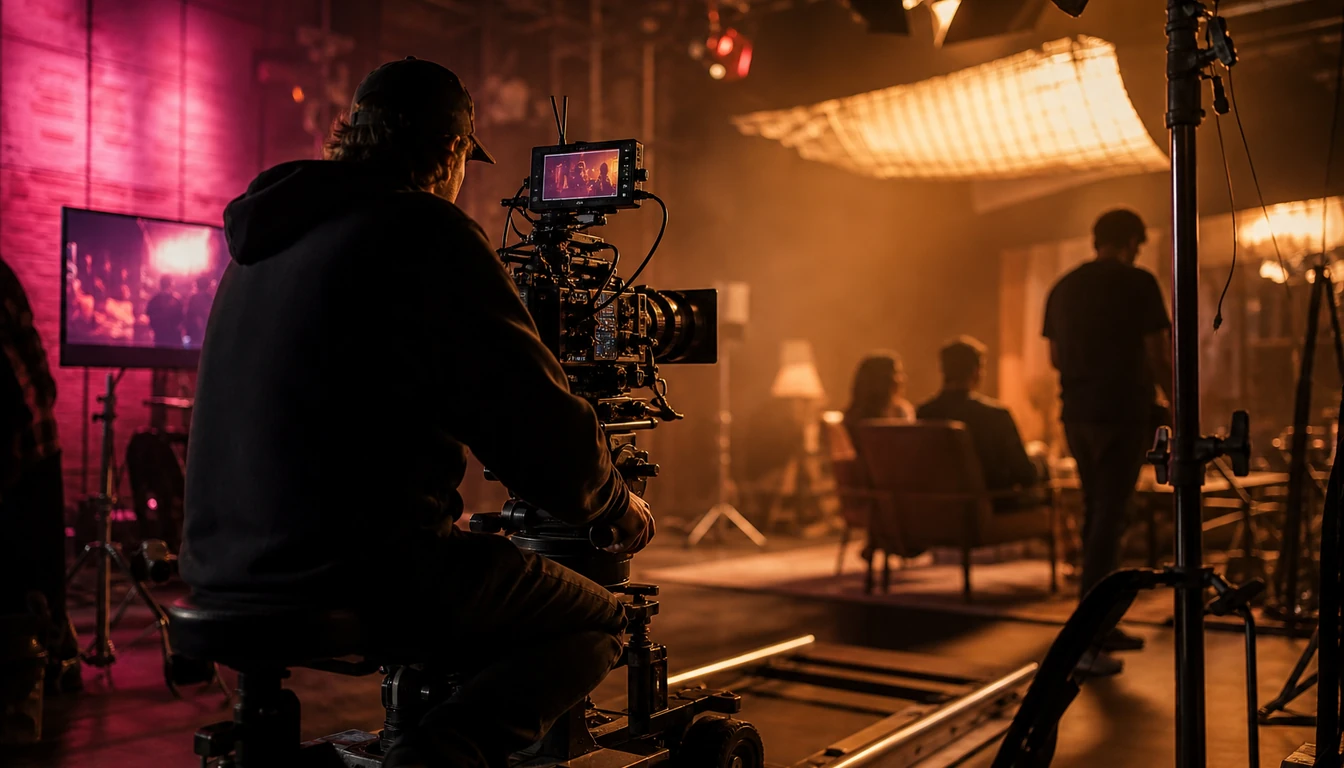
Production is the shoot — the days on set where planning becomes footage. It’s the phase most people picture: cameras, lights, talent, crew, movement, energy.
Mills James, one of the largest production companies in the country with thousands of spots from Super Bowl commercials to PSAs, integrates agency-level creative and production under one roof. That model eliminates the finger-pointing that happens when the creative agency and the production house are separate. One team. One vision. One set of problems to solve.
A professional shoot runs on tight schedules. Every hour costs money. The best crews move fast without sacrificing quality — they’ve rehearsed, pre-lit, and blocked every camera move before talent arrives. When the machine is already humming, the talent can focus on performance instead of waiting around for the technical team to figure things out.
Post-Production: Where Everything Comes Together
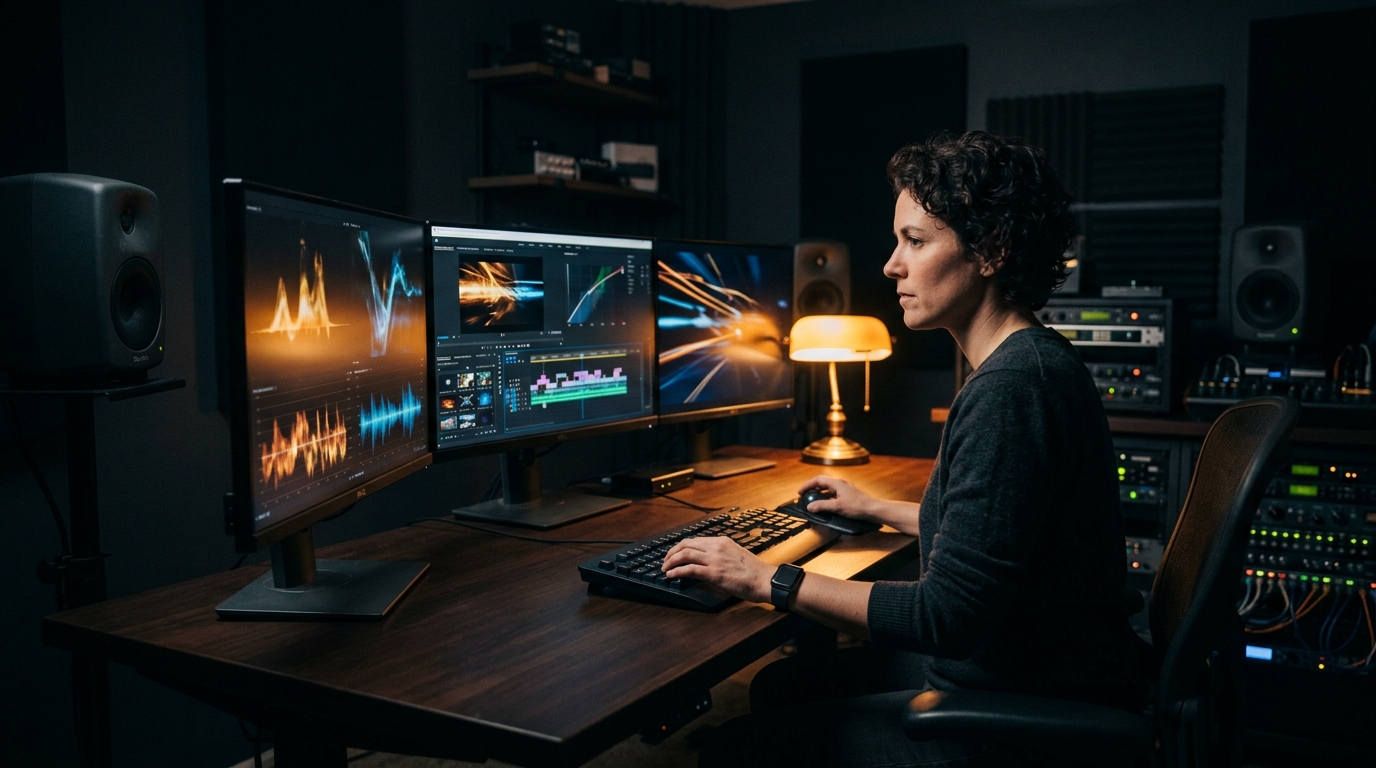
Post-production turns raw footage into a finished commercial. Editing, color grading, sound design, motion graphics, and visual effects converge here. It’s where pacing gets locked in, music elevates emotional moments, and color transforms flat digital footage into something cinematic.
Modern post has been transformed by AI. According to the World Federation of Advertisers, GenAI adoption is accelerating across animatics, translation, editing, transcription, and post-production. Tasks that used to take days of rotoscoping now finish in hours. That doesn’t replace the editor’s eye — but it gives them more time to focus on creative decisions instead of technical drudgery.
Sound is the single most overlooked element of TV commercial video production — and the most important. Bad audio makes expensive footage look cheap. Great sound design — from the voiceover to the music bed to the subtle foley that gives a scene texture — is what separates broadcast-quality work from everything else. You can forgive a shot that’s slightly soft. You can’t forgive audio that sounds like it was recorded in a bathroom.
How Streaming and CTV Are Reshaping TV Commercial Production
Digital video ad spend will exceed $80 billion in 2026, according to the IAB, growing nearly 20% faster than the overall ad market. That’s double what it was five years ago. The shift from traditional broadcast to streaming and CTV isn’t coming — it’s here and reshaping how commercials get produced.
CTV ads need to work across radically different viewing contexts. A viewer watching a 30-second spot during a live football game on a 65-inch living room TV is having a fundamentally different experience than someone seeing a 15-second version of the same ad on their phone during a YouTube break. Smart production teams build for both — shooting with framing flexibility, cutting multiple durations, mastering for every screen size.
The production fundamentals haven’t changed. Great lighting is still great lighting. A compelling performance is still a compelling performance. But the delivery ecosystem demands more: more formats, more versions, more agility in post. The production studios that thrive are the ones treating this complexity as creative opportunity, not logistical burden.
In-House vs. Agency Production: Which Model Actually Delivers?
Seventy-one percent of companies now produce video in-house, up from 46% in 2020. It’s the single biggest structural shift in the industry over the last five years. But the number hides nuance.
In-house production makes sense for high-volume, templated content — social clips, product demos, training videos. But the data shows mid-sized companies now produce roughly three videos per week, double their 2023 volume — and most of that is short-form digital, not TV spots. The in-house boom is real. It’s just concentrated in formats where speed and volume matter more than cinematic quality.
When a brand needs a broadcast-quality TV commercial — the kind that airs during primetime or runs as a hero CTV campaign — the calculus shifts. The gear, the crew, the creative direction, the post-production polish that broadcast demands aren’t things most internal teams have on a shelf.
Pretzel Logic Productions sees the spectrum differently. Not every project needs a full agency production. Not every project can be done in-house. The smartest approach is often a hybrid. Your internal team handles the always-on digital content. A dedicated production partner brings the firepower for your hero campaigns. Volume and quality — without burning out your internal team on projects they’re not equipped for.
This isn’t just theory. The data backs it up. Social video posts generate 12 times more shares than text and images combined. Eighty-seven percent of consumers say a video convinced them to buy. And 90% of marketers say video provides good return on investment. Those numbers demand a production approach that can handle both volume and showpiece quality. One team for everything rarely delivers both.
If you want to see what that level of TV commercial video production looks like, Pretzel Logic’s portfolio is a good place to start.
How to Choose the Right TV Commercial Production Partner
Choosing a production partner is a high-stakes decision. You’re trusting them with your brand voice, your budget, and a final product that will represent you to your entire audience. Here’s how to cut through the reels and pitch decks.
Look at their range, not just their highlight reel. A production house that’s delivered great work across industries — healthcare, restaurants, casinos, sports franchises, nonprofits — brings adaptable creative muscle. They’ve solved problems in contexts you haven’t thought of yet. That breadth matters when the unexpected hits your project.
Ask about their process, not just their portfolio. The best work in the world doesn’t help you if the process behind it is a black box. You want a partner who brings you into pre-production early, shows you cuts at multiple stages, and genuinely wants your feedback. Demo Duck puts it plainly: a commercial is 60 seconds or less, ideally 30 seconds — and the timeline should be transparent from day one.
Check whether they understand distribution. A beautifully shot commercial delivered in the wrong format for your CTV platform is a problem. Your production partner should know the spec sheets for every platform you’re targeting — frame rates, color spaces, audio requirements, closed captioning standards. If they can’t speak to those details fluently, keep looking.
Watch for creative chemistry. Hard to quantify, easy to feel. When you talk to a production team, do they get excited about your brand? Do they ask smart questions? Do they push back on ideas that won’t work and offer better ones? That’s the difference between a vendor and a partner. One delivers footage. The other delivers results.
Here’s something most guides gloss over: the production environment itself matters. A well-equipped studio with proper lighting grids, sound treatment, and flexible stage space can cut your shoot time by a third compared to on-location setups where every setup takes twice as long. That’s not marginal — it’s the difference between a single shoot day that hums and two days that crawl. Lightz Out Studios in San Diego offers exactly that — a professional facility where production teams can focus on the creative work instead of wrangling logistics. For brands targeting the Southern California market, having studio-grade infrastructure within reach is a genuine competitive advantage.
For brands that want a full-service marketing approach — where the TV commercial fits into a larger strategy spanning brand, digital, and media — working with an integrated team like InnoVision Marketing Group means the commercial isn’t an island. It’s part of a campaign where every piece reinforces every other piece.
Frequently Asked Questions
How long does TV commercial video production take?
A professional TV commercial typically takes 6 to 12 weeks from concept to final delivery. Pre-production accounts for roughly half that timeline — scripting, storyboarding, casting, and location scouting. The shoot itself is usually 1 to 3 days. Post-production takes 2 to 4 weeks depending on complexity, including editing, color grading, sound design, and 2 to 3 rounds of client review. Rush timelines are possible but trade speed for creative depth — fewer concept options, less time for casting selects, more decisions made on the clock instead of on their merits.
What makes a TV commercial different from a digital video ad?
TV commercials are built for broadcast standards — higher production values, stricter technical specs for frame rates and color spaces and audio levels, and a narrative structure designed to hold attention during passive viewing. Digital ads can be looser, shorter, optimized for active scrolling. Smart brands shoot TV-quality footage and cut multiple versions: broadcast spots, CTV versions, and social cuts — all from the same production.
Do I need a full production agency, or can my team handle it in-house?
It depends on the project scope. In-house teams are great for high-volume content — social clips, product demos, quick-turnaround videos. But if you need cinematic quality, professional talent, specialized gear, or a creative partner who’s solved your specific production challenges before, an experienced TV commercial video production partner is the better investment. Many brands use a hybrid model: internal team for always-on content, external partner for hero campaigns.
What should I prepare before contacting a production company?
Come with a clear understanding of your goal — what should the audience think, feel, or do after watching? Know your target platforms (broadcast, CTV, social, all of the above). Have a rough budget range in mind — enough clarity that the production team can propose realistic options. And bring examples of commercials you admire. Reference material cuts through more creative ambiguity than any brief ever written.
How is AI changing TV commercial production?
AI is accelerating post-production workflows — faster rotoscoping, automated transcription and translation, intelligent color matching across shots. The WFA reports that most major brands now use GenAI somewhere in their production pipeline. But the creative core — the storytelling, the performance, the emotional hook — still requires human judgment. AI speeds up the work. It doesn’t write the story.
What’s the most common mistake brands make with TV commercials?
Trying to say too much. A 30-second spot has room for exactly one idea — two if they’re tightly connected. Brands that try to pack in every feature, benefit, and call to action end up with a commercial that says nothing memorable. The best spots leave you with a feeling and one clear next step. That’s the standard you should expect from your TV commercial video production investment — and anything less isn’t worth the airtime.
Your Story Deserves to Be Told Right
Great TV commercial video production isn’t a commodity. It’s a craft. It takes a team that listens before they pitch, plans before they shoot, and polishes until every frame earns its place. The best productions don’t feel like transactions. They feel like someone finally understood what you’ve been trying to say about your brand — and knew exactly how to bring it to the screen.
Pretzel Logic Productions brings that approach to every project. Big-budget quality at any budget. A creative team that treats your brand like their own. A process that’s transparent from concept to delivery. And a philosophy — Fresh, Hot, & Slightly Twisted — that means you’ll never get a cookie-cutter commercial from a crew that’s just going through the motions.
If you’re ready to tell your story the way it deserves to be told, reach out to Pretzel Logic Productions. Let’s make something people actually want to watch.