
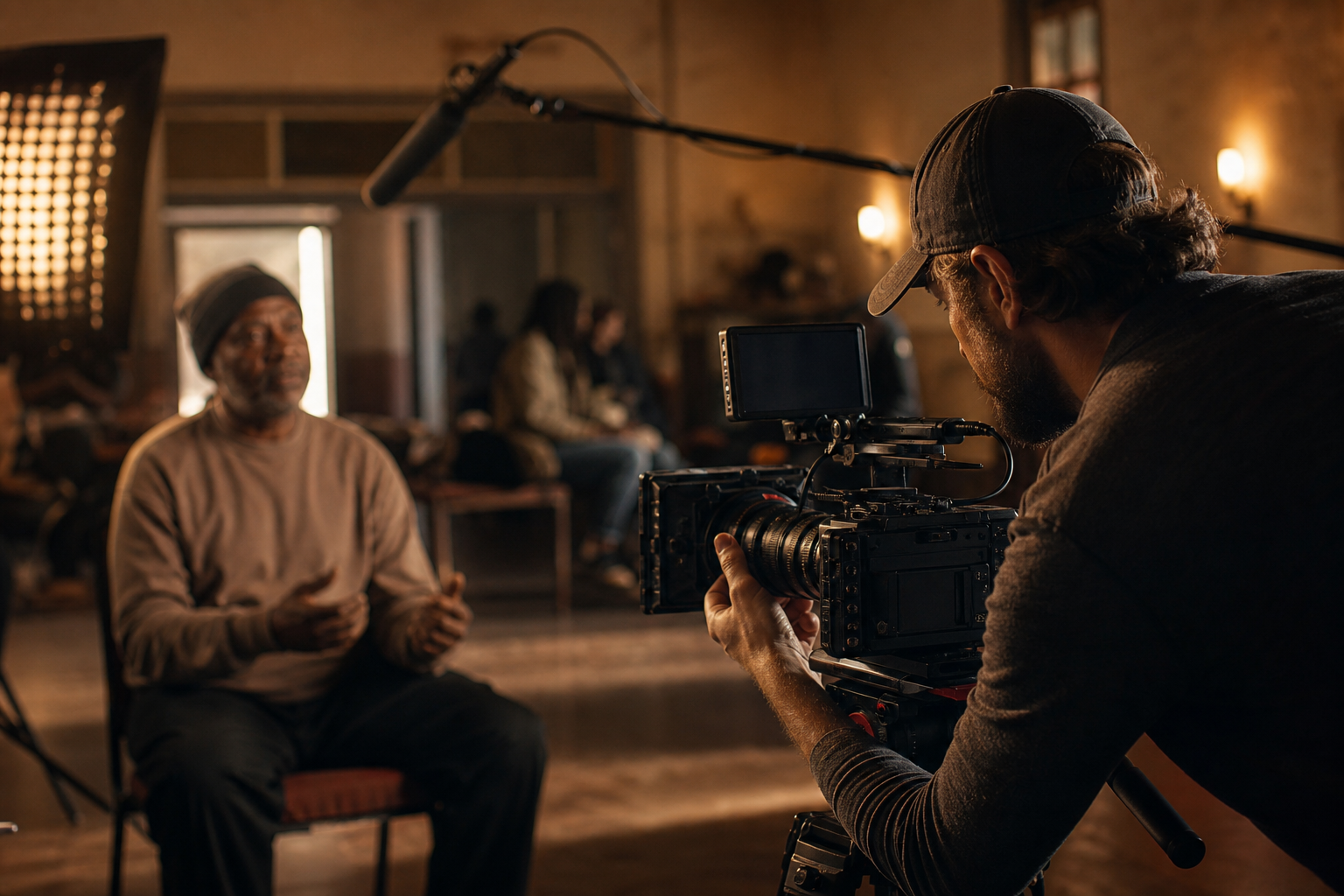
If your nonprofit is still relying on text-heavy annual reports and email blasts to connect with donors, you’re leaving money on the table. Effective nonprofit video storytelling isn’t a nice-to-have anymore — it’s the difference between someone scrolling past your mission and someone reaching for their wallet. Viewers retain 95% of a message delivered through video, compared to a grim 10% when reading it as text. That gap alone should tell you everything you need to know about where donor attention actually lives.
But here’s what most guides won’t tell you: the nonprofits winning at video right now aren’t the ones with six-figure production budgets. They’re the ones who figured out that authenticity beats polish every time. A shaky iPhone video of a real beneficiary telling their story will move donors more than a slick corporate spot that feels like an ad. The trick is knowing which stories to tell, how to structure them, and where to put them so the right people actually see them.
Why Video Storytelling Is a Fundraising Powerhouse for Nonprofits in 2026
Nonprofits leveraging effective nonprofit video storytelling raise 48—50% more in donations than organizations relying on static content alone. That’s not a marginal improvement. That’s nearly double. And when you dig into why, the answer is simpler than most people think: video closes the empathy gap.
Reading about a family struggling with housing insecurity engages the rational brain. Watching a three-minute video of that same family — hearing their voices, seeing their faces, catching the pause before they answer a hard question — bypasses logic and goes straight to emotion. That’s where donations come from.
The evidence is overwhelming. Video-centric fundraising campaigns built around nonprofit video storytelling receive 114% more funding than text-based campaigns, according to data from Classy. And 72% of donors describe themselves as “very likely” to donate after watching a nonprofit’s video about its work. These aren’t edge cases or seasonal spikes — they’re the new baseline.
What’s driving the shift in nonprofit video storytelling? Two things. First, attention spans. The average person scrolls past dozens of text posts before one stops them. Video interrupts the scroll. Second, trust. Donors are more skeptical than ever about where their money goes. A well-told video story demonstrates impact in a way that no grant report or pie chart ever will. Stories are remembered up to 22 times more than facts alone, per Stanford research — a statistic that should reshape how every development director thinks about content.
The Connection Between Video and Donor Retention
Most fundraising content focuses entirely on acquisition — getting new donors through the door. But retention is where the real money lives. And nonprofit video storytelling has an outsized impact on keeping donors around.
According to the 2025 Donor Engagement & Pipeline Benchmark Report, impact stories are the single most engaging content type for donors. When a recurring donor sees a quarterly video update showing exactly what their $25/month made possible — the after-school program they helped fund, the family they helped house — they don’t just stay. They upgrade.
Donor retention rates sit around 45% for organizations that use nonprofit video storytelling consistently, compared to just 27% for those that don’t. The math is brutal: lose fewer donors and you spend dramatically less on acquisition. Nonprofit video storytelling pays for itself in retention alone before you even count the new donors it brings in.

The ROI of Nonprofit Video: Key Statistics Every Development Director Should Know
Development directors live and die by ROI. So let’s talk hard numbers — not vague assertions about “brand lift” or “engagement.”
For every dollar nonprofits invest in nonprofit video storytelling, the average return is $4.30. Video content is shared 1,200% more than text and images combined — the organic reach multiplier alone justifies the production cost for most mid-size organizations. And 57% of people who watch a nonprofit’s video on YouTube go on to donate. That’s not a click-through rate. That’s a conversion rate.
The 2025 M+R Benchmarks Study, drawing from data across 216 nonprofits, reveals where the money is actually moving. Connected TV advertising spending jumped 84% in 2024 alone and now accounts for 15% of total fundraising advertising budgets. Meanwhile, TikTok emerged as the fastest-growing platform with 37% follower growth among nonprofits. The channels are diversifying, and so are the opportunities.
Yet here’s the gap: only 59% of fundraising teams currently use video in their communications mix. Among the 41% that don’t, the top-cited barrier isn’t cost — it’s not knowing where to start. Which means the organizations that figure out nonprofit video storytelling now are competing against far fewer voices than you’d expect.
Eighty-nine percent of nonprofits now produce video content, but only 49% produce the kind that actually moves donors — testimonials and storytelling. The other half is producing event recaps, explainer clips, and generic “about us” content that no one shares and no one donates to. The split between video that exists and video that works is where the strategic opportunity lives.
What the Data Says About Video Length and Format
Forget the myth that attention spans are eight seconds. That only applies to content people didn’t want to watch in the first place. For nonprofit storytelling specifically, the sweet spot is 35 seconds to 2 minutes — with one minute and thirty-five seconds being the ideal target for most campaigns. Long enough to establish a narrative arc. Short enough that donors finish watching before their coffee gets cold.
Authentic donor testimonials outperform scripted appeals by generating 300% higher engagement rates. Let that land. A real donor talking honestly about why they give — even if it’s unpolished — will dramatically outperform a professionally written narration. The lesson isn’t “skip production quality.” It’s “don’t let production quality kill authenticity.”
Types of Nonprofit Videos That Actually Drive Donations
Not all video content is created equal, and nonprofit video storytelling demands a different approach than commercial brand content. Here’s what moves the needle, ranked by measurable donor impact.
Beneficiary impact stories. This is the category that directly generates donations. A 90-second profile of a single person your organization helped, told in their own words, with footage of the actual outcome. No voiceover. No statistics. Just a human being saying “this is what my life was like before, and this is what it looks like now.”
Donor testimonial videos. A current donor explaining why they give — ideally one who was skeptical at first and became a monthly supporter after seeing the impact. This format works because it answers the question every prospective donor is silently asking: “Will my money actually do anything?” When the answer comes from another donor rather than your organization, it’s trusted.
Mission story videos. A 2-minute institutional narrative that explains your organization’s origin, the problem you exist to solve, and a clear vision of what success looks like. These live on your homepage and donation page. They’re the video equivalent of a case for support, and videos on landing pages can increase conversion rates by up to 80%.
Behind-the-scenes footage. Grant a short, raw look at your team in action. These build trust with recurring donors who want to know their money is being handled by real, competent, passionate people. Shot on a phone is fine — the rawness is the point.
Impact report videos. Annual reports are dead. A 2–3 minute video summarizing your year’s impact — with beneficiary faces, donor shout-outs, and a clear financial transparency moment — replaces a 40-page PDF no one reads. Visual storytelling thrives where text fails at communicating organizational transparency and impact.
Which Format for Which Goal
Match the video type to your objective. Donor acquisition → beneficiary impact stories and donor testimonials. Donor retention → behind-the-scenes and impact report videos. Brand awareness → mission story videos. Event fundraising → a five-minute reel combining all of the above, edited for emotional pacing.
The mistake most nonprofits make is producing one “capital V” Video per year — a big produced piece for the gala — and then having nothing else. A year-round cadence of small, authentic stories will outperform one annual sizzle reel every time. That’s the core principle behind sustainable nonprofit video storytelling — consistency over spectacle.
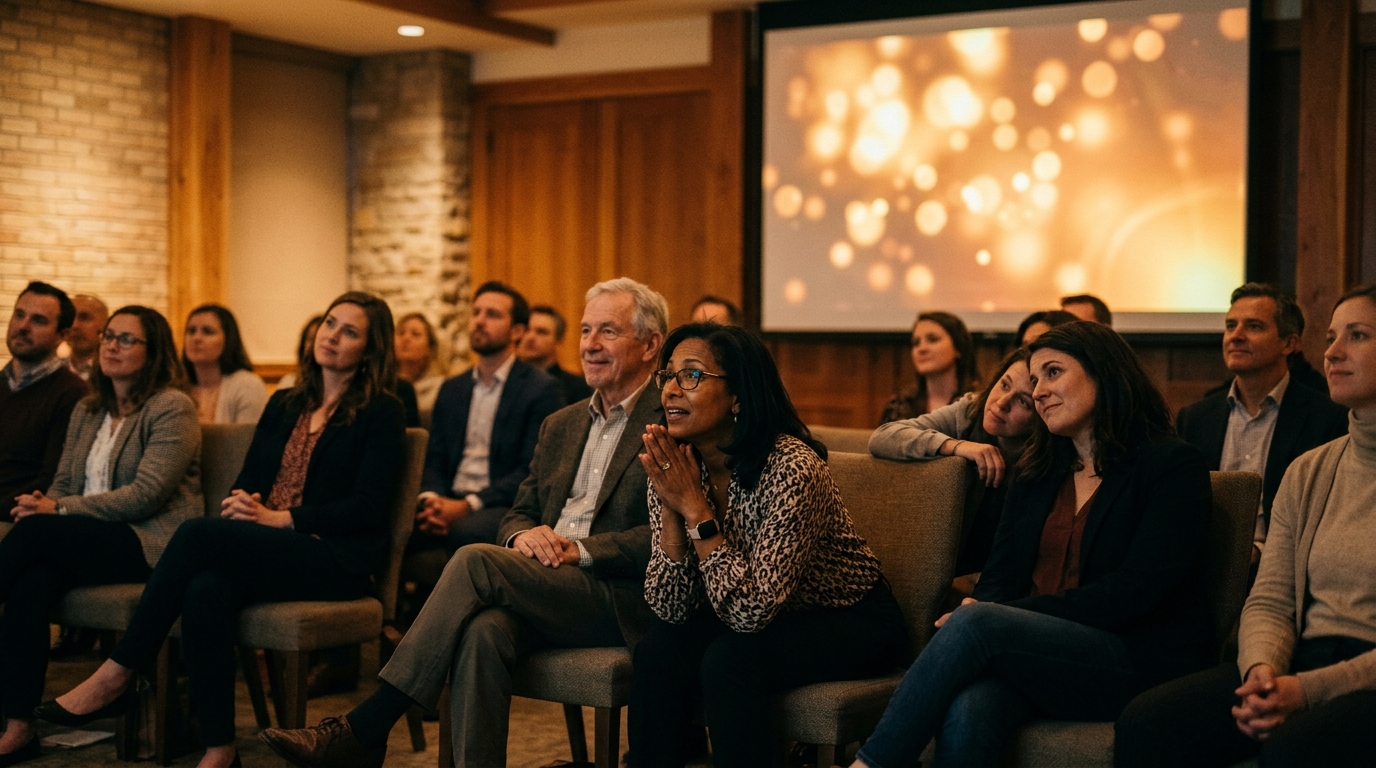
You don’t need a production studio to create video that moves donors. You need a story worth telling, basic gear, and the discipline to prioritize authenticity over polish.
Smartphone-first production. Modern phones shoot in 4K. Paired with a $30 lavalier mic and natural window light, the technical quality is broadcast-ready. The limiting factor is never the camera — it’s knowing what to point it at and when to stop talking. The 2025–2026 Nonprofit Storytelling Survey found that fewer than half of nonprofits follow a formal storytelling strategy beyond a basic content calendar. The organizations getting results aren’t the ones with better gear — they’re the ones with a clear process.
Partner with professionals strategically. There’s a middle ground between shooting everything on an iPhone and hiring a full-service production house. Professional video projects for nonprofits typically range from $7,000 to $15,000 for a polished piece that serves the organization for 2–3 years across multiple campaigns and channels. Reserve the professional budget for your cornerstone assets — the homepage mission video, the annual gala reel — and handle the weekly social content in-house.
The four elements every great nonprofit video needs. First, length discipline. Under two minutes, ideally closer to 90 seconds. Second, a single behavior-changing goal — one video, one ask. Third, a clearly defined target audience. A video for major donors looks nothing like a video for Instagram. Fourth, a channel-specific distribution plan. Each platform demands different pacing and framing, and repurposing a 16:9 YouTube video for TikTok without adaptation is the fastest way to waste production dollars.
Avoid the testimonial trap. The most common nonprofit video mistake: putting the organization’s executive director or board chair on camera to talk about how great the organization is. Donors don’t care. Put the beneficiary on camera. Put the frontline staff member on camera. Frame the organization as the guide, not the hero — the people you serve are the heroes of every story.
Pre-Production Questions Every Nonprofit Should Ask
Before you film a single frame, answer these: Who is the specific person whose story we’re telling? What’s the one emotion we want a viewer to feel at the 60-second mark? What’s the single action we want them to take immediately after watching? If you can’t answer all three, you’re not ready to shoot.
A professional production partner can help you work through these questions — but only if you bring them in early. The most expensive mistake in nonprofit video is hiring a crew to execute a brief that was never fully thought through on the strategy side. Pre-production planning, from concept development through storyboarding and stakeholder alignment, is where the real creative work happens. Filming and editing are execution.
Platform-Specific Distribution: Where Your Video Lives Changes Everything
A video’s impact is as much about distribution as it is about production. Here’s what works where in 2026.
YouTube. The default home for your cornerstone content — mission story videos, impact reports, and anything over two minutes. YouTube is also the platform where 57% of viewers convert to donors. Optimize your description with your focus keyword, include a clickable donation link in the first line, and add end screens that drive viewers to your website.
Instagram and TikTok. Short-form vertical video (9:16, under 60 seconds) dominates here. Candid.org’s year-long experiment with short-form video produced over 100 videos, 250,000+ views, and 13,000+ engagements — and their engagement more than doubled across Instagram and YouTube content overall. The key insight? Batch record multiple pieces in one session and schedule them across both platforms. Don’t chase trends — stick to your mission story and let consistency build the audience.
Connected TV and streaming. CTV is the fastest-growing channel in nonprofit advertising. The 84% spending increase in 2024 wasn’t driven by giant national nonprofits — mid-size organizations are finding that streaming ads geo-targeted to specific donor ZIP codes deliver measurable ROI. If your organization spends anything on paid media, redirect at least a portion to CTV.
Email and donation pages. The channel most nonprofits ignore: embedding video directly in cultivation emails and on donation confirmation pages. The Donor Republic mystery-shopper study found only 1 in 5 charities include video on their donation page. Only 15 charities included video in cultivation emails over a 90-day period. That’s not a crowded field — it’s an empty lane.
The Repurposing Engine
One professionally produced 2-minute mission video can be sliced into a half-dozen platform-specific assets: a 60-second Instagram Reel, a 30-second TikTok cut, a 90-second YouTube version with end screens, a 15-second CTV pre-roll, a GIF snippet for email, and still frames for your donation page hero image. The production cost gets amortized across every channel.
Building a Year-Round Video Storytelling Strategy That Actually Gets Done
The single biggest reason nonprofit video storytelling efforts fizzle: they’re treated as one-off projects rather than an ongoing program. A gala video in October and radio silence the rest of the year isn’t a strategy. It’s a missed opportunity.
Map a quarterly cadence. Q1: impact report video recapping the previous year. Q2: beneficiary story for spring appeal. Q3: behind-the-scenes content for summer stewardship. Q4: gala or year-end campaign video, plus donor thank-you messages. Four planned shoots a year. The rest is captured in between — phone-shot updates, quick thank-you clips, event snippets.
Build a simple content calendar. Most nonprofits now maintain a storytelling calendar, but fewer than half follow a formal strategy beyond the calendar itself. The calendar is the infrastructure. The strategy is knowing which story goes to which audience through which channel at which time of year. Don’t confuse having a calendar with having a plan.
Involve program staff early. For nonprofit video storytelling to work, your development team shouldn’t be the only people identifying stories. Frontline program staff know which beneficiaries have the most compelling narratives and which outcomes are most visually impactful. Build a lightweight system — a shared Slack channel, a monthly email prompt — that surfaces stories from the field continuously rather than scrambling for them a week before a shoot.
Measure what matters. Views are vanity. The metrics that predict fundraising outcomes: completion rate (did they watch to the end?), click-through to donate page, and — for email-embedded video — reply rate. A video with 5,000 views and a 15% click-through rate will generate more donations than a video with 100,000 views and a 0.5% conversion rate. Optimize for the metric that pays for the program.
Frequently Asked Questions About Nonprofit Video Storytelling
What’s the minimum budget needed for effective nonprofit video?
A smartphone, a $30 clip-on microphone, and natural window light can produce donor-ready content at near-zero cost. For a professionally produced cornerstone video that serves your organization for 2–3 years, budgets typically range from $7,000 to $15,000. The right investment depends on whether the video is for social media (start small) or your homepage and major donor presentations (invest in quality).
How long should a nonprofit storytelling video be?
The ideal length is 35 seconds to 2 minutes, with roughly 90 seconds being the sweet spot for most campaign and donation-page videos. Social media cuts should be shorter — 15 to 60 seconds for TikTok and Instagram. Videos over 3 minutes are best suited for YouTube or gala events where the audience has committed to watching.
What type of nonprofit video drives the most donations?
Beneficiary impact stories — real people describing, in their own words, how your organization changed their lives — consistently outperform every other format. Donor testimonials are the second most effective, because they answer the prospective donor’s core question (“will my money help?”) from a trusted perspective rather than the organization’s own messaging.
Can smartphone-shot video compete with professional production?
For social media and email content, absolutely. Smartphone-shot donor testimonials generate 300% higher engagement than scripted professional appeals. The key is good audio (use an external microphone) and natural lighting. Reserve professional production for your cornerstone assets — homepage video, gala reel, and major campaign content — where cinematic quality directly supports your brand and credibility.
How do I measure whether our video storytelling is working?
Track three metrics: completion rate (what percentage of viewers watch to the end), click-through rate to your donate page, and donor conversion within 30 days of a video campaign launch. Views and impressions are secondary — a video with a small but highly engaged audience that converts to donations is more valuable than a viral video that drives no revenue.
How often should a nonprofit publish new video content?
Aim for one professionally produced cornerstone video per quarter, supplemented by weekly short-form content (phone-shot updates, quick testimonials, event snippets). Consistency matters more than volume — a regular cadence of authentic content will outperform an annual burst of high-production video followed by months of silence.
Bring Your Story to the Screen
The data is unambiguous. Nonprofit video storytelling drives more donations, better retention, and deeper donor trust than any other communication format. The organizations winning right now aren’t the ones with the biggest budgets — they’re the ones telling the most honest stories and putting them where donors actually spend their attention.
At Pretzel Logic Productions, we’ve spent over a decade helping brands and nonprofits turn raw stories into cinematic content that moves audiences to act — from concept and scripting through principal photography, post-production, and distribution strategy. We work on a client-by-client basis, taking your mission on as our own. The same team that produces Super Bowl-adjacent commercials and national brand campaigns brings that creative standard to every project, regardless of scope.
You have a story worth telling. The only question is whether the right people will see it. Ready to tell your story?