
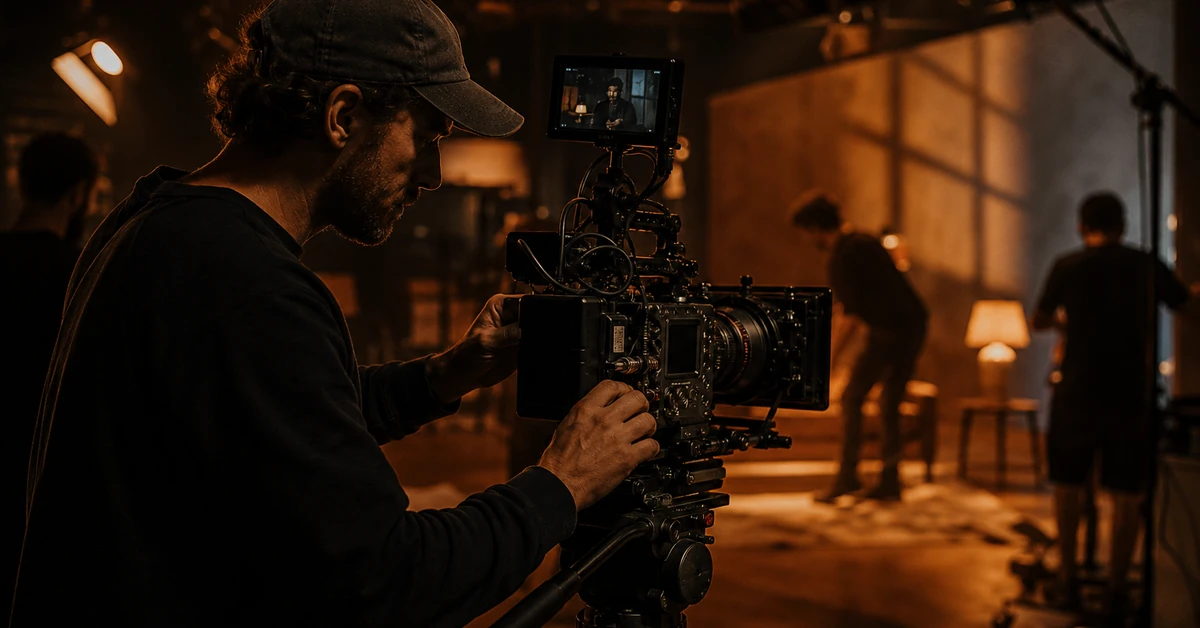
Here are the numbers that should make every marketing leader uncomfortable: 91% of businesses now use video. Ninety percent say it delivers a positive ROI. And yet most brands are churning out content nobody watches.
The problem isn’t the medium. It’s the absence of a real strategy.
A video content strategy isn’t a content calendar with “Wednesday: post a Reel” penciled in. It’s the plan that connects every frame of footage to a business outcome — awareness, trust, conversion, retention. The brands winning at video aren’t the ones with the biggest budgets. They’re the ones who know exactly why they’re hitting record.
Why Video Content Strategy Is No Longer Optional
Let’s get specific. The average US adult now spends over 60% of their screen time watching video. B2B video ad spending is projected to hit $2.86 billion by 2027. And according to Wistia’s 2026 State of Video Report — which analyzed over 13 million videos and 79 million hours of viewing data — LinkedIn and YouTube have become the two platforms where companies most aggressively distribute video content, with 81% of teams sharing on LinkedIn and 76% on YouTube.
Those are not “nice to have” numbers. They describe a fundamental shift in how business gets done.
Yet here’s the disconnect. Most brands approach video the way they approached blog posts fifteen years ago: make something, publish it, hope Google finds it. That’s not strategy. That’s wishful thinking.
Pretzel Logic Productions sees this pattern every day. Brands walk in with a vague mandate — “we need a video” — and no answer to the question that actually matters: what’s this supposed to achieve?

A real video content strategy answers that question before a single frame is shot. It defines the format, the platform, the audience, the hook, the CTA, and the metric that will determine whether the thing worked. When your video content strategy is built on clear outcomes rather than vague branding goals, every production decision gains purpose. Everything else is just expensive noise.
What the Data Actually Says About Video Performance
The video marketing data landscape is noisy. Every vendor publishes a “State of Video” report that just happens to support their product. So let’s filter for what holds up across multiple independent sources.
The Engagement Numbers Are Staggering
Pages that include video hold visitors for an average of 6 minutes. Text-only pages manage 2.5 minutes. That’s not marginal — it’s a 140% lift in dwell time, according to Wistia’s 2025 analysis. And dwell time is one of the strongest signals Google uses to evaluate content quality.
Video also drives a 157% increase in organic traffic from search results. Every SEO team that’s still treating video as a “nice to have” after seeing that number should revisit their priorities.
Revenue Impact Is Real and Measurable
Companies that use video marketing grow revenue 49% faster than those that don’t, per Aberdeen Group research cited by WebFX. Even when you control for company size and industry, the gap persists. Video isn’t a brand-building indulgence — it’s a growth lever.
On the conversion side, the numbers are equally blunt. Video can boost landing page conversions by 80% or more depending on placement and format. And 82% of people say a video convinced them to buy a product or service, according to Wyzowl’s 2025 State of Video Marketing Report.
Lead Generation Is Where Video Shines
Eighty-three percent of video marketers say that video helps them generate leads. Among B2B marketers specifically, 73% find video effective or very effective at reaching their business goals.
What’s behind those numbers? Simple. Video communicates three things text struggles with: authority, personality, and trust. A prospect who watches a two-minute brand video knows more about whether they want to work with you than one who reads a 2,000-word case study. Both have their place. But video closes the trust gap faster.
The Four Core Video Formats Driving Business Results Today
Not all video formats are created equal. The format that builds awareness on TikTok is almost never the format that closes a B2B deal on a sales call. Smart brands match format to funnel stage.
Short-Form Vertical: Discovery and Awareness
Short-form video — under 60 seconds, vertical, designed for TikTok, Reels, and Shorts — is the highest-ROI format for 71% of video marketers. It’s the top of the funnel. The goal isn’t to explain your full value proposition. It’s to stop a thumb mid-scroll.
The brands doing short-form well understand one thing: the first 3 seconds are the entire game. If the hook doesn’t land immediately, the video is gone. Neil Patel has written extensively about this — start with distribution, not production. A $50,000 commercial that nobody sees is worse than a $500 smartphone clip with a great hook that reaches 100,000 people.
Long-Form YouTube: Authority and Research
YouTube is where serious buying research happens. Product reviews, comparisons, tutorials, industry deep-dives — the kind of content someone watches when they’re actively evaluating a purchase.
The structural advantage of YouTube content is its shelf life. A well-optimized YouTube video accumulates views for years after publication. Consistency matters far more than volume — publishing once per week for two years builds dramatically more authority than posting daily for one month and then going dark.
Customer Stories and Case Studies: Trust and Conversion
Nothing converts like social proof. A three-minute customer story video — real client, real results, real voice — does more for conversion than any product demo. It’s the format that bridges the gap between “this looks interesting” and “I want what they have.”
Pretzel Logic Productions has seen this firsthand across their verticals. A healthcare client video featuring actual patients and providers builds trust that no text-based testimonial can match. A restaurant spot showing real food coming out of a real kitchen converts differently than a stock-photo slideshow.
Product Demos and Explainer Videos: Decision Support
For B2B companies especially, the product demo video is the hardest-working asset in the library. B2B buyers are now 80% through their buying journey before they ever contact a sales team. Your video is doing the heavy lifting long before a rep picks up the phone.
The most effective explainer videos share a structure: problem, solution, proof. Show the pain point first. Then show how your product or service solves it — concisely. Then show evidence it works. Sixty to ninety seconds is the sweet spot.

How to Build a Full-Funnel Video Strategy for Your Brand
A full-funnel video strategy isn’t about making one great video. It’s about making the right video for each stage of the buyer’s journey and connecting them into a system.
Top of Funnel: Stop the Scroll
At the awareness stage, your audience doesn’t know you exist. The video’s job is singular: earn attention. Short-form vertical content on social platforms is the primary tool here.
The metrics to track at this stage are reach, views, and engagement rate — not conversions. If you measure awareness content by conversion metrics, you’ll kill it before it has a chance to work.
Middle of Funnel: Build the Case
This is where the prospect knows they have a problem and is evaluating solutions. Long-form YouTube content, explainer videos, and industry thought-leadership pieces belong here. The goal shifts from “notice me” to “trust me.”
Internal links to your core service pages become critical at this stage. If someone just watched a six-minute video about your production capabilities, the next natural step should be one click away — not buried four pages deep in your site navigation.
Bottom of Funnel: Close With Confidence
At the decision stage, the right video removes risk. Customer testimonials, case study documentaries, and behind-the-scenes production footage all serve this role. The message is: here’s who we’ve done this for, here’s how it went, and here’s what it’ll look like when we do it for you.
Retention: Keep the Relationship Alive
Video doesn’t stop at the sale. Onboarding videos, product updates, behind-the-scenes brand content, and seasonal campaigns keep existing customers engaged and reduce churn. It’s dramatically cheaper to retain a customer than acquire a new one — and video is one of the most effective retention tools available.
Production Realities: What Quality Actually Looks Like at Every Level
Not every video needs a full production crew. In fact, the most effective video strategies blend multiple production tiers.
Smartphone Content: Good Enough Is Often Great
Lo-fi, authentic content performs exceptionally well on social platforms. A founder talking directly to camera from their office — good lighting, decent audio, genuine message — often outperforms a polished commercial in engagement. The bar for social video quality is “clear and authentic.” That’s it.
Mid-Tier Production: The Professional Sweet Spot
For brand videos, customer stories, and website hero content, professional production makes a measurable difference. Better lighting, professional audio capture, intentional composition, and polished post-production — including color grading, sound design, and motion graphics — communicate competence before the viewer has consciously registered why.
This is where working with a production partner pays for itself. The difference between “we tried to shoot it ourselves” and “a professional crew handled it” is visible in the first three seconds, and audiences are increasingly sophisticated at spotting the gap.
Studio-Grade: When the Stakes Demand It
TV commercials, broadcast content, high-profile brand launches, and Super Bowl-adjacent campaigns fall into this tier. Multi-camera setups, professional lighting grids, dedicated audio engineers, and full post-production suites.
The Pretzel Logic team has operated across this entire spectrum — from smartphone-ready social content to fully AI-powered television commercials that aired during the Super Bowl window. The throughline isn’t budget. It’s intentionality. Every production decision should serve the strategy.
Distribution and Repurposing: Getting Maximum Mileage from Every Asset
The single biggest mistake in any video content strategy is producing one version of one video and considering the job done. Smart distribution multiplies the return on every production dollar.
Platform-Specific Versions
One hero video should spawn multiple versions optimized for different platforms. A 2-minute brand video gets cut into a 30-second Instagram version, a 15-second TikTok teaser, a LinkedIn-native square cut with captions, and a YouTube edit with end screens and cards. Same footage, different packaging.
Repurposing Across Formats
A customer interview filmed for a case study video should also become a blog post, three social clips, a podcast excerpt, and a quote graphic for email marketing. The footage is the raw material. The formats are just different ways of packaging it.
Cadence Over Perfection
The brands that build real video momentum aren’t the ones with the most flawless productions. They’re the ones that publish consistently. Once per week for two years beats a one-time content sprint that produces 10 videos and then burns out.
Measuring What Matters: The Video Metrics That Actually Track ROI
Most video reporting is vanity metrics wearing a suit. Views without context mean nothing. A million views on a video that doesn’t drive business outcomes is a million-person reminder that your strategy needs work.
The Metrics That Matter by Funnel Stage
At the top of the funnel, track reach and engagement rate — not total views, but what percentage of people who saw the video actually watched it. A video seen by 5,000 people with a 70% average watch-through is outperforming one seen by 50,000 with a 10% retention rate.
In the middle of the funnel, track click-through rate, site traffic from video platforms, and time on site for pages that include video. If someone watches a YouTube video about your services and then visits your site, that’s a signal.
At the bottom of the funnel, track conversions directly attributable to video — form fills, booked calls, contact page visits after video views. Connect the video to the outcome.
For retention, track re-engagement rates and customer lifetime value among accounts that receive video content versus those that don’t.
Social Engagement Is Rising Fast
According to Wistia’s 2026 report, social engagement is now the fastest-rising metric companies use to evaluate video success. It’s overtaking raw view count as the primary barometer. That’s a healthy shift — engagement signals intent, and intent is what actually drives business results.
Frequently Asked Questions About Video Content Strategy
What is a video content strategy?
A video content strategy is a plan that defines what videos you create, who they’re for, where they live, and what business outcome each one is designed to achieve. It connects format to funnel stage — short-form social content for awareness, long-form YouTube for authority, customer stories for trust, and explainer videos for conversion. Without a strategy, video production is just expensive content creation with no measurable return.
How much does a professional video content strategy cost?
The cost of developing a video content strategy varies based on scope, production quality, and volume of content. A strategy that spans multiple formats and funnel stages involves pre-production planning, creative concept development, scripting, production, post-production, and distribution planning. The most effective approach is to discuss your specific goals and audience with a production partner who can scope the work to your needs and budget.
What’s the most effective video format for B2B marketing?
Short-form video leads in ROI for 71% of marketers, but B2B effectiveness depends on funnel stage. Short-form vertical content on LinkedIn works for awareness. Long-form explainer videos and product demos on YouTube drive consideration. Customer testimonials and case study videos close deals at the decision stage. The best B2B video strategies use all three, connected by a clear progression from awareness to conversion.
How often should a brand publish video content?
Consistency beats volume. Publishing once per week consistently for two years builds more audience and authority than a content sprint of daily videos that burns out after a month. The right cadence depends on your production capacity and audience expectations — but the rule is to set a sustainable pace and stick to it.
Does video content help with SEO?
Yes — significantly. Pages with video see a 157% increase in organic traffic from search results, and visitors stay on video-enabled pages for an average of 6 minutes versus 2.5 minutes on text-only pages. Google increasingly surfaces video results in search, making video a powerful organic visibility tool. YouTube is the world’s second-largest search engine, giving video content dual SEO value.
What’s the difference between video production and a video content strategy?
Video production is the execution: filming, editing, post-production, and delivery of a finished video. A video content strategy is the plan that precedes production — it defines the target audience, the funnel stage each video serves, the formats and platforms, the distribution plan, and the success metrics. Production without strategy produces expensive content. Strategy without strong production undermines the creative impact.
Ready to Build a Video Strategy That Actually Works?
Video content strategy isn’t about having the biggest camera budget. It’s about knowing exactly why the camera is rolling, who’s watching, and what they’re supposed to do next.
The brands that win at video aren’t the ones with the most gear. They’re the ones with the clearest plan — and a production partner who treats their brand like their own.
That’s the approach Pretzel Logic Productions brings to every project. From pre-production concept development and scripting through principal photography and full post-production — including color grading, sound design, and motion graphics — every decision ladders up to one question: does this serve the story?
If you’re ready to stop making content and start building a strategy, let’s talk about what that looks like for your brand.