Last updated November 12, 2026
A post-production timeline template organizes editing, color grading, sound design, and VFX into a logical sequence. While durations vary, a professional brand video production schedule typically spans several weeks. Structuring your schedule ensures creative visions are realized. It helps you meet strict technical delivery protocols. Most importantly, it stops budget overruns before they start.
Key Facts for Post-Production Planning
| Phase | Key Tasks | Standard Duration |
|---|---|---|
| Editorial | Ingest, Dailies, Assembly, Rough Cut | Varies by Scope |
| Visual Effects | Rotoscoping, 3D Elements, Cleanup | Varies by Complexity |
| Color Grading | Primary Correction, Look Development | Project Dependent |
| Sound Design | Foley, SFX, Final Mixing | Project Dependent |
| Final Delivery | QC, Rendering, Transcoding | Project Dependent |
Managing the Logical Transition to Creative Masterpiece
Post-production is the critical phase where raw dailies transform into a cohesive brand story. This stage is where file management logic meets the art of storytelling. Without a rigorous framework, even stunning footage loses its impact. At Pretzel Logic, we believe a professional workflow must balance the rigid needs of data backup with the visionary needs of a brand strategist. We make sure technical precision supports your high-level creative concepts.
Editorial, color grading, sound design, and visual effects (VFX) must intersect perfectly. These departments rely on one another. You cannot finalize a sound mix if the edit timing is still fluid. It just doesn’t work. Successful projects rely on a clear post production timeline template to track milestones and prevent scope creep. By setting hard dates for "Picture Lock," we protect your budget. We keep the team focused on the finish line.
Every file requires tracking. We track everything from the initial 6K raw footage to the final social media cutdown. According to industry expert Evercast, professional schedules should include dedicated departments for editorial, color, and sound to avoid bottlenecks. We treat the timeline as a living document. It guides our team through the chaos of creative iteration. We ensure every "twist" in the story is intentional. Every technical delivery must be flawless.
1. How long does post production take for a standard brand video?
A standard post-production workflow typically spans four to six weeks from ingest to final delivery. This depends on the complexity of motion graphics and the volume of raw footage. This phase encompasses all technical and creative tasks performed after filming. It includes editorial, sound mixing, and color correction.
We use industry-standard workflows that prioritize assembly and internal creative edits. We then move to final polish and exports. A comparison of standard post-production durations by project type includes:
- 30-Second Commercial: Generally completed within two to three weeks.
- Corporate Culture Video: Often requires a four-week schedule for stakeholder reviews.
- High-VFX Product Launch: May extend over two months depending on asset complexity.
- Short-Form Social Content: Typically moves through post-production in seven to ten days.
Raw footage volume and stakeholder count heavily influence the duration. According to monday.com, using Gantt charts and progress bars helps track milestone dates. It prevents unwanted budget overruns. For most branding video production needs, we prefer a month-long window. This allows for deep creative exploration without losing momentum.
2. What is the standard post-production workflow for a 30-second commercial?
The standard workflow for a 30-second commercial is a high-intensity production cycle. It prioritizes rapid feedback and high-impact visuals. We use a logical progression from organizing dailies to final color finishing. This compressed timeline ensures tv commercial production stays on track for strict air dates.
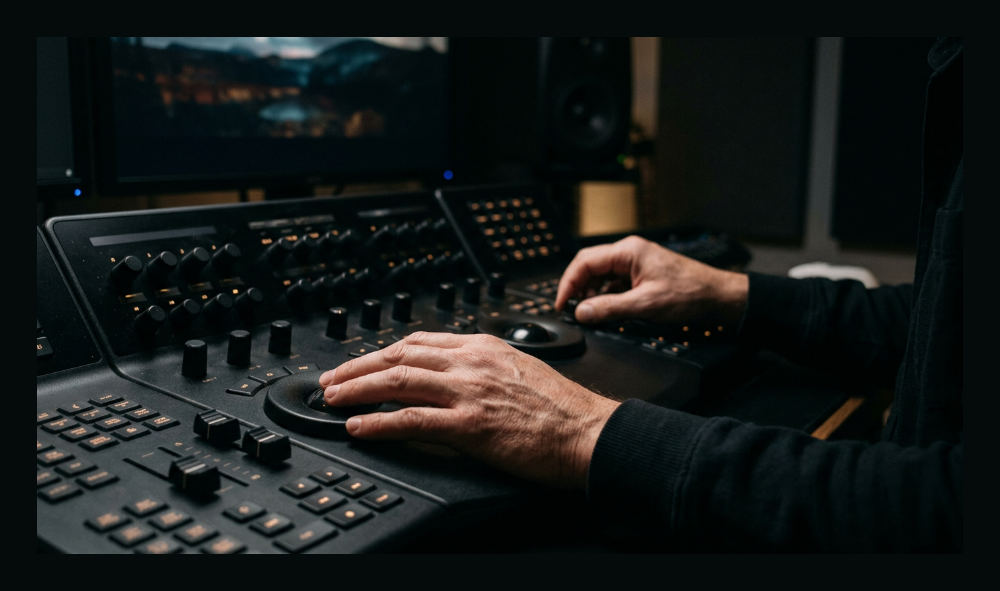
Logical Rule: Never move to color grading before reaching "Picture Lock." Changes to the edit after grading will double your technical workload.
The process begins with ingest and organizing dailies. We then create a "Radio Cut" to lock audio pacing and dialogue. Only then do we add visual flourishes. Commercial timelines require specific windows for client feedback via collaboration tools like Frame.io. This allows you to leave time-stamped comments directly on the video frame. It shortens the revision cycle significantly.
Key milestones include Picture Lock, Color Grading in DaVinci Resolve, and final Sound Design. We want the 30-second hook to land perfectly. Because commercials often air on broadcast or high-stakes social placements, we include a rigorous quality control (QC) phase. We make sure the file meets all broadcast standards. It must look perfect on a smartphone and a 4K television alike.
3. Integrating AI and Revitalization in the 2026 Workflow
Modern post-production workflow models now include AI tools. These handle technical cleanup, rotoscoping, and noise reduction. These tools reduce early visualization time. By automating repetitive tasks, our team can focus on the creative "twist" that makes your brand stand out.
Pretzel Logic offers a revitalization focus that integrates your existing client footage into new timelines. This requires a specific "asset audit" phase at the start of the schedule. We look at your old footage. We determine what can be upscaled or re-colored. Then we weave it into new stories. This is incredibly useful for long-standing brands with a library of high-quality assets that just need a fresh marketing angle.
Marketing leaders ensure these AI-enhanced workflows align with broader goals. Whether we are cleaning up old footage or using AI to generate 3D environments, the goal remains the same. We want a polished, professional result that feels authentic. Integrating these tools into digital production calendars keeps specific AI tasks visible to everyone involved.
4. Do you work with brands across the country?
Yes. Pretzel Logic Productions serves corporate brands and marketing agencies throughout the United States. From our San Diego hub, we use remote collaboration protocols for real-time reviews from New York to Seattle. This ensures your marketing video production maintains high quality regardless of your home office location.
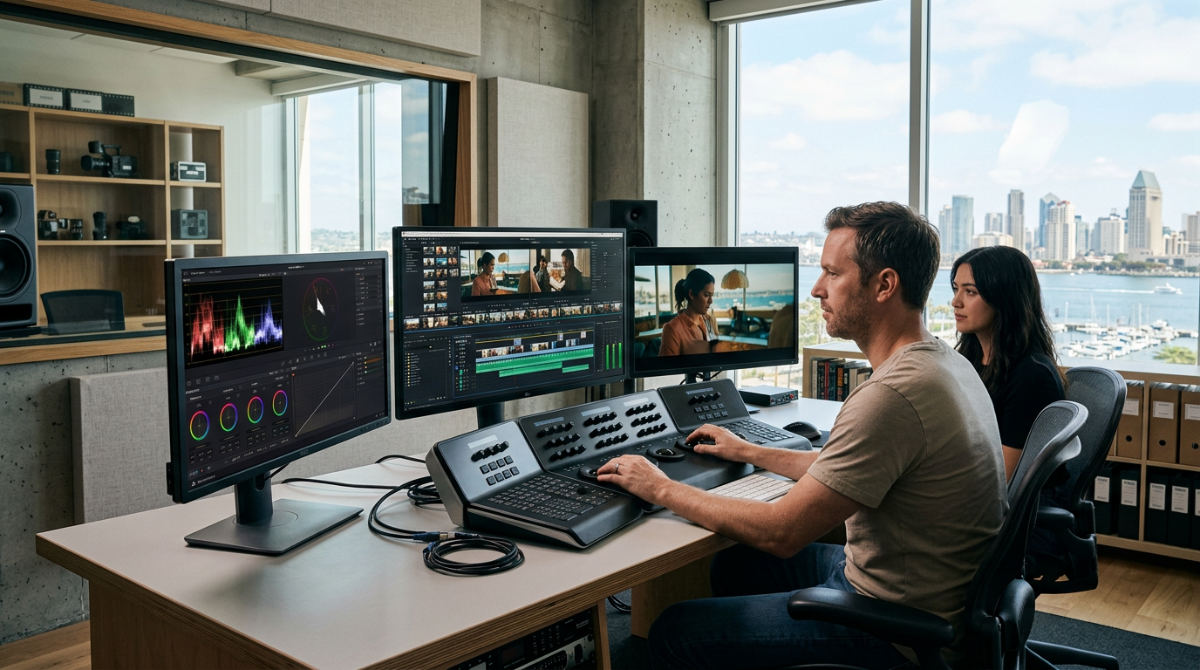
San Diego Production: Modern production studios utilize high-speed data infrastructure to facilitate collaboration with national clients.
National brands benefit from our localized technical infrastructure. It supports rapid rendering and high-bandwidth file transfers. A law firm in Chicago has different needs than a local San Diego startup. We use timeline templates for legal and restaurant clients that include mandated compliance review phases. These buffers protect your brand’s reputation.
Our post-production services are built for collaboration. We use cloud-based review platforms. You can see the latest cut on your tablet while sitting in a boardroom across the country. Distance is never a barrier to high-quality storytelling.
5. How to schedule post-production for a film
Scheduling for film requires a staggered approach. We often use a Gantt Chart to manage overlapping departments. Unlike a 30-second spot, a film’s timeline is measured in months. Before you begin, you need a locked script. You need organized metadata. You need a clear delivery spec sheet. The timeframe for a film post-production schedule varies based on project length and VFX heavy-lifting.
6. Organize and transcode all raw dailies into proxy files for efficient editing.
All raw footage must be backed up and converted into "proxies" before the first cut. Proxies are lower-resolution files. They allow editing software, like Adobe Premiere Pro, to run smoothly without taxing the computer’s hardware. This organization phase is the foundation.
7. Create the assembly edit to establish the basic narrative structure without effects.
The assembly edit is the first time the story takes shape. The editor places the best takes in order according to the script. There are no transitions yet. No music. No color effects. Just the raw story.
8. Refine the rough cut through successive creative iterations to reach picture lock.
The rough cut is where pacing is refined. We work closely with the director to ensure emotional beats hit hard. Once everyone agrees on the timing, we declare "Picture Lock." This is a significant milestone in any film post production schedule template.
9. Execute visual effects and motion graphics based on the locked timing.
The VFX team begins work once the timing is locked. This includes screen replacements or complex 3D character animations. These renders take time. They must happen after the edit is finalized to avoid wasted work.
10. Perform professional color grading to establish the visual mood and consistency.
We use DaVinci Resolve to adjust the colors of every shot. We ensure they match and evoke the right emotion. This is where a film gets its unique "look." We might use warm tones for a rom-com or gritty blues for a thriller.
11. Conduct sound design and final audio mixing for a cinematic experience.
Sound is 50% of the experience. We add Foley, clean up dialogue, and mix the musical score. We create a rich, immersive soundscape.
12. Export final masters according to the technical delivery requirements.
The final step is creating the "deliverables." This includes versions for theater projection, streaming services, and social media. Each has specific resolution and file format requirements.
13. Common Pitfalls in Post-Production Management
A major mistake is failing to account for "render time." Technical export errors happen at the very end of the schedule. High-resolution 4K or 6K files can take hours to process. If you have a deadline on Friday morning, your final export should be running by Wednesday night. This allows for unforeseen glitches.
Ignoring the feedback loop between creative concepts and technical execution leads to missed deadlines. When a creative director wants to change a shot after color grading has started, the entire timeline breaks. Clear communication is non-negotiable. Sticking to milestones like Picture Lock is mandatory.
Do not skip the "buffer" for compliance reviews. This is a frequent error for legal and healthcare video production. These industries require an extra layer of scrutiny. By choosing a post-production studio with a proven framework, you avoid the chaos of unorganized file versions. A structured timeline isn’t just a calendar. It is the map that leads your project from a hard drive full of clips to a finished masterpiece.
If you are ready to bring your next creative vision to life, we invite you to contact us at Pretzel Logic. Our team is ready to help you navigate the complexities of production and delivery. We will ensure your story is told exactly the way you imagined it.
FAQ
What are post-production deliverables? Deliverables are the final files handed over to the client. This typically includes a high-resolution master, social media cutdowns, caption files, and sometimes "clean" versions without text overlays for international distribution.
How many rounds of revisions are standard in a post-production timeline? A standard timeline usually includes two dedicated rounds of creative revisions. The first round happens after the "Rough Cut" and the second occurs before "Picture Lock" to ensure all stakeholders are aligned before technical finishing begins.
What is the difference between a rough cut and a fine cut? A rough cut focuses on the story, dialogue, and overall pacing. A fine cut is a more polished version where the timing is frame-accurate, and initial sound and visual effects may be present to give a better sense of the final product.
Why is "Picture Lock" so important? Once a project is picture-locked, the duration of every shot is set. This allows the colorist and sound mixer to work on the final files knowing that the timing won’t change. If changes are made after this point, it often requires expensive and time-consuming rework for multiple departments.