Last updated November 19, 2026
A high-end post production facility serves as the engine room where raw footage evolves into a polished brand narrative. Modern production requires a combination of high-resolution technical setups, calibrated color environments, and collaborative spaces. We analyzed data from industry leaders like Black Hangar Studios to identify the critical standards that define modern excellence.
1. A reliable technical setup must support high-resolution formats and fast data transfers.
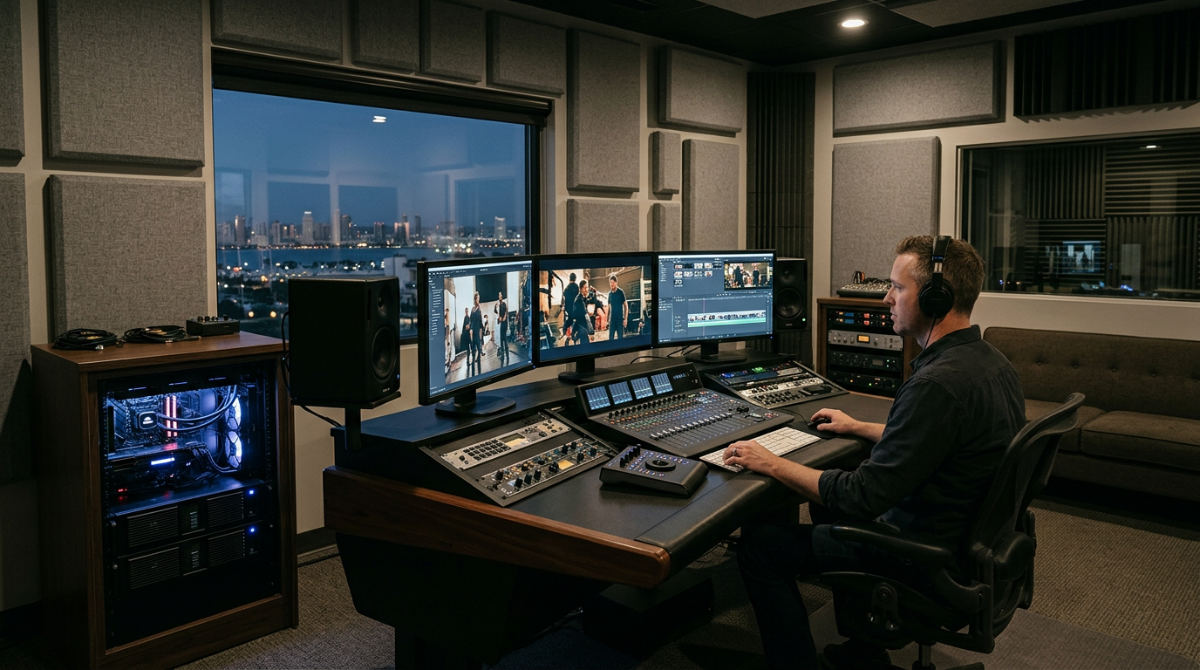
Technical infrastructure is the backbone of any elite studio. A professional post production facility lives or dies by its hardware. It has to. Working with high-resolution raw files is now a common requirement for major brands. This means the facility must provide workstations paired with calibrated monitors to ensure visual accuracy for broadcast. High-speed storage arrays are mandatory. They prevent bottlenecking during the creative process. If a machine lacks the processing power to handle these formats, you will face lag during critical color grading and mastering sessions.
Downtime does not just frustrate editors. It eats your project budget. Data integrity is just as vital. Secure handling and redundant backup systems are essential to survive tight deadlines. Look for a studio that treats your media with the same security as a bank, ensuring no file is lost to a hardware failure. Ask about server speeds. Inquire how they manage massive file transfers to keep your timeline on track. High-speed fiber connections allow for efficient remote reviews with stakeholders across the globe. We prefer fiber for the simple reason that lag kills the creative flow.
Source: Black Hangar Studios
2. Pretzel Logic Productions integrates logical workflows with high-level creative concepts for nationwide impact.
Pretzel Logic bridges the gap for West Coast brands by offering national broadcast quality through a collaborative framework. Creative storytelling is only half the battle. The rest depends on a rigorous post-production workflow that ensures every frame serves the brand’s mission. Our services include specialized AI Video Production. We use it to speed up traditional commercial workflows, generating high-end assets at modern speeds. We serve corporate brands and marketing agencies from our San Diego hub, ensuring a consistent creative "twist" in every project.
By combining logical structure with visionary execution, we help marketing directors move from a rough assembly to a final master without the friction found in fragmented shops. Our strategy balances technical precision with the emotional resonance required for modern audiences. Choosing a partner that understands this balance is the difference between a video that looks okay and one that truly converts. Transparency is a priority during the versioning process. Clients always know exactly where their project stands. No guessing.
Source: Pretzel Logic Productions
3. Isolated sound rooms are essential for dialogue cleanup and clean mixes.
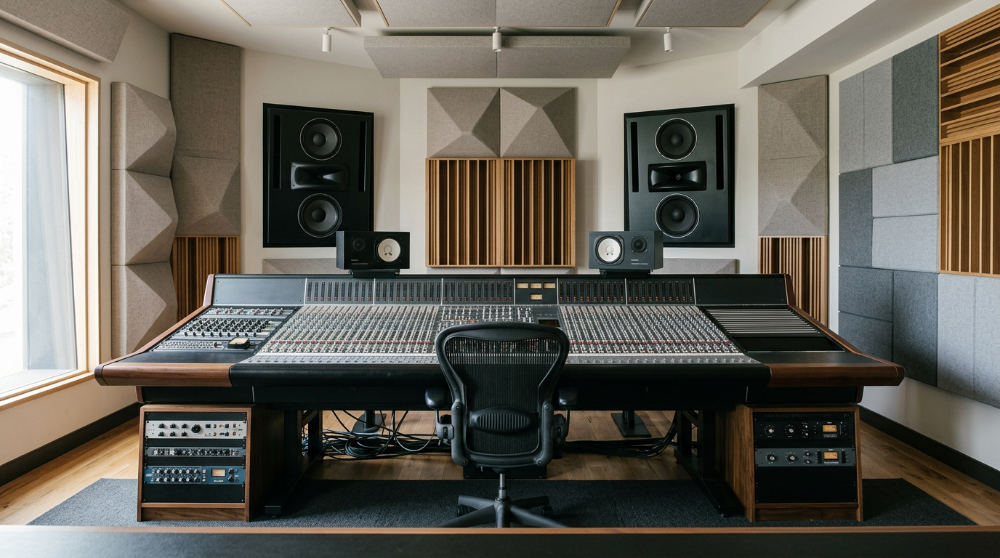
Acoustic precision is the silent partner of visual excellence. Sound is a critical component of the viewing experience, yet it is often the most overlooked element in a standard edit suite. Soundproofing is critical. It eliminates external distractions that compromise the finishing process. A true post facility utilizes specialized rooms. This allows creative teams to work extended hours without interruptions while fine-tuning soundscapes. One key service is Audio Mixing, where we balance and treat multiple sound tracks to create a final audio master.
During the mixing stage, even a tiny amount of ambient noise in the room can lead a technician to make incorrect adjustments to dialogue or background effects. Professional facilities use these isolated environments to ensure audio meets the rigorous standards of feature films and high-end broadcast commercials. Ensure your chosen facility has dedicated acoustic treatment, high-fidelity monitoring, and proper isolation. This allows for the precise removal of mouth clicks, background hiss, or inconsistent room tones. Without proper isolation, the final mix may sound muddy or unprofessional when broadcast on home theater systems.
"Soundproofing and isolated audio rooms are especially important for achieving clean mixes in post-production." — Black Hangar Studios
Source: Black Hangar Studios
4. Color grading suites must use calibrated environments for broadcast quality.
Visual consistency across devices is achieved through rigorous environmental control. The way a viewer perceives your brand is heavily influenced by color. Calibrated monitors are mandatory. They ensure colors translate accurately across diverse screens, from smartphones to 4K theater displays. Without a reference-grade monitor, a colorist might see a vibrant red that looks muddy or orange on a customer’s device. Strict light control within the studio prevents ambient interference, allowing colorists to make precise adjustments to skin tones and shadows.
These high-end finishing touches differentiate professional TV commercial production company outputs from amateur video. When you step into a color suite, expect it to be dimly lit. The walls should be neutral gray to prevent color contamination in the colorist’s vision. This level of environmental control ensures your branding video production maintains a consistent look across every platform. Colorists use these suites to manage Color Grading. This procedure alters and enhances the color of a motion picture or video for emotional and aesthetic impact.
Source: Black Hangar Studios
5. Integrated motion graphics and visual effects require specialized hardware performance.
Visual effects integration thrives when technical barriers are removed. Modern facilities must house the processing power required for complex VFX rendering within the editing timeline. It is no longer efficient to bounce between different boutique shops for graphics and editing. Regular hardware updates are necessary. High-end software demands significant GPU resources. When your project involves heavy 3D elements or detailed tracking, the facility’s infrastructure determines your speed. You either see previews in real-time or you wait hours for a single render.
On-site technical support ensures that graphic-heavy projects remain on schedule, catching errors before they become costly delays. If you are producing content for a marketing video production, having the ability to tweak graphics during a review session is a massive competitive advantage. Look for a facility that integrates these visual tools directly into the workflow for a more fluid creative process. High bit rates and deep color depth thrive when metadata isn’t lost during file transfers between vendors.
Source: Black Hangar Studios
6. Collaborative spaces facilitate better communication between directors and editors.
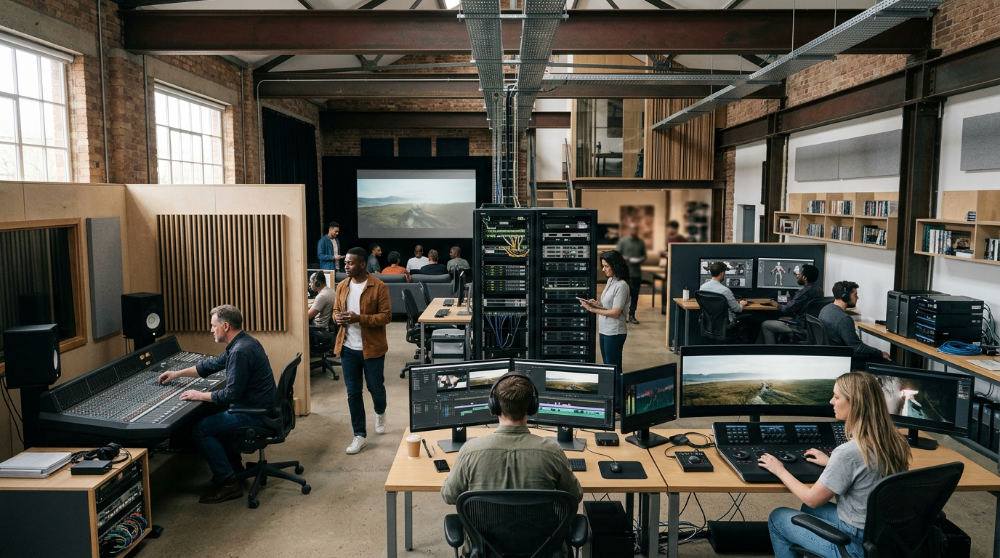
Physical environment impacts creative chemistry. A high-end facility must offer more than just workstations; it needs a layout that prioritizes human interaction. Strategic designs provide enough physical room for small creative teams to sit together. They review raw footage, discuss narrative pivots, and iterate in real-time. These environments are specifically crafted to maintain focus during intensive, multi-hour editing sessions.
When a director and editor share a comfortable, well-lit space, the fusion of creative vision and emotional pacing becomes far more effective. A unified workflow prevents the common pitfalls of remote misalignment. It ensures the final cut resonates. Rather than working in isolation, teams benefit from the immediate feedback loop. This collaborative atmosphere is essential for capturing the subtle nuances of a brand story. Amenities like client lounges and dedicated breakout rooms also help maintain stamina. Long review sessions are grueling. You need a space that supports the push.
Source: Black Hangar Studios
7. On-site technical support bridges the gap between software issues and creative flow.
Technical redundancy ensures project continuity under pressure. Technical hurdles can derail a project faster than a lack of creative ideas. Having experienced assistant editors and colorists available on-site significantly accelerates the delivery timeline. This matters for complex projects with tight deadlines. These professionals manage the heavy lifting of data ingestion and organization. This lets the lead editor remain focused on the story.
Immediate troubleshooting for platforms like Premiere Pro or DaVinci Resolve is critical. It prevents session delays. If a plugin fails or a drive disconnects, an on-site support team can resolve the issue in minutes. They also ensure continuity as the project transitions from raw production into the final master. By bridging the gap between technical infrastructure and creative output, a facility protects the client’s investment. Proactive maintenance extends to regular software updates and security patches to keep client data safe.
Source: Black Hangar Studios
8. Full-scale production facilities offer end-to-end support from pre- to post.
Efficiency is maximized when all production stages live under one roof. Managing all production tools within a single location reduces the friction of moving assets between different vendors. When a project stays within one ecosystem, the risk of data loss or file incompatibility is virtually eliminated. Comprehensive support teams facilitate a much smoother transition from the filming stage directly into the final edit. The staff is already familiar with the project’s technical specifications.
Consolidated management helps filmmakers and brand managers maintain their original creative vision without technical fragmentation. This integrated approach ensures the energy captured on set is translated accurately through the editing, grading, and mixing phases. By utilizing a facility that understands the entire lifecycle of a video, brands achieve a more cohesive and professional final product. Dedicated project managers serve as the single point of contact, ensuring every department is aligned on the client’s ultimate objectives.
Source: Black Hangar Studios
How to Establish a Post-Production Workflow for National Standards
A post-production workflow is the sequence of steps taken to organize, edit, and finish a video project. To meet national broadcast targets, this sequence must be rigid yet adaptable. Integrating motion graphics early in the edit is a strategic move. It helps explain complex corporate concepts to wider audiences, ensuring visual aids are woven into the narrative. This phase is part of post-production, which is the final stage of video production involving editing, sound mixing, and visual effects.
Successful workflows bridge the creative energy found in San Diego with the technical rigor required for high-stakes media. For example, teams often use logistical tools to support team coordination and asset management during the intensive editing phase. By following a structured path from ingestion to final delivery, production houses guarantee consistent quality. Content hits the mark whether it is intended for social media or national television. A well-documented workflow also allows for easier handoffs between different departments.
Do you work with brands across the country?
Yes, Pretzel Logic Productions serves corporate brands and agencies nationwide from our San Diego hub. We provide a collaborative bridge for West Coast brands seeking national broadcast quality for their campaigns.
| Service Area | Capability |
|---|---|
| Local Hub | San Diego, CA |
| Reach | National / Nationwide |
| Client Types | Brands, Agencies, Corporations |
How long does post production take?
Timelines vary based on complexity, but a standard commercial workflow moves through several distinct phases. Professional clinics that offer this service typically segment the schedule into assembly, visual finishing, and audio mastering phases. Post-production is the final stage of video production, encompassing editing, sound mixing, and visual effects.
| Project Stage | Typical Duration |
|---|---|
| Rough Cut | TBD based on scope |
| Fine Cut & VFX | TBD based on scope |
| Color & Sound | TBD based on scope |
Maximizing Creative Collaboration in San Diego
Professional video editing services ensure that the initial vision is enhanced by technical expertise during the final polish. Logical collaboration between directors and post-production houses keeps the brand story authentic. Choosing a facility with high-end monitors and audio suites is non-negotiable for achieving broadcast quality. These tools provide the precision necessary to meet network specifications. Organizations like Black Hangar Studios set a high bar for the industry by providing full post-production setups for filmmakers.
Effective post production video editing strategies involve balancing raw creative intuition with strict technical delivery standards. Our local teams in San Diego often work with partners to ensure the marketing strategy aligns perfectly with the visual execution. By combining high-level creative concepts with a disciplined workflow, brands produce content that stands out. This involves clear communication regarding technical specs like aspect ratios and frame rates.
Whether you are developing a marketing video production or a full-scale TV campaign, the focus should always be on clarity and impact. Using post-production editing services allows you to refine your message. Every frame must contribute to the overarching goal. This connection between technology and storytelling defines the modern standard for professional video content. High-quality finishing ensures that the message is not lost in poor technical execution. We believe the twist in the story is only as good as the logic in the edit.
Ready to see your brand story with a twist? Fill out the form at https://pretzellogicproductions.com/contact-us/ to start your logical collaboration with our post-production experts.
Pretzel Logic Productions 5961 Kearny Villa Rd San Diego, CA 92123