
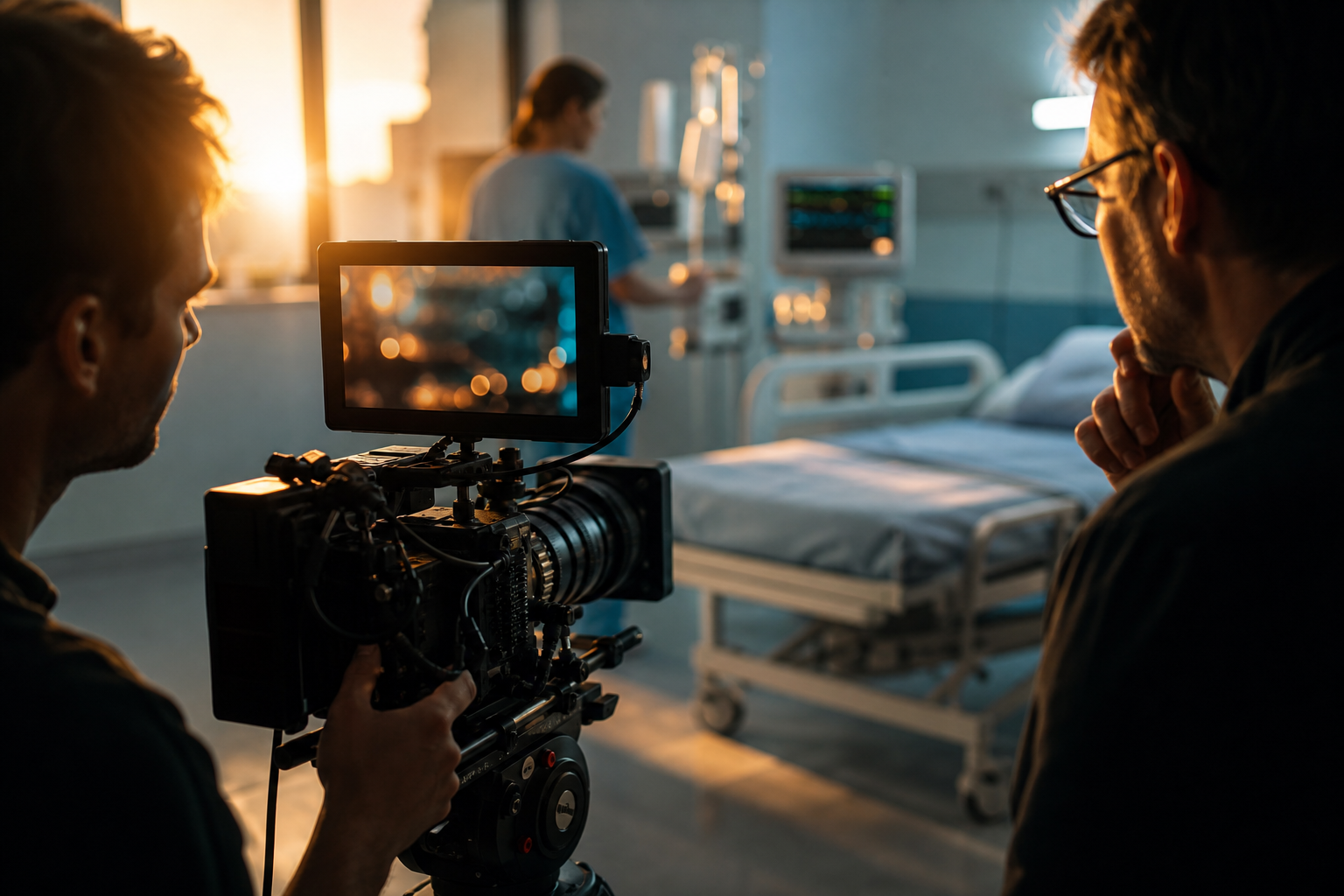
Most healthcare organizations know they need video. What they don’t know is that hiring a generic production crew — however talented — is fundamentally different from working with a medical video production company that understands compliance, clinical accuracy, and the regulatory reality healthcare brands deal with every day. Getting those distinctions wrong doesn’t just produce a bad video. It can produce a legal problem.
What Makes Medical Video Production Different From Standard Videography
Standard corporate video follows a predictable playbook. Set up the lights. Frame the CEO. Roll.
Medical video production doesn’t work that way. The StudioBinder team put it bluntly in their healthcare video production playbook: “Healthcare video production is not just corporate video with a stethoscope in the frame. Compliance requirements, clinical accuracy standards, and patient privacy rules set it apart.”
That’s not marketing fluff. It’s the difference between a crew that knows to secure signed patient consent forms before the camera turns on and one that doesn’t. It’s the gap between an editor who understands that a surgical video can’t skip a step without risking a peer reviewer calling it inaccurate, and one who cuts for pacing alone.
Here’s the truth most healthcare marketing teams discover the hard way: you can hire the most visually gifted production team in your city, and if they’ve never worked through a HIPAA review cycle or worked with a regulatory affairs team, you’ll spend more in revision costs than you saved on the initial bid.

The Buzzbox Media team identified the real cost driver in medical device video production, and it’s not the shoot itself. “Every time a video goes through regulatory review and comes back with changes, you are paying for additional editing time. Getting regulatory and legal teams involved during scripting rather than post-production can save thousands.”
A seasoned medical video production company doesn’t just tolerate the compliance layer. It builds the entire workflow around it — script review checkpoints before a single frame is shot, legal sign-off windows baked into the timeline, and clinical reviewers looped in during pre-production rather than surprised at final delivery. That’s not bureaucracy. That’s how you ship a medically accurate video on time and on budget.
The ROI of Medical Video: What the Numbers Actually Say
If you need to justify the investment to your CFO or board, the data makes your case better than any pitch deck ever could.
Healthcare videos generate 41% higher click-through rates than text ads. Not a small edge — nearly half again the performance of the written word. And 93% of healthcare marketers report positive ROI from their video content, according to the same Think Branded Media analysis.
Dig deeper and the numbers get more interesting. Healthcare marketing ROI on video typically lands between 3x and 8x per dollar spent. The top performers? They’re hitting 9x.
And trust — the currency healthcare runs on — is overwhelmingly visual. Video quality impacts brand trust for 87% of consumers, according to Forge Apollo’s research. When a patient is choosing between two providers for a procedure they’re anxious about, the one whose video presence feels professional, empathetic, and clinically credible wins. Every time.
These aren’t abstract marketing vanity metrics. They represent actual patient acquisition, actual physician referrals, and actual revenue — tracked from view to consult to procedure.
Types of Medical Video Content (and When to Use Each)
“We need a video” is where most healthcare marketing conversations start. It’s also where they stall. Because what kind of video? For which audience? Delivered where? A surgical technique film and a patient testimonial share almost nothing in common except a camera — and confusing the two is how six-figure productions end up gathering dust on a YouTube channel no patient ever visits.
Patient Testimonials and Story Films
A single patient story, told with care, does more to convert prospective patients than any list of credentials or clinical outcomes data. Beard & Bowler’s medical device video production guide nails it: “The most expensive video is the one nobody watches. A film that gets used by every sales rep for two years delivers more value than a production that gets played once at a conference and forgotten.”
The best patient testimonials don’t feel like testimonials. They feel like someone sharing their experience with a friend. A medical video production company that gets this right prioritizes authenticity over polish — capturing the real emotion of a recovery story rather than staging a perfectly lit but hollow interview. The production approach mirrors that — minimal crew footprint, natural light when possible, and interview questions that invite reflection rather than praise.
Surgical and Procedure Videos
These are the precision instruments of the medical video world. Peer reviewers will scrutinize every cut. Clinical educators will reference your lighting decisions for years. Get the exposure wrong on a critical anatomical detail and the entire production’s credibility collapses.
Working with a team that has actual surgical filming experience — not just general videography skills — changes everything. They know where to position lights so the sterile field isn’t compromised. They understand that the camera can’t move during a critical dissection just because the shot would look more dynamic. Clinical accuracy beats cinematic flair every time in this format.
Medical Device Demonstrations
Whether you’re launching a new implant, showcasing a diagnostic platform, or training a sales force on a surgical instrument, device demos sit at the intersection of engineering precision and human storytelling. The device needs to look flawless. But it also needs to be shown in context — in a clinician’s hands, solving a real clinical problem.
J2 Media, a production company whose founder spent 24 years inside the medical device industry before picking up a camera, frames their entire approach around this dual fluency: content that “holds up in front of physicians, nurses, and techs.” That’s the bar. If your device demo wouldn’t pass a scrub tech’s silent scrutiny, it’s not ready. A specialist medical video production company earns that scrutiny by hiring or consulting clinicians during pre-production — catching inaccuracies before they reach the edit suite.
Training and Continuing Medical Education
The demand for short-form expert content is surging, and any medical video production company watching the space knows this trend is accelerating. Demand for 2–5 minute expert clips jumped 40% across 2024, according to the Get Camera Crew pharma event trends report. Same-week delivery requests increased by 31% — meaning the industry doesn’t just want more video. It wants it faster, and in formats that busy clinicians will actually watch between cases.
The same report found that 78% of pharma companies recorded at least one event session in 2025, and 62% captured on-site interviews with speakers, key opinion leaders, and executives. If your organization isn’t doing this yet, your competitors almost certainly are.
How to Choose the Right Medical Video Production Company
Most healthcare organizations default to one of two approaches when hiring a production partner: they either call the crew that did their last corporate gala video, or they Google “medical video production company” and call whoever ranks highest. Both approaches skip the questions that actually matter.
Choosing a partner isn’t about comparing demo reels. It’s about evaluating whether the team understands the regulatory and clinical context your content lives in — before they even unpack a light stand.
Clinical Fluency and Industry Experience
A production company that’s filmed a hundred restaurant commercials will make beautiful images in your hospital. But they won’t know what “sterile field” means. They won’t understand why the surgeon can’t repeat that suture throw for a second take. They won’t anticipate that the IRB-approved script can’t be ad-libbed on set.
Station 12, a creative video agency with deep expertise in healthcare and life science content, approaches every project with the understanding that the content has to pass clinical muster before anyone discusses lighting ratios. That prioritization — accuracy first, aesthetics second — is what separates a genuine medical video production company from a generalist crew.
Compliance and Privacy Expertise
HIPAA isn’t a training module your production crew completes during onboarding. It’s a legal framework that governs every patient-identifiable image, every B-roll shot in a clinical setting, every interview recorded in a consultation room.
44 Studios describes their approach as producing content that is “accurate, HIPAA-conscious, and strategically aligned.” That middle term — HIPAA-conscious — isn’t a throwaway adjective. It means the crew knows to clear the background of any patient charts before rolling. It means B-roll of a waiting room requires every visible face to have signed a release. It means your legal team isn’t finding surprises in the rough cut.
Creative Vision and Storytelling Ability
Compliance isn’t an excuse for boring video. The best medical video production companies bring the same creative ambition to a physician profile as they would to a consumer brand spot — they just do it within a framework that keeps the legal team comfortable.
Lenslight, a Boston-based healthcare video production team for medtech and digital health, runs full end-to-end projects — concept through delivery — in a 4–8 week window. That speed doesn’t come from cutting corners. It comes from having the compliance checkpoints integrated into the creative timeline rather than bolted on after the fact.
When you’re evaluating a production partner, ask to see their regulatory review workflow. If they don’t have one — or if they look confused by the question — you’re talking to a generalist crew that hasn’t done this before. Move on.
The Compliance Factor: HIPAA, Consent, and Regulatory Review
Let’s be direct about something most production websites dance around: the compliance layer in medical video production is not optional, and it will add time to your timeline. The question isn’t whether it exists. It’s whether your production partner has a system for managing it efficiently.
Patient consent forms need to be signed before the camera turns on — not after. HIPAA authorization releases need to specify exactly how the footage will be used, for how long, and on which platforms. If your video includes any patient-identifiable information — even a wristband visible in a wide shot — it needs to be addressed before the editor ever opens the timeline.
Forge Apollo’s healthcare video production compliance standards frame it clearly: HIPAA compliance requires explicit patient consent, anonymizing patient data, and implementing strong security measures throughout production and post. Not as an afterthought. As the foundation.
The medical video production company you choose should be able to hand you a consent workflow document in the first conversation — before contracts are signed, before creative briefs are written. If they can’t, the first week of your production timeline will be spent building compliance infrastructure instead of making creative decisions.
Why Storytelling Matters More Than Equipment
Walk through any trade show and you’ll hear production companies lead with their gear list. RED cameras. Anamorphic lenses. Drone fleets. It sounds impressive until you realize that none of it matters if the story doesn’t connect.
Healthcare is fundamentally a human business. Patients don’t choose a provider because of sensor specs or aperture settings. They choose because they trust someone. Because they saw a video that made them feel understood. Because a physician’s on-camera presence communicated competence and compassion in equal measure.
A medical video production company that understands this dynamic spends as much time on pre-production — understanding the patient journey, interviewing the clinical team about what actually matters to the people they treat, crafting a narrative arc that respects the emotional weight of healthcare decisions — as they do on production and post combined.
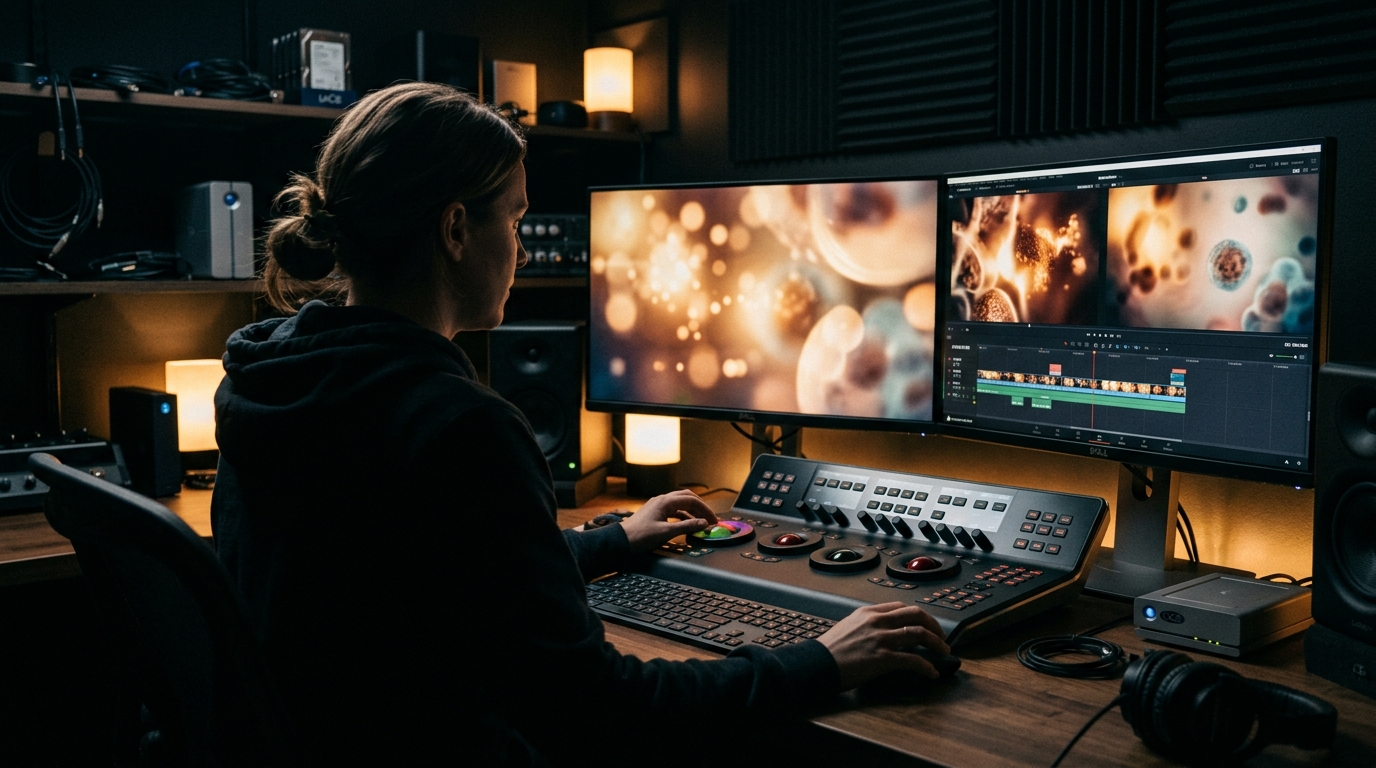
This is where Pretzel Logic Productions approaches the work differently. Every production starts with the story — what is this video actually trying to make someone feel, believe, or do — before anyone discusses camera packages or lighting plots. You can have the most technically flawless surgical cinematography in the industry. If a patient watches it and feels nothing, it failed.
That philosophy extends across the entire production pipeline. Pre-production planning digs into the clinical context and audience psychology before a single frame is shot. And post-production doesn’t just polish footage — it shapes the narrative rhythm that keeps a clinician watching through a 15-minute CME module or a patient leaning in during a 90-second testimonial.
The studios and equipment at Pretzel Logic Productions are industry-standard. But they’re not the selling point. The selling point is a team that asks the right questions before production starts, builds compliance into the workflow instead of fighting it during review, and treats every project — from a hospital brand film to a single physician profile — as a story that deserves to be told with craft and care.
Whether you’re browsing the portfolio or ready to start a conversation, the same principle runs through every frame of work: a medical video is only as good as the trust it builds in the people who watch it.
Frequently Asked Questions About Medical Video Production Companies
What does a medical video production company do that a general video crew can’t?
A medical video production company brings clinical fluency and compliance expertise that general crews don’t have. They understand HIPAA requirements, patient consent workflows, sterile field protocols, and regulatory review processes. They also know how to script and frame content so it holds up under peer review — not just look good on screen. The difference shows up in revision cycles: a specialist team typically completes projects with fewer compliance-driven rewrites because they built the review checkpoints into the timeline from the start.
How long does a typical medical video project take?
Most end-to-end medical video projects run 4–8 weeks from concept to final delivery, depending on complexity. Pre-production — scripting, regulatory review, casting, location scouting — typically takes 2–3 weeks. Production itself is often 1–2 shoot days. Post-production, including compliance review cycles, fills the remaining 2–4 weeks. Projects involving 3D medical animation or extensive multi-location filming may run longer.
What should I look for when evaluating production companies?
Look for three things beyond the demo reel. First: clinical experience in your specific specialty or device category. Second: a documented compliance and consent workflow — ask to see it in the first conversation. Third: references from healthcare clients whose projects were similar in scope to yours, not just broad brand work. A beautiful reel means nothing if the team behind it has never handled an IRB review or filmed in an active clinical setting.
Do we need patient consent for every video that films in our facility?
Yes — for any footage where a patient is identifiable, including background B-roll in waiting rooms, hallways, or clinical spaces. HIPAA requires explicit written authorization specifying how the footage will be used, on which platforms, and for what duration. Your production partner should provide consent forms and manage the signing process before the shoot day. If your crew isn’t bringing this up during pre-production, that’s a red flag.
Can we use the same video across our website, social media, and physician training?
Possibly — but not automatically. Different distribution channels often require different cuts, formats, and compliance sign-offs. A surgical technique video for peer-reviewed publication typically needs to be more clinically detailed than the version posted to your practice’s Instagram. Smart production planning shoots with multiple deliverables in mind, capturing enough coverage during the shoot day to serve every channel without requiring reshoots. Confirm this is part of your production partner’s pre-production process.
What’s the single biggest mistake healthcare organizations make with video production?
Bringing the compliance and legal teams in during post-production instead of pre-production. When a regulatory reviewer sees finished footage for the first time and flags something — an off-label mention, a non-compliant patient view, an unapproved claim — the fix often requires reshooting, not just re-editing. The right medical video production company loops legal and regulatory into the scripting phase, well before any camera equipment arrives on site. It’s the single highest-impact decision you can make to control your timeline and your budget.
Ready to Tell Your Story?
Choosing a medical video production company isn’t about finding the crew with the most impressive camera package. It’s about finding a team that understands your regulatory reality, respects your clinical expertise, and brings genuine storytelling craft to the work — not just technical proficiency behind a lens.
Pretzel Logic Productions has built a reputation on exactly that approach: bringing big-budget creative ambition to every project while navigating the compliance and accuracy standards healthcare brands can’t afford to compromise. Let’s talk about your next production — whether it’s a physician profile, a patient story, a device launch, or something that doesn’t fit neatly into any of those boxes. The twisted ones are usually the best ones.