
Last updated September 5, 2026
Documentary pre-production planning is the moment a story evolves from raw research into a tangible documentary script outline. It involves a realistic documentary production schedule and a locked set of legal plans before you ever unpack a camera. For San Diego brands, this process covers documentary budget planning, location scouting for documentaries, and a brand documentary strategy that keeps the project honest. The plan protects the crew’s time, the subjects’ trust, and the production budget. It leaves room for the unplanned sparks that make a documentary memorable. At Pretzel Logic, we build the frame so you can capture the lightning.
Key takeaways
Pre-production planning fixes five key decisions before the shoot begins.
- A working script acts as a flexible roadmap rather than a rigid set of dialogue rules.
- Limit your primary subjects to 7-8 characters to maintain audience connection.
- Music rights and archival clearances must be initiated during pre-production.
- Integrated motion graphics should be planned during scripting to visualize data.
- San Diego filming requires adhering to municipal permitting requirements for public locations.
The Logic of the Documentary Pre-Production Workflow
Pre-production starts once the documentary script outline is finished. The people who matter most in that first week are the director, the cinematographer, and the 1st AD. According to Standard Pre-Production Definitions, this phase turns an abstract idea into a concrete execution plan. It covers everything from camera tests to location scouting for documentaries. Our workflow treats that plan as a foundation. It is not a cage. The production must adapt when a real person replaces the hypothetical character on the page.
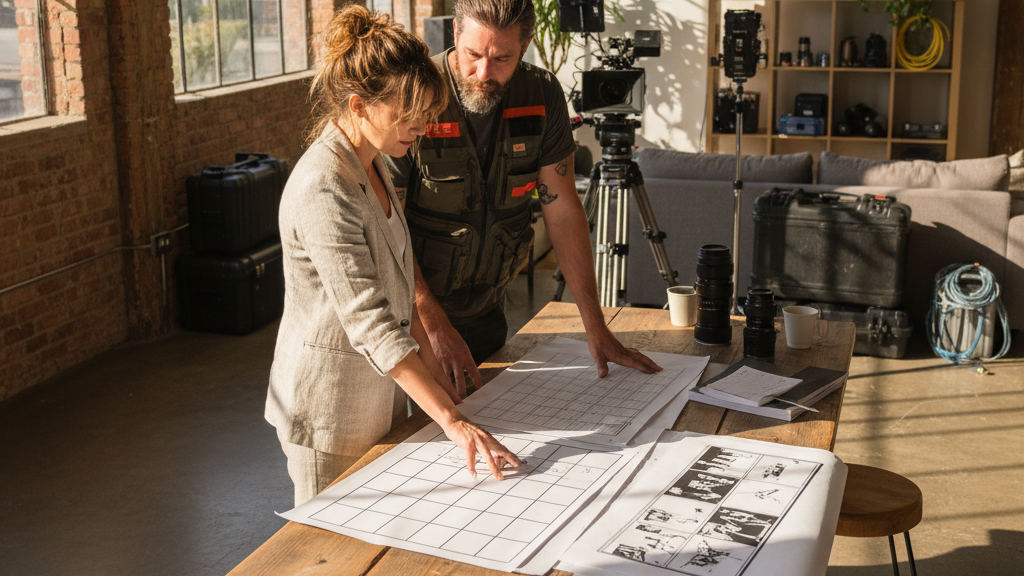
A production bible keeps the plan in one place. It holds the working script, shot lists, legal releases, and location notes. This document is the reference point for the filmmaker and the 1st AD. When new information surfaces during research, everyone sees how it changes the schedule. Developing a research phase helps identify the core conflict and emotional arc before the cameras roll. This allows interview questions to go deeper than surface-level brand points. When we handle pre-production planning, we focus on the "why" behind every shot. Logistics must serve the story weight, not just the producer’s convenience.
Developing a Working Script and Narrative Strategy
A documentary script outline for brands is not meant to be memorized. It is a hypothesis. It predicts what the story might be once the real characters appear. Unlike narrative film, a documentary script is a living document. It changes when a subject gives an honest answer. It shifts when a location opens a new visual angle. By identifying the emotional beats early, you can direct the energy of the shoot toward the moments that truly matter. Don’t just cover every possible question. Focus on the heart.
Planning for high-end animation during this phase is vital. It explains complex data, internal processes, or historical context. If your subject involves logistics or numbers, integrating motion graphics allows you to visualize what cannot be filmed. Strategize your B-roll needs carefully. You need street textures, interview cutaways, and working scenes. This ensures you have enough visual coverage to support the story in the edit. For example, documenting a San Diego nonprofit’s impact requires more than planned shots. You need the daily textures of the communities being served. This prevents the documentary paradox: a strong story with zero visual evidence.
Budgeting and Scheduling for Professional Impact
Professional impact comes from a budget that knows where money should go. It requires a schedule that protects the subjects’ time. Documentary budget planning involves comparing line items. Your camera package, audio, lighting, and insurance allocations must reflect the story needs. The 1st AD turns that budget into a documentary production schedule. They move high-risk scenes to the front and protect locations with unpredictable conditions.

Music rights can take months to secure. Start the licensing line before the edit even begins. According to Desktop-documentaries, clearing music is a common cause of post-production delays when left too late. The budget should also include a contingency for the unexpected. Archival discoveries and new characters often impact the shooting duration. A flexible contingency fund is not a blank check. It is the difference between following a true story thread and flattening it to fit a dead plan.
Documentary Planning vs. Commercial Production
A brand documentary strategy is unique. It must hold narrative truth and marketing purpose together. An indie film may discover its story in the edit. A brand documentary needs a useful deliverable that is honest and builds trust. The planning table below captures that difference.
| Feature | Indie Documentary | Brand-Storytelling Documentary |
|---|---|---|
| Primary Goal | Artistic/Educational | Brand Awareness/Trust |
| Scripting | Fully Discovery-Based | Structured working Script |
| Legal Needs | Standard Releases | Brand Usage & Trademark Clearance |
| Distribution | Festivals/Streaming | Owned Channels/Social Campaigns |
Indie films often have the luxury of time. A brand documentary requires a focused brand storytelling strategy to align with corporate values. If you intend to build an Automated Sales Machine from the finished film, the trust generated by the documentary is part of the conversion road. The same planning method gives the film room to remain human. It still serves a clear marketing use.
Location Scouting and Legal Essentials in San Diego
Location scouting for documentaries in San Diego is a filter. It takes the script’s wish list and tests it against public permits, sound, parking, and weather. Securing an appearance release for every person on camera is non-negotiable. It is a legal requirement regardless of the deliverable or the size of the shoot. Without the release, a brand film can be blocked from distribution. This pulls the entire campaign off schedule.
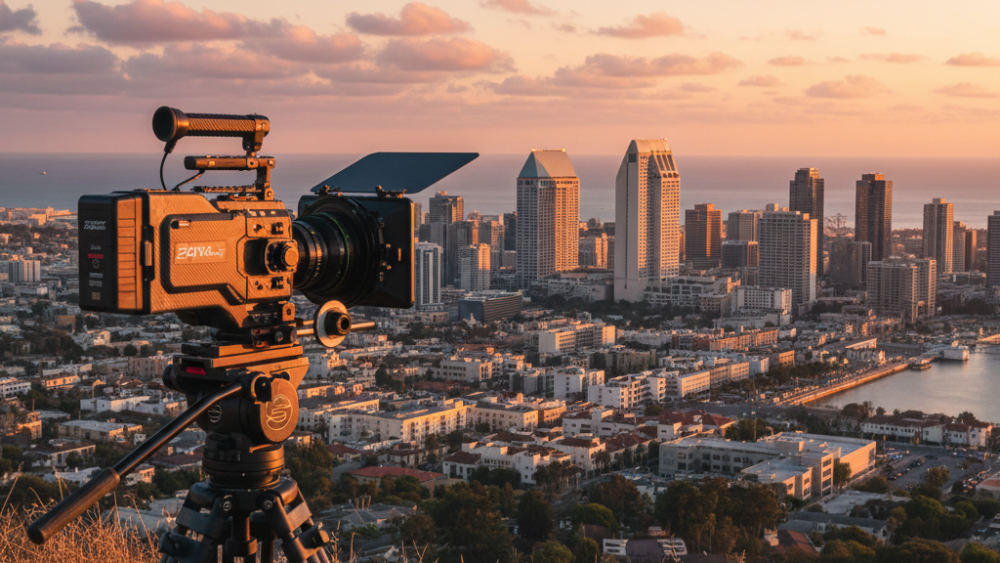
San Diego offers diverse locations. You have the cliffs of La Jolla and the urban texture of the East Village. Each spot brings unique sound and permit challenges. Public location permits must go through the local film office. Technical scouts should document ambient noise, light pockets, and flight paths. The micro-climate matters as much as the view. Coastal fog in La Jolla can kill a lighting plan in minutes. Leading with permits and releases builds trust with owners, managers, and city staff. They will be more flexible when the shoot needs a second take.
When Detailed Planning Becomes a Barrier
Rigorous planning becomes a barrier when it stops the camera from reacting to truth. Over-scripting produces wooden interviews. Subjects who recite memorized answers lose the micro-expressions that audiences read as honesty. Strict adherence to a storyboard can cause a crew to miss the unplanned emotional moment. The best documentarians use the storyboard as a safety net. They move the camera when a subject’s real behavior opens a more meaningful visual.
A budget that is too rigid also kills the story. This is especially true when a discovery makes the story harder or better. Avoiding the research phase results in a film that feels like a long-form advertisement. In our work on the Solutions for Change campaign, a logical framework kept the production efficient. However, leaving space for the subjects’ real-life experiences was what made the emotional impact land. The plan says where the camera may go. It does not dictate the exact moment the camera moves.
Executing Your San Diego Documentary Vision
A successful San Diego brand documentary requires a flexible pre-production plan. You must hold it strongly enough that the shooting and edit team can be adaptive. Start with a production bible, a working documentary script outline, and a 1st AD who understands the value of protecting the story. From there, the budget handles the reshoots. The schedule leaves time for B-roll and the unpredictable. All the while, the brand story stays on message.
Focus on the quality of the central arc. Do not prioritize the quantity of subjects. Partnering with a team that knows local San Diego permits and high-end camera aesthetics streamlines the process. This gives you more time for creative direction. If you are ready to tell a documentary story that stands out, we invite you to reach out to our San Diego office to talk through your next production.
Frequently asked questions
Here are the pre-production planning questions directors ask most when they are preparing a brand documentary in San Diego.
How do you plan pre-production for a documentary?
Start with a documentary script outline and a research phase to identify the key themes, conflicts, and characters. Assemble your core team, including a 1st AD and the cinematographer, and let them test the plan against a realistic schedule. Then secure all legal clearances, including an appearance release, music rights, and public permits. This ensures post-production and distribution do not hit surprises later.
What is included in a documentary production bible?
The production bible contains the working script, shot lists, and location contact information to keep the crew organized. It should also include the visual style guide, with color palettes and B-roll references, so the cinematography stays consistent. Legal documents, including appearance releases, are collected here for the crew, the producer, the editor, and the brand client.
How long does documentary pre-production typically last?
It can range from a few weeks for a brand short to several months for a feature-length investigative project. The timing is driven by the research, the availability of your subjects, and the number of location permits and rights to negotiate. Archival research, animation, music licenses, or a complex location shoot will all extend the pre-production timeline.
Do I need a shooting permit for public locations in San Diego?
Yes. Most public spaces in San Diego require a commercial filming permit to protect public safety and city resources. Permit requirements change by neighborhood, by crew size, and by whether the location has public traffic. Professional crews normally work through the San Diego Film Office to avoid fines, lost time, or having to stop filming mid-scene.
What is the difference between a shot list and a storyboard in documentary filmmaking?
A shot list is a technical plan. It tells the crew what camera setup and frame is needed for each moment. A storyboard is a visual sketch of how those shots connect into a narrative rhythm. In a documentary, the storyboard is a reference map. The shot list remains a living track that B-roll and reveals can update on the final day.