
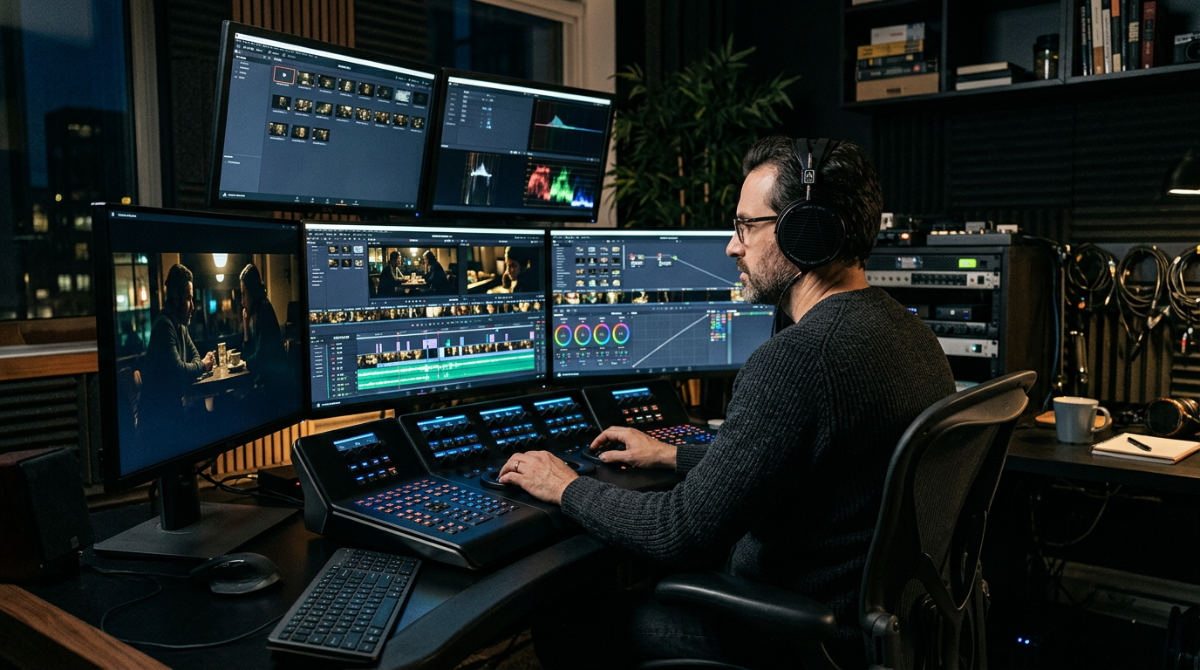
Last updated September 5, 2026
Post production is the final stage of filmmaking where raw footage is cut, assembled, and polished. We take those scattered shots and hammer them into a cohesive story. This is where we ensure the final video meets professional standards for cinema, social media, or broadcast. It is the bridge between a hard drive full of files and a finished campaign that actually moves people.
Key takeaways
- Picture editing builds the narrative structure during the rough cut stage.
- Color grading creates the emotional atmosphere while color correction fixes technical lighting inconsistencies.
- Sound design provides the immersion necessary for high-end cinematic results.
- Motion graphics serve as a vital tool for corporate brands to explain complex data visually.
- The ‘Picture Lock’ milestone is critical before starting expensive technical finishes like VFX or color.
Prerequisites for Post Production Success
Success in the edit suite requires a clear timeline and specific technical assets before the first cut begins. The length of this process varies. Complex brand campaigns take time. Larger feature-length projects in the broader film industry often require a significantly longer commitment to reach completion. Budgeting is equally critical. You need to allocate a substantial portion of your total production budget specifically to the post stage. If you skimp here, your brand’s ambitions will likely fall flat on the screen.
Before you sit down at the workstation, you must have organized raw footage, often called rushes. You also need high-quality external audio recordings and a creative brief. Modern workflows at Pretzel Logic utilize professional non-linear editors (NLE) like DaVinci Resolve or Adobe Premiere Pro. These tools allow us to meet current resolution and metadata standards. A structured file naming convention is not a suggestion. Neither are redundant backups. They are prerequisites for keeping a project on track when deadlines loom.
Understanding the Role of Post Production in Filmmaking
Post-production involves all tasks associated with cutting raw footage, assembling it, and adding audio or visual elements according to standard industry definitions. At Pretzel Logic, we approach this through a logical twist. We use highly structured, rigid workflows as a framework. This actually grants us the freedom for true creative experimentation. By nailing the technical logistics first, we ensure the magic happens. No lost files. No broken timelines.
The scale of this phase varies wildly depending on the medium. According to Movie Insider, post-production requires the bulk of a project’s time and resources for computer-animated movies and effects-heavy productions. This stage bridges the gap. It connects the initial script to the final audience experience. It is the meticulous technical polishing that takes a series of disjointed clips and turns them into a persuasive brand story that resonates with viewers in San Diego and beyond.
Phase 1: Building the Narrative Foundation in San Diego
The Picture Lock Rule: Never start your color grade or sound mix until you have achieved ‘Picture Lock.’ Changing the timing after these stages can significantly increase your costs and cause delays.
Picture editing is where raw footage is cut and assembled into a sequence to find the story’s rhythm. We begin by creating a Rough Cut. This is the first version of the film. It focuses entirely on story flow and pacing rather than polished transitions. During this phase, the editor and director look for the soul of the project. We ensure the emotional beats land exactly where they should.
Establishing a clear workflow during this initial stage is vital. It prevents costly revisions later in the VFX and color grading cycles. We prioritize corporate brand storytelling by ensuring your core message is crystal clear even before any visual flourishes or music are added. If the story doesn’t work in black and white with basic audio, no amount of flashy editing will save it. This foundational phase is where we verify that the logic of the script translates into a compelling visual journey.
Comparing Post Production Workflows: Film vs. Corporate Brand Video
While the technical tools remain similar, the objectives of a feature film and a brand video often diverge at the edit desk. Feature films generally focus on long-form narrative pacing and character arcs. Brand videos prioritize immediate, hook-driven engagement. You have to capture attention in the first three seconds. Delivery requirements also differ. Modern social media distribution often necessitates multiple aspect ratios. This adds a complex layer of versioning to the delivery workflow that traditional cinema rarely faces.
The San Diego video production ecosystem has become a unique hub. We blend Hollywood-level narrative techniques with agile commercial timelines. We see this daily. Our team adapts high-end cinematic finishes for local marketing agencies and law firms who need their content to stand out in a saturated digital landscape.
| Project Type | Typical Timeline | Essential Assets | Primary Goal |
|---|---|---|---|
| Feature Film | 6–12 Months | Raw Rushes, ADR, Foley | Narrative Immersion |
| Brand Campaign | 4–8 Weeks | B-Roll, Brand Assets, Logo | Audience Conversion |
| Social Content | 1–2 Weeks | Quick Cuts, Graphics | High Engagement |
| Animated Short | 3–6 Months | Keyframes, Voiceover | Visual Explanation |
Phase 2: Enhancing Visuals with Color and Graphics
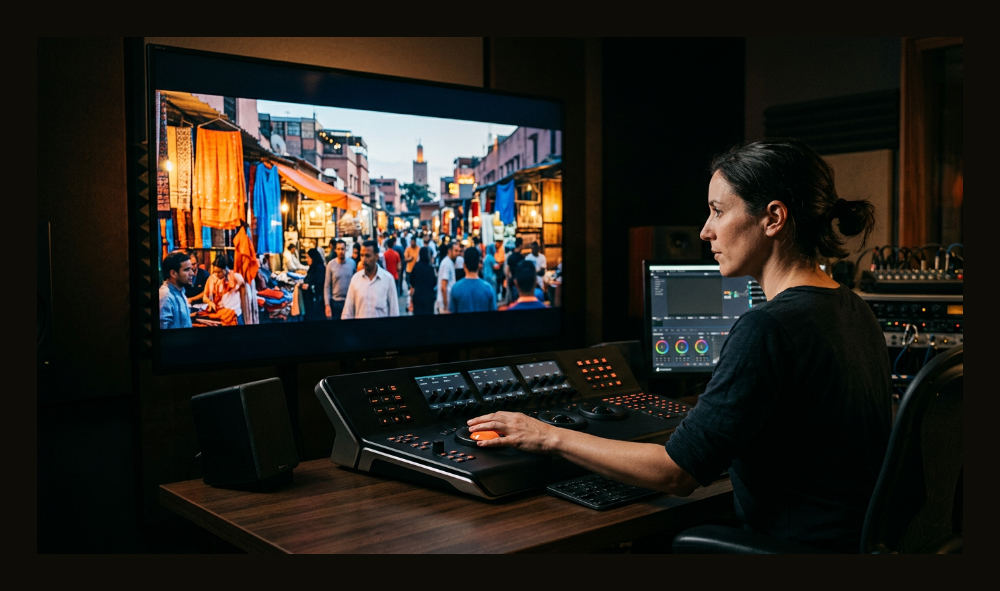
Practical Tip: Use motion graphics to highlight key statistics in corporate videos; it helps viewers better understand and retain important information compared to static text.
Once the narrative is set, we move into Color Grading. This is the creative process of altering and enhancing the color of a motion picture for style and mood. This is distinct from color correction, which is the technical task of ensuring all shots look consistent. Grading allows us to give a lifestyle brand a warm, sun-drenched San Diego glow or a law firm a cool, authoritative tone. I would always choose a custom grade over a generic LUT. It builds brand identity.
For stories that reality cannot fully capture, our team offers motion graphics to enhance the final product. These are animated graphic design elements. We use them to explain complex business concepts or data points that raw footage cannot convey. A major part of our work involves a Revitalization Focus. We take existing brand footage that may feel dated. Then, we breathe new life into it through modern animation and updated color tech. This ensures your legacy content continues to perform without the need for a full re-shoot.
Phase 3: The Immersive Power of Sound and Final Delivery

Sound Mixing is the final stage where dialogue, sound effects, and music are balanced into a high-fidelity track. In high-end productions, studios often work with a Foley Artist. This is a professional who recreates everyday sound effects like the rustle of a suit jacket or the click of a coffee cup. These details build texture. To ensure the highest quality audio, professional productions utilize ADR (Automated Dialogue Replacement). We re-record dialogue in a controlled environment when location audio is compromised by background noise.
The final step is mastering for various platforms. A video destined for a cinema screen requires a different dynamic range and color space than one intended for a smartphone. The Pretzel Twist ensures the quality of your project translates perfectly across every medium. We provide final delivery files optimized for broadcast, web, and social media. Your brand will look as professional on a five-inch screen as it does on a 50-foot one.
Critical Limits and Common Post Production Pitfalls
Watch Out: Post-production cannot magically fix out-of-focus shots or extremely distorted audio. Always aim for the best possible capture on set.
One of the most dangerous traps in filmmaking is the "fix it in post" mentality. It is a lie. While modern software is powerful, it cannot replace poor foundational data. If a shot is blurry or audio is peaking, the results will always be compromised. Over-editing is another common mistake. It leads to "over-baked" visuals that distract the viewer from the brand’s core message. When you add too many filters or transitions, you risk losing the authenticity that builds trust.
Technical incompatibility is another frequent hurdle. If project settings are not unified from the start, you will likely encounter glitches during final rendering. For marketing campaigns, failing to account for the specific technical requirements of digital media strategies can lead to poor ad performance. To avoid these issues, we maintain a strict technical checklist from day one. The logic of the file structure must support the beauty of the final edit.
Step-by-Step Guide to the Professional Workflow
1. Organize and back up all raw media files
Start by offloading footage to a redundant storage system. Create a logical folder structure by date, camera, and scene.
2. Sync audio tracks with video rushes
Align high-quality external audio recordings with the corresponding video clips. Use timecode or waveform matching for precision.
3. Create the rough cut to establish story flow
Assemble the best takes into a sequence that follows the script. Focus on the narrative arc. Forget visual polish for now.
4. Attain picture lock to finalize the sequence length
Confirm the final timing of all cuts with stakeholders. No further changes to the duration of the film should occur after this point.
5. Perform color correction to normalize all shots
Adjust exposure, white balance, and contrast. Ensure every clip in the timeline looks consistent and natural.
6. Apply creative color grading to set the mood
Layer stylistic color choices over the corrected footage. Evoke the specific emotional response your brand requires.
7. Integrate motion graphics and visual effects
Add animated text, logos, or digital enhancements. Use these to clarify information and add visual flair to the sequence.
8. Mix the final audio and sound effects
Balance levels between music, voiceovers, and environmental sounds. We ensure clarity and professional sound mixing for film.
9. Render the final master for distribution
Export the project using the correct codecs and resolutions for cinema, television, or social media platforms.
Mastering the Art of the Finish
Successful post-production is a balance of logical technical execution and unbridled creative vision. Whether you are a local law firm or a national lifestyle brand, the quality of your finish determines your professional authority. A polished, well-paced video signals that your brand values excellence. It shows you care about detail.
Our boutique San Diego approach offers the visionary quality of a major studio with the personal collaboration of a dedicated partner. We understand that every project needs a unique perspective to stand out. If you are ready to see how a professional touch can transform your footage, contact us to bring your visual vision to life.
FAQ
How long does post-production usually take? For most brand videos, post-production takes between 4 and 8 weeks. However, this depends on the volume of footage, the number of stakeholders involved in approvals, and the complexity of motion graphics.
What is the difference between color correction and color grading? Color correction is technical; it fixes problems like incorrect exposure or white balance to make footage look "normal" and consistent. Color grading is creative; it applies a specific look or mood to the footage to enhance the storytelling.
Why is ‘Picture Lock’ so important? Once you start color grading or sound mixing, your work is tied to specific frame numbers. If you change a cut after these stages, you have to redo the technical work, which wastes time and budget.
Can you use existing footage for a new video? Yes, our revitalization services allow us to take existing assets and update them with new editing, color grading, and motion graphics to fit current campaign needs.
Do you handle sound design and music licensing? Yes, we provide full sound mixing, Foley, and music supervision to ensure your project is both sonically immersive and legally compliant.