
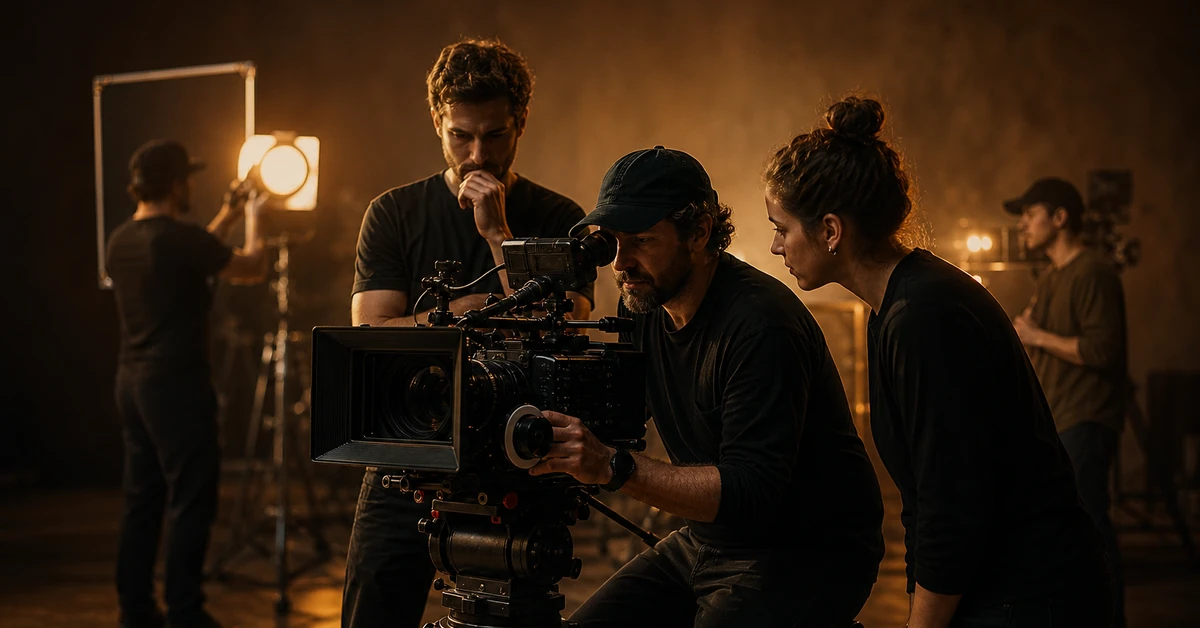
A brand storytelling video transforms a company’s core identity into a cinematic experience that audiences feel — not just watch. Unlike product demos or feature lists, these films build emotional bridges that convert strangers into loyal advocates by revealing the human truth behind a brand. For businesses ready to stand apart in a crowded market, a well-crafted brand storytelling video is one of the most powerful tools in modern marketing.
There’s a moment in every great brand-driven storytelling video when something shifts. The voiceover lands on a particular note. The footage cuts to a reaction shot. And suddenly, the viewer isn’t watching a company promote itself — they’re inside a story. They feel it.
That shift is the whole game.
Pretzel Logic Productions has built a well-crafted story film for casino brands, healthcare systems, restaurant chains, sports franchises, and nonprofits across Southern California and beyond. Every production teaches the same lesson: audiences don’t just want information. They want to feel something that changes how they see a brand — and that’s exactly what this format delivers when it’s made right.
This guide breaks down everything: the psychological mechanics that make storytelling film work, how to structure a film that moves people, what the production process looks like at a professional level, how to distribute your finished film, and the most common mistakes that kill great brand stories before they’re ever seen.
Table of Contents
- What Is a Brand Storytelling Video?
- Why Brand Storytelling Videos Move Audiences
- The 5 Core Elements of Every Powerful Brand Storytelling Video
- Types of Brand Storytelling Films That Work Across Industries
- How to Create a Brand Storytelling Video: The Full Production Process
- Brand Storytelling Video Lessons From Across Industries
- How to Distribute and Amplify Your Brand Story Film
- Common Brand Storytelling Video Mistakes to Avoid
What Is a Brand Storytelling Video?
A brand storytelling video is a film — short or long — that communicates who a brand is, what it believes, and why it matters through narrative rather than exposition. Instead of listing features or announcing promotions, it puts character, conflict, and transformation at the center of the frame.
Think of it this way: a product video tells you what something does. A brand film shows you why it exists.
That distinction sounds simple. It isn’t. Most companies instinctively want to lead with their credentials — the awards, the years in business, the certifications. And every time they do, the audience’s attention slips away. The brands that break through lead with story. The other stuff earns attention once the viewer already cares.
Storytelling vs. Selling: A Critical Distinction
Traditional marketing video is built around a pitch. This format is built around truth — a moment of conflict your audience recognizes, a transformation they want for themselves, a mission that aligns with what they already believe. The pitch is still there. It’s just woven into an experience rather than announced from a podium.
When audiences sense they’re being sold to, they disengage. When they sense they’re inside a story that means something — they lean in. A brand film is the difference between content people skip and content people share.
The Anatomy of a Brand Story Film
Every effective brand video content — whether it runs 60 seconds or six minutes — shares the same deep structure:
- A protagonist your target audience recognizes (a customer, founder, employee, or community member — not the brand itself)
- A problem or tension that reflects a real pain point your audience has felt
- A turning point where the brand plays a genuine role in the resolution
- A transformation that shows a real before-and-after — not a transaction, but a change
This structure maps directly to how the human brain processes and retains information — and it’s exactly why this format outperforms almost every other marketing investment when it’s built right.

Why Brand Storytelling Videos Move Audiences
The Neuroscience Behind Story
What makes brand storytelling video different from every other format in your marketing mix isn’t creative preference — it’s biology.
Research by neuroeconomist Paul Zak at Claremont Graduate University found that character-driven narratives cause the brain to release oxytocin — a neurochemical directly linked to trust, empathy, and cooperation. Harvard Business Review summarized it simply: “When we hear a story, our brain synchronizes with the storyteller.”
In practical marketing terms, a great brand film doesn’t just communicate a message — it creates a shared experience. The viewer’s brain processes the protagonist’s emotions as if they were their own. That’s not marketing theory. It’s documented neuroscience. And it’s why a compelling story produces emotional responses — and purchasing decisions — that no feature-benefit campaign ever will.
What the Data Says About Video and Emotion
The commercial research confirms what the neuroscience predicts:
- According to Wyzowl’s annual video marketing survey, 91% of consumers say they want to see more video content from brands they follow.
- Viewers retain 95% of a message delivered in video, versus 10% when reading the same information in text (Insivia Research).
- Emotional marketing campaigns deliver twice the profit impact of purely rational campaigns, based on research spanning hundreds of brands across multiple markets.
The film combines all of this — the emotional engagement of narrative with the retention power of moving image. When it’s built correctly, it’s not just a content format. It’s a competitive advantage.
The 5 Core Elements of Every Powerful Brand Storytelling Video
Understanding what this format is and why it works is the foundation. Building one that actually moves an audience is the craft. These five elements consistently separate productions that define a brand from ones that are quickly forgotten.
1. A Protagonist Your Audience Recognizes
The protagonist of a brand storytelling video is almost never the brand itself. It’s a person — a customer who solved a difficult problem, a founder who took an honest risk, an employee whose daily work reveals what the culture actually is.
Why? Audiences don’t project themselves onto logos and products. They project onto people. When the protagonist’s struggle mirrors something the viewer has felt — that’s the emotional hook that holds attention from the first frame to the final cut.
2. Conflict That Mirrors a Real Pain Point
A brand story film without conflict isn’t a story — it’s a testimonial with better production values. And testimonials, however genuine, rarely move people the way a real narrative does.
Real conflict in a great brand film looks like this: a small business owner who built something meaningful and nearly lost it. A healthcare patient navigating a terrifying diagnosis without a team behind them. A founder who believed in something when everyone around them said it couldn’t work. The conflict isn’t manufactured. It’s found. And finding the real one is the most important work a production team does during pre-production.
3. A Transformation Arc
Every great brand film shows a before and after — not for the product, but for the person at the center of the story. The subject is changed by the experience of working with, believing in, or being helped by the brand.
That transformation is what the viewer wants for themselves. It’s what makes them remember the film a week later and reach out. The arc doesn’t need to be dramatic. It just needs to be honest and observable.
4. Authentic Visuals Over Staged Perfection
The era of the overly polished production is over. Audiences trained by a decade of documentary content, social media reality, and streaming authenticity can detect manufactured emotion at a glance — and they disengage the moment they detect it.
The most effective brand story today looks intentional, not perfect. Real locations. Real people in their actual environments. Moments captured rather than posed. Getting authentic footage that also reads as cinematic is a genuine craft skill — not a default setting on an expensive camera. It’s the difference between a crew that finds the truth in a shoot and one that can only stage it.
5. An Ending That Invites — Not Commands
The final frames of a great brand film should leave the audience with something — an emotion, a question, a desire. Not a hard pitch.
The call to action in this format is embedded in the feeling. If the story was honest and the transformation was real, the viewer already knows what they want to do next. A good ending simply makes the path clear without demanding the viewer take it.

Types of Brand Storytelling Films That Work Across Industries
Not every brand story takes the same form. The format that moves audiences for a healthcare system is different from what works for a restaurant chain or a sports franchise. These are the brand storytelling video formats that consistently deliver across categories:
Founder Origin Stories
The founding story of a business is almost always worth telling — if the right production team knows how to find it. Why did someone take the risk? What did they believe in when the evidence was thin? What did building the business cost them, and what did it give back?
Founder origin films work especially well for brands where the “why” is a genuine differentiator — where knowing the story changes how you see the service. Healthcare practices, creative agencies, specialty food brands, mission-driven nonprofits. Anywhere that authenticity is the competitive edge rather than the feature list.
Customer Transformation Films
These productions follow a real customer’s experience — before, during, and after their relationship with the brand. The challenge is finding subjects who can speak candidly on camera, and filming their world in a way that honors the authenticity of their story rather than packaging it into something too polished to feel real.
When done right, customer transformation films outperform nearly every other format for conversion. The viewer sees themselves in the subject, recognizes the problem, and wants the result. The brand didn’t have to sell anything — the story did it.
Mission and Values Films
For brands whose identity is tied to a belief system rather than a specific product or service, mission films communicate what a company stands for at a level that no website copy can reach. These brand story films are particularly powerful for nonprofits, healthcare organizations, and brands in competitive markets where price and features have been commoditized.
When you can’t differentiate on the product alone, the story of why you exist becomes the differentiator. A mission film makes that story impossible to ignore.
Behind-the-Scenes Brand Documentaries
Some of the most compelling these productions content is simply a camera inside the world of how something is made — the craft, the people, the process. When a brand has a story of expertise, dedication, or artistry behind it, documentary-style content lets audiences see exactly what they’re investing in.
The production community in San Diego knows this format well. Lightz Out Studios has built a behind-the-scenes authority in local content creation — showing the world of professional photo and video production from the inside. That transparency is itself a brand story.
How to Create a Brand Storytelling Video: The Full Production Process
Great brand story films don’t happen by accident. They follow a deliberate process that starts well before a camera is turned on — and continues after the final file is delivered to the client.
Phase 1 — Discovery and Concept Development
Before scripting, before storyboarding, before any logistics, the production team needs to understand the brand deeply: what it stands for, who its audience actually is, and which story — if told honestly — would change how that audience sees the brand.
This phase involves brand interviews, audience research, and identifying the specific human truth the film will be built around. It’s strategic, collaborative work. It’s also the phase that most separates a brand storytelling video that lands from one that misses.
Phase 2 — Pre-Production and Planning
Once the concept is locked, pre-production begins in earnest: script development or story outline, storyboarding, location scouting, casting (real people — unless the concept specifically calls for performance), shoot logistics, and budget planning.
For complex projects, animatics help clients visualize the final film before any significant production spend. This is where decisions about tone, pacing, visual language, and emotional arc get made — before the shoot day. The planning process behind Pretzel Logic’s video production services reflects this philosophy: story architecture first, production execution second.
Phase 3 — Principal Photography
The shoot is where the story is captured. A well-planned brand film production runs efficiently, protects the authenticity of its subjects, and gives the director and DP room to find the moments that weren’t scripted — because those unplanned moments are often the ones that define the final film.
Managing location logistics, lighting for a cinematic look without losing authenticity, directing non-actors, capturing clean production sound in imperfect environments — these are craft skills built over years. The difference between experienced crews and inexperienced ones shows up most clearly on set, under pressure, when something doesn’t go according to plan.
Phase 4 — Post-Production, Editing, and Delivery
The edit is where a brand film finds its emotional truth. Pacing, music, color grading, sound design, the specific sequence of moments on the timeline — all of it shapes what the viewer feels from the first frame to the last.
Great post-production is storytelling in itself. The editor’s decisions about what to cut, what to hold, and how to build the arc can transform solid footage into something audiences genuinely remember. It’s also where the brand’s visual identity — colors, typography, motion graphics — is woven into the film without overwhelming the story it’s supposed to serve.
Brand Storytelling Video Lessons From Across Industries
The principles of great brand storytelling video are universal. The execution looks different across every vertical. Here are patterns that consistently work across the industries where story matters most:
Sports and Entertainment: The Human Behind the Performance
Sports brands have long understood that the story of an athlete — the journey, the sacrifice, what they gave up to get into that room — is more compelling than any highlight reel. Brand films in sports and entertainment focus on the human behind the performance. Casino brands and event venues use the same logic: tell the story of the people who make the experience real, and you give the audience something to connect to beyond the spectacle.
Healthcare: Patient-First Narratives That Build Real Trust
In healthcare, a brand story film centered on the patient’s actual experience — not physician credentials or facility accreditations — consistently outperforms every other format. Audiences don’t want to be sold on a healthcare system. They want to see someone who was in their position come out the other side. The humanity of the patient story does what no list of certifications ever could: it creates trust before the first appointment is ever made.
Food and Beverage: Community, Origin, and Belonging
The most effective brand story film for food and beverage brands connects the product to people, place, and community — not just flavor profiles or ingredient sourcing. The restaurant that’s been in the neighborhood for three decades. The food truck that started in someone’s garage on a belief that the city deserved something better. These stories build the kind of loyalty that no discount program replicates.
For brands running integrated campaigns that pair brand films with full-service digital marketing, working with an agency like InnoVision Marketing Group ensures the story extends across every channel — paid, organic, social, and earned — rather than living in isolation on a single platform.
How to Distribute and Amplify Your Brand Story Film
A brand storytelling video that no one sees is a missed opportunity — regardless of how good it is. Production is the first half of the work. Distribution is the second.
Key channels where brand story films perform consistently:
- Homepage hero section: A brand film embedded on the homepage or about page consistently increases session duration and conversion rates. Visitors who watch a film stay longer and convert at higher rates than those who only read copy.
- Social media: Cut for platform. A 90-second version for LinkedIn. A 30-second cut for Instagram reels and TikTok. A full-length upload to YouTube. Each platform reaches a different stage of the audience relationship — awareness, consideration, or conversion.
- Sales presentations and proposals: A brand film shared before or during a sales conversation changes the dynamic before anyone speaks. It makes the brand real and human before the pitch begins.
- PR and earned media: A genuinely compelling story film can earn coverage. Journalists covering your industry respond to real stories more readily than they respond to press releases.
- Email campaigns: Video thumbnails embedded in email sequences increase click-through rates significantly — making your brand film a powerful tool across the entire customer journey, not just top-of-funnel awareness.
Common Brand Storytelling Video Mistakes to Avoid
After building brand story films across dozens of industries and hundreds of productions, these are the patterns that consistently kill great stories before they reach the audience they deserve:
- Leading with the brand instead of the person: The logo, the tagline, the award shelf. It’s the fastest way to lose an audience in the first 15 seconds. Start with a character in a specific situation — the brand earns its place by showing up in the story, not by announcing itself.
- Choosing subjects for convenience instead of story: The CEO who isn’t natural on camera. The long-time client who gives polished answers rather than honest ones. The right subject has the real story — even if they’re harder to find and require more effort to film. Find them.
- Trying to tell too many stories at once: One story, told fully, beats three stories told partially — every time. Focus is the structural element that gives a brand storytelling video its emotional weight. When a film tries to be everything, it becomes nothing.
- Skipping or rushing pre-production: The shoot cannot fix a story that wasn’t found during discovery. The edit cannot save footage that wasn’t captured on set. Brand story films flow in one direction — there are no shortcuts through the front end of the process.
- Measuring views instead of impact: A brand film that reaches 500 ideal prospects and generates five meaningful inquiries has outperformed a video with 50,000 views and no follow-through. Define what success looks like before production begins. Measure what actually matters when it’s done.
Your Brand Has a Story Worth Telling
Every brand has a story. Most are never told — not because they aren’t compelling, but because transforming a company’s truth into a film that audiences genuinely feel is a specific craft skill. It takes producers who ask the right questions during discovery, directors who can find the authentic moment under pressure on set, and editors who understand that emotional arc is built in the timeline — not just captured on location.
Pretzel Logic Productions builds brand storytelling video for brands that take the craft seriously — from concept through delivery, with a creative-meets-logical approach that feels less like working with a vendor and more like working with a partner who genuinely invests in your story.
Explore the work in our portfolio of brand films — then, when you’re ready to tell your story, reach out to the Pretzel Logic team. We’ll find the story that makes your brand unforgettable.