Last updated November 8, 2026
Autodesk Maya animation serves as a premier 3D tool for high-end commercial production, offering features for modeling, rigging, and photorealistic rendering. By integrating a logical workflow that bridges conceptual ‘twist’ ideation with technical execution, brands can create sophisticated 3D motion graphics and character-driven narratives that outperform standard 2D video content.
Key takeaways
- Industry Standard. Autodesk Maya is the industry standard for 3D modeling, rigging, and high-fidelity rendering.
- Narrative First. A logical storytelling framework must precede technical production to ensure narrative impact.
- Visual Depth. Motion Graphics in Maya provide superior depth compared to traditional 2D design elements.
- Remote Collaboration. Collaborative workflows allow national brands to review rigging milestones in real-time.
- Polished Output. Post-production integration is essential for color grading and finalizing commercial-grade renders.
Maximizing Brand Impact with Autodesk Maya
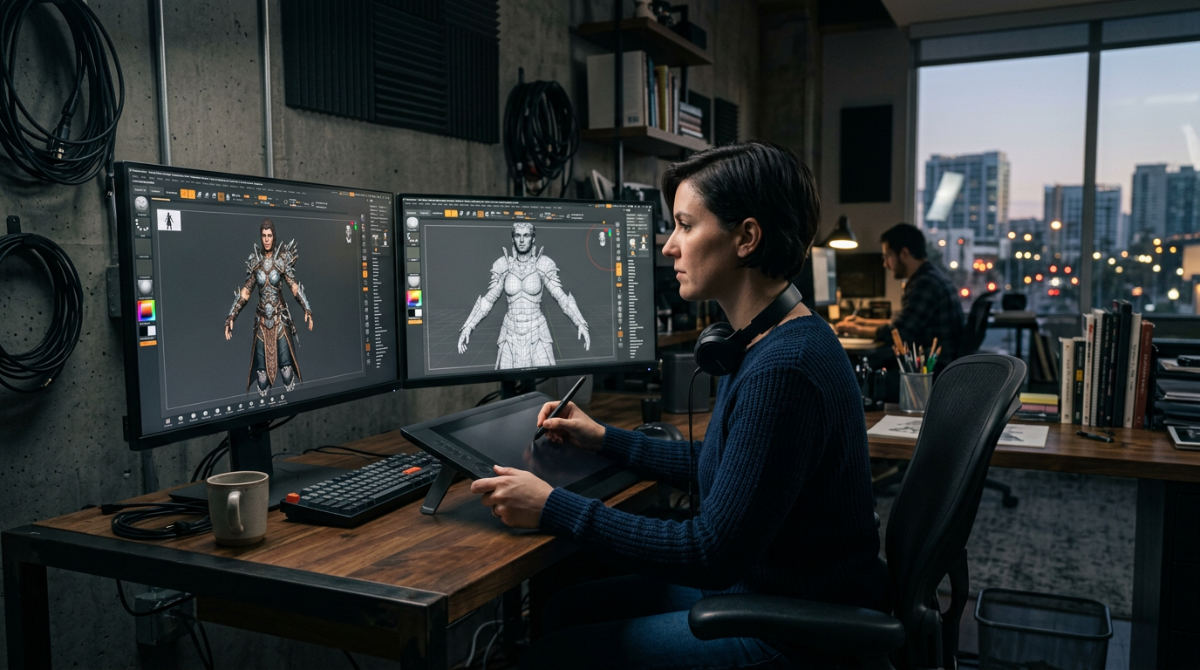
Autodesk Maya is the primary 3D animation and modeling software used for high-end commercial production across various industries. It provides a comprehensive suite of tools for everything from geometry creation to final lighting. Standing out in a saturated digital environment requires more than just a flat image. You need space. You need immersion. Studios like ours utilize 3D motion graphics in Maya to achieve realistic depth that 2D alternatives simply cannot match.
Motion Graphics is the visual technique of animating graphic design elements, frequently executed in Maya for 3D depth. We use Maya to help brands move beyond static visuals. Our team creates environments where light interacts with surfaces naturally. We showcase products from angles that are impossible to capture with a physical camera. The goal is simple. Capture viewer attention immediately, whether the project is a photorealistic restaurant commercial or a sleek tech demo. According to Adobe’s industry insights, Maya offers the industry-standard features necessary to bridge the gap between a creative concept and a finished, high-fidelity render.
Pretzel Logic Productions is a full-service video production company specializing in conceptual animation and storytelling. We combine technical mastery with our ‘With a Twist’ framework. This approach ensures that every frame, no matter how technically complex, serves a logical creative purpose. We don’t just animate for the sake of movement. We animate to drive a specific emotional outcome. Our animation video production services are designed to turn these complex 3D tools into storytelling assets that boost your brand’s presence.
Do you work with brands across the country?
Pretzel Logic Productions serves brands across the country from our San Diego base. Modern production workflows leverage digital connectivity to bridge the distance. Our creative energy is rooted in Southern California, but our reach is national. We manage full-scale 3D production for corporate marketing teams from New York to Miami.
| Service Feature | National Workflow Detail |
|---|---|
| Communication | Weekly video strategy sessions and real-time feedback loops. |
| File Sharing | High-speed cloud access for massive 3D asset files. |
| Milestones | Concept approval, rigging milestones, and final render delivery. |
| Brand Standards | Logical workflow ensures consistency across regional campaigns. |
Our process eliminates the barriers of physical distance. By establishing three key remote review phases, we ensure that stakeholders are never left in the dark. Working with a nationwide scope allows us to bring a fresh, local creative spirit to national accounts without the need for physical travel. This logical workflow maintains high brand standards. A campaign launched in Seattle will feel as cohesive as one launched in Atlanta.
Comparing Maya with Other Animation Tools
Maya is a powerhouse for 3D. However, specialized software offers different aesthetic outcomes depending on your specific needs. For example, Dragonframe for stop motion animation is a common industry choice for producing a distinct, tactile look. This differs wildly from the digital perfection of 3D. Choosing the right tool is a logical decision based on your brand’s voice.
Maya excels where physics and complexity meet. It allows for advanced simulations, such as fluid dynamics for a beverage commercial or the way fabric moves in a fashion spot. These interactions are incredibly difficult to replicate in traditional 2D software. Maya incorporates a process known as rigging. This is the act of creating a digital skeleton for a 3D model. It allows the model to move with biological or mechanical accuracy. This specialized step is essential for character-driven storytelling, but it’s generally absent in basic 2D animation tools.
| Animation Tool | Primary Use Case | Key Differentiator |
|---|---|---|
| Autodesk Maya | High-end 3D commercials | Advanced rigging and physics simulations. |
| Dragonframe | Stop-motion production | Frame-by-frame control of physical puppets. |
| 2D Software | Explainer videos | Faster turnaround for flat graphic elements. |
Integrating Maya into the Commercial Workflow
The Pretzel Logic ‘Concept to Screen’ process keeps the narrative at the forefront of the technical build. Professional workflows prioritize client input at critical milestones. We ensure the character’s movement reflects the brand’s personality before moving into the labor-intensive animation phase. This prevents the "uncanny valley" effect. It ensures the brand voice is consistent.
Once the animation is complete, we move into Post-Production. This is the final stage of the video workflow where Maya renders are edited and color-graded. These post-production and VFX workflows are critical for layering 3D elements over live-action footage. We often use this technique in our San Diego studio to blend reality with digital imagination. Creative agencies utilize these high-quality visuals to drive tangible engagement results for their clients.
We prioritize logical storytelling above all else. This means we finalize the narrative structure and the storyboard before opening a single Maya project file. By locking the "why" and the "how" early, we avoid technical waste. The final render shouldn’t just be a pretty picture. It must be a functional piece of marketing. If a brand needs full-scale video production, the 3D assets created in Maya integrate into the broader campaign strategy without friction.
1. Define the narrative twist
The most impressive 3D animation will fail if the underlying story is weak. Start by identifying the core message and the ‘twist’ that will make your commercial memorable. This twist is the unexpected element. It breaks the pattern. It sticks in the viewer’s mind.
Once the twist is identified, script the logical flow of information. Do not worry about textures yet. Ignore the lighting. Make sure the story is the hero. Establish the visual style early by determining if your brand requires photorealistic product shots or stylized characters. For a law firm, this might mean a clean, professional environment. A restaurant might need hyper-realistic food styling that looks appetizing in 3D.
2. Build the 3D assets and rig
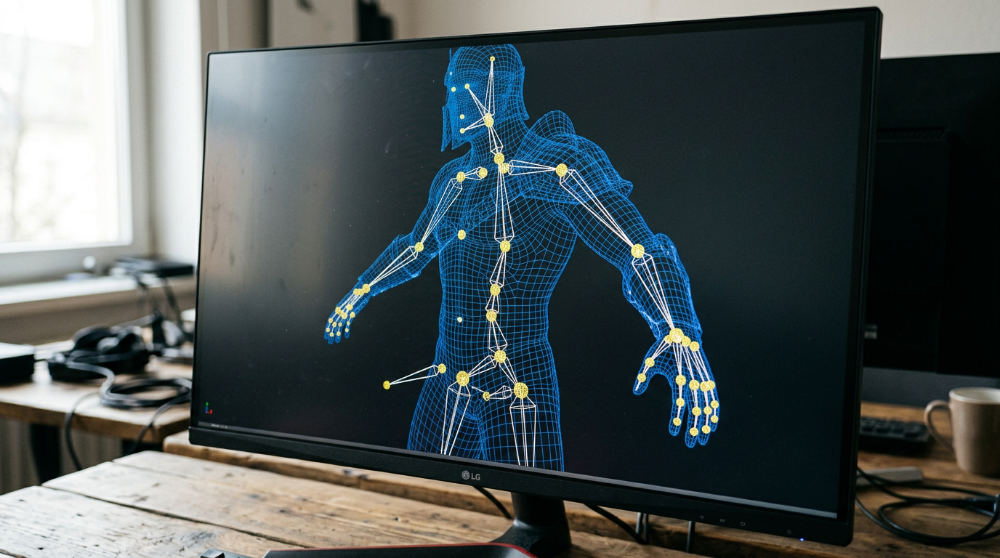
Technical execution begins with modeling the 3D geometry. Every detail matters. We look at the scale of the object and the subtle textures that allow it to catch light realistically. A professional look depends on how well these digital objects mimic their real-world counterparts.
After modeling, we execute the rigging process. This defines how the model will bend, stretch, and move once the animators take over. It is vital to review these digital skeletons with stakeholders early. If a character or product doesn’t move the way you expect at this stage, it’s much easier to fix now than after the final textures have been applied. This phase ensures the range of motion matches the performance of the script.
3. Animate and render for final delivery
With the rig in place, we apply keyframe animation to bring the models to life. This is the stage where the personality of the brand is injected into the movement. Once the movement is approved, we initiate rendering. Rendering is the technical process of generating the final visual image from the 3D scene in Maya. It often requires high-performance render farms to process the billions of calculations needed for photorealism.
The final step occurs in the post-production phase. We perform color grading and final editing to ensure the visuals align with your brand’s color palette. We check for consistency across all frames. We ensure the lighting in the 3D world matches any live-action elements. This final polish separates a DIY video from a national-quality commercial.
Common Pitfalls in 3D Production
One of the most frequent mistakes brands make is over-complicating the technical execution without a strong story. This leads to ballooning costs. It results in low engagement. The audience needs an emotional hook to follow. Technology must always be the servant of the narrative, not the master.
Another pitfall is ignoring the asset management phase. For national campaigns, failing to organize Maya files and textures properly can lead to brand inconsistency across different regional versions. Also, marketing teams often underestimate rendering time. Photorealistic 3D takes time to compute. Rushing this phase can result in "noisy" or low-quality visuals that delay project launches.
Never start Maya work until the storyboard is locked. Changing 3D animation mid-stream is significantly more labor-intensive and expensive than changing a 2D graphic or a script line. A logical workflow dictates that the foundation must be solid before the 3D skyscraper is built.
FAQ
What makes Autodesk Maya better for commercials than 2D animation? Maya offers depth, realistic lighting, and complex physics that 2D cannot replicate. This is essential for photorealistic product demos and high-end brand storytelling.
How does Pretzel Logic handle 3D projects for national clients? Modern studios often use cloud-based tools for real-time collaboration. This facilitates the sharing of massive files and the conducting of rigging reviews regardless of a partner’s physical location.
What is the ‘With a Twist’ framework? It is a storytelling approach that prioritizes a unique narrative hook. We ensure technical 3D execution always supports a logical, engaging message rather than just looking good.
How long does a typical Maya animation take to render? Rendering time varies by complexity, but high-fidelity 3D requires significant processing time. We account for this in our project timelines to ensure polished, noise-free results.
Can 3D animation be combined with live-action footage? Yes. In post-production, we layer Maya renders with live-action video to create high-impact visuals that blend reality with digital assets.
Conclusion
Autodesk Maya animation provides the creative depth and technical horsepower needed for industry-leading commercial videos. By following a logical production workflow, Pretzel Logic ensures that your brand’s story is told with both technical precision and creative flair. We move beyond simple visuals to create a lasting impact.
Visit us at 5961 Kearny Villa Rd, San Diego, CA 92123 to discuss how we can scale your vision nationwide. Whether you are looking for a character-driven story or high-end motion graphics, our team is ready to bring your vision to life. Contact us today to start your next project and give your brand’s story a 3D twist.