Last updated November 18, 2026
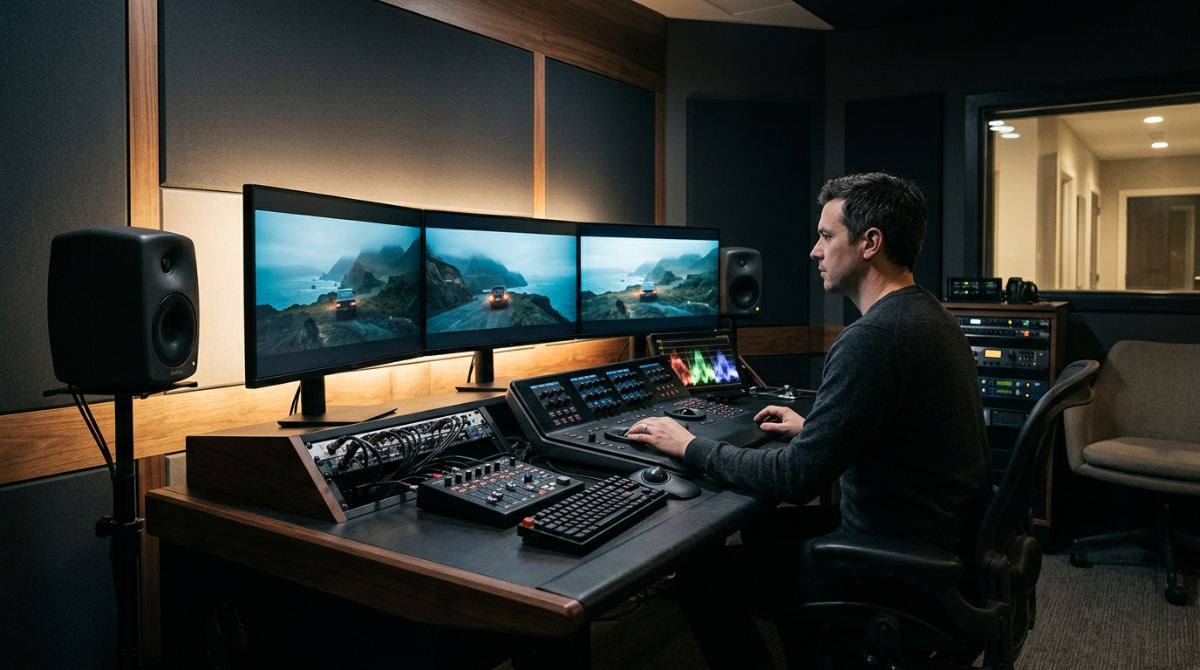
High-end post production facilities serve as the final crucible where raw creative concepts are forged into broadcast-ready assets. The industry emphasizes highly integrated environments that bridge the gap between technical quality control and visionary storytelling. This list explores the essential infrastructure used by global leaders to ensure cinematic consistency.
Post-production is the phase where editors, colorists, and sound designers refine raw footage into its final deliverable form through a structured post-production workflow.
1. Modern facilities must offer integrated sound and picture services in a single workflow.
Integrated facilities provide a centralized hub where picture and sound specialists collaborate under one management structure. Fragmentation kills tight deadlines. When you bounce between different shops for sound mixing and color grading, you risk losing the creative thread that ties a story together. Top-tier post production facilities, such as Warner Bros. Post Production, solve this by housing creative services for both departments under one roof. Warner Bros. Post Production is a primary example of a facility providing integrated sound and picture creative services in one cohesive environment.
This allows for real-time collaboration between disparate creative teams. A sound designer can adjust a mix based on the final color palette of a scene as it happens. To get the most out of your budget, look for studios that utilize unified asset management systems. This ensures that metadata and versioning remain consistent across theatrical features or streaming series. At Pretzel Logic, we embrace this logical flow by centralizing our post-production editing services. We make sure every frame and every beat feel like they belong to the same world. By eliminating the friction between different technical silos, you preserve the emotional impact of your footage.
Moving large raw files between physical locations is risky. When data stays on one secure server, the danger of drive failure or data corruption drops significantly. This workflow also benefits branding video production. It keeps brand assets accessible to both the motion graphics team and the colorist simultaneously. By utilizing shared storage solutions, producers can oversee the entire creative arc without leaving the suite. We believe this is the gold standard for high-end television and cinema production today.
2. Utilize multi-stage facilities for green screen and post integration.
Multi-stage facilities allow production teams to capture live-action elements and process them in an edit bay within the same hour. The most efficient way to handle complex visual effects is to choose a provider that offers integrated green screen stages alongside their editing suites. Many professional facilities allow production teams to move efficiently from the set to an edit bay within the same complex. This proximity isn’t just about convenience. It is about technical accuracy for your marketing video production.
When the same team oversees the lighting on the stage and the keying in the suite, you see fewer artifacts. Composites look real. Verify that these stages are equipped for live webcasting. This allows a remote director to participate in the shoot from anywhere. They can provide real-time feedback that prevents costly reshoots. Reducing the delay between production and post means files don’t have to be shipped or uploaded to external servers. This cuts down on ingestion time. Using professional content production services ensures that technical execution matches creative ambition without the logistical headaches of split-location shoots.
Modern green screen workflows now incorporate real-time rendering engines. Editors see a rough composite while the actor is still on stage. This immediate visualization helps directors confirm that the framing matches the intended background plate. For fast-paced marketing campaigns, this speed is a competitive advantage. It removes the guesswork. It allows for more creative experimentation. By housing these stages and suites together, the facility creates a feedback loop that improves the quality of every shot captured. This collaboration is vital for maintaining high standards in network-grade advertising.
3. Secure a studio that specializes in network-grade color correction and graphics.
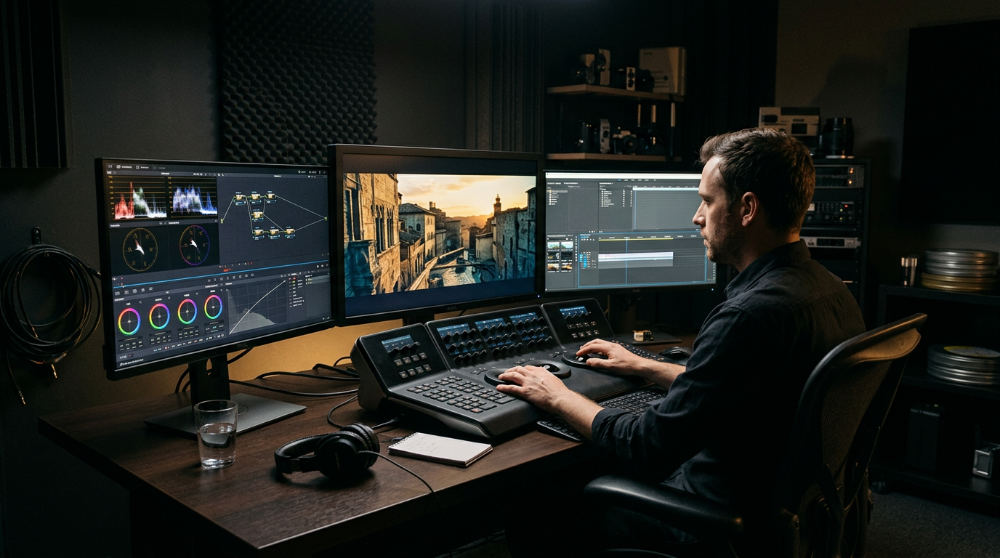
A network-grade studio offers hardware and calibrated monitoring that guarantees visual consistency across all broadcast and streaming platforms. Color Correction is the technical process of adjusting the color and light of a film to achieve a specific look. This process is more than just fixing exposure. It sets the mood. It ensures a brand’s visual identity remains intact across all screens. Professional facilities provide specialized online editorial options tailored for the rigors of cable and network television. This level of polish is mandatory if you want your project to stand up next to high-budget broadcast content.
Beyond the look, you need a facility that handles the essential parts of delivery. This includes multi-format compression, DVD authoring, and international file specs. While digital streaming is dominant, physical media still requires expert handling. A dedicated creative staff should manage your graphics design and color to ensure that text is legible and colors are legal for broadcast. For brands that need to stand out, this technical precision separates a home-movie feel from a cinematic campaign. This is especially critical for tv commercial production. There are strict legal requirements for text size and color legality that must be met.
Professional colorists use high-end displays that represent colors accurately. Consumer monitors simply cannot replicate this. In a post production suite, the environment is controlled for lighting and temperature. This ensures the colorist’s eyes remain fresh. This scientific approach to color ensures that the vibrant red of a logo looks identical on a phone as it does on a massive cinema screen. Without this calibration, your video might look washed out or overly saturated on different devices. Investing in professional-grade color services is the final step in protecting your brand’s integrity.
4. Leverage specialized labs for film and video transfers and digital dailies.
Specialized labs act as the technical backbone of a production by converting raw camera data into manageable files for the editorial team. The foundation of any modern workflow is the digital dailies process. Expert facilities ensure that footage captured on set is processed, backed up, and prepped for the edit efficiently. This includes digital intermediates services. These act as a vital bridge between raw filming data and the final color grade. If you work with legacy formats, you need a lab that can handle high-quality transfers.
These technical laboratories often provide secure film and tape storage. This is a critical safety net for high-value productions. By leveraging these specialized labs, you ensure that data is never at risk. Editors work with the highest-fidelity proxy files possible. This technical groundwork prevents bottlenecks during the final finishing stages. It ensures the longevity of master assets for future re-releases or archival purposes. The digital dailies process also involves basic color balancing. It gives the director an accurate representation of what was captured before they even leave the set. This immediate review capability is crucial for large-scale productions.
These labs often handle the creation of LTO backups. These are the industry standard for long-term data preservation. Hard drives can fail after a few years of storage. LTO tapes are designed to last decades. A high-end post production facility will insist on these protocols to protect your investment. By ensuring that your dailies are handled by experts, you reduce the risk of losing precious footage due to technical errors. This disciplined approach to data management allows the creative team to focus on storytelling rather than troubleshooting corrupted files or missing media.
5. Ensure your facility provides closed captioning without moving master tapes.
Internal captioning services protect your content by keeping the high-resolution master files within a single secure facility throughout the finishing process. Security is a massive concern. This is especially true for high-budget series or documentaries governed by strict NDAs. One of the biggest vulnerabilities in any workflow is when a master tape or drive leaves the building for third-party services like closed captioning. To mitigate this risk, prioritize facilities that perform all captioning and accessibility services in-house. This keeps intellectual property within a secure, controlled environment.
Checking for local accreditations can be a shorthand for finding shops that adhere to the highest broadcast standards. The MOME (Mayor’s Office of Media and Entertainment) is the NYC government body that oversees the ‘Made in NY’ post-production discount program. This incentivizes local finishing work. Beyond security, having the captioning team in the same building as the editors allows for faster corrections if a script change happens at the last minute. This integrated approach ensures you meet all legal requirements for broadcast and streaming accessibility without compromising the safety of your most valuable files.
In-house accessibility services also include Audio Description for the visually impaired. This is a growing requirement for network delivery. When these services are handled internally, the sound engineers can ensure the description track doesn’t clash with important dialogue or musical cues. This collaborative environment results in a higher quality product for all viewers. Keeping the entire finishing process under one roof also simplifies the billing and project management aspects of a production. You have one point of contact for every technical deliverable. This ensures that nothing falls through the cracks during the final push to air.
6. Select a facility with mobile recording units for specialized voiceover work.
Mobile recording units bring studio-grade acoustics to any location. They allow talent to record high-fidelity audio without traveling to a central facility. When lead talent is tied to a filming schedule or cannot travel to a fixed post production facility, mobile recording units become essential. These recording studios on wheels or ADR trailers allow for high-quality audio capture directly on location. The primary challenge is ensuring these mobile booths maintain the same rigorous acoustic standards as permanent recording suites. You must prevent any noticeable dip in quality.
Successful producers integrate these mobile sessions directly into the main timeline. This allows for a much faster turnaround. ADR (Automated Dialogue Replacement) is the procedure of rerecording audio in a studio environment to replace production sound. These voiceover tracks can be recorded and synced to the edit in near real-time. This mobility is a cornerstone of the modern approach. It ensures that geographical constraints never hinder the vocal performance or the final sound mix. Utilizing these specialized units preserves the narrative’s momentum. Technical quality remains consistent with the rest of the studio-recorded dialogue.
These mobile units are often equipped with high-speed satellite or cellular uplinks to stream the session back to the main facility. A director located in another city can listen in and provide notes as the talent records their lines. This level of connectivity ensures that the performance matches the creative vision of the project, regardless of where the actor is physically located. For branding video production, this means capturing professional narration even if the spokesperson is currently on a national tour. It provides flexibility without sacrificing the sonic richness required for premium content.
7. Prioritize facilities that offer dedicated production offices for rent.
On-site production offices facilitate immediate communication between the administrative, creative, and technical teams. This streamlines the decision-making process. Complex projects involving multiple stakeholders often suffer from communication gaps when teams spread across different locations. Top-tier post production facilities solve this by offering dedicated production office space for rent within the same building as the edit bays. This setup allows directors, editors, and producers to collaborate in real-time. Immediate feedback loops drastically reduce the number of revision rounds.
When searching for a long-term home for a project, check for facilities that offer tiered discounts for extended residencies. New York City offers a ‘Made in NY’ discount card. It provides up to 20% off post-production services for first-time clients at participating facilities. You can find more details through the NYC Production provided by the city. By housing the creative and administrative teams under one roof, you eliminate the friction of commuting between sites. The project’s vision is tightly managed from the assembly edit through to the final delivery.
Having an office in the facility also means producers have direct access to the technical support staff. If an editor encounters a technical glitch or needs a specific plugin installed, the solution is just a few steps away. This proximity fosters a sense of community and shared purpose among the crew. It often translates to a more creative atmosphere. It also makes client presentations much smoother. There is a professional space to host executives for high-stakes reviews. In the competitive world of media, this infrastructure supports the efficiency needed to bring complex stories to life on time and under budget.
Do you work with brands across the country?
Yes, Pretzel Logic serves clients nationwide by leveraging cloud-based collaboration tools and high-speed fiber infrastructure from our San Diego hub. We maintain a consistent workflow for our out-of-state projects. Location is never a barrier to cinematic quality. Our "Twist" approach allows us to manage content for brands from New York to Los Angeles using remote review sessions. By utilizing secure streaming links, clients can watch their edit in real-time and provide feedback as if they were sitting in the room with us.
| Service Feature | Remote Capability |
|---|---|
| Project Management | 100% Cloud-Based |
| Client Reviews | Real-time Remote Sync |
| Delivery Speed | High-speed Fiber |
| Asset Security | Encrypted Transfers |
How long does post production take?
Commercial post-production timelines vary depending on the volume of motion graphics and the intricacy of the color grade. A standard post-production workflow includes seven primary steps to move from raw data to a finished product. These steps are ingestion, assembly edit, rough cut, client review, fine cut, color/sound, and final delivery. For complex projects, this timeline can extend as more layers of visual effects are integrated into the final master.
| Workflow Phase | Typical Duration |
|---|---|
| Ingestion & Prep | 1-2 Days |
| Editorial (Rough/Fine) | 1-2 Weeks |
| Color & Sound Mix | 3-5 Days |
| Final QC & Export | 1-2 Days |
Optimizing Your Marketing Video Production
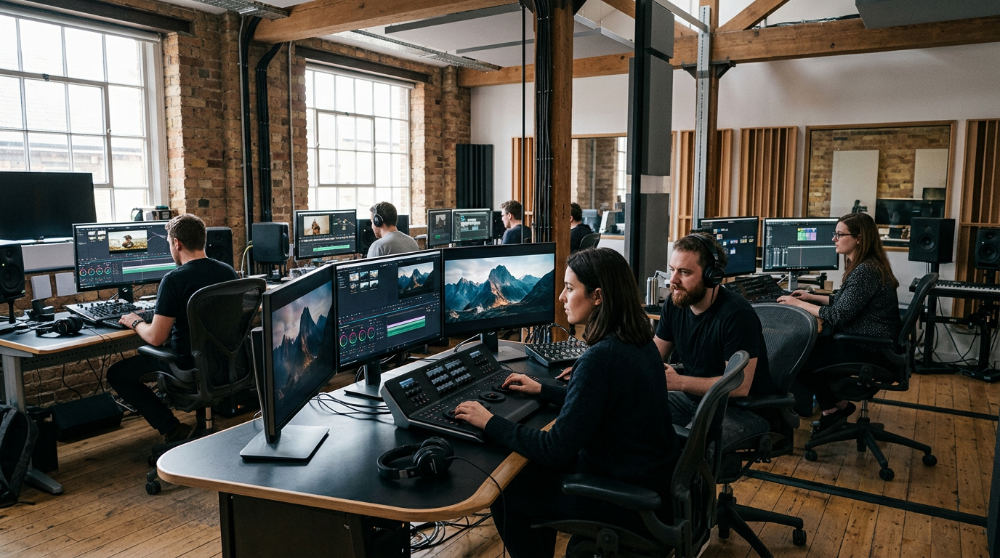
Success in the final stage of filmmaking is measured by technical quality control and turnaround time. We focus on high-level logical workflows to prevent creative bottlenecks during the finishing stage. Our team provides a boutique experience with a national reach. We offer specialized food styling for hospitality brands or integrated AI video production to enhance your commercial. We help brands navigate the transition from offline editorial to the final online finish without losing the narrative’s heart.
We utilize industry-standard tools to ensure every frame meets broadcast requirements. Professional-grade editing and finishing systems are used in high-end post-production facilities to achieve superior color and effect quality. You can explore our professional content production services to see how we blend creative energy with structured technical execution for every client. By centralizing these complex tasks, we ensure your brand message remains clear and visually striking across all platforms.
If you are ready to refine your brand’s story with a facility that values both logic and creativity, reach out to the team at Pretzel Logic. High-volume media assets are best managed by studios that offer robust technical infrastructure to support diverse marketing efforts. To start your project consultation, fill out the form on our website and speak with us about your specific needs for upcoming television or digital campaigns. We are dedicated to providing the high-end finishing your brand deserves to stand out in a crowded marketplace.