Last updated November 18, 2026
Post-production is the final stage where animation frames are polished, edited, and finalized for distribution. Unlike live-action, this phase focuses heavily on compositing, color grading, and visual effects to bridge the gap between technical data and creative brand storytelling.
Key takeaways
- Post-production timelines vary depending on the complexity of the 2D or 3D assets.
- Compositing is the critical step that merges separate visual layers into a cohesive single frame.
- Effective sound design and Foley are essential for giving digital characters human-like presence.
- Consistency in branding production relies on precise color grading and brand-specific LUTs.
What is post production in animation?
Post-production is the third and final major phase of the filmmaking process, occurring after pre-production and production. In the context of animation, this phase involves taking individual frames, often generated in software like AutoCAD or 3D suites, and assembling them into a narrative sequence. According to Filmmaker Tools, this stage ensures all elements, from music to visual effects, work together to create a finished product.
For a brand, this stage serves as the creative twist where technical renders become emotional stories. This is the moment where we ensure the final output aligns with your original vision, whether you are launching a startup in the Gaslamp Quarter or managing a legacy brand across California. Key activities include video editing, adding visual effects (VFX), and finalizing the audio mix to ensure the message resonates with the target audience.
The production phase focuses on building the assets. Post-production focuses on the viewer’s experience. It involves refining the pacing and tone to make sure the story flows naturally. By the time an animated project reaches this stage, the heavy lifting of character design and environment building is done. This leaves the floor open for the fine-tuning that makes professional animation stand out. We call this the polish. It matters.
How is animation post production different from live-action?
Animation post-production focuses on the refinement of computer-generated layers rather than selecting the best takes from raw footage. In a traditional shoot, editors work with light captured by a camera lens. In animation, we work with light simulated by an engine. The workflow is less about fixing errors and more about perfecting the layers that were built during the production cycle.
Rendering is a unique technical hurdle. It does not exist in live-action. It requires significant processing time to output high-resolution frames before editing can begin. A single second of high-end 3D animation might take hours to render, depending on the complexity of the lighting and textures. Live-action is different. The footage is available for review the moment the memory card is plugged in.
Animation also allows for pixel-perfect control during color grading (every element is digitally defined from the start). We can change the color of a character’s shirt or the brightness of a virtual sun without affecting the rest of the frame. I would always pick animation for highly branded content because it allows for exact adherence to brand style guides. San Diego marketing teams agree.
Comparing animation and live-action post workflows
Animation post-production workflows focus on building a world from zero, whereas live-action workflows focus on trimming a world that was already captured. The following table highlights the core differences between the two workflows:
| Feature | Live-Action Post-Production | Animation Post-Production |
|---|---|---|
| Primary Input | Raw camera footage (R3D, MOV) | Digital renders (EXR, PNG sequences) |
| Core Process | Trimming and assembly | Compositing and layering |
| Audio | Syncing production sound | Creating 100% of sound via Foley |
| Correction | Fixing lighting on set | Re-rendering digital lights |
| Software | Adobe Premiere Pro focus | After Effects and Rendering focus |
The post-production workflow for marketing video production
The post-production workflow for marketing video production begins with the technical process of generating the final frames from 2D or 3D models. It bridges the workspace and the final visual. Once the frames are generated, we move into the post-production editing services that define the look and feel of the project.

Logical Rule: Never skip the Foley stage. Because animation is born in a silent digital environment, every footstep and rustle must be intentionally created to make the world feel real.
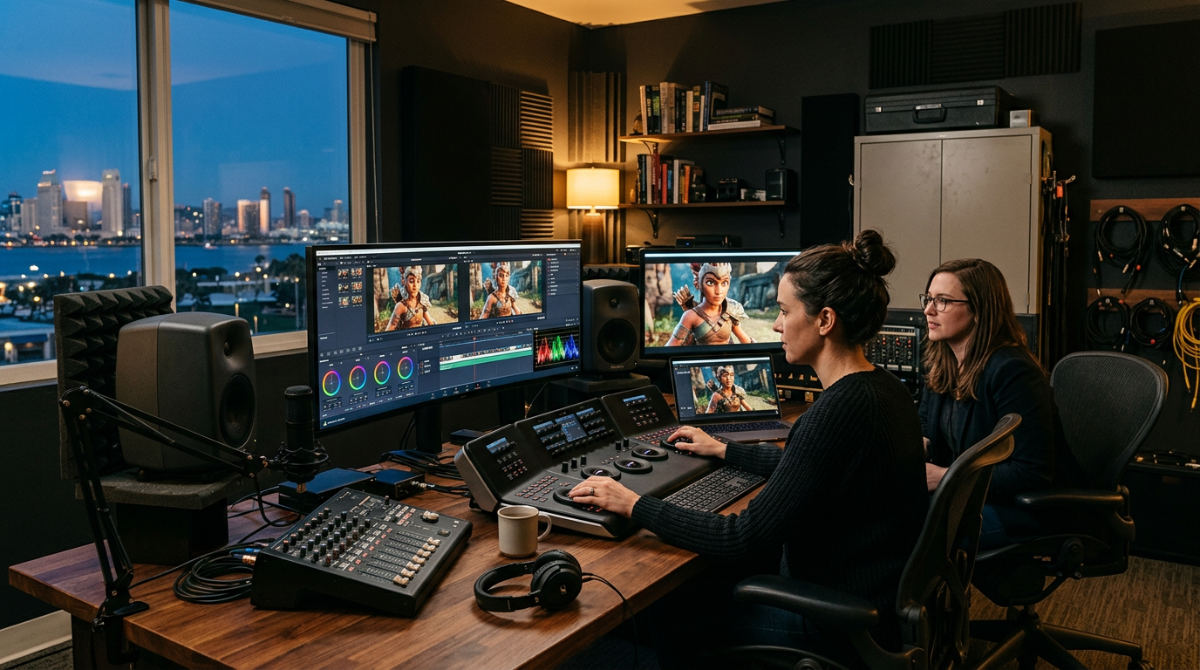
Compositing follows, using software like After Effects to blend characters, backgrounds, and atmospheric effects into a single scene. This is where we add depth, such as fog, lens flares, or motion blur, to ensure the digital world feels tangible. Sound design and Foley are then introduced to replace the silence of the digital world with footsteps, rustles, and environmental ambience.
Refining the final edit is essential for high-impact marketing video production that needs to grab attention in seconds. At Pretzel Logic, we utilize an integrated AI workflow to accelerate rendering times. This lets our human creatives focus on the story. The blend of technology and artistry allows us to produce high-quality branding video production that looks as good on a mobile screen as it does on a stadium display.
How long does post production take in animation?
Post-production in animation varies for standard commercial projects, though complex 3D projects can take longer. The timeline is heavily influenced by the technical requirements of the renders. For example, a 2D explainer video might move through post-production relatively quickly. A highly detailed 3D product launch video could require significant time for the rendering and compositing phases.
Time Saver: Pre-rendering background elements separately from moving characters can significantly reduce your final render times during the compositing phase.
Timeline factors include the total number of frames, the complexity of the lighting, and the number of revisions required for brand consistency. TV commercial production often requires a faster turnaround to meet strict broadcast deadlines and technical specifications. Managing these timelines requires a collaborative approach to ensure every stakeholder is aligned from the first render to the final export. By setting clear milestones for color grading and sound mix reviews, we avoid the bottlenecks that often plague large-scale tv ad production cycles.
Do you work with brands across the country?
Yes, Pretzel Logic Productions serves corporate brands and agencies across various regions. We love the creative energy of Southern California, but our post-production workflow is designed for remote collaboration. This allows us to manage projects for clients in various markets with a boutique feel. Every project receives the attention it deserves.
By using cloud-based review tools, we maintain a broad reach while keeping the visionary spirit of our San Diego creative roots. Whether you are a local restaurant or a national nonprofit, our team ensures your branding production meets elite standards. We also collaborate with professional partners for integrated digital media strategies that extend the life of your animated assets. This capability ensures that your message, whether it is for a local TV spot or a global digital campaign, is delivered with consistency and technical precision.
When the standard workflow is not enough
Post-production can become a bottleneck if the pre-production planning was insufficient or if the assets lack the necessary resolution for large-scale displays. A common mistake is treating animation post-production like a simple filter stage. It is actually a fundamental reconstruction of the visual narrative. If the initial renders don’t have enough data, even the best software for post production cannot fix a lack of detail.
For brands with existing legacy content, we offer a revitalization method, using modern animation overlays to refresh dated footage without a full reshoot. This allows companies to update their marketing materials efficiently. Choosing the right software for the job can lead to compatibility issues. To achieve high standards, production studios typically select a pipeline of software that balances quality with rendering efficiency.
When working with an animation explainer video company, keep in mind that the final 10% of the work provides 90% of the emotional impact. This includes the subtle color grade, the crisp sound mix, and the final polish. Without a well-managed post-production phase, the most beautiful animation in the world can fall flat. If you are looking to transform your technical assets into a compelling brand story, we are ready to help. Start the process by reaching out to our team to discuss how our collaborative approach can fit your next project.
To begin your project consultation and see how we can bring your creative vision to life, fill out the form at https://pretzellogicproductions.com/contact-us/.
FAQ
What are the 5 stages of post-production?
The five stages typically include video editing, visual effects (VFX) and compositing, color grading, sound design/mixing, and final delivery/export. In animation, the rendering stage often serves as the technical gateway to these steps.
What is post-production in 3D animation?
In 3D animation, post-production is where multi-pass renders (diffuse, shadow, reflection, etc.) are combined. It’s where the "lighting" is finalized through compositing and where digital environments are integrated with character movements to create a cohesive scene.
How much does it cost to produce an animated video?
Investment levels are determined by factors such as the complexity of the animation (2D vs. 3D), the duration, and the level of detail required in post-production. A high-end 3D commercial with complex liquid simulations or hair dynamics typically requires a more substantial resource allocation than a flat-style 2D explainer.
What is the difference between production and post-production?
Production is the act of creating the building blocks—modeling the characters, animating their movement, and setting up the digital lights. Post-production is the act of refining those blocks, adding atmospheric effects, and editing them into a final story with sound.