Last updated November 10, 2026
A 2D animation pipeline is a rigid, structured workflow. It moves a project from a raw concept to the final screen through three distinct phases: pre-production, production, and post-production. This logical sequence ensures creative ideas remain technically viable. It helps us meet commercial deadlines without sacrificing quality. We don’t just wing it. We follow the map.
Key takeaways
- Pre-production acts as the creative blueprint. Detailed scripting and storyboarding prevent future project drift and costly revisions.
- Digital puppet animation utilizes rigging. This technique maintains character personality while significantly reducing manual production time.
- Integrated teams prevent errors. Managing the entire workflow from script to final composite ensures the brand’s message is not "lost in translation."
- Modern pipelines leverage AI. AI Video Production is an emerging technology used to enhance speed and quality in modern animation workflows.
- Complexity defines production timelines. Visual intricacy and character detail are the primary drivers of resource allocation in traditional workflows.
| Phase | Primary Goal | Key Deliverables |
|---|---|---|
| Pre-Production | Strategy & Visualization | Script, Storyboard, Animatic |
| Production | Asset Creation & Motion | Character Rigs, Keyframes, Backgrounds |
| Post-Production | Polish & Delivery | Color Grading, Sound Mix, Final Export |
Establishing the Animation Blueprint
A professional 2D animation pipeline follows a timeline determined by visual style and movement complexity. Before we draw a single frame, we need a finalized brand brief. We need core messaging objectives. We need a clear budget scope. Within the industry, clinics and studios often categorize projects based on whether they require simple motion graphics or intricate character narratives. The latter demands broadcast-quality investment. This investment is backed by hard market data. The 2D animation software market is anticipated to grow to $92.3$ billion by 2030. That shows a massive demand for high-quality digital assets.
Success in this medium requires a balance between strict milestones and creative pivots. Logic provides the structure. Creativity provides the soul. Without a blueprint, the production phase is just a series of expensive guesses. By setting technical constraints early, we free the team to focus on storytelling rather than troubleshooting. This structured approach ensures that every dollar spent translates directly into viewer engagement. It drives brand retention. We prefer this methodical path because it eliminates the "what if" anxiety that kills creative momentum.
1. Develop the Script and Concept
The 2D animation pipeline begins with a finalized script. This concept establishes the tone, narrative arc, and core marketing message. We nail the "why" behind your company before touching a stylus. We engage in collaborative concept development that aligns with your brand’s authentic story. This foundation is where every visual asset is built. It ensures creative goals are rooted in business logic.
Our approach relies on a unified creative vision. The same team handles your scriptwriting and production. This ensures the original vision survives the technical grinder. It prevents the "lost in translation" errors common in animation-only shops that receive scripts without context. We find the high-level hook that separates your story from generic corporate noise. We also define the visual style based on your industry. A law firm needs clean professionalism. A restaurant promotion requires vibrant energy. Starting with mastering pre-production video planning is the most reliable way to ensure the final product hits your marketing goals.
2. Create the Storyboard and Animatic
Storyboarding is the essential pre-production step of visualizing the script. We turn it into a sequence of panels that define pacing, camera angles, and key actions. Once these boards are approved, we convert them into an animatic. This is a rough, timed video sketch. We use it to test the narrative flow before entering the expensive production phase. It allows you to see the timing of the voiceover against the proposed visuals.
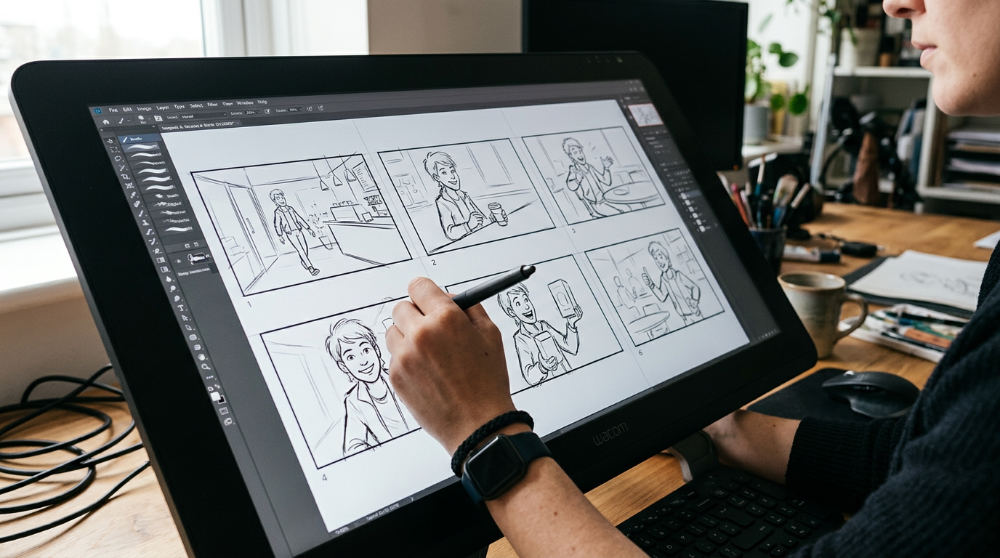
This step is vital for spotting technical hurdles early. We look for scenes that are too complex for the timeline or jarring transitions. We use our "Logical Collaborator" framework here to ensure the timing meets your marketing goals. We make sure you hit a specific call-to-action at the 30-second mark. An animatic is a reality check. It is much easier to cut a scene in a sketch than it is to delete a fully rendered sequence. By refining the pacing now, we protect your budget.
3. Design Characters and Backgrounds
In this phase, we refine the visual tone and palette to match your brand identity. We use color guides and asset design to build your world. We establish the logic of the environment. We ensure background consistency so the viewer stays immersed. This involves creating "model sheets" that show characters from various angles. They must look identical regardless of who is animating them.
Modern asset tools allow for smooth remote collaboration. You can review character designs and environment sketches in real-time. Whether your project requires traditional hand-drawn aesthetics or efficient digital puppets, the design phase sets the foundation. We ensure every character has a distinct silhouette. Every background must support the narrative without distracting from the main message. This stage is where your brand’s visual language is codified. A single screenshot should be instantly recognizable as yours.
How is digital puppet animation produced?
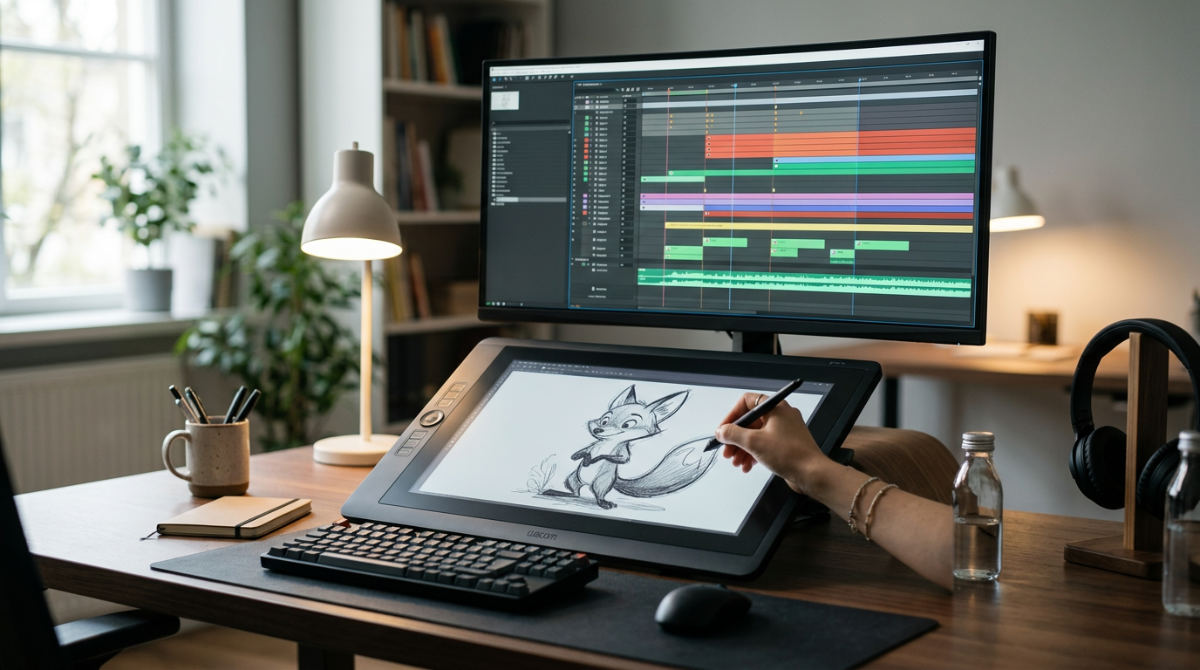
Digital puppet animation is produced through rigging. This is where a 2D character is given a digital skeleton that allows for fluid movement.
- Rigging. Rigging creates a digital skeleton for a 2D character to enable animation. It allows for reusable movement.
- Efficiency. Animators manipulate limbs and facial features without redrawing every single frame manually. This significantly reduces labor hours.
- Consistency. Rigging is ideal for series where character consistency is paramount. The "puppet" remains identical across every scene.
- Quality Control. Working with an Animation Video Production Company ensures your rigs are flexible enough for complex acting.
4. Execute the Animation Production
Animation production is the technical execution of movement. Static assets become dynamic sequences through frame-by-frame drawing or digital puppet manipulation. We breathe life into the designs. In the modern workflow, we increasingly integrate AI Video Production. This technology enhances speed when rendering complex textures. It helps generate variations in background elements. This allows our human animators to focus on the nuance of character acting.
We focus heavily on the "acting" to ensure the character’s personality resonates. A law firm’s mascot should move with authority. A retail brand’s character might be bouncy. Throughout this phase, we maintain a rigorous review cycle. Every movement must align with the pre-production blueprint. The 2D animation software market is projected to reach $92.3$ billion by 2030 according to S3ART Store. That growth proves these tools offer incredible, high-fidelity motion. Projects that utilize traditional 2D animation often require significant specialized skill to manage visual complexity.
5. Complete the Post-Production and Polish
Post-Production is the final stage of the pipeline. It includes editing, color grading, and sound mixing. This phase is where all the disparate elements come together. We take the animated sequences, voiceovers, background music, and sound effects and forge a single file. Without a thorough post-production process, the most beautiful animation can feel unfinished. It can feel jarring.
During this phase, we execute professional color grading. We refine the visual tone and palette to match brand identity. We then layer in custom sound design. This provides the emotional weight that drives the story home. A great animation can be ruined by poor sound. We treat audio with the same level of logical precision as the visuals. Finally, we review the export for commercial readiness across all platforms. It must look good on a smartphone. It must look good on a broadcast monitor. Our professional video services ensure the final result is polished.
Do you work with brands across the country?
Yes. Pretzel Logic provides services to corporate brands and marketing agencies across the United States. We utilize a National Production Capability framework. This allows for productive remote collaboration. A client in New York gets the same real-time review experience as a local business. For brands looking to expand their reach, the expertise offered by InnoVision Marketing Group can complement our animation production.
- Remote Infrastructure. Our digital pipeline supports high-speed file sharing and collaborative feedback tools.
- Industry Range. We have delivered 2D animation projects for healthcare, hospitality, and legal sectors nationwide.
- Timezone Flexibility. Our team manages workflows across all US timezones.
- Production Scale. We handle everything from small social clips to national commercial campaigns.
Common Technical Pipeline Failures to Avoid
The most common failure in a 2D animation pipeline is skipping the animatic. This leads to expensive timing issues. These are much costlier to fix during post-production when the assets are already fully rendered. If the timing is off, an animator might spend forty hours on a sequence that only needs to be five seconds long. This wastes your budget.
Another frequent mistake is failing to integrate the script and animation teams. This creates "lost in translation" errors. The visuals won’t match the messaging. This results in a disjointed viewer experience. Over-relying on AI without human creative oversight can also result in a "hollow" feel. It lacks authentic brand storytelling. For those in highly regulated sectors, ignoring legal requirements during the scripting phase can lead to final rejections. Use specialized management tools to handle the business side. Let us handle the creative execution.
Bringing Your Visual Vision to Life
A professional 2D animation pipeline is the bridge between a logical business goal and an inspiring visual story. By following a structured process from script to screen, you ensure your message is delivered clearly. You ensure it is delivered professionally. At Pretzel Logic, we blend technical rigor with a creative twist. We make sure your brand stands out in the modern digital landscape. Whether you need professional explainer video services or a full-scale commercial campaign, we are ready to scale your production.
To start your next project, fill out the form at Pretzel Logic Productions.
FAQ
What is the difference between 2D animation and motion graphics?
2D animation typically involves character-driven storytelling with complex movement and "acting," while motion graphics focuses on animating graphic design elements, text, and abstract shapes to convey information.
How are resource requirements determined for 2D animation?
Resource allocation for 2D animation is primarily influenced by the level of detail, the complexity of character rigs, and the specific technical requirements of the production pipeline.
Why is the pre-production phase so important?
Pre-production acts as the blueprint for the entire project. It allows teams to finalize scripts and storyboards before moving into the more expensive production phase, preventing costly revisions later on.
What tools are used in a 2D animation pipeline?
Common tools include Adobe After Effects for motion graphics, Toon Boom Harmony for character animation, and various AI video production tools for enhancing rendering speed and background assets.
Can 2D animation be used for corporate training?
Yes, 2D animation is highly effective for corporate training as it can simplify complex concepts, maintain viewer engagement, and be easily updated as training requirements evolve.