Last updated November 10, 2026
Professional video post-production involves media offloading to RAID systems, assembly editing, sound design, color grading, and visual effects integration. According to Adobe, post-production can take from a month to a year or more, depending on the project and nature of the work. This technical workflow transforms raw files into polished assets through a collaborative cycle of refinement and strategic brand alignment.
Key takeaways
- Extended Timelines. Post-production workflows range from one month for standard commercials to over a year for complex long-form projects.
- Data Redundancy. Utilizing a RAID system is the non-negotiable first step to protect raw brand assets from hardware failure.
- Emotional Grading. Color grading is a distinct creative step used to evoke specific emotional responses tied directly to brand identity.
- Immersive Audio. Sound mixing and foley artistry are essential for creating professional, high-impact auditory experiences.
- AI Integration. AI revitalization can upscale and modernize existing brand footage to extend its lifecycle and improve visual clarity.
1. Prerequisites for a Professional Workflow
Before the first cut, you must organize and back up all raw footage on a RAID System to prevent catastrophic data loss. Professional post-production requires a foundation of data redundancy. A Redundant Array of Independent Disks (RAID) ensures that if one drive fails, your brand’s investment remains secure. According to FILMD, RAID systems are essential in post-production to prioritize the safety and redundancy of raw footage.
Verify that your project timeline accounts for sufficient time to complete a professional edit. While a social media clip might move faster, high-end branding video production involves multiple rounds of stakeholder reviews and technical refinements. To guide this effort, we establish a clear creative brief based on the 12 pre production planning steps to ensure the edit stays true to the original vision.
Consider the total typical costs involved in a professional workflow. These costs cover software licensing for industry-standard tools, high-performance hardware capable of rendering 4K or 8K files, and specialist labor fees for editors, colorists, and sound engineers. Skipping these prerequisites leads to technical bottlenecks that stall projects indefinitely.
2. The Strategic Foundation of Video Editing
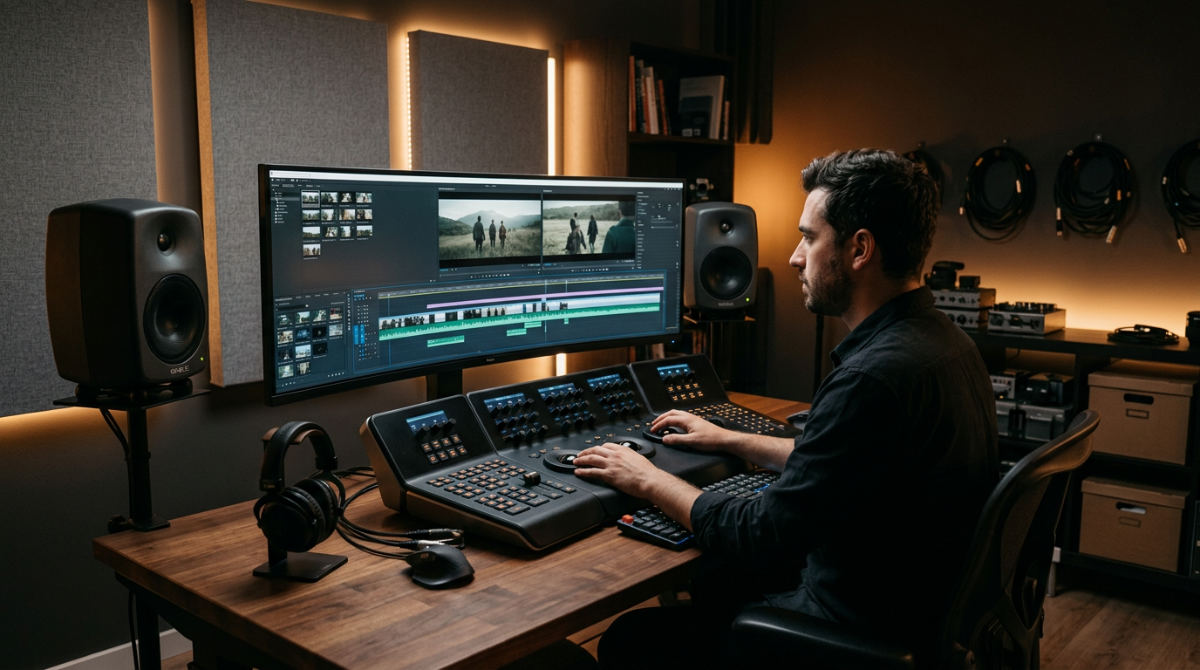
Video editing is the process of selecting and joining clips into a cohesive narrative through technical organization and creative pacing. Logic meets magic here. We balance technical file management with creative storytelling. Our team views this phase as a strategic opportunity to refine the brand’s voice rather than a mechanical assembly of clips. We start with an assembly edit to determine the narrative flow. We purposefully ignore transitions or color at this stage to focus entirely on the story’s structure.
During this phase, we look for the Pretzel Logic twist. We hunt for opportunities for unexpected visual elements or non-linear storytelling that elevate traditional corporate footage into something memorable. Professional editing suites allow for experimentation with creative pivots without losing track of the project’s structure. By utilizing industry-standard workspaces, modern editors maintain clean file organization and multi-track editing.
As the edit progresses, we ensure the final cut aligns perfectly with high-level marketing goals. This collaborative science ensures technical execution serves the strategic vision. If the pre-production phase defined a specific market positioning, the post-production workflow is where we verify that every frame reinforces that message. For brands looking to maximize their reach, Innovisionmarketinggroup offers specialized traditional media strategies that complement these visual assets.
3. What are the steps in post production?
Post-production includes five core stages: logging/organization, picture editing, sound design, visual effects, and color/delivery. The post-production process involves transferring image and sound files into computer files to work within a digital editing workspace. Adobe notes this is essential for transitioning from raw capture to a flexible creative environment.
The process is a collaborative science. Every frame must serve the overarching brand story. Below is a breakdown of how these stages typically function in a professional production environment:
- Logging and Organization: Sorting footage, syncing audio, and labeling clips for easy retrieval.
- Picture Editing: Moving from the rough cut to the fine cut to lock the visual narrative.
- Sound Design: Layering dialogue, music, and sound effects to build an immersive world.
- Visual Effects and Graphics: Adding titles, motion graphics, or VFX to enhance the imagery.
- Color and Delivery: Finalizing the aesthetic look and exporting files for broadcast or web.
| Stage | Primary Goal | Typical Duration |
|---|---|---|
| Editing | Narrative structure | Varies by project |
| Audio | Sound clarity/impact | Varies by project |
| Color | Visual mood/brand | Varies by project |
| Delivery | Technical compliance | Varies by project |
4. Refining Sound Design and Foley Artistry
Sound mixing is the process of leveling and blending all audio elements (dialogue, music, effects) into a final track. In professional marketing video production, audio is a critical component of the viewer’s experience. If the sound is thin or distracting, the visual quality won’t matter. We focus on balancing levels. This ensures a spokesperson’s voice remains authoritative while the background music drives the energy.
To add hyper-realistic depth, a Foley Artist may be brought in to record custom sound effects. They capture the crisp rustle of fabric or the specific thud of a product being placed on a table. These subtle layers create a sense of presence that stock sound libraries often lack. For specialized sectors like medical or law firm branding, the audio tone must remain compliant and professional. This requires a delicate mix that sounds accessible yet highly credible.
Music licensing is another critical hurdle handled during this phase. Agencies that offer this service typically secure the necessary rights for every track to avoid legal issues during distribution. For a 30-second TV spot, this might involve choosing a track that builds to a crescendo exactly as the call-to-action appears on screen. We ensure the auditory and visual elements hit simultaneously.
5. Color Grading vs Color Correction in San Diego
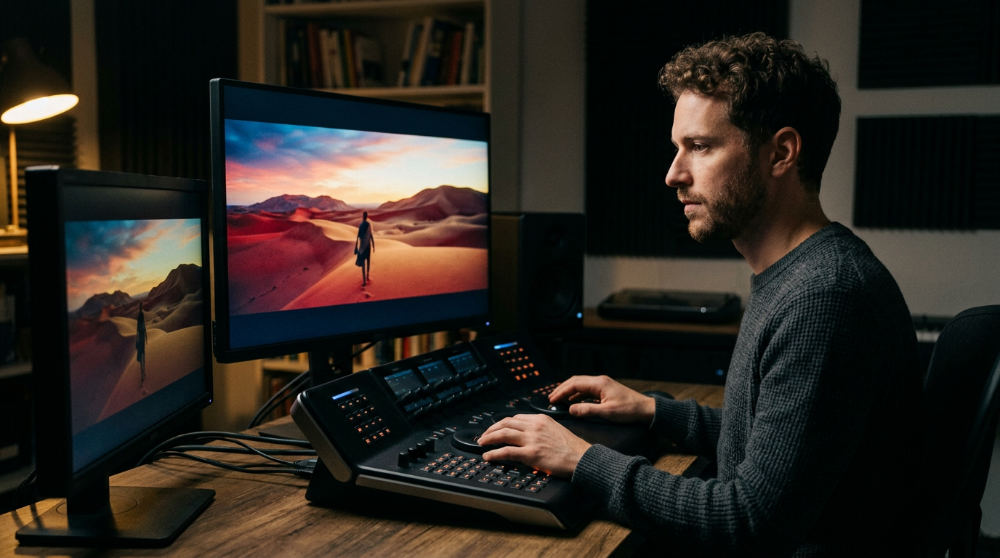
Color correction is a technical fix that ensures visual consistency by adjusting exposure, contrast, and white balance across all clips. If one shot was filmed at noon and the next at 4 PM, the professional must neutralize them. We do this so the viewer doesn’t notice the jump in lighting. It is the essential first step in making the footage look professional and uniform.
Color grading is a creative choice. The Colorist applies a specific palette to evoke brand-specific emotions. This is where we define the look of the film (perhaps a cool, clinical blue for a tech firm or a vibrant, saturated palette for a lifestyle brand). Consistent color is vital for branding video production. It ensures the visual identity matches existing company assets like logos and website styles.
The casino beach bar and grille branding spot shows how warm color grades translate the physical atmosphere of a beachside location into a digital experience. By pushing the golden tones of the sunset and the turquoise of the water, we used grading to make the viewer feel the heat and relaxation of the venue before they ever visited in person.
6. Visual Effects and AI Revitalization
Visual Effects (VFX) involve imagery created or manipulated outside of a live-action shot to enhance the narrative. We use them to remove a stray reflection or add a digital backdrop. In the modern workflow, VFX aren’t just for blockbusters. Corporate videos use them to add polished motion graphics that explain complex concepts or data points that live-action footage cannot convey.
Our AI revitalization process is a specific service we offer to modernize existing brand footage. By using advanced algorithms to upscale resolution and improve clarity, we take legacy assets and make them look like they were shot on modern 4K cameras. This is particularly useful for brands that have high-value historical footage but need it to meet today’s broadcast standards for tv commercial production.
Integrating AI into the workflow boosts efficiency for marketing video production without sacrificing human creativity. We use these tools to handle repetitive tasks, such as rotoscoping or noise reduction. This frees up our editors to focus on the high-level storytelling that defines our approach. This blend of modern tech and human intuition ensures your video feels both current and authentic.
7. Do you work with brands across the country?
Yes. We provide post-production services for brands across the United States using secure remote collaboration tools. While our creative hub is located in San Diego, our digital workflow allows us to manage national projects with high efficiency. We offer the same level of high-end polish regardless of where your team is located.
Our specialized commercial production meets rigorous distribution standards for broadcast anywhere in the country, from local cable buys to national networks. We utilize encrypted cloud transfers and remote review sessions to ensure you are part of the process every step of the way.
| Service Area | Collaboration Type | Delivery Method |
|---|---|---|
| San Diego | In-person/Digital | Fiber/Cloud |
| National | 100% Remote | Secure Cloud/RAID |
| Global | 100% Remote | Encrypted Transfer |
Law firms in New York and restaurant groups in Florida all benefit from our West Coast creative energy. We handle everything. From the initial assembly to the final technical delivery, we have it covered. Your files will be formatted correctly for every platform (from social media to the silver screen).
8. Common Post-Production Mistakes to Avoid
A critical mistake is failing to account for the technical and creative requirements of the final distribution platform. One of the most frequent errors is skipping the backup phase. You must always use redundant storage to protect your investment. Losing a week of editing work due to a single drive failure is an avoidable tragedy. Ignoring the sound mix until the end of the process often leads to disjointed narrative pacing.
Over-editing is another common pitfall. Using too many flashy transitions or aggressive effects can distract from the core brand message. In professional post-production, the best editing is often invisible. It serves the story rather than showing off the software. Finally, failing to plan for platform-specific aspect ratios, such as 9:16 for vertical social content, during the final delivery phase can result in awkward cropping. That mistake undermines your brand’s professional image.
Ready to Bring Your Vision to Life?
Transforming raw footage into a compelling narrative requires a delicate balance of technical precision and creative intuition. At Pretzel Logic, we specialize in taking your brand’s story and giving it the professional polish it deserves. We ensure every frame and sound frequency works toward your marketing goals. If you need a fresh commercial or want to revitalize existing assets with AI, we are ready to help.
Our team brings a unique perspective to every project we touch in San Diego and beyond. We don’t just edit; we craft experiences that stick. You can contact us by filling out the form at https://pretzellogicproductions.com/contact-us/ today.
Pretzel Logic Productions 5961 Kearny Villa Rd San Diego, CA 92123
FAQ
What are the 5 stages of post-production?
The 5 stages of post-production are logging and organization, picture editing (rough cut to fine cut), sound design and mixing, visual effects (VFX) and motion graphics, and color grading and final delivery.
How long does the post-production process typically take?
The timeline for post-production varies significantly by project. A standard commercial may take one to three months, while complex feature-length films or detailed corporate campaigns can take six months to over a year.
What is the difference between color correction and color grading?
Color correction is a technical process to ensure visual consistency and natural colors across all clips. Color grading is a creative process used to apply a specific aesthetic or "look" that evokes an emotional response aligned with the brand.
Why is a RAID system important in video editing?
A RAID (Redundant Array of Independent Disks) system provides data redundancy. This means if one hard drive fails, your raw footage and project files remain safe, preventing the loss of high-value brand assets.
Can AI be used in professional post-production?
Yes, AI is used for revitalization, such as upscaling old footage to 4K, as well as automating repetitive tasks like noise reduction and rotoscoping, allowing editors to focus on creative storytelling.