Last updated September 15, 2026
A post production studio is a specialized facility that manages the final stages of filmmaking, including video editing, color grading, sound design, and visual effects. These studios transform raw footage into a polished narrative by balancing technical workflow management with creative artistry to ensure the final product meets commercial standards.
Key takeaways
- Technical workflows. Post-production involves specialized processes like color grading, sound mixing, and ADR to ensure broadcast quality.
- Scale and storage. Modern studios utilize massive shared storage systems, often exceeding 3,000 terabytes, to manage high-resolution 8K media.
- Legacy Revitalization. The revitalization process can transform legacy brand footage into new, high-performing social media assets.
- Strategic Integration. Integrating post-production strategy during the pre-production phase significantly reduces total project costs.
- Collaborative Tech. Remote collaboration tools like Frame.io allow global clients to participate in real-time editing reviews.
The Role of Post-Production in Branding
Professional post-production services act as the bridge between raw captured visuals and a cohesive brand narrative that resonates with audiences. The production phase is where you capture your visual assets, but the post-production facility is where the Pretzel Logic twist happens. We believe the most compelling stories are born when strict technical management meets high-level creative flair.
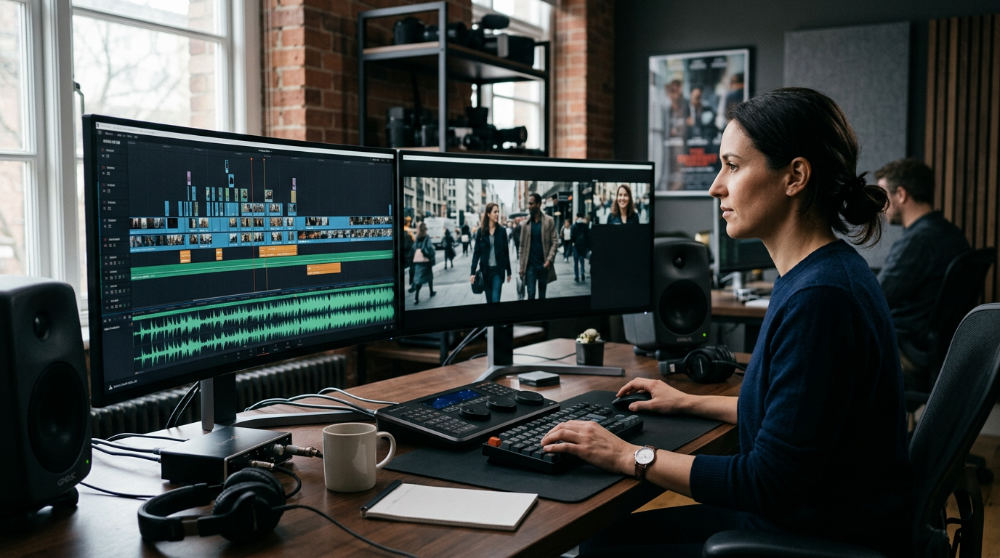
In professional branding, the quality of your final edit dictates how consumers perceive your authority. Pacing matters. Emotional music cues and sharp transitions turn a simple testimonial into a cinematic experience. According to Post-production Technical Definition, this phase is as critical in photography as it is in film (often referred to as retouching or editing) to ensure the brand image is flawless.
Effective post-production focuses on enhancing brand impact through professional pacing and emotional resonance. At Pretzel Logic, we prioritize logical workflows to ensure that creative experimentation never derails your delivery timeline or budget. We treat every frame as a strategic asset. By doing this, we help you build a narrative that isn’t just seen, but felt. You can learn more about enhancing brand impact to see how these creative choices drive conversion.
Strategic Planning and Resource Requirements
Strategic planning for a video project requires high-resolution raw footage, a clear creative brief, and organized production metadata before editing begins. These prerequisites act as the roadmap for the editor, ensuring the final product aligns with your original vision. Meticulous planning helps a visual effects company accurately estimate the computing power and hours needed for complex CGI or compositing tasks.
- Realistic Timeframe. The duration of a commercial edit varies based on the complexity of visual effects, the number of revision rounds, and the depth of the sound design.
- Estimated Cost. Budgeting is a variable process. For a detailed breakdown of how to allocate funds for editors, colorists, and mixers, consult our video production cost guide.
- Technical Infrastructure. Professional environments require more than just a laptop. Industry-standard setups often involve high-speed LTO storage for long-term archiving and specialized non-linear editing software like Avid Media Composer (Avid).
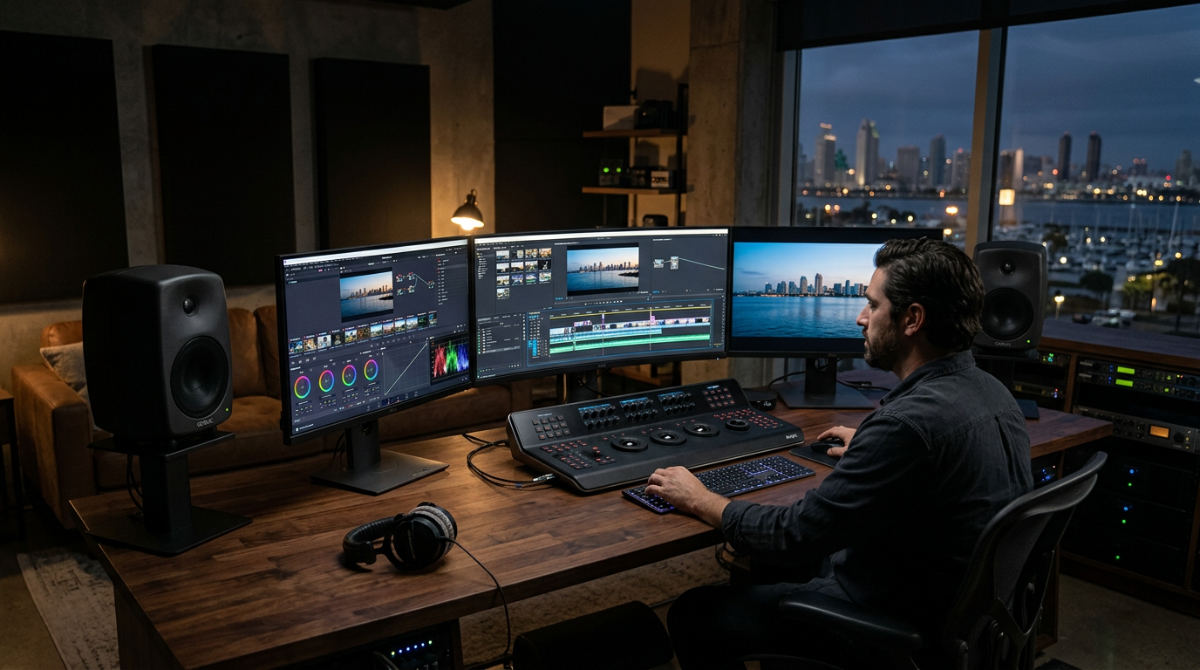
Modern facilities like Sugar Studios utilize massive shared storage systems, sometimes exceeding 3,000 terabytes, to manage the enormous file sizes associated with 8K raw media. Without this level of infrastructure, your project risks technical bottlenecks or data loss.
Essential Workflows in a Professional Studio
Every successful film project follows a rigorous series of technical steps to ensure the final output is broadcast-ready. This is where the technical "logic" of our process meets the creative "twist" of your brand story. These steps include domestic and international mastering for VOD, streaming, and specialized encoding to ensure the file plays correctly on any theater screen.
San Diego Advantage: Our local San Diego facility leverages a unique regional ecosystem to provide top-tier services for both local brands and remote global partners.
Video editing services at Pretzel Logic focus on building a narrative that aligns with your specific industry. A legal video requires absolute accuracy and clear evidence presentation. Conversely, restaurant branding leans heavily into sensory appeal and fast-paced, appetizing cuts. Our color grading process moves beyond simple correction to establish a cinematic mood tailored to the project’s visual standards.
Sound is half of the viewing experience. Professional workflows involve detailed sound design and mix sessions, often incorporating Foley to add realistic textures and spatial audio to immerse the viewer. When location noise ruins a perfect take, we utilize dedicated recording spaces for ADR (Automated Dialogue Replacement), which is the process of re-recording audio in a studio environment to replace or improve production sound. This ensures your message is heard clearly, regardless of the filming conditions.
For brands looking to reach specific demographics, InnoVision Marketing Group provides expert multicultural marketing services to ensure your finished video resonates with diverse audiences across different languages and cultural backgrounds.
1. Organize and Ingest Media
Organizing media involves transferring raw camera files into a high-speed shared storage environment and generating proxies for efficient editing. This ensures data integrity and allows multiple artists, such as an editor and a motion graphics designer, to access the files simultaneously. Video finishing services depend on this initial organization to maintain color accuracy and file links through to the final export.
Logical Rule: The most creative edits are built on the most logical foundations; never skip the organization phase.
During this phase, we create "Dailies," which are raw, unedited footage processed for immediate review by directors and stakeholders. We also apply initial metadata tags and create proxy files. Proxies are lower-resolution versions of the footage that facilitate smoother editing without taxing the system hardware, allowing for a faster, more fluid creative process.
2. Craft the Narrative Assembly
Once the media is organized, the lead editor begins the rough cut. This is the stage where we establish the sequence of events and ensure the story beats align with the project goals. It is the "skeleton" of your video, focusing on pacing and story structure rather than visual polish.
We refine this edit through several iterations until we reach "Picture Lock." This is a critical milestone where no further timing changes are made to the visual sequence. At this point, we often consult with marketing partners to ensure the narrative structure supports broader campaign objectives. If you are curious about how this fits into the wider project lifecycle, you can review the marketing video production steps to see the transition from set to suite.
3. Enhance Visuals and Audio
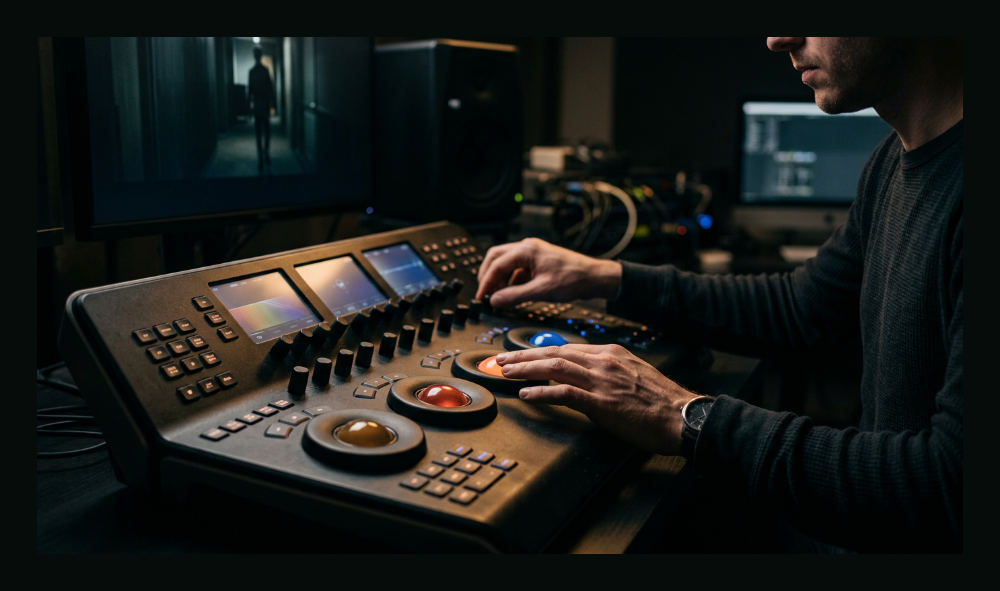
After picture lock, the project moves into the specialized finishing suites. The footage is sent to a color grading studio where we apply creative Look-Up Tables (LUTs) and enhance the visual texture of the film. This is where we can make a bright afternoon shot feel like a moody evening or make brand colors pop with vibrancy using industry-standard tools.
Simultaneously, the sound team executes Foley recording to reproduce everyday sound effects, like the clink of a glass or the rustle of clothing, that add realism to the audio track. We also integrate motion graphics design at this stage. These graphics are essential for explaining complex concepts through visual metaphors, which is particularly useful for corporate or educational sectors where abstract ideas need a concrete visual representation.
4. Master and Export Deliverables
The final step is the creation of master files. High-end commercial presentations often require a Digital Cinema Package (DCP) for theatrical releases. For digital-first brands, we encode various versions for VOD, streaming platforms, and social media. Each platform has specific technical specifications for aspect ratios and compression rates that must be met to ensure the video looks perfect on every screen.
A final quality control (QC) check is performed to confirm that all audio-visual elements are perfectly synchronized and that there are no digital glitches. This technical rigor ensures that when you finally share your vision with the world, it performs exactly as intended.
Common Post-Production Pitfalls to Avoid
The most common mistake brands make is neglecting post-production strategy during the early planning stages. Waiting until after filming to think about the edit often leads to expensive fixes that could have been avoided with a few hours of pre-production consulting.
- Ignoring Legacy Assets. Overlooking the potential of legacy revitalization is a missed opportunity. Don’t discard old raw footage. A professional studio can often repurpose that content into high-performing social campaigns.
- Generic Partnerships. Choosing a partner without industry-specific expertise can be detrimental. A studio that doesn’t understand the precision required for legal video work, for example, may miss crucial details that affect the video’s utility.
- Physical Limitations. Assuming physical presence is required is a mistake. Modern remote tools like Frame.io allow for collaboration from anywhere in the world, giving you access to top-tier talent regardless of your location.
- Skipping the Mix. Many brands focus solely on the picture and ignore the sound mix. Poor audio quality is the fastest way to lose an audience’s trust, so never skip professional sound design and mix sessions.
For a comprehensive look at how we handle these technical demands, visit our dedicated post-production services page.
Frequently asked questions
What is the difference between production and post-production?
Production is the physical act of filming and capturing assets on location or in a studio. Post-production is the subsequent phase where those assets are edited, enhanced, and finalized into a story. While production provides the raw materials, post-production is where the narrative structure, emotional tone, and brand polish are applied to create a finished product.
Can a post-production studio work with footage I already filmed?
Yes, our legacy revitalization service specifically focuses on breathing new life into existing brand footage. We can re-edit, color grade, and add modern graphics to make older assets perform like new content. This is a cost-effective way for brands to maintain a consistent social media presence without the need for constant new film shoots.
What software do post-production studios use?
Professional studios typically utilize industry-standard tools such as Avid Media Composer for narrative editing and DaVinci Resolve for color finishing. Adobe Creative Cloud, particularly Premiere Pro and After Effects, is also frequently used for motion graphics and secondary editing tasks. The choice of software usually depends on the specific technical requirements and the complexity of the visual effects.
What does a post-production manager do?
They oversee the logical workflow, ensuring that editors, colorists, and sound designers stay on schedule. They manage technical deliverables, track the budget, and act as the primary liaison between the creative team and the client. Their goal is to ensure the project meets all technical specifications while staying true to the creative vision.
How does color grading differ from color correction?
Color correction is a technical process that fixes issues like exposure, white balance, and contrast to make footage look natural and consistent across different shots. Color grading is a creative process used to establish a specific mood, style, or brand aesthetic. While correction makes it look "right," grading makes it look "cinematic."
Bring Your Vision to Life with a Twist by scheduling a consultation for your next creative breakthrough. Our team is ready to help you navigate the complexities of the edit suite to ensure your brand stands out.
To start your project with a team that values both logic and creativity, contact us today.