
Last updated September 12, 2026
TV commercial video production is the specialized process of creating high-impact visual advertisements for broadcast and connected TV. It involves three core stages, pre-production planning, professional filming, and post-production, focused on building emotional brand hooks rather than detailed product explainers to drive measurable growth across multiple viewing platforms.
Key takeaways
- Time efficiency. Commercials are most effective when kept under 30 seconds with a focus on high-level branding.
- Asset maximization. A single shoot can generate over 40 pieces of micro-content for social media and CTV.
- Cost-effective updates. Post-production revitalization can refresh existing brand footage without the cost of a full reshoot.
- Strategic foundations. Successful spots require a creative brief detailing audience psychographics and viewing habits.
Bridging Creative Vision and Technical Reality

TV commercial video production requires moving away from granular product explainers toward high-level brand storytelling. A YouTube ad might list five features of a software suite, but a TV spot succeeds by anchoring the brand to a specific emotion or problem-solving moment. We facilitate this transition by focusing on the collaboration between logical workflows and high-level creative concepts. This approach ensures even the most visionary creative concepts remain grounded in logistical reality, preventing budget overruns while maintaining the "twist" that makes a commercial memorable.
The 30-Second Rule: Commercial videos are ideally 30 seconds or less and should focus on high-level branding rather than diving into specific product details.
Modern campaigns no longer live solely on traditional networks. Many full-service production houses now integrate broadcast strategies with Connected TV (CTV) and Over-the-Top (OTT) placements to ensure a message reaches cord-cutters and streamers alike. The backbone of this reach is a comprehensive Creative Brief. According to media buying for television, a brief must outline the target audience’s demographics and psychographics to ensure the final spot resonates. Defining these viewing habits early allows us to tailor the technical execution to suit the platforms where your audience actually spends their time.
Strategic Planning and Cost Considerations
Budgeting for a professional spot involves more than just the daily rate of a camera operator. It requires balancing talent fees, location permits, and high-end gear. A professional broadcast-ready spot typically requires a production timeline of several weeks to move from the initial brainstorm to the finished file. This duration accounts for the meticulous nature of professional casting calls and location scouting, which are non-negotiable for achieving a look that stands up to national network standards.
| Factor | Local Broadcast | National Network |
|---|---|---|
| Production Quality | Standard HD / High Resolution | High Resolution / Cinema Grade |
| Talent Requirements | Local actors / Store owners | SAG-AFTRA / Professional Union |
| Location Scope | 1-2 Local sites | Multiple high-end sets |
| Typical Timeline | Varies by Scope | Varies by Complexity |
When evaluating the TV commercial production budgeting process, brands must distinguish between production costs and the separate media buy. Local spots offer a lower barrier to entry for restaurants or law firms, whereas national campaigns demand a scale of coordination involving multiple agencies. If you are aiming for a local slot during the evening news or a wider rollout, professional scouting ensures your brand is framed against a backdrop that suggests authority and longevity.
Production Value Comparison
High-end technical execution is the primary hurdle for brands migrating from digital-first ads to the television screen. Social-first content often thrives on a "lo-fi" handheld aesthetic, but broadcast TV demands rigorous standards for lighting, audio fidelity, and cinematography. The difference is immediately visible in the dynamic range of the image and the crispness of the sound design.
We distinguish our work through what we call "The Pretzel Logic Twist." This involves using unconventional storytelling or unexpected visual transitions to ensure your brand doesn’t get lost in a crowded commercial break. Instead of following the predictable rhythms of traditional advertising, we look for ways to subvert viewer expectations. This technical polish separates a professional brand film from a hobbyist project. For those looking to see how these production values translate into real-world results, checking out insights from Lightz Out Studios can provide a deeper look at the gear and techniques used in professional settings.
Prerequisites for Professional Production
Before the cameras roll, your brand must have a solid foundation to ensure the investment yields a high return. Commercials that meet broadcast standards require an investment that covers a specialized crew and broadcast-compliant equipment.
- Timeframe. Ensure adequate lead time from initial strategy sessions to the air date.
- Cost. Allocate a budget sufficient to cover professional production and post-production.
- Brand Assets. Finalized brand guidelines and a clear singular objective are mandatory.
- Audience Data. You must have an identified target market and an understanding of their primary viewing platforms.
1. Develop the creative brief
A creative brief is the foundational document that outlines the goals, tone, and audience for the commercial project before any filming begins. A successful commercial starts with a document that defines the "why" behind the "what." In this step, you outline your specific goals, whether that is brand awareness or a direct response, and identify the one thing you want a viewer to remember after the 30-second window closes. We collaborate with your team to ensure this concept aligns with the practical steps of commercial video production, ensuring the vision is actually buildable. A focused brief prevents scope creep and keeps the entire crew aligned on the brand’s voice from day one.
2. Write the script and storyboard
Commercial scripting and storyboarding serve as the blueprint for every visual and auditory element, ensuring the narrative fits the precise time constraints of broadcast advertising. Every second is precious in a broadcast slot. The script must be timed to the millisecond. We draft scripts that balance spoken dialogue with visual cues, ensuring the pacing fits perfectly into 15, 30, or 60-second windows. Once the script is locked, we create storyboards to visualize every camera angle. This allows us to spot logistical hurdles, like a complicated lighting setup or a difficult camera move, before we arrive on set. Storyboarding bridges the gap between the written word and the final frame, giving you a clear preview of the finished product.
3. Conduct location scouting and casting
Location scouting and casting are the essential pre-production steps where we secure the talent and environments that define your brand’s visual identity. Securing the right faces and places gives a commercial its soul. We run professional casting calls to find talent that doesn’t just read lines, but embodies your brand persona with genuine authenticity. Simultaneously, we scout locations that provide the best visual depth and lighting opportunities.
San Diego Insider Tip: Utilizing local scouting knowledge for law firms and restaurants helps find ‘visual gems’ that others miss, especially in the diverse micro-climates of San Diego.
For regional clients, San Diego commercial filming offers a massive variety of backdrops, from sleek modern offices to coastal vistas. Choosing a location with the right vibe can drastically reduce the need for expensive set dressing later. As a San Diego video production house, we leverage our local knowledge to find coastal or urban environments that maximize production value without excessive travel costs.
4. Execute the production shoot
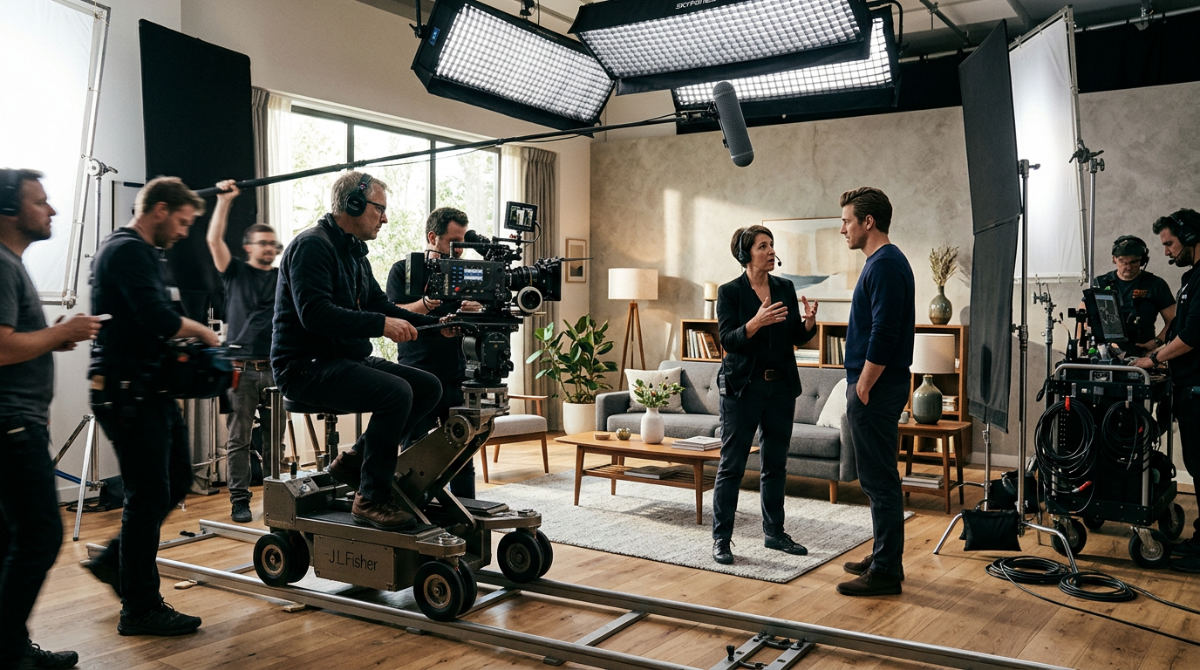
The production phase is where the crew, led by the Director and Director of Photography (DP), brings the storyboard to life. We manage specialized audio and lighting technicians to ensure the technical quality meets broadcast standards. Broadcast video advertising requires a higher level of discipline on set compared to social content, as every shadow and sound reflection is amplified on large screens.
Content Multiplier: A single commercial shoot can fuel over 40 pieces of micro-content for cross-channel marketing when planned correctly during pre-production.
By capturing footage in high resolution, we maintain the flexibility to crop and reframe the image. This allows us to deliver a 16:9 version for TV and a 9:16 vertical version for social media platforms without losing image quality. This strategy, highlighted in studies on commercial video effectiveness, ensures your production budget works harder across all your marketing channels. Our commercial video production services prioritize this multi-use approach to provide the best return on investment.
5. Enter the post-production phase
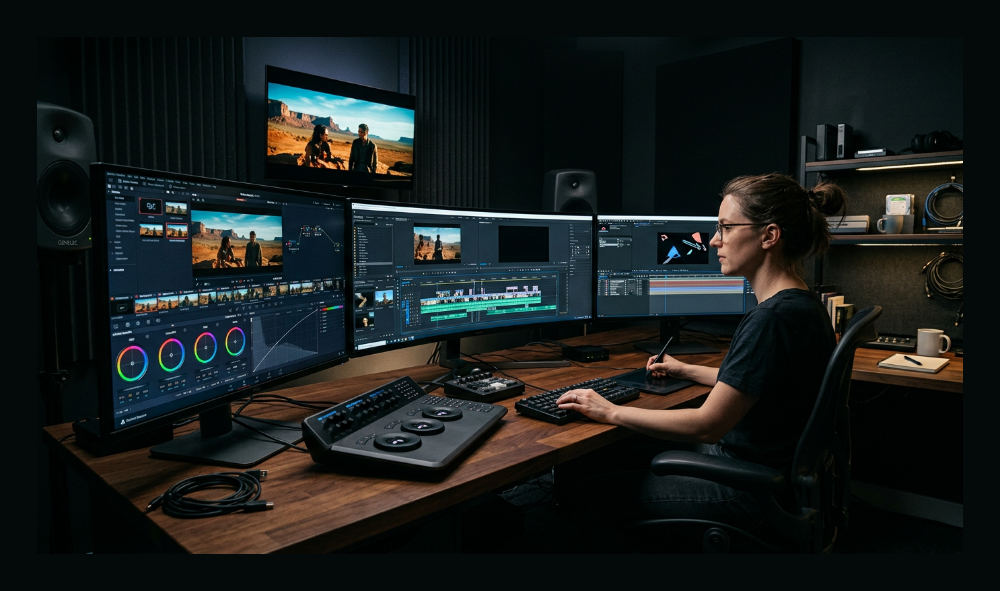
Post-Production is the final stage where editing, color grading, and sound design polish the raw footage into a broadcast-ready spot. This is where the pace of the edit is fine-tuned to ensure the emotional hook lands exactly when it should. During this phase, we also integrate Motion Graphics, which are animated visual elements used to explain complex ideas or capture attention within a live-action commercial. These graphics can highlight key statistics, call-to-action buttons, or brand logos in a way that feels organic to the video. Post-production for commercials also involves strict adherence to broadcast technical standards for loudness and color safe-zones.
We also offer specialized Revitalization Services. Unlike standard edits, this service allows us to breathe new life into your brand’s existing footage. If you have high-quality assets from a previous campaign that feel a bit dated, we can re-edit the content, update the color grade, and add new graphics to create a fresh commercial without the expense of a full reshoot. As a leading TV ad production company, we understand that maximizing current assets is just as important as filming new ones.
Common Mistakes to Avoid in TV Production
One of the most frequent errors is overcomplicating the message. Because airtime is limited, trying to squeeze five different product benefits into 30 seconds usually results in a cluttered ad that the viewer ignores. Focus on a single high-level brand feeling instead. Ignoring technical requirements like "title-safe zones" or broadcast audio loudness standards can lead to your spot being rejected by networks.
Choosing a partner based solely on the lowest price often backfires. If there isn’t a logical collaboration between the creative team and the logistics experts, you may end up with a beautiful concept that is impossible to film on your budget. Don’t neglect multi-platform scaling. If you don’t plan for social media aspect ratios during the shoot, you miss out on the chance to turn your TV spot into dozens of high-performing digital assets.
If you are launching a new product or looking to refresh your brand’s presence on the screen, our team is ready to help you contact us to bring your vision to life by combining strategic planning with unconventional creative execution.
FAQ
What is the standard length for a TV commercial? Most broadcast spots are either 15 or 30 seconds. 60-second spots are typically reserved for high-impact brand stories or national campaigns with larger budgets.
How much does a TV commercial cost to produce? Clinics that offer this service generally scale pricing based on the complexity of the shoot, covering the crew, equipment, and post-production needed to meet network quality standards.
Can I use my TV commercial on social media? Yes. By filming in high resolution (4K or 6K), we can crop the footage for vertical platforms like Instagram or TikTok, maximizing the value of your production budget.
How long does it take to produce a commercial? Standard production cycles typically include several weeks for strategy, scriptwriting, casting, filming, and the final editing process to ensure a professional result.