
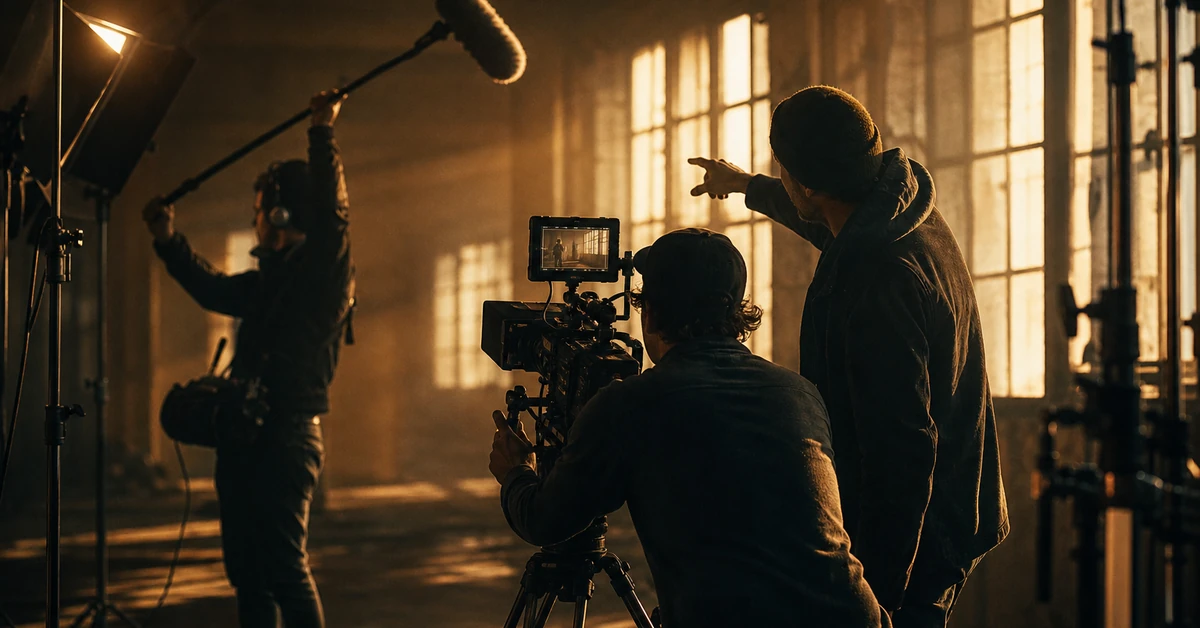
Documentary video production sits at the crossroads of journalism and cinema — equal parts investigative rigor and visual storytelling. You’re not just pointing a camera at something real. You’re shaping hours of raw life into a narrative that grabs an audience by the collar and doesn’t let go. For brands, nonprofits, and organizations, documentary video production isn’t a vanity project. It’s the most powerful tool you have for building trust, telling your origin story, or putting a human face on what you do. And unlike a commercial that burns out after a campaign cycle, a well-produced documentary works for years — living on your website, screening at events, getting shared by the people whose stories it tells.
What Is Documentary Video Production?
Documentary video production is the craft of telling true stories through film. Unlike scripted commercial work where every frame follows a storyboard, documentary filmmaking works with real people, real locations, and events that unfold on their own terms. Your job as the filmmaker is to capture what’s real — then shape it into something that moves people.
The form covers enormous ground.
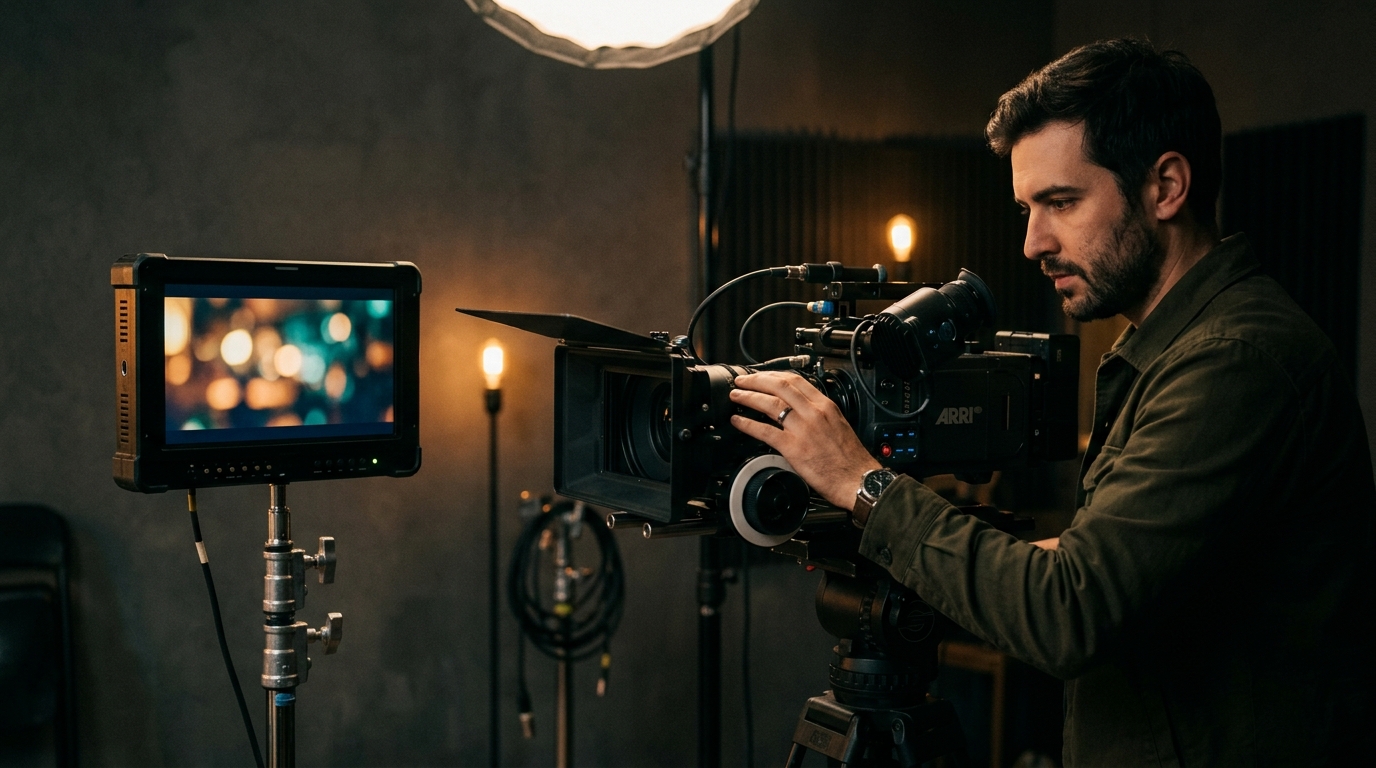
A step-by-step guide from Careers in Film maps the full arc: pre-production planning, interview techniques, shot lists, crew assembly, A-roll cuts, B-roll, sound design, color correction, and mastering. What makes documentary distinct is that you’re building the story in the edit bay as much as you are on location. You go in with a thesis. The footage tells you whether you were right.
For brands and organizations, documentary video production serves a different purpose than a 30-second spot. A commercial sells. A documentary convinces. It demonstrates expertise. It proves impact. It shows your people — not actors playing them — doing the work. The authenticity is the value proposition.
The range of what documentary video production can accomplish is vast. A healthcare system documenting patient outcomes. A nonprofit capturing field work in communities they serve. A manufacturing company telling the story of its craft through the voices of the people on the floor. In every case, the format earns a level of trust that scripted advertising simply cannot buy. Viewers know when they’re watching something real — and they respond differently.
The Documentary Filmmaking Process: Pre-Production Through Final Cut
Documentary production follows the same structural phases as any film — but the balance of power shifts heavily toward research and post-production. You spend less time blocking scenes and more time finding them.
Research and Development
Before a single frame is shot, you need a working hypothesis. What’s the story? Who are the characters? What’s at stake? This phase involves deep background research, identifying interview subjects, and scouting locations that visually support the narrative. Unlike fiction, where you can build a set to match your vision, documentary demands you find reality that already looks the part.
Pre-Production Planning
Even though documentaries are reactive by nature, you still need a plan. Shot lists, interview question outlines, equipment checklists, location permits, travel logistics — all of it. The difference is that your plan needs built-in flexibility. When a subject says something unexpected during an interview, you follow it. When weather changes your shoot day, you adapt. The best documentary crews combine a strong pre-production planning discipline with the instinct to throw the plan out when the story demands it.
Principal Photography
This is where documentary work diverges most sharply from commercial production. You’re shooting in active environments — factories, clinics, kitchens, boardrooms — not controlled sets. Lighting has to work with what’s available. Audio has to be clean in rooms you didn’t choose. The cinematographer’s job is to find the shot within the chaos.
Adobe’s documentary production guide emphasizes small crews for good reason: intimacy. A three-person team creates less disruption than a twelve-person one. Subjects relax faster. Real moments happen. They also recommend shooting RAW at the highest resolution your budget allows — you can’t reshoot a moment that happened once.
Post-Production: Where the Documentary Is Actually Made
Documentary editing is a writing process. You’re constructing the narrative from whatever the footage gives you — not from a script. This is where story structure, pacing, emotional arcs, and thematic coherence all get built.
Modern post-production workflows include A-roll assembly (the core narrative from interviews and key scenes), B-roll integration (supporting visuals that provide breathing room and context), sound design and mixing, color grading to establish visual continuity across disparate locations, and motion graphics for data visualization or title sequences. A professional post-production team transforms raw footage into something an audience will sit through — and that’s the whole game.
What Does Documentary Production Actually Cost?
Documentary budgets are wildly variable — more so than any other film format — because the scope of the project drives everything. A 30-minute documentary can cost anywhere from $10,000 at the micro-budget tier to more than $1.5 million at the premium tier, according to Artfolio’s 2025 budget analysis.
The single largest cost driver is post-production. It typically consumes 30 to 50 percent of the total budget. Editing alone, by a common industry rule of thumb, requires roughly one month for every 10 minutes of screen time. A feature-length documentary (90 minutes) can mean nine months in the edit suite before picture lock. Color grading, sound design, music licensing, and motion graphics all add layers on top of that.
Then there’s the harder truth. The Whickers’ 8th Cost of Docs survey found that only 13 percent of independent documentary filmmakers can take a wage from their production fund — the lowest figure since the survey began. Only 21 percent feel adequately paid. Kit hire costs now appear in 73 percent of production budgets, up from 42 percent, driven by wider use of cinema cameras, DSLRs, drones, and specialized rigs.
The market, however, is enormous. Global documentary television is projected to reach $15.8 billion by 2030, per GII Research. European documentary production alone hit 898 feature titles in 2023 — 38 percent of all European feature film output. The demand is real. The economics for individual filmmakers remain punishing.
For organizations commissioning documentary video production, the budget question comes down to scope. A single-subject profile with one location and a two-day shoot costs dramatically less than a multi-city shoot following four characters over six months. The professional advantage is that an experienced production partner can help you define a scope that fits your resources without compromising the story.
The hidden cost most first-time documentary clients don’t anticipate is archival. If your documentary video production involves historical footage, news clips, or licensed music, those rights don’t come cheap. Archival research and licensing is its own discipline — and it can easily add five figures to a mid-budget production. Plan for it in pre-production, not post.
How Technology Is Changing Documentary Filmmaking
Documentary production has always been shaped by the tools available. The shift from film to digital in the early 2000s democratized the form — suddenly you didn’t need a $50,000 camera package to make a festival-worthy film. The current technological shift may be even more significant.
AI in the Documentary Workflow
Roughly 50 percent of documentary makers now use AI in their creative process, according to the Whickers survey. The primary applications are translation (making international interviews accessible without human translators) and writing funding applications — the administrative grind that eats into creative time. But AI is also appearing in editing workflows: transcription, rough-cut assembly, audio cleanup, and even shot selection from large volumes of footage.
Adobe’s documentary toolset now includes AI-powered Speech to Text for transcription in 18-plus languages, Text-Based Editing that lets you edit video by editing a transcript, and Enhance Speech for cleaning dialogue captured in less-than-ideal conditions. These aren’t replacing editors. They’re removing the parts of the job editors hate doing.
Cameras, Drones, and the Visual Arms Race
The baseline for professional documentary work has risen sharply. 4K is table stakes. 8K is increasingly common for productions anticipating long shelf lives or theatrical runs. Drone cinematography — once a specialty add-on — is now used in at least 39 percent of documentary productions, providing aerial establishing shots and spatial context that previously required helicopter rentals.
The democratization cuts both ways.
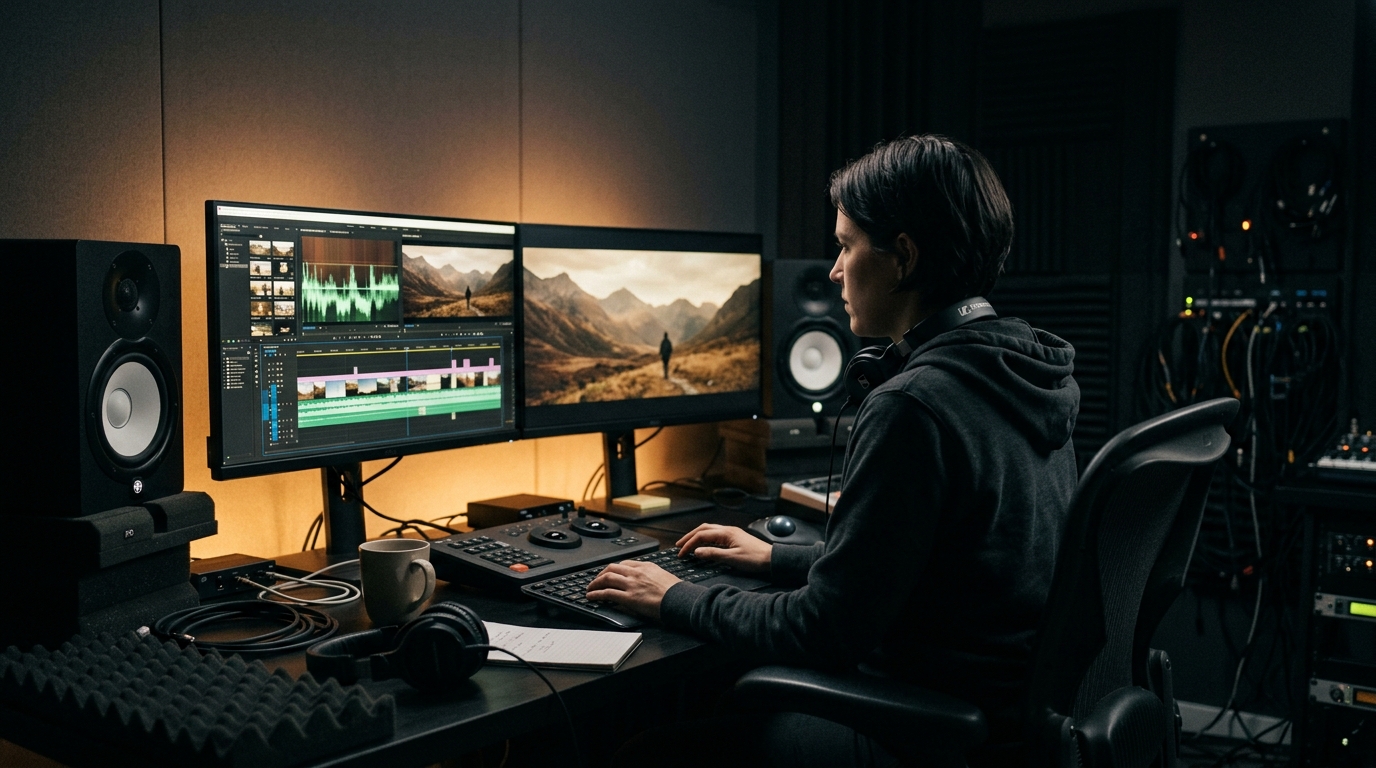
Entry-level documentary gear has never been better or cheaper — a smartphone can shoot usable 4K. But audience expectations for production value have climbed in parallel. Your documentary is competing for attention with Netflix originals shot on $60,000 cinema bodies. Visual quality matters. So does audio. So does pacing. Every technical choice in documentary video production — from lens selection to color grade — either reinforces the audience’s trust or quietly erodes it.
Distribution and the Streaming Effect
Streaming platforms have transformed documentary distribution. European documentaries perform particularly well on VOD — audiences watch a higher share of European documentary content than European fiction, according to the European Audiovisual Observatory’s Key Trends 2025 report. The global appetite for documentary content is real and growing.
But the gatekeepers haven’t gone away. The Sundance Film Festival received 1,736 feature documentary submissions in 2025 and accepted just 37 — a 2.1 percent acceptance rate. For non-U.S. filmmakers, the rate drops to 1.1 percent. An estimated $850 million was spent producing documentaries that didn’t make the cut, per Documentary Business analysis. The festival path is not a distribution strategy — it’s a lottery ticket.
Why Professional Documentary Production Matters for Brands and Organizations
The DIY temptation is real. Everyone has a 4K camera in their pocket. But documentary craft is not about resolution. It’s about instinct — knowing when to hold a shot, when to let silence breathe, when to cut away. It’s about earning trust from interview subjects so they give you something real instead of a polished sound bite.
Professional documentary production also solves practical problems. Audio that’s unusable because nobody monitored the levels. Lighting that makes your CEO look like a witness in a deposition. Footage that’s technically sharp but narratively flat because nobody was thinking about story structure during the shoot. These are problems you don’t know you have until you’re sitting in an edit bay with 40 hours of material and nothing that connects.
For brands investing in professional video production, documentary work offers something commercials can’t: staying power. A well-made documentary about your company’s origin, your nonprofit’s impact, or your industry’s evolution has a shelf life measured in years, not weeks. It lives on your site. It screens at events. It gets shared by the people featured in it. It’s content that compounds.
The 2026 State of the Documentary Field study surveyed 820 professionals globally and found the field expanding — but making a sustainable living remains genuinely hard. That matters for anyone hiring documentary talent. The crews who stick with this work do it because they’re compelled to. They bring a level of commitment to your project that you can’t buy with a day rate.
Documentary video production also opens doors that commercial work can’t. When you approach a potential interview subject with a documentary pitch — as opposed to a marketing ask — the conversation changes. People want their stories told honestly. They’ll give you access, time, and candor that they’d never grant a commercial crew. For brands serious about thought leadership and authentic positioning, that access is worth more than any ad buy.
Frequently Asked Questions
What makes documentary video production different from commercial production?
Commercial production follows a script. Documentary production follows reality. In commercial work, you control every element — lighting, blocking, performance, pacing. With documentary, you control what you can, adapt to what you can’t, and build the story in post-production from what actually happened. The skill sets overlap, but the creative mindset is fundamentally different. Documentary requires comfort with uncertainty and the editorial instinct to find narrative in raw, unscripted footage.
How long does documentary production take?
Timelines vary dramatically based on scope, but a useful baseline: a short documentary (10-20 minutes) with a single subject and limited locations can go from concept to final delivery in 3-4 months. A feature-length documentary (60-90 minutes) following multiple subjects across different locations often takes 18-24 months. The Whickers survey found that 41 percent of documentaries now take between 6 months and 2 years to complete. Post-production alone for a feature documentary typically spans 6-12 months.
Do I need a large crew for documentary work?
Not necessarily — and often smaller is better. A core documentary crew of three to four people (director, cinematographer, sound recordist, and a producer or production assistant) can handle most shoots. Small crews create less disruption in real environments, build rapport with subjects faster, and move more nimbly. Adobe’s documentary guide specifically recommends keeping crews small for these reasons. Larger crews become necessary for multi-camera setups, complex lighting situations, or shoots spanning multiple simultaneous locations.
What equipment is essential for documentary production?
At minimum: a cinema camera body capable of 4K or higher, a versatile zoom lens (24-70mm or similar), professional audio capture (lavalier microphones plus a boom mic), and reliable lighting that works in unpredictable environments — LED panels that run on battery power are ideal. Beyond that, the equipment list grows with the project. Drones for aerial footage. Gimbals for smooth movement. Multiple camera bodies for interviews. The gear should serve the story, not the other way around.
Can documentary content work for brand marketing?
Yes — and it often outperforms traditional commercial content in engagement and trust metrics. Documentary-style brand content — origin stories, founder interviews, impact films, customer profiles, behind-the-scenes process pieces — builds credibility that scripted ads can’t match. The key is editorial honesty. The minute a documentary feels like an infomercial, it loses the authenticity that makes the format powerful. The best brand documentaries tell true stories where the brand plays a supporting role, not the lead.
What should I look for when hiring a documentary production partner?
Look for a portfolio that demonstrates range — different subjects, different visual styles, different emotional registers. Ask about their editing philosophy: documentary post-production is where the film gets made, and you want a team that treats the edit as a creative process, not an assembly job. Check that they handle the full pipeline from concept through delivery so you’re not coordinating multiple vendors. And pay attention to who you’ll actually be working with day to day — documentary production is intimate, and chemistry with your director and producer matters more than it does in commercial work.
Ready to Tell Your Story?
Documentary video production rewards patience. The best work comes from crews who show up curious, listen harder than they talk, and treat the edit bay as a place where stories are discovered — not just assembled. It’s a craft that demands technical skill and emotional intelligence in equal measure, which is why the people who do it well tend to do it for life.
If you’re sitting on a story that deserves to be told — your company’s founding, your team’s impact, the people your work touches — let’s talk. At Pretzel Logic Productions, documentary video production isn’t a side offering. It’s part of the creative DNA — the same visual instinct and storytelling craft that drives our commercial and brand work, applied to the stories that need more than 30 seconds to land.
Bring us your idea, your footage, or just the beginnings of a story. We’ll figure out the rest together.