
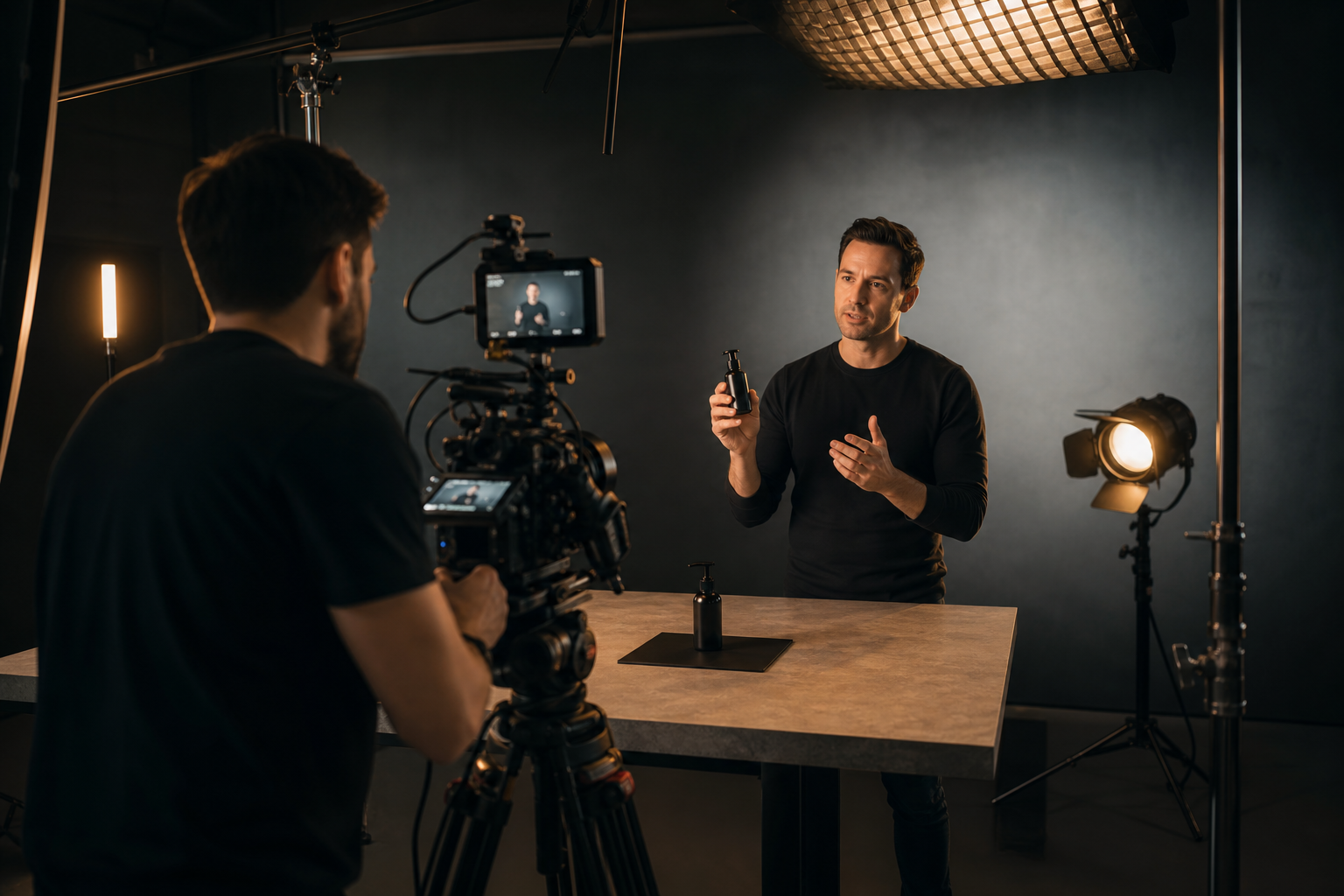
Video production for small business is one of the highest-leverage investments a growing brand can make. A professionally produced video compresses months of trust-building into a few powerful minutes — reaching potential customers across every platform where they already spend time. In 2026, 91% of businesses use video as a core marketing tool, and the companies skipping it are actively ceding ground to competitors who aren’t waiting.
Here’s the shift that matters most: audiences now expect to see a brand in motion before they commit to buying. Whether it’s a homepage brand video, a service demo, or a customer testimonial, video builds the emotional connection and credibility that static content simply can’t replicate at the same speed or depth.
For small businesses especially, video production for small business levels the playing field. A three-person shop can tell its story with the same cinematic confidence as a national brand — when the production is done right. This guide covers everything you need: why video is non-negotiable right now, which types drive the best results, how to build a strategy, what the production process actually looks like, and how to find a partner who’s genuinely invested in your story.
Why Video Production Is No Longer Optional for Small Businesses
The argument doesn’t rest on opinions anymore. The data on video production for small business ROI is consistent, compelling, and only growing stronger year after year.
Companies that deploy video content experience 49% faster revenue growth than those that don’t. Landing pages featuring video convert at rates 86% higher than text-only alternatives. And 84% of consumers say video content directly influences their purchasing decisions — with 60% having purchased a product after watching a brand video.
These aren’t abstract statistics. Each one translates to specific, trackable outcomes for a small business: more leads captured on your homepage, more proposals converted after a demo video, more revenue in the door from customers who arrived already convinced.
Video production for small business isn’t a luxury reserved for companies with dedicated marketing teams. It’s infrastructure. And the gap between businesses with professional video and those without is widening — not narrowing — every year.
The ROI Case Is Overwhelming
The investment thesis for video is about as clear as it gets in marketing. According to HubSpot’s analysis of video marketing data, 93% of marketers consider video a crucial part of their overall strategy — a number that reflects real performance, not trend-chasing. Video production for small business creates compounding returns: each piece of content works across multiple channels, multiple audiences, and continues generating views and leads for months or years after the original shoot.
The efficiency argument is equally powerful. AI-assisted production workflows have reduced average video production costs by 40% over the past few years — bringing professional-quality content within reach of businesses that previously couldn’t justify the commitment. The barrier to entry has dropped significantly. The upside hasn’t.
Social video generates 1,200% more shares than text and images combined. When you factor in both reach and conversion, the case for video production for small business isn’t a debate. It’s a decision.
The Most Effective Types of Videos for Small Business Growth
Not all video formats deliver the same results. Strategic video production for small business begins with matching the right video type to your specific conversion goals — before a camera is ever switched on.
Brand Story Videos
A brand video answers the first question every prospect asks: “Can I trust these people?” It tells the story of your company — who you are, what you believe, and why customers should choose you over every alternative available to them. Done right, a brand video builds emotional connection before a single sales conversation happens. By the time a prospect reaches out, they already feel like they know you.
This is the foundation of any serious video production for small business strategy — and almost always the first video a business should produce. Everything else in your content library builds from this anchor.
Product and Service Demo Videos
Demo videos show your offering in action. For service businesses, that means documenting the process, the outcomes, and the transformation a client experiences. For product companies, it means close-up, professionally filmed demonstrations that give customers the confidence to buy without ever touching the product first.
Research from Wyzowl consistently shows viewers retain 95% of a message delivered via video versus just 10% through reading. A well-produced demo dramatically shortens your sales cycle and converts hesitant browsers into confident buyers — often before they’ve spoken to anyone on your team.
Customer Testimonial Videos
Nothing sells quite like a satisfied customer talking directly to camera. Testimonials are among the highest-converting formats in video production for small business — because they shift the credibility burden from you to an impartial third party. A professional testimonial captures authentic moments, frames the client’s story around the specific problem your business solved, and distributes that story across every stage of your funnel. One strong testimonial video can meaningfully improve conversion rates at awareness, consideration, and decision stages simultaneously.
Social and Short-Form Content
Short-form video built for Instagram Reels, YouTube Shorts, TikTok, and LinkedIn has become essential for brand awareness and algorithmic reach. Even short-form content benefits enormously from professional production values: intentional lighting, clean audio, deliberate framing, and strategic editing separate brand-building content from forgettable noise. Think series over one-off posts — recurring formats build audience familiarity and algorithm momentum far faster than sporadic uploads, however well-produced each individual video might be.
How to Plan Your Small Business Video Production Strategy
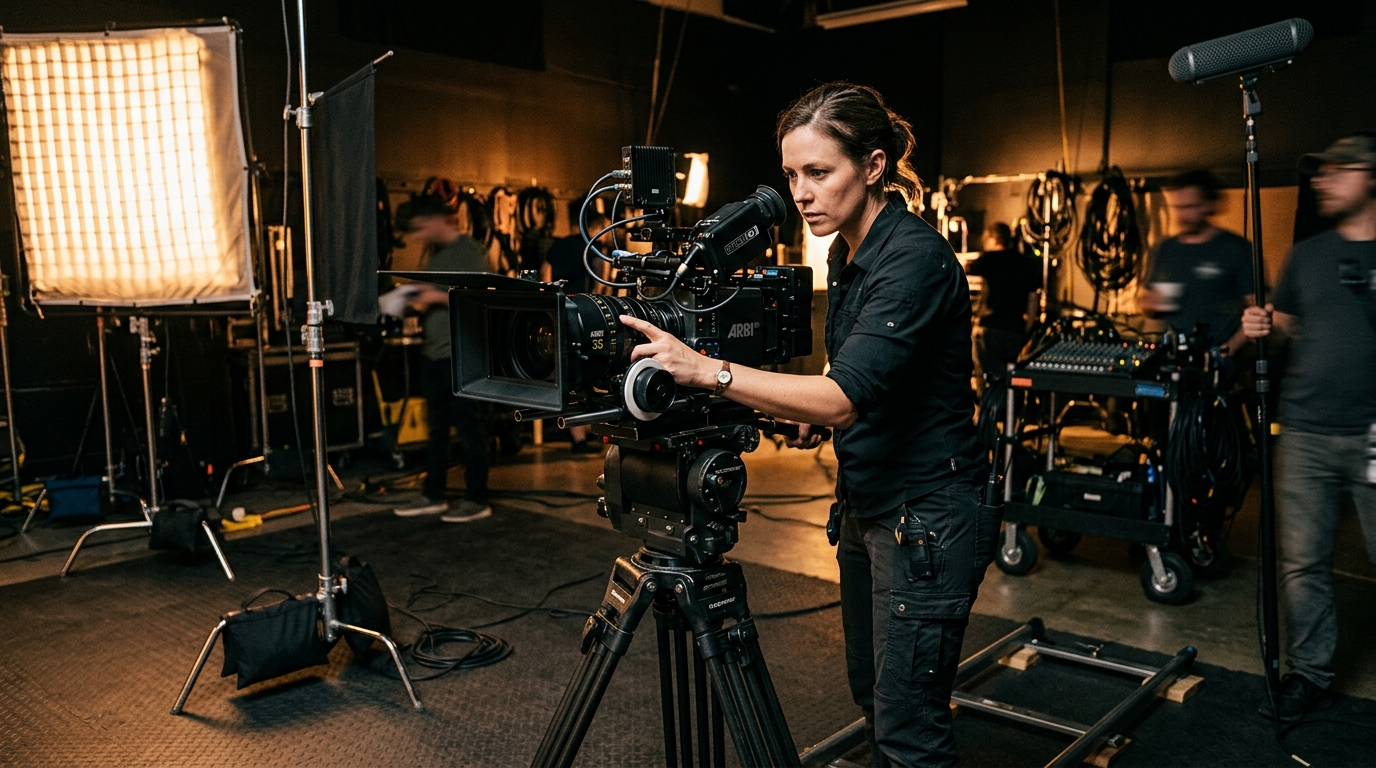
Great video doesn’t happen by accident. The small businesses that get the best return on their video investment approach it with a clear strategy before any production begins.
Start with one question: What specific action do you want viewers to take?
Every video should be engineered around a conversion goal. A brand video might be optimized to drive contact form submissions. A demo might move someone from consideration to requesting a quote. A testimonial might be the final trust signal a near-ready prospect needs to commit. When you know the goal, everything else follows naturally — video length, messaging architecture, distribution channels, call to action.
A practical video production for small business planning framework looks like this:
- Identify your top 2–3 conversion goals for the next 12 months — whether that’s awareness, lead generation, or direct sales conversion
- Map video formats to each goal — brand video for awareness, demo for consideration, testimonial for conversion, short-form for reach
- Build a production schedule — even one professional shoot per quarter builds a meaningful content library over the course of a year
- Plan your distribution deliberately — your homepage, email nurture sequences, social channels, paid advertising, and sales decks all benefit from well-placed video
- Define your measurement plan upfront — track play rates, engagement time, and downstream conversion data from the first video you publish
The businesses that consistently win with video treat video production for small business as an ongoing investment — not a one-time project. Each new piece of content builds on the last. Each new video expands what your library can do.
What to Expect from the Video Production Process
Working with a professional production team is more collaborative — and less complicated — than most small business owners expect. The process unfolds across three distinct phases, each one building on the last.
Pre-Production: Where the Story Begins
Pre-production is everything that happens before a camera is switched on, and it’s the most consequential phase of any video production for small business project. This is where concept development, scriptwriting, storyboarding, location scouting, casting (when needed), and logistics planning all happen.
A thorough pre-production process is the difference between a shoot that runs smoothly and delivers exactly what you envisioned — and a shoot that produces footage you can’t quite use. At Pretzel Logic Productions, pre-production begins with a genuine conversation about your brand, your audience, and the specific outcome this video needs to create. Not a template. An actual conversation about your story.
Production: Bringing It to Life
The shoot is where planning pays off. A professional crew brings the right equipment, technical expertise, and creative direction to capture footage that’s actually worth watching. Lighting, camera angles, sound design, direction of on-screen talent — each element is managed deliberately. Nothing is left to chance.
For video production for small business shoots, expect an organized, well-managed day that respects your team’s time. A skilled production crew will put your people at ease, capture authentic moments, and deliver raw footage with real storytelling potential — not just technically correct clips that feel hollow on screen.
Post-Production: Where Raw Footage Becomes Story
Post-production is where video editing, color grading, sound design, music licensing, motion graphics, and animation come together into your final deliverable. This phase is technically demanding, and it’s where the quality gap between amateur and professional production becomes most obvious. Professional post-production is what gives video the polished, premium feel that earns audience trust instantly — and that small businesses often underestimate as a factor in how their brand is perceived.
How to Choose the Right Video Production Partner
For small businesses, the relationship with your production partner matters as much as their technical capabilities. Here’s what to look for:
Genuine creative voice, not just technical execution. The best production partners don’t simply film what you describe — they bring ideas, push back when something could be stronger, and add creative value throughout the engagement. You want a partner who is genuinely invested in the outcome, not just the deliverable.
A portfolio that demonstrates real versatility. Review their work carefully. Can they tell a compelling story for a service business? Do their testimonial videos feel authentic or scripted? Look for technical polish — clean audio, intentional lighting, smooth color grading — alongside emotional resonance. The portfolio tells you exactly what to expect from your own project.
End-to-end capability. For most small businesses, working with a full-service production team — one that handles everything from concept through final delivery — is far more efficient than managing separate vendors for scripting, filming, and editing. According to industry research on small business video production, businesses working with full-service partners consistently report stronger strategic alignment and better final results.
Clear, proactive communication from day one. A professional team should be able to walk you through the entire process, set realistic expectations, and communicate proactively at every stage. If the initial conversation feels vague or disorganized, the shoot probably will be too.
For businesses who want their video content to live inside a broader integrated marketing strategy — not as a standalone asset but as part of a full campaign ecosystem — partnering with an agency like InnoVision Marketing Group brings video production into a full-service environment that includes brand strategy, digital campaigns, and paid media. If your project also requires professional studio space, Lightz Out Studios offers dedicated San Diego facilities that complement production work of any scale.
For video production for small business in the Southern California market, Pretzel Logic Productions delivers exactly this kind of end-to-end capability — concept through final cut, with a creative edge that shows in every frame.
Measuring the Results: Is Your Video Investment Paying Off?
Measurement is where many small businesses leave significant value on the table. Without tracking, you can’t optimize. You also can’t build the internal case for expanding your video library — which is how the best-performing companies keep compounding their advantage year over year.
The metrics that matter depend on your specific goal:
For awareness: Video view count and watch time, organic reach and impressions, and whether branded search volume increases following a video launch.
For consideration: Play rate on key landing pages, time-on-page for pages with video versus those without, and click-through rates on video thumbnails in email campaigns.
For conversion: Form fills and direct requests from pages with video embeds, sales cycle length (does video-educated pipeline close faster and at higher rates?), and customer acquisition data before and after video implementation.
Video production for small business generates measurable, trackable returns when approached with intention. Video content drives 4x higher ROI than social media posts alone, and marketers who track video performance systematically are consistently the ones who scale their investment — because the numbers justify it clearly and compellingly.
Don’t wait for a perfect analytics setup to start. Even basic tracking — play count, form fills, and sales cycle data — gives you enough to build a strong internal case for the next production and the one after that.
Frequently Asked Questions About Video Production for Small Business
What types of video are most valuable for a small business just getting started?
The highest-priority video for most small businesses is a brand story video — one that clearly communicates who you are, what you do, and why customers should choose you. After that, a customer testimonial video and a service or product demo cover the most important conversion touchpoints. These three formats together address awareness, trust, and consideration — and build the foundational content library that everything else in your strategy builds from.
How long should a professional brand video be?
Most effective brand videos for small businesses run between 60 and 180 seconds. That’s enough time to establish your story, build emotional connection, and deliver a clear call to action — without losing viewer attention. Social media cuts are typically 30 to 60 seconds, while homepage hero videos can run slightly longer if the content genuinely earns every second of watch time with compelling narrative and pacing.
What is the difference between DIY video and professional video production for small business?
DIY video works well for casual behind-the-scenes social content. Professional video production for small business delivers broadcast-quality lighting, clean audio, intentional cinematography, and polished post-production — the difference between content that builds trust and content that accidentally undermines it. The gap is most visible in brand videos and customer testimonials that new prospects see as their first impression of your business.
How do I make sure the video actually reflects my brand?
Brand alignment starts in pre-production. A professional production partner should invest real time understanding your brand voice, visual identity, and target audience before filming begins. Share your brand guide, reference content you admire, what makes your business genuinely different, and what you want viewers to feel after watching. The production process should amplify your existing brand — not impose a generic template onto it.
How often should a small business produce new video content?
Most small businesses benefit from at least one professional production per quarter — enough to steadily build a content library without overwhelming production schedules. Start with the foundational formats: brand video, testimonial, and a demo. Then expand to platform-specific content. Consistency matters more than volume. Two or three high-quality professional videos per year is a stronger foundation than sporadic bursts of content that doesn’t truly represent your brand.
What should I look for in a video production company’s portfolio?
Look for versatility, storytelling quality, and evidence the team adapts to different brand voices rather than applying the same look to every project. Watch their testimonial videos: does it feel authentic or scripted? Review their brand videos: do they make you feel something? Check technical polish — clean audio, intentional lighting, smooth color grading. The portfolio tells you exactly what to expect from your own project.
Ready to Tell Your Story?
Video production for small business is not a passive investment. It’s a direct lever on growth — one that compounds over time as your video library grows and each piece of content continues working across every platform your customers use.
The businesses that consistently win with video treat it strategically, execute it professionally, and distribute it with intention. They invest in partners who care about the story — not just the shoot.
At Pretzel Logic Productions, that’s exactly the philosophy behind every project. Fresh, Hot, & Slightly Twisted — we bring creative vision and sharp execution to video production for small business at any scale. From concept development through final delivery, we’re invested in your outcome, not just your footage.
Explore our video production services and see what’s possible. Or if you’re ready to start a real conversation about your story, reach out to the Pretzel Logic team today.
Are you ready to tell your story?