
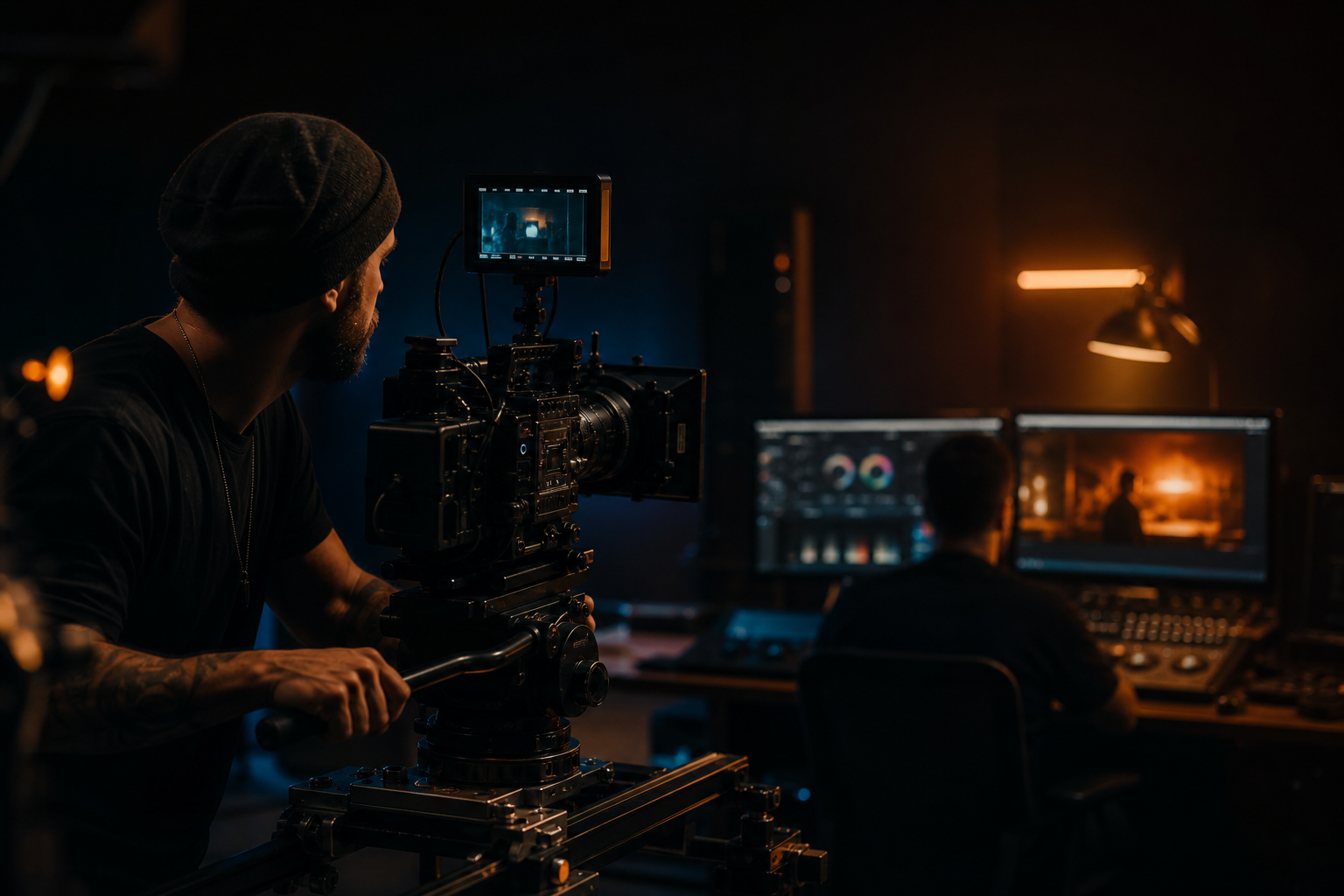
Production and post production are the two engine rooms of every great video — and understanding both phases is the difference between a brand story that lands and one that falls flat. Production captures the performances, the lighting, and the raw footage that makes up your project. Post production is where that footage gets shaped into something your audience actually feels. Ready to bring your story to life? Talk to Pretzel Logic Productions →
If you’re a brand, marketing director, or business owner preparing for your first professional video project — or your tenth — this guide gives you a clear picture of what happens at each stage. Knowing the difference between production and post production isn’t just industry jargon. It directly shapes your timelines, your approvals process, and your final result. Get it wrong, and even a well-shot project can stall in editing for months. Get it right, and your brand video is delivered on time, on brand, and ready to perform.
Let’s walk through it all.
What Is Video Production? Everything That Happens Before and On Camera
Video production is the phase where cameras roll. It’s principal photography — the days spent on set, on location, or in studio capturing everything that will eventually make up your finished video. But production doesn’t start when the camera operator presses record. It begins long before that, and understanding the full scope of what “production” actually covers is the first thing every business client needs to know.
The production phase is typically broken into three connected moments: pre-production planning, the shoot itself, and the immediate handoff that bridges footage into editing. Each one matters. Skip or rush any of them, and the ripple effect lands squarely in post production — as extra costs, extended timelines, and compromised creative output.
The numbers put this in sharp perspective. Moving Image reports that production days typically last just 1–3 days out of a total project timeline of 6–10 weeks. The vast majority of your project’s time — and the vast majority of what shapes your final video — happens in the phases before and after the shoot. Which is exactly why the most effective production and post production teams invest so heavily in what happens at both ends of the camera-on timeline.
Pre-Production: Where Every Great Project Begins
Pre-production is the planning engine of video production. This is where your video’s concept gets turned into an executable blueprint. Done well, pre-production makes production days run faster, smoother, and more cost-efficiently. Rushed or skipped, it turns your shoot into an expensive game of catch-up — with corrections that come due in post production at a significantly higher rate.
A comprehensive pre-production phase includes:
- Creative concept development and brief alignment
- Script development, copywriting, and script approvals
- Shot list and storyboard (including animatics for complex or animated productions)
- Location scouting and permit acquisition
- Casting and talent coordination
- Equipment planning, crew scheduling, and vendor management
- Client review and sign-off before cameras roll
Pre-production isn’t a formality — it’s the session where a video idea transforms from a concept into a production-ready vision with every major creative decision locked before a single frame is captured. The pre-production investment always pays back in a smoother shoot and a faster, less expensive post production process.
Pretzel Logic Productions’ pre-production and planning services are built on this principle: get everything locked before cameras roll, so the shoot executes with precision and the edit starts with confidence.
Principal Photography: Turning Plans Into Footage
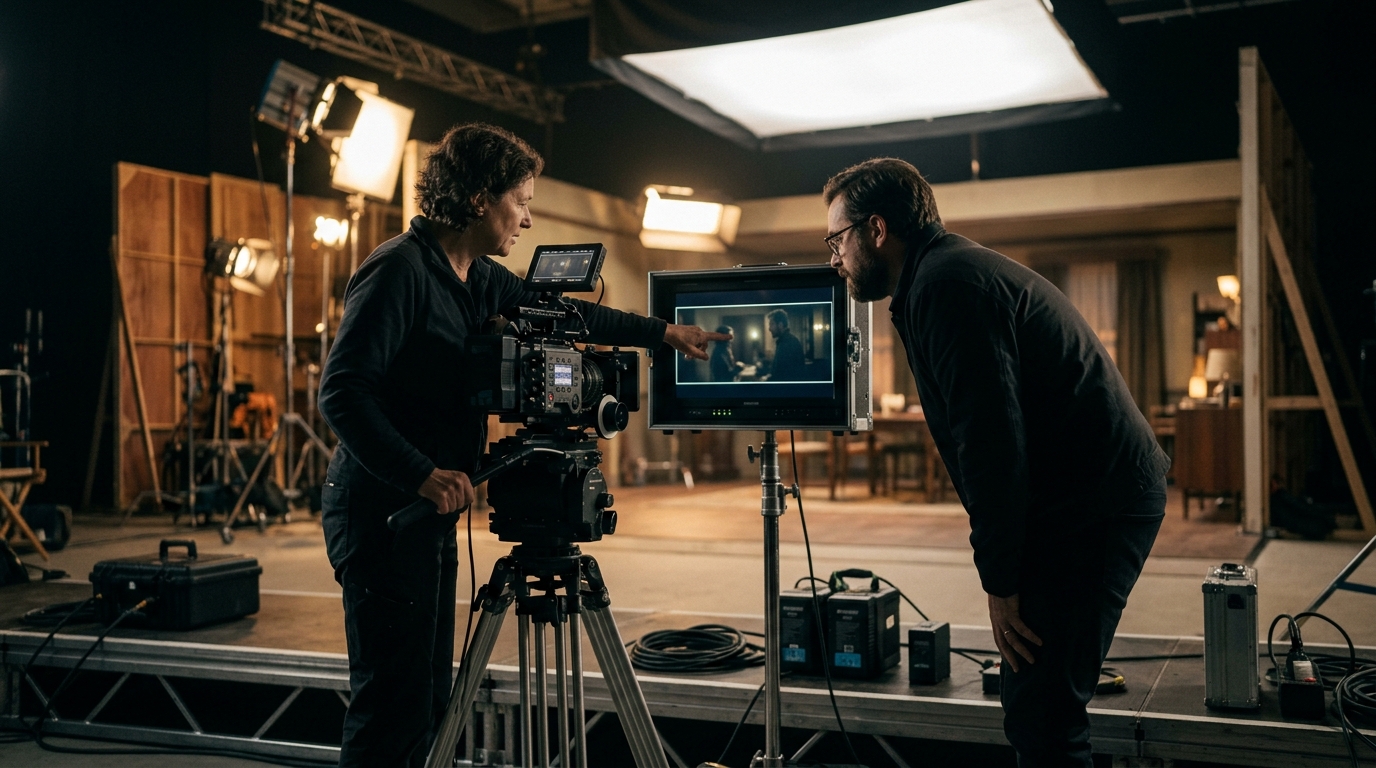
Principal photography is the phase most clients picture when they think of “production” — the cameras, the crew, the direction, the action. This is the execution phase. A well-prepared shoot runs with the efficiency of a well-rehearsed machine: talent knows their direction, crew knows their positions, every scene in the shot list gets captured with coverage to spare.
The raw footage captured on set doesn’t look like your finished video yet. Colors appear flat and unsaturated. Dialogue audio may sound hollow without music or sound design underneath it. There are no motion graphics, no titles, no lower-thirds. That’s entirely intentional. The camera captures maximum information — the richest, most flexible material possible — so post production has full creative latitude to shape the final look, feel, and emotional impact.
Every decision made during the production phase directly shapes what’s possible — and what’s costly — in post production. Lighting setup. Audio capture quality. Number of camera angles and coverage options. These aren’t just production decisions. They’re post production decisions too, made earlier in the process when they’re cheaper to get right.
What Is Post Production? How Raw Footage Becomes a Finished Story
Post production is what happens after the cameras stop rolling. It’s the phase where raw footage, rough audio, and scattered clips get assembled, refined, and polished into the finished video your audience will see — and the phase that, in most projects, takes the most time by a significant margin.
According to MASV, a complete post production workflow consists of six sequential stages: data management, video editing, VFX, color grading, sound design, and final delivery — with proper file organization and metadata at the start saving hundreds of hours of work downstream. Each stage depends on the one before it. Which means that post production can’t be rushed by skipping stages — it can only be accelerated by being better prepared coming out of production.
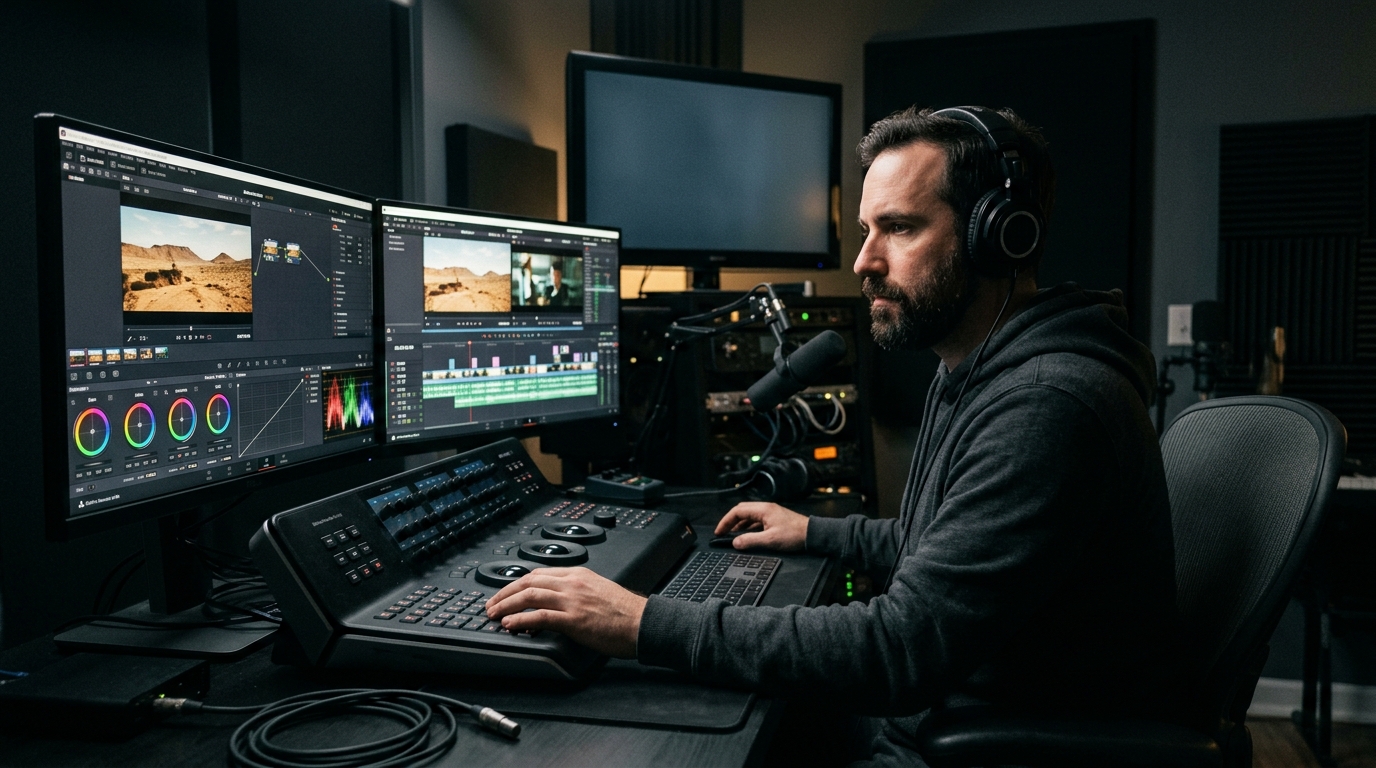
Here’s what production and post production look like from the editing side of the process:
Video Editing and the Assembly Cut
The first step in post production is ingesting your raw footage and organizing it. Experienced editors don’t start cutting immediately — they log footage, create a logical bin structure, sync audio to picture, and build an assembly cut first. This rough first pass gets all usable material into a coherent sequence before any real creative shaping begins.
From the assembly cut, the editor works through structured revision rounds — typically a rough cut, a fine cut, and then picture lock. Picture lock is the critical milestone where the editorial structure is fully approved. After picture lock, no further structural changes are made to the timeline. Color, sound, VFX, and motion graphics all get finished against a locked, stable edit — which is why premature creative changes after picture lock are so costly and why the revision process during editing needs to be collaborative and decisive.
Color Grading: The Visual Language of Your Brand
Color grading transforms technically correct footage into visually striking content that feels purposeful and intentional. It’s one of the most powerful creative tools in post production — and one of the most consistently underestimated by clients who have never seen a before-and-after comparison from a professional colorist.
A skilled colorist balances exposure across scenes filmed at different times or with different lighting setups, matches skin tones across cuts, corrects unwanted color casts, and applies a creative visual “look” that gives the entire video its personality. For brand videos, color grading is where your brand’s visual identity gets expressed through the image itself — through warmth or coolness, through contrast and saturation decisions that feel aligned with your brand’s character.
Sound Design and Audio Finishing
Clean, professional audio is the single most important technical element in video production — and the one most frequently undervalued until it’s broken. Audiences tolerate lower-resolution video much longer than they tolerate poor audio quality. Even a beautifully shot video loses a significant portion of its impact when the audio feels amateurish or distracting.
Sound design in post production involves multiple distinct disciplines: dialogue editing and cleanup, ADR (re-recorded dialogue when on-set audio is unusable), music selection or original scoring, sound effects, and the final mix that balances all audio elements at the correct relative levels across every distribution platform. Each of these sub-disciplines requires its own expertise — which is why professional post production teams are built around specialists, not generalists.
Final Delivery and Distribution
The last stage of post production is output — and it’s more complex than it sounds. A broadcast television commercial has different technical specifications than a LinkedIn video post. A cinema trailer has different requirements than a 15-second YouTube pre-roll ad. A long-form corporate documentary has different delivery standards than a six-second bumper ad for streaming platforms.
A thorough post production delivery package covers every format your campaign requires — correct codecs, correct aspect ratios, correct audio specifications, correct color spaces — all delivered simultaneously. Clients who don’t clarify their deliverables list before post production begins often find themselves paying for additional output rounds after the fact.
Production vs. Post Production: The Key Differences Every Client Should Know
Understanding the real difference between production and post production helps you ask the right questions, set realistic expectations with your team and stakeholders, and collaborate more effectively with your video production partner throughout the project. Here’s how the two phases compare across the dimensions that matter most to business clients.
Timeline and Project Scope
Production is typically the fastest-moving phase. A single-day commercial shoot. A two-day brand video capture. Even complex multi-location productions usually wrap principal photography within a week. The production phase is physically intensive — a lot of people doing a lot of things at the same time, against a very specific schedule.
Post production takes longer. Often significantly longer. A 90-second brand video might require three to five weeks of editing, color, sound, and revision rounds. A TV commercial that shot in a single day might spend three weeks in post production before it’s delivery-ready. That’s not inefficiency. That’s the craft.
Industry data confirms the pattern: the full production and post production cycle for a professional video project typically runs 6–10 weeks from initial brief to final delivery, with the physical shoot representing only a small fraction of that total timeline. Budget and timeline planning that doesn’t account for a robust post production phase consistently creates project delays and client frustration.
Team Roles and Resources
Production requires a coordinated physical crew: camera operators, lighting technicians, sound engineers, directors, producers, production assistants, on-camera talent, and location managers. It’s a simultaneous, real-time effort where every department is moving in concert against a unified shot list and schedule.
Post production is a more sequential, often individual discipline. Your editor, colorist, sound designer, and motion graphics artist may each work on your project independently and hand off to each other in sequence. This makes the post production process less visible to clients than the shoot — which is part of why it’s chronically underestimated in project planning.
When a video production company handles both phases under one roof — the same creative team that shoots your project also edits it — the quality gap between what was planned on set and what ends up in the final cut narrows dramatically. Pretzel Logic Productions operates this way by design: integrated production and post production as one creative workflow, not two separate departments.
How On-Set Production Decisions Directly Shape Post Production Costs
Here’s the relationship between production and post production that most business clients don’t fully understand until they’ve experienced it firsthand: every decision made on set either saves or costs you time and money in the editing suite.
This is why the best video production companies treat production and post production as a single integrated workflow rather than two separate services. The creative decisions made before and during the shoot directly determine how much time your post production team will spend correcting, compensating, or creating rather than crafting.
Lighting, Camera Coverage, and the Edit
A scene shot with two camera angles gives your editor one choice. The same scene shot with four angles — wide, medium, two-shot, close-up — gives your editor creative flexibility: the ability to cut around a stumbled line, adjust the rhythm of a sequence, emphasize an emotional reaction, or build tension through intercutting. Coverage decisions during production are, at their core, editorial decisions made on set while they’re still cheap.
Lighting decisions made on set become color grading advantages or problems in post production. A consistently lit scene gives your colorist clean, flexible material to grade creatively. Inconsistently lit takes — different times of day, different lamp temperatures, different setups that weren’t matched on set — means your colorist spends hours correcting and matching before they can do any creative work at all. Time spent on corrections in post is time that isn’t spent on craft.
Audio Capture Quality on Set
Poor on-set audio is one of the most expensive post production problems to solve — and one of the most preventable. ADR, or Automated Dialogue Replacement — the process of re-recording dialogue in a controlled studio environment when on-set audio is unusable — adds significant time, coordination, and cost to any post production schedule. It also frequently results in audio that sounds slightly disconnected from the picture, no matter how well the recording session goes.
When a production crew uses quality boom microphones, properly placed lavalier mics, and disciplined audio monitoring during the shoot, the post production audio phase becomes a matter of polish and creative enhancement rather than damage control. That’s not a minor distinction — it’s often the difference between a one-week audio finish and a three-week audio struggle.
According to Vidico, after managing 1,200+ video projects for major brands, systematic workflow — the intentional connection between production decisions and post production outcomes — is identified as the defining differentiator between average and high-performing video content. That’s not a production philosophy. It’s a business result.
What Business Clients Should Know Before Working With a Video Production Company
Whether you’re evaluating a production partner for the first time or preparing for a campaign with a team you’ve worked with before, there are several things every business client should understand about the production and post production process before the project begins.
Questions to Ask Before You Sign
The quality of your production and post production partnership starts with the right questions at the outset:
- Does your team handle both production and post production in-house? An integrated team — one that shoots and edits — delivers more cohesive results because the same creative vision carries through every phase. There’s no translation loss between what was intended on set and what gets executed in the edit.
- How many revision rounds are included in post production? Know the revision structure upfront. Unlimited revisions sound appealing until they extend your timeline by months. Clear, structured rounds with consolidated feedback are faster and better for everyone.
- Who owns the raw footage after delivery? Clarify this before the shoot. Some production companies retain raw footage; others deliver everything at final output. The difference matters if you ever want to repurpose footage for a different campaign.
- What delivery formats are included in the scope? Every platform has different specs. Confirm that your production partner can deliver in every format your campaign requires — not just the primary cut.
Pretzel Logic Productions handles production and post production as a unified, end-to-end service. Their video production services and post-production services are managed by the same creative team — which means the story developed in pre-production is the same story that emerges on the other side of the edit suite.
How to Prepare Your Team for Production Day
The most productive and efficient shoots happen when clients come prepared. Preparation isn’t just about having the right people in the room — it’s about respecting what the production phase actually is: the execution of a detailed plan. The time for changes is before production day. Changes made on set are expensive. Changes made after picture lock are more expensive still.
Smart preparation looks like:
- Reviewing and genuinely approving the script and shot list before shoot day — not rubber-stamping them
- Briefing any on-camera spokespeople with clear talking points rather than memorized scripts (which read as wooden on camera)
- Confirming locations, props, branded elements, and wardrobe in advance with the production team
- Designating a single point of contact on-set who is authorized to give creative approvals in real time
- Understanding that production day is for executing — not rethinking
According to Levitate Media, most video projects that fail do so well before the final delivery — in the pre-production planning phase, or in the distribution strategy that was never built. The production and post production work rarely fails because the team wasn’t talented. It fails because the preparation wasn’t done.
Frequently Asked Questions About Production and Post Production
What is the difference between production and post production?
Production refers to everything captured on camera — the actual shoot, including all footage, audio, and performances captured during principal photography. Post production is everything that happens after filming: video editing, color grading, sound design, music, motion graphics, and final delivery. While production can last one to several days, post production often takes weeks. Both phases of production and post production are essential — neither phase can substitute for the other in a professional video workflow.
How long does post production typically take?
For a standard brand video or commercial, post production takes two to six weeks depending on complexity, revision rounds, and delivery format requirements. A 30-second social media clip may be edited in a few days. A two-minute brand documentary with motion graphics, custom music, and multi-platform delivery can take four to eight weeks. Your production company should give you a clear post production timeline estimate before the shoot begins so you can plan your campaign launch accordingly.
Why does post production take longer than the actual shoot?
Because post production involves multiple sequential disciplines — editing, color grading, sound design, music, motion graphics, and delivery — each of which must be completed, reviewed, and approved before the next begins. Production days are fast because they execute a pre-built plan. Post production is where that plan gets refined into the finished story. The production and post production cycle as a whole runs 6–10 weeks for most professional video projects.
Do I need to be involved during post production?
Yes — at key review milestones. Your production company will share rough cuts for feedback, then fine cuts, then a final version before picture lock. You don’t need to be present daily, but plan for two to three structured review rounds where you provide clear, consolidated feedback. Prompt, decisive feedback at each post production review stage keeps projects on schedule and prevents the compounding delays that come from late-stage revision requests.
Can AI tools speed up post production?
AI tools are becoming genuinely useful in post production for tasks like rough cut assembly, transcription-based editing, noise reduction, and automated color matching. Mergemate reports that AI is reducing post production turnaround times by 30–50% for teams that integrate these tools effectively into their workflows. AI augments skilled post production professionals — the creative judgment, storytelling instincts, and technical expertise of experienced editors and colorists remain irreplaceable.
Ready to Tell Your Story?
Production and post production are two sides of the same creative coin — and when they’re managed by a team that understands how each phase feeds the other, the results show in the finished work. Every lighting decision made on set becomes a color grading advantage in post. Every clean audio track captured on location becomes a crisp, professional soundtrack in the mix. Every well-planned production day becomes a smoother, faster, more creative edit.
That’s the Pretzel Logic Productions philosophy. Fresh, Hot, & Slightly Twisted — and relentlessly committed to delivering brand stories that land. Whether you’re planning your first professional video project or looking for a production partner who genuinely integrates production and post production as one seamless creative workflow, the team at Pretzel Logic Productions would love to hear from you.
Contact Pretzel Logic Productions → Let’s talk about your next production.