
Last updated August 31, 2026
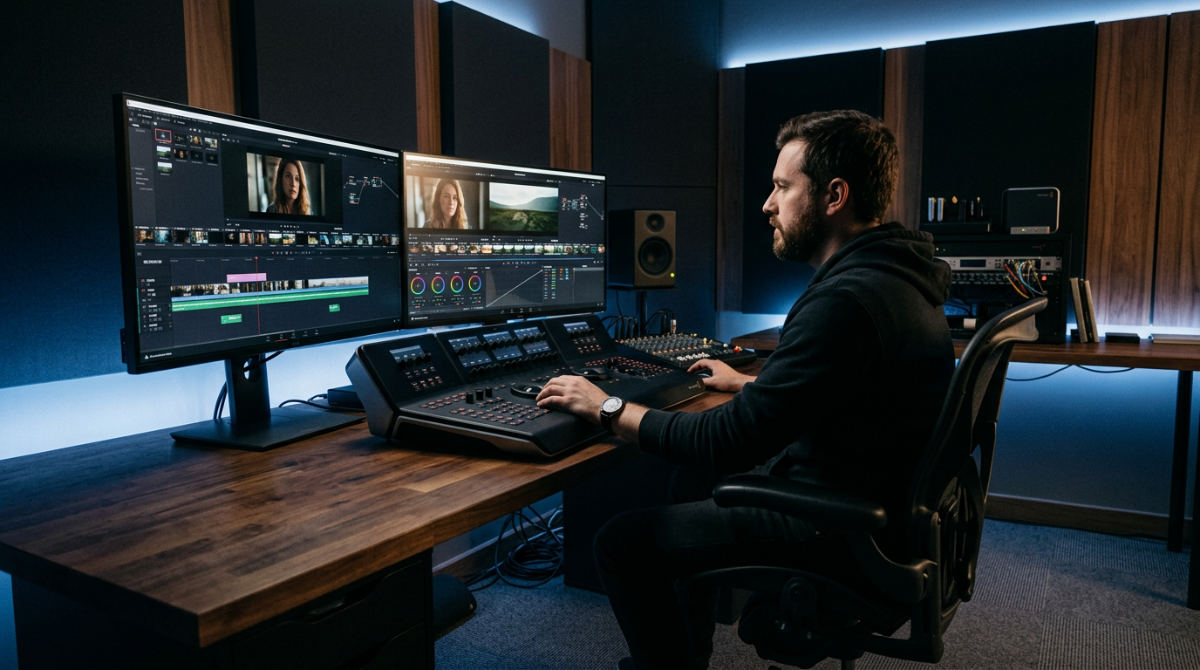
Post-production refers to the final stage of filmmaking where raw footage is assembled and enhanced. It encompasses picture editing, sound mixing, color grading, and visual effects to transform disparate video clips into a cohesive, visionary story suitable for delivery to TV, social media, or corporate audiences.
Key takeaways
- The Third Rewrite. Post-production is the "third rewrite" of a film where the final narrative is truly forged through careful selection and pacing.
- Timeline Intensity. More than 50% of the total production timeline typically occurs in the editing suite rather than on the filming set.
- Audio is Half the Experience. Audio quality, including Foley and mixing, is as vital to immersion as the visual quality of the footage.
- Strategic Visualization. Motion graphics are the primary tool for clarifying complex brand or legal concepts for modern audiences.
- Emotional Palette. Color grading ensures brand consistency and establishes the emotional mood of the piece through color science.
Prerequisites, Time, and Investment
Before you enter the suite, you must have high-quality raw footage, a finalized script or storyboard, and high-speed storage drives capable of handling large data rates. According to Mpenyc, more than half of film and TV show production time takes place in an editing suite. This makes it the most time-intensive phase of the journey.
Timelines vary significantly based on the project’s scale. A polished commercial requires a dedicated window for editing, sound design, and color work to ensure high quality. Conversely, feature-length documentaries or complex corporate films can span six months or more. Generally, post-production represents a significant portion of your total budget, especially if the project requires extensive visual effects or detailed 3D modeling. Professionally, this work requires high-end non-linear editing software (NLE) and calibrated monitoring equipment to ensure the video looks and sounds correct across all possible viewing devices.
1. Organize and secure your raw footage
We begin the post-production workflow by backing up all media to redundant storage systems to prevent data loss or file corruption. This is more than just a safety measure. It is the first step in our "Logical Collaborator" framework, where we balance technical precision with the creative freedom to find that perfect "twist" in the story.
- Ingest and Logging. We import all files and label clips by scene, take, and camera angle to create a searchable library.
- Proxy Creation. Transcoding raw, high-resolution files into smaller proxy formats allows our editors to work with smoother playback on their workstations.
- Script Audit. We review the script against the captured footage immediately to identify any missing shots or continuity errors before the heavy lifting begins.
- Data Redundancy. Files are cloned to multiple drives to ensure that a hardware failure never results in a lost day of work.
Effective organization at this stage prevents the budget overruns that affect nearly 40% of productions, often due to rushed prep work making the later editing stages chaotic.
2. Execute the initial Picture Editing
Practical Rule: Never assume visual effects can save a bad story; the picture editing must stand strong on its own first.
Picture Editing is the procedure where we pare down raw footage into a structured rough cut to establish the foundational story arc. During this phase, we focus on the logic of the narrative. We choose shots that advance the plot or brand message rather than just selecting the most beautiful frames. We move from the assembly edit, a loose collection of scenes, into the fine cut, where every frame is scrutinized for rhythm and emotional impact.
For our San Diego partners, we often weave in local industry nuances, such as specific regional lighting or cultural touchstones, to ensure the content feels authentic to the local market. We avoid generic corporate transitions that feel dated. Instead, we use thought-provoking cuts and non-standard pacing to ensure your commercial content stands out from the noise of typical advertising. This stage is where the "third rewrite" occurs. We often find new meaning in the footage that wasn’t apparent on the page.
3. Develop the soundscape with Foley and ADR
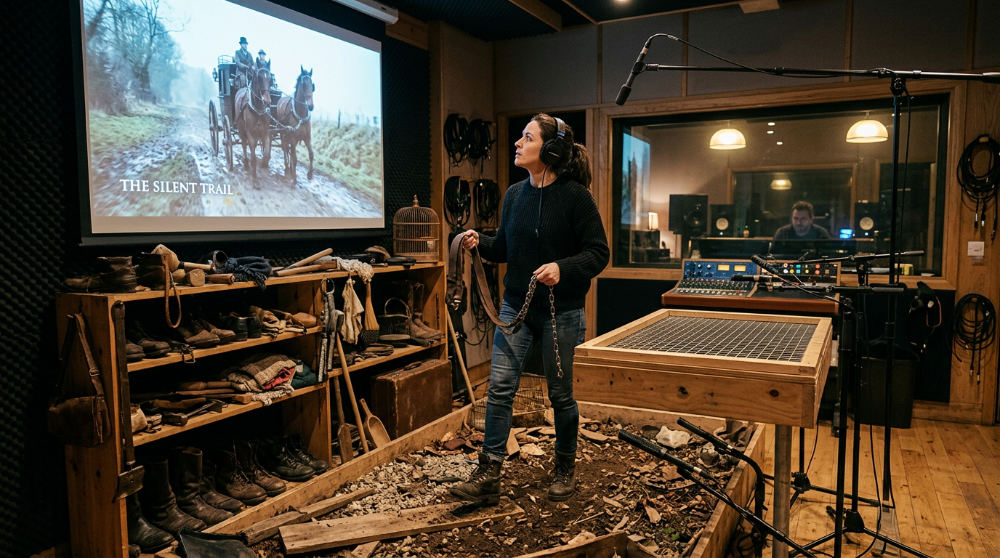
Sound design is the "secret sauce" that makes a video feel professional and fully immersive, often carrying more emotional weight than the visuals. While the camera captures dialogue, it rarely captures the textures of the environment. Foley Artists are the specialists who recreate everyday sounds, like the crisp clink of a coffee cup or the rustle of a suit jacket, to add a sense of physical reality to the scene.
- Dialogue Enhancement. We use ADR (Automated Dialogue Replacement) to re-record lines in a studio if the original onset audio was ruined by wind or traffic.
- Ambient Layering. We build multi-layered background tracks to create a sense of space, such as the low hum of a legal office or the bustling energy of a San Diego restaurant.
- Spot Effects. Unique sounds are added for specific actions, ensuring that every movement on screen has a corresponding sonic weight.
Without these layers, a video feels "thin" and amateurish. By focusing on high-fidelity sound, we ensure the viewer remains locked into the story without being distracted by technical gaps in the audio.
4. Integrate Visual Effects and Motion Graphics
Visual Effects (VFX) involve manipulating imagery to add elements that were not present during the live-action shoot, such as digital environments or complex cleanup. For many of our clients, this stage is less about dragons and more about the strategic use of animation and motion graphics to clarify abstract data or brand value propositions.
Motion Graphics are animated graphic design elements that are vital for modern corporate communication. They allow us to translate a complex legal argument or a sophisticated software feature into digestible, engaging visuals. We treat these digital elements as an integral part of the narrative rather than a decorative afterthought. By maintaining consistent typography and brand colors in our graphics, we reinforce your identity throughout the video. The visual "twist" we provide serves the overarching goals of your marketing campaign.
5. Master the mood through Color Grading
Watch Out: Ensure your colorist sees the final sound mix, as the rhythm of the music can sometimes influence how aggressive a color grade should be.
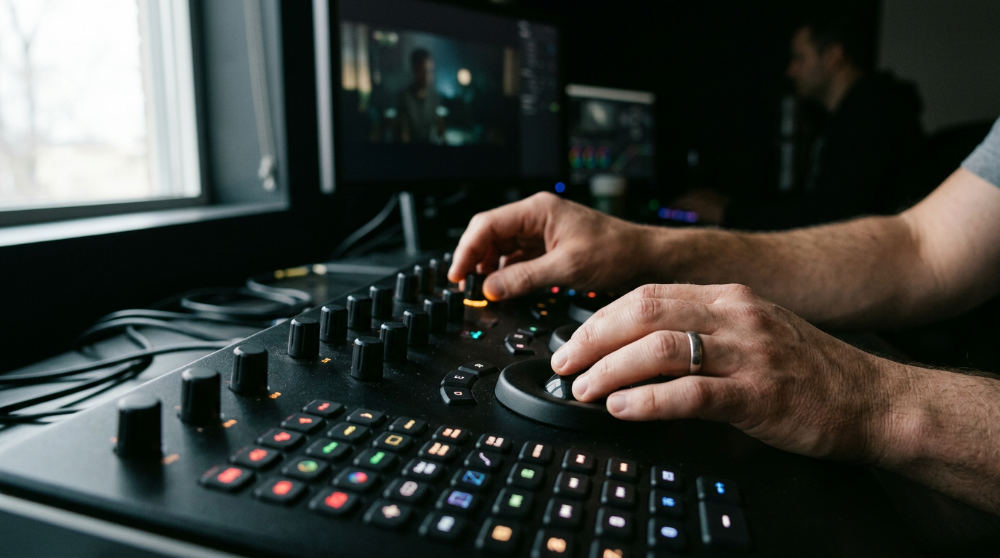
Color Grading is the procedure of adjusting the colors, contrast, and luminance of the video to evoke specific emotions or match brand palettes. According to StudioBinder, post-production refers to all tasks associated with cutting raw footage, but grading is what gives that footage its final "film look." We use this stage to ensure that a shot filmed at high noon looks identical to one filmed at sunset if they belong in the same sequence.
At Pretzel Logic, we often employ a revitalization focus, where we take a client’s existing legacy footage and modernize it through expert grading to meet contemporary visual standards. This process can make old content feel brand new again. Whether we are aiming for the warm, inviting tones of a hospitality video or the sharp, high-contrast look required for legal video production services, color is our primary tool for controlling the viewer’s subconscious mood and keeping them engaged.
6. Perform the final Sound Mixing
Sound Mixing is the final audio stage where dialogue, music, and sound effects are perfectly balanced into a single master track. While sound design is about creating the individual elements, mixing is about the relationship between them. We ensure that the music supports the emotional beat of a scene without overpowering the spoken word, maintaining a clear hierarchy of sound.
- Loudness Standards. We adhere to specific industry decibel standards to ensure the video sounds consistent whether it is played on a smartphone or a cinema sound system.
- Frequency Balancing. We carve out space in the mix so that voices aren’t competing with the bass of the soundtrack.
- Multi-Device Testing. We listen to the mix on multiple speakers to ensure the brand message remains clear in every listening environment.
If you are looking for tips on setting up a recording space to improve your initial audio quality, the production insights at Lightz Out Studios offer helpful advice on studio acoustics. Proper mixing ensures your professional message is never lost in a muddle of noise.
7. Export and deliver for diverse platforms
The final step in the post-production journey is preparing specific versions of the video for the various platforms where it will live. We don’t just export one file. We create a suite of assets tailored for maximum impact. This includes vertical crops for social media reels, high-bitrate masters for television, and compressed versions for website embedding.
- Mastering. We generate high-resolution master files (such as ProRes) that serve as the archival "source of truth" for the project.
- Optimization. We create H.264 or H.265 files that offer the best balance of visual quality and fast loading times for the web.
- Quality Control. A final QC pass is conducted to ensure no glitches, dead frames, or audio pops were introduced during the export process.
This delivery phase preserves the creative "twist" we have built into the project, ensuring your story looks exactly as intended regardless of the screen size. Following a structured video production guide ensures that these final deliverables meet your strategic goals and provide a high return on investment.
Common Post-Production Pitfalls to Avoid
- The "Fix it in Post" Fallacy. Post-production can enhance great footage, but it cannot fix blurry, out-of-focus, or severely underexposed shots. Start with the best quality possible.
- Ignoring Audio Fidelity. Viewers will tolerate a grainy image, but they will turn off a video almost instantly if the audio is scratchy or the dialogue is hard to hear.
- Rushing the Creative Edit. Trying to squeeze the edit into a few days often leads to missed opportunities for better storytelling and can cause the very budget overruns you are trying to avoid.
- Poor Version Control. Without a logical naming convention (e.g., v01, v02_Final), it is easy to accidentally send an unapproved or old version of the cut to a client or broadcaster.
- Skipping the QC Pass. Skipping the final review of the exported file can lead to embarrassing errors, such as a missing graphic or an audio sync issue appearing on the live launch.
Frequently asked questions
What is the difference between production and post-production?
Production is the active phase where the crew is on set, cameras are rolling, and the raw footage is physically captured. Post-production is everything that happens afterward: the assembly, editing, and refinement of that footage into a finished story. Think of production as gathering the ingredients and post-production as the actual cooking and plating of the meal.
How long does post-production usually take?
The timeline is highly dependent on the complexity of the project. A standard 30-second brand commercial might take two to four weeks for a high-end finish including color and sound. However, a feature-length film or a detailed corporate documentary with significant graphics can take several months to complete properly.
Is editing the same as post-production?
No, picture editing is just one specific phase within the broader post-production workflow. While editing involves cutting and arranging the clips, post-production also includes sound design, Foley, color grading, visual effects, and final platform delivery. Editing is the skeletal structure, but post-production is the entire finished body.
Can you fix low-quality raw footage in post?
We can certainly enhance colors and use digital tools to clean up some grain or noise, but we cannot "add" focus to a blurry shot or recover details that were never captured. High-quality capture during the production phase is essential for achieving a professional, visionary final result that meets modern industry standards.
What specific files are delivered at the end?
Typically, we deliver a high-bitrate Master file (such as ProRes 422 or DNxHR) for archival and broadcast use. We also provide compressed versions (like H.264) optimized specifically for web hosting and social media platforms. Depending on the project, we may also provide separate files for audio stems or social media cuts.
If you want to ensure your next project benefits from a workflow that combines technical logic with a visionary creative edge, we invite you to contact us to collaborate with our team at Pretzel Logic.