Last updated November 19, 2026
A post-production workflow is the grid that guides your raw footage toward becoming a polished final video. This Post-Production Workflow acts as the roadmap for the entire project. It ensures that every asset moves from ingest to final export without technical friction. The process involves several key stages. These include ingest, assembly, fine cut, VFX, color grading, sound design, and delivery. Commercial projects follow a specific timeline to ensure high-end technical polish.
Key takeaways
- Multi-Stage Framework. Professional workflows move through ingest, assembly, fine cut, VFX, color, sound, and delivery.
- Project Timeline. Commercial projects require a structured window to ensure high-end technical polish.
- AI-Augmented Speed. Modern production uses AI for faster pre-visualization while maintaining human creative oversight.
- Platform-Specific Standards. Technical requirements vary drastically between social media assets and broadcast TV commercials.
- Remote Collaboration. Studios in San Diego can effectively serve national brands through secure, high-speed feedback loops.
The Blueprint of Professional Post Production Workflows
A successful post-production workflow acts as the logical bridge between a director’s creative vision and the technical requirements of broadcast standards. Without a rigorous pipeline, even the most inspired footage can become mired in project bloat. This leads to missed deadlines and technical inconsistencies. At Pretzel Logic Productions, a full-service video production house based in San Diego, we operate under a framework we call Logical Collaborators. We ensure that every creative "twist" is supported by a stable technical foundation.
The process begins with ingest. Raw media is organized and backed up to ensure data integrity before any creative manipulation occurs. This stage is non-negotiable. Editors must verify that all files are accounted for and metadata is correctly logged to prevent data loss. Once the media is secure, Video Editing serves as the core procedure involving the assembly and manipulation of video shots. Our team in San Diego assembles the narrative arc to ensure the brand story remains authentic and compelling.
Structure is vital here. It dictates how information flows between specialists. For instance, if a law firm in the Midwest requires a branding video, the file structure must be clear. Sound designers and colorists need to work simultaneously without overwriting each other’s progress. By using professional post production strategies that emphasize organization, we keep momentum high. We keep errors low. This ensures a smooth handoff to national stakeholders.
The Logic Gap: The greatest risk to a video project isn’t a lack of creativity, but a lack of logical technical systems to support that vision.
Essential Stages from Raw Footage to Final Delivery
Professional workflows bridge the gap between initial capture and final delivery by following a linear path that prevents expensive backtracking. By locking the story during the assembly phase, the team avoids wasting resources on color or effects for scenes that might eventually be cut. This methodical approach ensures that the final product meets both creative goals and technical broadcast requirements.
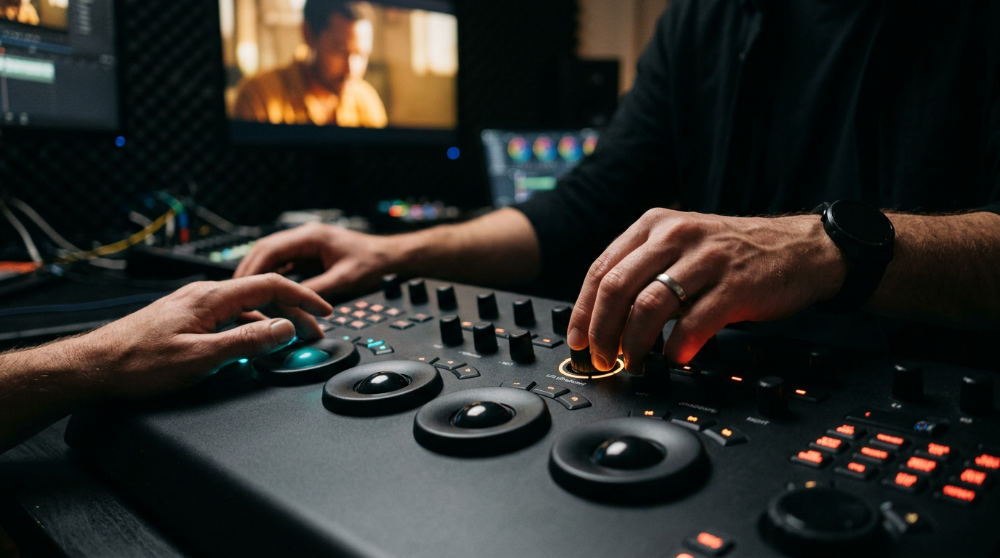
The assembly phase establishes the "radio edit." We focus on dialogue and timing before applying visual flourishes. During this stage, the editor ignores color and effects. The story must hold up on its own. This is where the narrative backbone is formed. It allows stakeholders to see the flow of the message before expensive visual work begins.
San Diego Expertise: From our studio in San Diego, we provide high-end color grading services that meet national broadcast standards for any industry.
During the fine cut, the narrative is tightened. Every second must serve marketing video production goals and capture audience attention. Three critical technical layers follow:
- Color Grading. This involves the meticulous process of altering and enhancing the color of a motion picture. It evokes specific emotions and maintains brand consistency. Adobe notes this is a foundational part of the journey from initial storage to the final delivery of the motion picture.
- Sound Design. Mixing provides the auditory depth necessary for a professional feel. It balances voiceovers with music and environmental effects.
- Visual Effects (VFX). This is where digital cleanup or compositing happens to polish the frame.
Final delivery involves rendering the project into specific formats optimized for different platforms. We target everything from theater screens to mobile feeds. Each platform has unique compression and resolution requirements. Meeting these prevents a "cheap" or distorted appearance on the user’s end.
| Stage | Focus | Typical Output |
|---|---|---|
| Ingest | Data Integrity | Organized Media Bins |
| Assembly | Narrative Structure | Rough Cut (Radio Edit) |
| Fine Cut | Timing & Pacing | Picture Locked Edit |
| Color/Sound | Sensory Polish | Mastered Audio & Video |
| Delivery | Technical Specs | Platform-Ready Files |
Comparing Production Standards for Commercial Success
Marketing video production often prioritizes rapid turnaround and platform-specific aspect ratios for social media engagement. When producing content for Instagram or TikTok, the workflow must account for vertical framing and "safe zones." These are spots where UI elements like captions or "Like" buttons sit. Content must quickly capture attention to stop the scroll. We focus on immediate visual impact and platform compatibility.
In contrast, tv commercial production requires rigorous technical adherence to broadcast legalities and high-resolution mastering. Every color must fall within "broadcast safe" limits. Audio must be leveled to strict decibel standards. This prevents clipping or sounding too quiet compared to other network content. We utilize our Logical Collaborators framework. It ensures these varying technical needs don’t stifle the creative energy that makes a brand stand out.
Our specialized food post-production adds a layer of sensory detail. We leverage food styling expertise to make culinary visuals pop in the final edit. Whether it is a quick-service restaurant ad or a high-end dining feature, the way steam, texture, and color are handled in post-production can make the difference between a hungry viewer and a disinterested one. Precise sound design also plays a role in making food look appetizing.
Integrating AI Video Production and Motion Graphics
Modern workflows now incorporate AI Video Production. This is an emerging technology used for developing commercials and generating visual assets. By using AI to storyboard or generate background elements, we show clients a near-finished look before we ever pick up a camera. This reduces the risk of expensive reshoots. It allows for more experimentation with the "twist" in the story. It is a powerful tool for streamlining the initial phases of creation.
Motion Graphics function as animated digital footage that creates the illusion of motion. These are often integrated during post-production to enhance clarity. They are vital for explaining complex corporate concepts clearly. For instance, if a biotech firm needs to explain a cellular process, motion graphics bridge the gap where live-action footage is impossible. Integrating these early in the post-production services phase ensures they feel like a natural part of the environment.
While AI accelerates asset generation, the human touch remains essential for ensuring the visual narrative aligns with the brand’s unique voice. AI can generate a face or a background. It cannot understand the subtle emotional nuance required for a luxury branding campaign. For complex branding projects, simplifying complex workflows through clear graphic guides helps maintain project momentum. It keeps all team members aligned on the visual goal.
Do you work with brands across the country?
Yes, Pretzel Logic Productions serves brands across the country from our San Diego studio. We use a unified remote post-production pipeline. We utilize high-speed collaborative feedback loops and secure cloud storage. This ensures communication with national marketing directors is just as fast as if they were in the room with us. Our location in Southern California provides access to world-class talent. Our systems support clients regardless of their time zone.
Our team manages projects for clients in diverse regions. We provide the same high-touch service as a local partner. Whether you are a law firm in the Midwest or a restaurant group on the East Coast, our logical technical systems bridge the geographic gap. High-end video production involves managing complex technical requirements. We ensure the final product meets the highest possible standards regardless of where the footage was captured.
Remote workflows have evolved significantly. We can now share 4K previews with clients in real-time. This eliminates the "waiting game" of traditional post-production. It allows for immediate creative adjustments. Speed is essential for meeting the tight deadlines often found in national marketing campaigns. Clear communication remains the foundation of our remote success.
Where Traditional Workflows Often Fail
Project bloat often occurs when there is no clear transition between the creative rough cut and the technical finishing stages. When teams start color grading before the edit is "locked," they waste hours of work on shots that eventually get cut from the final film. This lack of logical sequence is where many smaller studios struggle to stay on budget. A disciplined workflow prevents these redundancies.
Failing to account for the "twist," an unexpected visual narrative, can lead to generic content. It fails to connect with the audience. If the workflow is too rigid, the creative soul of the project gets crushed under the weight of technical checklists. Conversely, relying solely on automated tools without a logical creative framework leads to disjointed storytelling and technical delivery errors. Balanced oversight is necessary for premium results.
Workflows that ignore the specific sensory cues required for food or legal industries often miss the mark. A legal branding video requires a tone of stability and trust. We achieve this through specific pacing and color palettes. If an editor treats every project with a "one size fits all" approach, the brand’s unique voice is lost in the noise. Customization at every step is key to quality.
Revitalizing Your Brand Story in San Diego
Revitalizing a brand story requires a precise combination of creative reimagining and technical execution. We ensure the message hits its mark. By analyzing existing footage and identifying gaps in the narrative, we can apply modern editing techniques to make old content feel new again. This process relies on a disciplined post-production pipeline that focuses on maximizing the value of every frame captured.
Effective post-production is not just about fixing mistakes. It is about elevating your story into a masterpiece with a twist. Our San Diego-based team specializes in post-production services that breathe new life into existing footage or turn new concepts into reality. By blending creative storytelling with strict technical logic, we ensure your message is true to your brand and resonates with your consumers.
We believe that every brand has a story worth telling. The way that story is packaged determines its impact. Whether we are helping a local San Diego business or a national corporation, our goal is to deliver a visual experience that exceeds expectations.
To get started on your next campaign and ensure your technical workflow supports your creative ambitions, please fill out the form at https://pretzellogicproductions.com/contact-us/ to schedule your strategy session.
Frequently asked questions
What are the 5 stages of post production?
The standard stages include Ingesting/Organization, Editing, Sound Design, Color Grading, and Export/Delivery. According to industry leaders at Adobe, this process covers everything from initial storage to the final delivery of the motion picture, ensuring that raw data is transformed into a professional, broadcast-ready asset.
How long does the post production phase take?
The professional post-production phase typically requires a multi-week timeline. These timelines vary based on the complexity of motion graphics, the amount of raw footage processed, and the number of stakeholders involved in the feedback loop. High-end commercials with heavy VFX often require more time for detailed technical work.
What is the difference between video editing and post production?
Video editing is a specific procedure within the broader post-production phase focused on cutting and arranging shots to build a narrative. Post-production encompasses the entire journey from the moment the camera stops rolling, including sound mixing, color correction, visual effects, and final technical delivery for various platforms.
How does the workflow differ for tv commercials production versus social media ads?
TV commercials require strict adherence to broadcast standards, including specific color space requirements and audio loudness regulations. Social media ads focus on rapid delivery, multiple aspect ratios (like 9:16 for mobile), and varying caption requirements to ensure the message is clear even when a viewer has their sound turned off.
Can you revitalize existing footage into a new branding production?
Yes, post-production allows for the revitalization of old assets through new editing, updated color grading, and fresh motion graphics. This is a highly efficient way for brands to update their messaging or launch a new campaign without the significant cost and time commitment of a full new shoot.