
The Complete Guide to Brand Video Production: Strategy, Process & Proven Results
Brand video production is the process of conceptualizing, filming, and editing video content that communicates a company’s identity, values, and unique position to its target audience — transforming abstract brand promises into something an audience can see, hear, and feel. Done strategically, brand videos create emotional connections that outlast any individual campaign, building the kind of trust that turns first-time buyers into loyal advocates. This guide covers the full picture: what drives brand video’s effectiveness, how to build a sound strategy, what to expect at every production stage, and how to measure what you actually get back.
Table of Contents
- Why Brand Video Production Delivers What Other Content Can’t
- Types of Brand Video Production: Matching Format to Purpose
- Building Your Brand Video Strategy Before You Touch a Camera
- Inside the Brand Video Production Process
- Measuring the ROI of Brand Video Production
- How to Choose the Right Brand Video Production Partner
- Ready to Tell Your Story?
Why Brand Video Production Delivers What Other Content Can’t
There is a specific moment in a great brand film when something clicks. You are not reading a spec sheet or scanning a bulleted list of features. You are feeling something — about a company, a product, a vision. That feeling is not accidental. It is the result of intentional brand video production, and it is why every serious business eventually arrives at the same conclusion: static content alone does not cut it.
The data makes this plain. According to Wyzowl’s State of Video Marketing research, 87% of businesses now use video as a marketing tool — and companies that invest in brand storytelling through film consistently outperform those that don’t on the metrics that matter: time-on-site, conversion rate, and purchase intent. That is not a trend. That is a structural shift in how audiences absorb and process information.
Video Builds Trust at a Speed No Other Format Can Match
Your audience processes visual and auditory information simultaneously, in real time. A well-crafted brand video communicates tone, credibility, culture, and personality in ways that even the sharpest written copy cannot replicate. When someone watches your brand film and already feels like they know who you are before they’ve ever called you — that is brand video production doing its job at the highest level.
Think about the brands you feel genuinely connected to. Each one has invested in video storytelling — not to showcase a product catalog, but to communicate a worldview. The product follows. The sale follows the connection. The connection comes from the film.
For businesses of any size, this principle holds. You do not need a massive production budget. You need a clear story and a production partner who knows how to tell it on camera without flinching.
The Business Impact Numbers Are Consistent
Across independent studies and platform-level research, the performance pattern for brand video is consistent:
- Viewers retain 95% of a message delivered via video versus roughly 10% through text — a gap documented by Google’s own research
- Landing pages featuring brand video see conversion rate increases of 80% or more
- Social media video generates approximately 1,200% more shares than static text and image posts combined
- B2B buyers who watch a vendor’s brand film are significantly more likely to request a demo or proposal
The takeaway is not that video performs better. The takeaway is by how much — and why settling for static content when video is accessible means intentionally leaving results on the table.
Why Brand Video Is Different from Product or Promotional Video
Not all video is brand video production. Promotional videos sell a specific offer. Product demos explain features. Explainer animations teach processes.
Brand video production does something more foundational: it communicates who you are — your values, your culture, your reason for existing — in a way that makes audiences want to be associated with you before they have ever transacted with you. It is top-of-funnel in the deepest possible sense, laying the emotional groundwork that makes every other marketing effort more effective. When your audience already trusts and likes you from a brand film, your sales team’s job gets easier, your email open rates climb, and your inbound leads arrive warmer.
Types of Brand Video Production: Matching Format to Purpose
Brand video production is a category, not a single format. The right type of brand film depends entirely on what you are trying to accomplish and where in the customer journey you plan to deploy it. Choosing the wrong format — however beautifully executed — means your investment does less work than it should.
Brand Story Films
The flagship format. A brand story film introduces your company’s origin, mission, and character in cinematic, emotionally driven terms. These are the films that live on your homepage, get shared on social, and anchor your brand’s presence at trade shows and investor pitches. They are designed to create immediate emotional recognition — “I know who these people are and I like them” — in two to three minutes or less.
Culture and Team Films
Designed primarily for two audiences: prospective hires and B2B buyers evaluating whether your company is the right partner. Culture films show what working with you actually looks like — the people, the energy, the values in action. In markets where talent is competitive and clients are choosing between similarly qualified providers, a culture film can be the deciding factor. It is proof that your organization is what your website says it is.
Testimonial and Client Story Videos
One of the most versatile formats in brand video production. A well-produced client story video combines the emotional engagement of a narrative with the credibility of third-party validation. These are not static text reviews dressed up with a talking head. They are mini-documentaries about transformation — what a client’s business looked like before, and what changed after working with you. Used effectively in mid-funnel contexts, they shorten sales cycles considerably.
Campaign and Launch Films
Built around a specific moment — a product launch, a rebrand, a campaign concept. Campaign films tend to be higher production value, shorter in duration, and designed for maximum distribution impact. They often anchor a broader integrated marketing push, serving as the visual centerpiece that other assets (social graphics, email headers, landing page heroes) extend and echo.
Event and Documentary Content
Long-form documentary content that captures a company’s presence at an industry event, showcases a brand video project in depth, or explores a topic the brand has genuine authority on. Documentary-style content positions a company as a thoughtful leader — not just a vendor — and performs particularly well with sophisticated B2B audiences who read between the lines of polished promotional content.
Building Your Brand Video Strategy Before You Touch a Camera
Here is the uncomfortable reality about most failed brand video projects: they do not fail on set or in the edit suite. They fail in a conference room, three weeks before production starts, when nobody could agree on what the video was actually supposed to do.
Strategy is not the administrative preamble to the creative work. Strategy is the creative work. Get it right, and every downstream decision — casting, location, tone, pacing, music — becomes dramatically easier to make with confidence.

Define What You Are Actually Trying to Accomplish
Before a single storyboard gets sketched, your production brief needs to answer three questions with specificity:
- Who is this for? — Not “everyone.” A real person with real motivations, fears, and decision-making triggers. The more precisely you define this, the more powerfully the film will land for that person.
- What should they feel after watching? — Emotion precedes action. Define the emotional destination first. Inspired? Relieved? Curious? Confident? Each destination calls for different creative choices.
- What do you want them to do next? — Visit your site? Call your team? Share the film with a colleague? Specific calls to action produce specific results. Vague ones produce scrolling.
A brand video designed to introduce a startup to venture investors looks nothing like one designed to convert B2B prospects who have already researched five competitors. Different audiences, different emotional beats, different calls to action — different films. Trying to make one video serve all these purposes at once is how companies produce expensive content that moves nobody.
Know Your Audience’s Emotional Landscape
Great brand video production is built on empathy before creativity. Before you can move your audience, you have to understand what already moves them. What do they worry about when no one is watching? What do they aspire to? Where does your brand fit into the story they are already telling themselves about their business and their goals?
This research does not need to be a six-week formal exercise. Talk to five recent customers. Read three months of support emails. Look at what content your audience shares, comments on, and saves. The patterns are always there if you are willing to look before you start scripting.
The brand films that feel like they were made specifically for you — that unsettling, flattering feeling of being understood by a company — are built on exactly this kind of audience intelligence. It is not magic. It is research translated into empathy, then into visual storytelling.
Map Your Video to the Customer Journey
Brand video production spans multiple points in how a buyer discovers, evaluates, and ultimately chooses a company. A top-of-funnel awareness film serves a different purpose than a mid-funnel “why us” video, which differs again from a case study or culture piece used in a competitive evaluation late in the sales process.
Map your video to its specific function in that journey, then build the content, tone, length, and call to action accordingly. Clarity here protects your budget and prevents the most common brand video mistake: trying to make one film do everything at once. Focused beats comprehensive, every time.
Inside the Brand Video Production Process
The production process is where strategy becomes physical. It is also where projects get derailed — by scope creep, unclear communication between client and crew, and the persistent myth that you can “fix it in post.” You can fix some things in post. You cannot fix a poorly conceived strategy, a missed performance, or a location that never worked. Those cost you twice.
Understanding the three stages of brand video production helps you show up prepared, ask the right questions of your production team, and protect your investment at each step.
Pre-Production: Where Great Videos Are Actually Made
Pre-production covers everything that happens before cameras roll: scriptwriting, storyboarding, location scouting, talent casting, shot list development, scheduling, and legal clearances. It is the phase clients most consistently underestimate — and the phase that most directly determines shoot day’s success or failure.
Every hour invested in pre-production saves three hours on set and five hours in the edit. A production partner who rushes through this phase is not saving you time. They are shifting the risk forward, to the moments when it costs the most to fix.
What strong pre-production looks like in practice for brand video production:
- A written creative brief reviewed and approved by both client and production team before anything else moves
- A detailed script or shot-by-shot storyboard that leaves no creative ambiguity on shoot day
- A location scout with confirmed permits, verified power access, and a backup plan
- Talent that is not just booked, but briefed, styled, and prepared for the creative direction
- A shoot-day schedule that builds in realistic setup time, breakdown time, and buffer — not the fictional schedule where everything goes perfectly
The best production companies make pre-production feel collaborative and energizing, not bureaucratic. They are drawing creative vision out of you through sharp questions and genuine curiosity — not just checking procedural boxes to protect themselves.
Production: Bringing Your Brand to Life on Camera
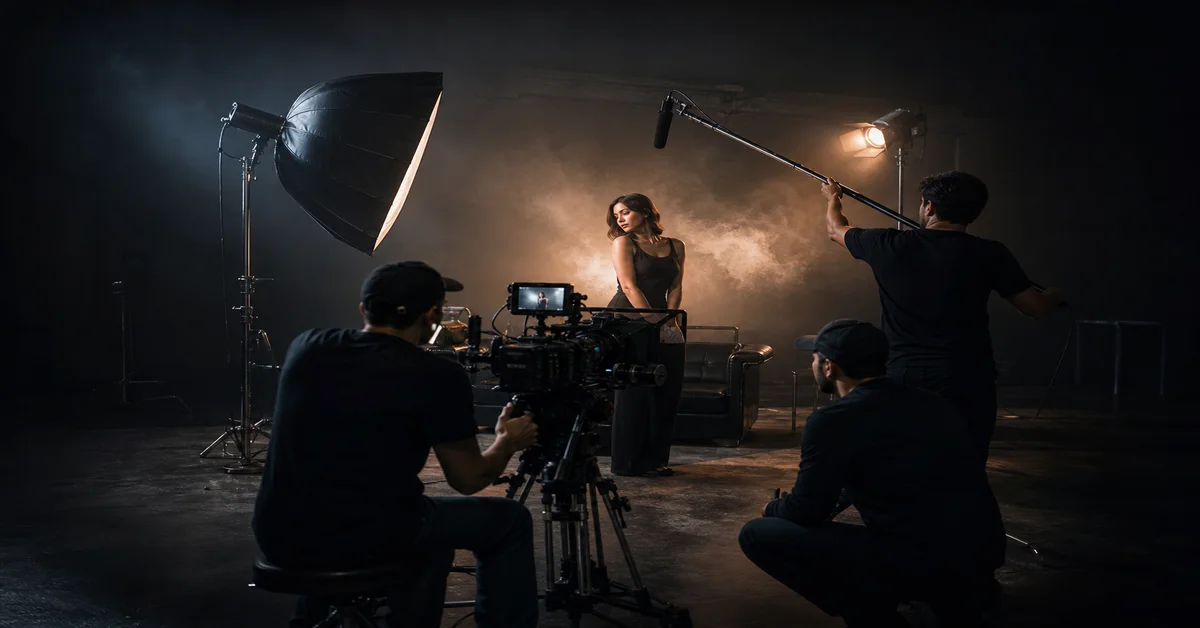
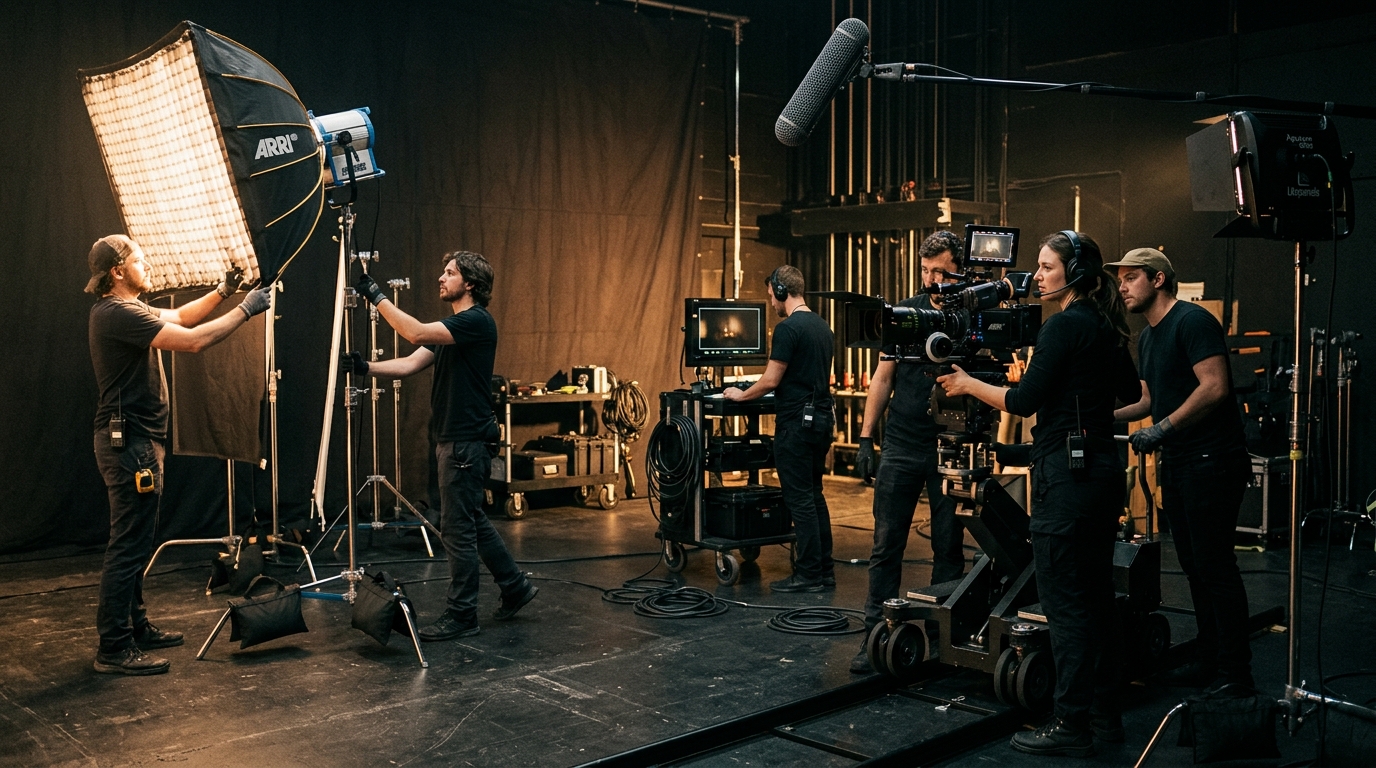
Shoot day is simultaneously the most exciting and the highest-stakes moment in any brand video production project. Everything you built during pre-production gets stress-tested in real time against reality: weather, talent nerves, logistics, noise, light that shifts faster than expected.
Professional brand video production involves far more than pointing a camera at something that looks nice. The cinematography — lens choice, camera movement design, lighting setup — communicates your brand’s character as powerfully as the script does. A wide, stable shot reads differently than a close, handheld one. Warm, directional light tells a fundamentally different story than cool overhead fluorescent. These are not aesthetic preferences left to the cinematographer’s taste. They are brand communication decisions that require an informed director.
The director’s role is to hold the creative vision while managing the physical reality of a shoot: keeping the team on schedule, adapting when locations do not cooperate with the plan, and capturing not just the scripted moments but the unexpected, unscripted ones that make great brand films feel genuinely human. That combination — artistic vision held lightly enough to adapt, with enough calm authority to make decisive calls under pressure — is genuinely rare, and worth selecting for deliberately.
Post-Production: The Craft Layer That Makes or Breaks the Film
Post-production is where raw footage becomes a story. Editing, color grading, sound design, motion graphics, music selection, and final mix — each element shapes how the finished film lands emotionally with your audience, often in ways that are invisible when done well and immediately apparent when done poorly.
Color grading alone shifts the emotional temperature of an entire brand film. The same footage cut to two different music tracks becomes two different stories. These are not technical afterthoughts. They are the craft layer that separates good-looking video from a film that actually moves people.
Plan for at least two rounds of structured revision: one on the rough cut for feedback on overall structure, narrative arc, and pacing; one on the fine cut for tone, detail, and final adjustments. A clear revision framework agreed on before production begins is not red tape. It is the mechanism that keeps scope from expanding and timelines from slipping.
Measuring the ROI of Brand Video Production
ROI on brand video is real — and measurable. But it does not always arrive as a direct, attributable line from “video viewed” to “sale closed.” Understanding which metrics to track, and what they actually tell you about your investment’s performance, is what separates teams that know brand video works from teams that keep second-guessing it.
The Metrics That Tell You Something Real
Depending on where your video lives and what it was designed to accomplish, the meaningful metrics include:
- View-through rate — What percentage of viewers watch to completion? Completion rate is a direct signal of engagement quality, not just reach. High completion rates mean the story is holding attention.
- Engagement quality — Comments, shares, and saves on social platforms indicate emotional resonance — not just algorithmic distribution. Someone sharing a brand film is someone vouching for your brand.
- Website traffic correlation — Did organic traffic to key pages increase in the weeks following your brand video’s launch? Correlated lift is a strong signal, even when direct attribution is imprecise.
- Lead quality, not just volume — Prospects who have watched a brand film often convert at higher rates and require shorter sales cycles because the trust work was done before they arrived. Track this separately from standard lead volume.
- Branded search lift — Month-over-month branded search volume in Google Search Console. Post-launch increases point directly to the brand awareness impact of a film.
For a structured framework for connecting video metrics to business outcomes at every funnel stage, HubSpot’s video marketing resources are consistently well-researched and practically oriented.
Brand Lift vs. Direct Response: Know What You Are Measuring
Brand films are designed to create emotional resonance — not to generate same-week conversion behavior. Treating a brand film like a direct response ad and measuring it by immediate click-to-purchase attribution is a category error. It leads companies to undervalue one of their most powerful long-term business assets by holding it to the wrong standard.
Brand lift — measured through NPS trend, share of voice, changes in inbound lead quality, or periodic audience sentiment surveys — captures what brand video production actually does over months, not days. It shifts how an audience perceives you. That perception shift is the foundation everything else in your marketing is built on. Make it, protect it, and measure it on its own terms.
Set the measurement framework before you launch. Decide whether you are primarily measuring direct response or brand lift — and apply the metrics appropriate to that goal from day one. Retrofitting measurement after the fact produces inconclusive data and frustrated stakeholders.
How to Choose the Right Brand Video Production Partner
Your production partner shapes the outcome of your brand video more than any other single variable. The wrong team — even one with genuinely beautiful work on their reel — can turn a strategically sound, properly funded project into an expensive missed opportunity. Choosing well is not about finding the fanciest equipment or the biggest portfolio name. It is about finding the team that thinks like a storytelling partner, not a vendor.
What to Look for Beyond a Demo Reel
A demo reel shows you what a production team can make look good in a 90-second highlight package. It does not show you how they think, how they handle a shoot day when the plan falls apart, or whether their work has actually moved a client’s business forward.
When evaluating brand video production partners, push beyond the reel:
- Ask for full-length case studies, not just highlight clips. You want to see the complete film and understand the brief it was responding to.
- Speak with former clients directly — not just the references the company nominates for you. Ask about communication, problem-solving, and whether the finished film performed against the goals it was built for.
- Look for a structured discovery process. The right brand video production partner will ask you detailed questions about your audience, your business goals, and your competitive context before pitching a single creative concept. If the pitch comes before the questions, you are talking to a production house, not a strategic partner.
- Evaluate their creative point of view. Can they tell you why they would make specific choices for your brand? Or do they produce whatever the brief says without challenge or contribution? The best partners push back on weak briefs — respectfully and constructively — because they are as invested in the outcome as you are.
Some production studios operate as part of broader integrated marketing environments, which can deliver a distinct advantage. When brand strategy, creative direction, and video production share the same organizational context, the translation loss between strategic intent and on-screen execution is dramatically reduced. Pretzel Logic Productions operates within exactly this kind of ecosystem — connected to the full-service marketing expertise of InnoVision Marketing Group — which means the strategic and creative layers speak the same language before a camera ever rolls.
Red Flags That Tell You to Walk Away
Not every warning sign announces itself loudly. Watch for these:
- No written pre-production documentation — If a production team will not provide a written brief, storyboard, or shot list before filming starts, you are committing budget to a process with no creative checkpoint. That is avoidable risk.
- Vague revision policies — “We will work with you until you are happy” is not a revision policy. It is a liability waiting to happen. Get round counts, scope definitions, and timeline expectations in writing.
- Aggressive turnaround promises — A team promising a two-week turnaround on a full brand film is either running a skeleton post-production process or setting an expectation they cannot fulfill. Great post-production work takes real time.
- No questions about your audience or goals — A production team that pitches visual concepts before asking who you are trying to reach is building a film for their reel, not your business objectives.
For projects that involve studio space — whether for controlled product shots, executive interviews, or green-screen work — access to a professional facility like Lightz Out Studios can simplify logistics considerably, particularly for San Diego-based production.
Ready to Tell Your Story?
Brand video production, done with strategy and craft behind it, is one of the highest-impact investments a business can make in its own growth. It builds trust at scale. It creates emotional equity that no other content format can replicate. It gives your audience a reason to choose you before they have spoken to a single person on your team.
The keyword is done right. That means strategy before storyboards. Meticulous pre-production before shoot day. A production partner who treats your story with the same seriousness you do, and brings the kind of creative fearlessness that turns a good brief into a great film.
If you are ready to create a brand video that actually moves your business forward, bring your story to Pretzel Logic Productions. We would love to hear what you are building.