Last updated November 23, 2026
Production and post-production represent the dual phases of creating visual content. Production involves the physical filming and technical execution of a script on location. Post-production is the final stage including editing, VFX, and sound design. This collaborative process involves a series of technical and creative milestones tailored to the needs of professional commercial projects.
Key takeaways
- Phase distinction. Production captures the logical assets while post-production applies the creative twist through editing and effects.
- Project timelines. Professional video workflows typically account for multiple stages of editing, color, and sound design to ensure high-quality results.
- Software standards. Modern workflows often utilize cloud collaboration and professional editing software to synchronize distributed teams.
- Visual mood. Color grading is essential for establishing a cohesive professional appearance and mood across all shots.
The Symbiosis of Production and Post Production
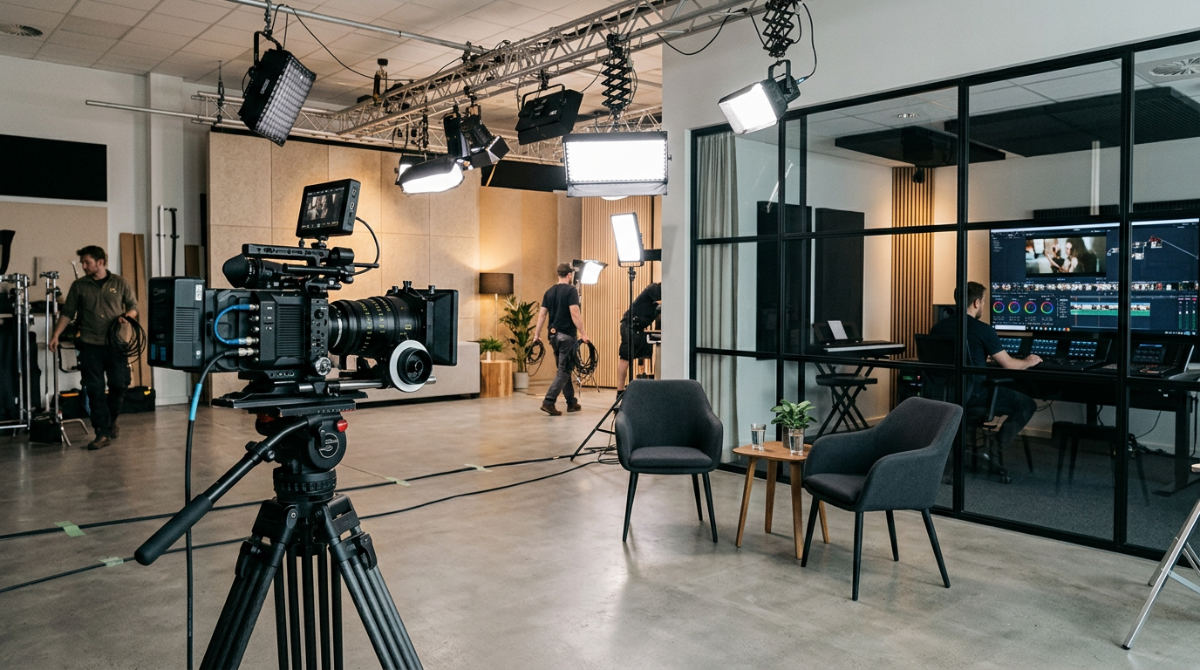
Production focuses on the logical capture of scenes. We ensure every frame matches the storyboard’s technical requirements. When we step onto a set, we are there to translate a structured plan into high-quality raw assets. This phase is about precision. We ensure the lighting hits the subject correctly, the sound is crisp, and the camera movements stay fluid. Without a rigorous approach to the filming phase, the subsequent steps become an exercise in damage control rather than creative enhancement.
Post-production serves as the final stage of filmmaking where editing, VFX, and sound design converge to finalize the vision. It is the moment where raw materials gathered on set are refined into a polished narrative. At Pretzel Logic, we refer to the bridge between these two phases as the "Pretzel Twist." This is our specific approach to injecting high-level creative concepts into a structured, logical workflow. We make sure the final product is not just technically sound but also emotionally resonant.
Successful branding production depends on maintaining visual consistency from the initial lens choice to the final export. If a director of photography chooses a specific vintage lens to capture a warm, nostalgic feel during production, the editor and colorist must honor that choice during the final grades. Continuity ensures the brand’s message remains clear across all platforms. To understand the technical environment required for this level of work, exploring specialized post-production facilities and workflow strategies reveals how the right setup supports high-end output.
Essential Elements of a Professional Filming Phase
Casting and location scouting provide the unique backdrops and talent needed for authentic brand stories. In a production hub like San Diego, we have access to diverse environments. We move from coastal vistas to modern urban skylines. These locations allow us to tailor the visual aesthetic to the specific needs of a brand. Selecting the right face to represent a company is just as vital as the setting. The talent must embody the brand’s values to forge a genuine connection with the audience.
Technical execution involves managing lighting, sound recording, and camera movement to ensure high-quality raw assets. The production phase acts as the "capture of logic," where the pre-planned script is manifested into tangible media. Every decision made on set, from the frame rate to the microphone placement, serves the ultimate goal of the edit. When we handle video production, we focus on gathering the most versatile assets possible to give the creative team maximum flexibility later.
Effective communication during filming prevents costly bottlenecks during the subsequent editing phases. If a scene requires specific visual effects, the production crew must capture the necessary "plates" or reference shots to help the VFX artists later. Misalignment here leads to delays or the need for expensive reshoots. By treating production as the foundation for the creative "twist" that comes later, we ensure a smoother transition into the editing suite.
Navigating the Post-Production Workflow
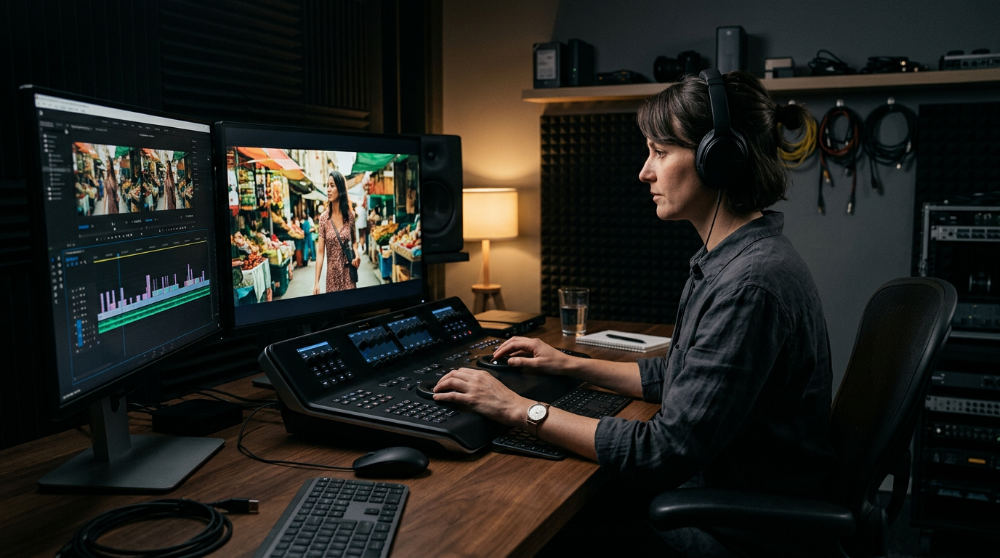
The assembly edit is the first major milestone. Raw footage is organized into a basic narrative structure. During this stage, the editor selects the best takes and lays them out according to the storyboard. It is a rough version of the story. We focus on pacing and flow rather than visual perfection. This allows the brand to see the "skeleton" of their video and make foundational changes before the more time-consuming work begins.
Visual Effects (VFX) involve integrating computer-generated imagery into live-action footage to enhance the storytelling. This can range from subtle cleanup, like removing a stray power line from a shot, to complex 3D animations that explain a product’s inner workings. Color grading significantly impacts the mood and atmosphere. It ensures a cohesive professional appearance across all shots. According to Gigantic Studios, color correction and grading are vital for establishing the emotional tone of a piece.
Sound design and Foley work add auditory layers that bring the visual world to life through realistic texture and music. Foley is the art of reproducing everyday sound effects, like the rustle of a jacket or the clink of a glass, which are often lost during primary filming. When combined with a professional score and clean dialogue, these elements create an immersive experience. Our Post-Production Services focus on these fine details to ensure the final export meets the highest standards of modern cinema.
Comparing Commercial and Social Workflow Timelines
TV commercial production requires higher technical standards and longer lead times for broadcast compliance. Because these ads must meet strict network specifications for audio levels and color space, the review process is often more rigorous. Social media branding content often prioritizes speed and iterative versions for different platform ratios, such as vertical formats for TikTok or square crops for Instagram.
The following table highlights the general differences between these two common project types:
| Feature | TV Commercial | Social Media Video |
|---|---|---|
| Timeline | Standard Commercial Schedule | Rapid Social Schedule |
| Audio Mix | Professional Surround/Stereo | Stereo/Mono |
| Color Grade | High-Dynamic Range | Standard Web-Ready |
| Resolution | 4K/UHD Broadcast | Vertical/Square/16:9 |
A commercial might stay in the grading suite for several days to achieve a specific cinematic look. Conversely, a social media campaign might require fifty different versions of the same ad, each with unique captions or call-to-action overlays. Regardless of the platform, the goal remains the same: maintain the brand’s visual identity. We often work as a TV commercial production company to help brands navigate these complex delivery requirements while keeping their creative vision intact.
Modern Tools and AI Integration
We leverage AI for commercial development to accelerate pre-visualization and streamline post-production delivery. Modern AI tools allow us to quickly generate concept art or mock up complex VFX sequences before we even arrive on set. This reduces uncertainty. It helps our clients visualize the "twist" we plan to bring to their story. During the editing phase, AI can also assist with tedious tasks like automated transcription or initial color matching. This frees up our artists to focus on high-level creative decisions.
High-end video editing and branding often rely on professional software suites to manage complex assets. Integration with a wider ecosystem allows for a fluid transition between motion graphics, sound design, and the final edit. Cloud-based post-production facilities and workflow strategies allow our team to collaborate with marketing agencies and corporate brands across the country. Modern workflows leverage digital review platforms to facilitate collaboration across different geographic regions.
Specialized vertical workflows ensure that the post-production needs of different industries are met with precision. For instance, the editing style for a law firm often emphasizes clarity, authority, and trust through stable shots and clean graphics. Food styling and restaurant visual storytelling require high-energy cuts, macro cinematography, and vibrant color palettes to stimulate the viewer’s appetite. We tailor our technical approach to match the industry-specific expectations of your audience.
Managing Risks and Avoiding Workflow Bottlenecks
The pre-production phase is often the most time-consuming. It requires careful research and scriptwriting to ensure a cohesive story with a clear beginning, middle, and end, according to DIGISTARS. Skipping this step or rushing through it almost always leads to problems during production and post production. Without a solid script, the editor is left trying to "find" the story in a pile of unrelated footage. This can double the time spent in the edit suite.
Skipping Foley or detailed sound design can result in a "hollow" feeling that undermines the brand’s perceived quality. A video might look beautiful, but if the audio feels thin or disconnected, the viewer will subconsciously perceive the brand as less professional. Similarly, remote collaboration requires robust video editor post production strategies to maintain version control and speed. Without a clear system for handling revisions, projects can quickly descend into "creative drift," where the original goals of the campaign are lost under a mountain of conflicting feedback.
To ensure a smooth process, brands should:
- Lock the script early. Changes made during filming are expensive (changes made in the edit are even more so).
- Define the technical specs.
- Budget for sound. Never treat audio as an afterthought, it is 50% of the viewing experience.
- Trust the workflow. Follow the essential stages of movie post-production to ensure nothing is missed.
Building Visionary Stories in San Diego and Beyond
From our San Diego roots, we provide national reach for corporate brands and marketing agencies seeking premium visual stories. The journey from raw footage to a final color-graded frame is a partnership between logical execution and creative intuition. By blending a structured production phase with a visionary post-production workflow, we help businesses tell stories that aren’t just seen, but remembered.
To begin your own collaborative journey, consult with experts who understand both the technical and emotional aspects of film. We can revitalize existing footage or build a new campaign from the ground up. We are here to provide the creative twist your brand needs. To take the next step in your creative journey, fill out the form at https://pretzellogicproductions.com/contact-us/ to share your vision with our team today.
Frequently asked questions
What is the difference between video production and post production?
Production is the act of filming and capturing raw footage on set. Post-production is the subsequent process of editing, color grading, and adding sound or visual effects. Production focuses on logistical execution and capturing the "logic" of the script, while post-production focuses on the creative assembly and final polish of the story.
Do you work with brands across the country?
Yes, we serve corporate brands and marketing agencies across the entire United States from our San Diego studio. We utilize cloud-based collaboration tools to bridge the distance, allowing for remote review and approval cycles. This ensures that national clients receive the same high-level creative input as our local partners.
How long does it take to edit a professional marketing video?
Timelines for professional marketing videos vary based on the project scope and creative requirements. The exact duration depends on the volume of raw footage, the complexity of visual effects, and the number of revision rounds required. Clinics and production houses that offer high-end commercial services often employ extended schedules to ensure broadcast-quality grading and sound mastering.
What does production and post production involve?
Production involves casting, location scouting, filming, and technical site management to capture raw assets. Post-production involves assembly editing, VFX, color grading, sound design, and final delivery. Together, these phases represent the total transformation of a conceptual script into a finished, professional visual product ready for distribution.
What is included in premium post-production services?
Premium services include high-end color grading, custom sound design, and professional Foley work to enhance audio quality. They also involve advanced motion graphics and specialized AI-integrated delivery for faster turnarounds. A primary focus of premium workflows is ensuring total visual and auditory consistency across all of a brand’s media platforms.