Last updated November 15, 2026
Post audio production is the final stage of video creation where sound is edited, enhanced, and mixed to create a professional auditory experience. This multi-layered process includes dialogue cleanup, sound design, Foley, and final mixing to ensure your brand’s message is clear, emotionally resonant, and technically compliant for broadcast or digital platforms.
Key takeaways
- Extended Timelines. Professional post-audio workflows typically involve several weeks of production from initial assembly to final delivery.
- Broadcast Compliance. Adhering to established loudness standards is a standard requirement for broadcast TV commercials to ensure audio consistency.
- Emotional Impact. Sound design transforms corporate messaging into cinematic experiences, significantly increasing the emotional resonance of the content.
- Remote Pipelines. Digital review pipelines allow brands to collaborate remotely from San Diego to the East Coast in real-time.
- Vocal Restoration. ADR and AI-assisted cleanup can rescue low-quality location audio without losing the human "twist" of the performance.
The Logic Behind Professional Sound Landscapes
Post audio production establishes a professional sound landscape by balancing dialogue clarity with immersive textures to build brand authority. This phase is more than just "fixing" sound. It serves as the sonic identity that defines how audiences perceive your brand. At Pretzel Logic Productions, we ensure technical precision never stifles the creative vision. We are a San Diego-based full-service video production company specializing in logical workflows and creative stories "with a twist."
In the marketing space, high-end brand storytelling often utilizes spatial audio technologies to create immersive 360-degree experiences for headphone listeners. This technology is now a standard for brands that want to stand out on social platforms. Mobile users demand a theater-like experience. Our San Diego hip film house culture brings a visionary edge to corporate marketing teams nationwide through remote-ready review dashboards. Distance isn’t a barrier to high-quality branding production. Our pipeline is built for fluid collaboration regardless of location.
Essential Prerequisites, Timeline, and Investment
A successful audio workflow begins with high-quality raw audio files, a locked picture edit, and a clear brand voice guide for vocal direction. Before we touch the mixing board, we ensure the "picture lock" is final. This prevents costly rework where audio sync is lost due to late-stage visual edits. In the industry, a standard post-production workflow generally takes between 2 to 6 weeks. It depends on the complexity of sound design and Foley requirements.
Budgeting for these services depends on the need for licensed music, custom Foley recording, and the number of final delivery formats required. Modern pipelines allow for remote service. Marketing directors can provide feedback via digital collaboration tools regardless of their time zone. This collaborative spirit ensures the final product aligns perfectly with the initial creative brief.
| Feature | Standard Brand Video | High-End TV Commercial |
|---|---|---|
| Average Timeline | 2–3 Weeks | 4–6 Weeks |
| Audio Format | Stereo / 2.0 | Dolby Atmos / 5.1 / Stereo |
| Vocal Tech | AI-Cleanup & EQ | ADR & Studio Overdubs |
| Compliance | Platform Specific | ATSC A/85 & EBU R128 |
1. Organize the dialogue and vocal tracks
Dialogue editing organizes vocal tracks by matching all spoken lines in a commercial to ensure tonal consistency across different takes. Even if the actor’s performance was perfect on set, the microphone placement or room acoustics might vary slightly between shots. Professional dialogue editing ensures the audience never notices these transitions. It keeps them immersed in the story.
At Pretzel Logic, our post-production process utilizes audio tools for dialogue restoration. We remove unwanted background noise while preserving natural nuances. This isn’t about making a person sound like a robot. It is about stripping away interference so the human voice shines through. To ensure the highest quality, clinics and studios often use ADR (Automated Dialogue Replacement). This is the process where actors re-record lines in a studio to replace low-quality location audio. Specialized workflows for legal or medical videos ensure that complex terminology remains crystal clear and authoritative.
2. Layer in texture with Foley and sound design
Foley and sound design add texture by creating or capturing sound effects that are integrated into media during post-production to enhance the overall auditory quality. While a stock sound might work for a quick social clip, a premium brand video needs specific sounds to feel authentic. This organic layering is what makes a video feel expensive. Good sound design creates an emotional atmosphere. It distinguishes between rhythm-focused music and texture-focused ambience.
For restaurant commercials, we focus on appetite appeal by enhancing the crisp sounds of cooking. Think of the sizzle of a steak. The specific pop of a cork. The scrape of a knife. These details drive consumer action. Our revitalization focus allows us to breathe new life into a brand’s existing footage. We replace flat audio with modern, dynamic soundscapes. By applying new post-production editing services, we can make five-year-old footage look and feel like it was shot recently. For specialized studio space or high-end soundstage needs, many producers look to Lightz Out Studios to capture the perfect raw elements.
3. Execute the re-recording mix
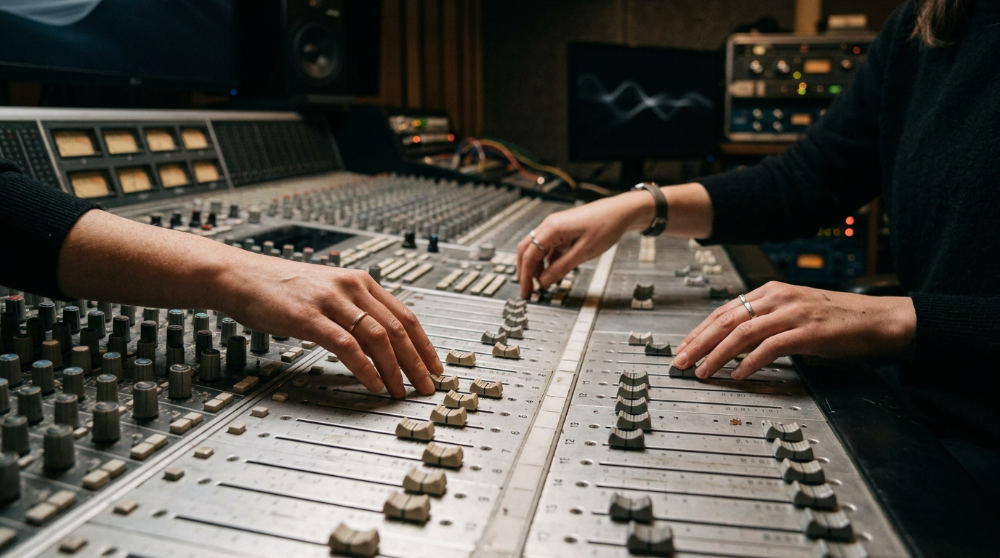
The re-recording mix executes a final balance between dialogue, music, and sound effects to ensure the most important message always takes center stage. During the mix, we prioritize how audio post-production impacts mobile versus TV perception. We adjust the mix to sound clear on smartphone speakers and home theaters alike. Whether a customer sees your ad on a 4K TV or scrolls through a muted social feed with captions, the impact remains high.
Audio sweetening adds a final layer of professional polish. We use subtle reverb or compression. We use compression to make the narrator’s voice feel larger than life. You can check our complete guide to sound design to understand how frequency balancing prevents listener fatigue in longer corporate videos. By carving out space for every element, we ensure the viewer stays engaged from the first frame to the final logo animation.
4. Verify technical loudness standards
Verifying technical loudness standards ensures that every TV commercial production maintains consistent volume levels across broadcast networks. You have likely experienced the frustration of a commercial being twice as loud as the show you were watching. Modern standards were created specifically to end this. Professional post-production teams perform a final technical audit to ensure compliance with Loudness Standards (EBU R128, ATSC A/85). These are technical regulations ensuring commercials maintain consistent volume levels.
Failing to meet these standards can result in your commercial being rejected by broadcasters. This phase is crucial for marketing video production that spans multiple platforms. It covers local TV and national streaming services. Industry-standard workflows provide specific masters for each platform to ensure your brand sounds consistent everywhere. Using Audio Post-Production Managed Pipelines ensures these technical hurdles are cleared long before your air date.
Comparing Audio Post-Production Components
Understanding the distinction between editing and mixing is vital for managing your post-production workflow. Dialogue editing focuses on the clarity and flow of speech. It ensures the words are intelligible and the pacing feels natural. Sound design focuses on the emotional environment. It uses texture and tone to make the viewer feel a specific way. Think of the excitement during a tech launch.
The re-recording mix is where all these elements are glued together into a cohesive, standardized output. Without this step, even the best dialogue and sound effects will clash. For brands reaching diverse audiences, partnering with experts can ensure sound design resonates across different cultural contexts. Certain sounds or musical cues carry different weights in different regions. By coordinating these efforts, we ensure the sonic landscape supports the visual narrative perfectly.
Common Pitfalls in Brand Audio
Common pitfalls in brand audio include relying on generic stock effects and ignoring mobile-specific sound challenges. Using only stock sound effects can make a premium brand feel generic. Custom Foley is often the missing twist that provides authenticity. Neglecting the mobile experience often results in dialogue that is buried by background music when played through small phone speakers. Managed pipelines must include checks for mono-compatibility and small-speaker clarity.
Skipping the dialogue cleanup phase leads to inconsistent volume levels. These distract the viewer from the marketing message. Furthermore, ignoring broadcast loudness standards can lead to costly delays during the final delivery phase of a TV ad campaign. Stations will flatly reject non-compliant files. Sound post-production ensures video sounds equally clear on TV, in the cinema, and on a mobile phone.
Frequently asked questions
What are the 5 stages of post-production?
The five stages are logging and assembly, the rough cut, the fine cut (picture lock), audio post-production (sound design and mixing), and color grading. Audio post-production typically happens simultaneously with or immediately after the picture lock stage to ensure all sounds are perfectly synced to the final timing of the visual edits.
Do you work with brands across the country for audio post?
Yes, Pretzel Logic Productions uses collaborative digital pipelines to serve clients from San Diego to the East Coast. Production companies utilize cloud-based review tools so marketing directors can leave time-stamped feedback on audio mixes from any location, ensuring that expertise is accessible to corporate teams nationwide without the need for travel.
How long does post-production take for a standard brand video?
Typically, a professional post-production workflow takes 2-6 weeks from initial assembly to final audio delivery. This timeline accounts for revisions, sound design layering, and final technical compliance checks. More complex projects involving custom Foley or ADR may lean toward the six-week mark, while simpler digital-only spots can move faster.
What is the difference between sound editing and sound mixing?
Sound editing is the process of collecting, cutting, and placing individual audio elements like dialogue and effects to build the story’s foundation. Sound mixing is the final step of balancing those elements’ volume, frequency, and placement to create a unified experience. Think of editing as choosing the ingredients and mixing as seasoning the dish.
Can you revitalize existing footage with new sound design?
Yes, post-production services include the revitalization of legacy footage through modern color grading and audio sweetening. New sound design can make 5-year-old footage feel relevant and high-impact for modern marketing campaigns by removing outdated music beds and replacing them with cinematic spatial audio and crisp, contemporary Foley effects.
If you are ready to transform your brand’s message into a cinematic experience that sounds as good as it looks, we are here to help. You can contact our team to start a project consultation by filling out the form at https://pretzellogicproductions.com/contact-us/. Whether you need a national TV spot or a revitalized corporate video, we provide the technical logic and creative twist your story deserves.