Last updated November 14, 2026
A 3d animation pipeline is a standardized sequence of technical and creative steps, divided into pre-production, production, and post-production, used to create three-dimensional digital assets. This workflow ensures that complex tasks like modeling, rigging, and rendering occur in a logical order to prevent costly errors and maintain visual consistency.
Key takeaways
- Pre-production establishes the campaign strategy. This phase creates the visual blueprint through storyboarding and concept art to define the project’s vision before technical work begins.
- Rigging must precede animation. A digital skeleton must be finalized and bound to the mesh to prevent geometric breaking during the movement phase.
- Rendering is the most time-intensive stage. This technical process converts 3D data into 2D cinematic frames, often requiring significant computing power and time.
- AI integration accelerates development. Using AI in modern workflows helps speed up pre-visualization, allowing for faster client feedback on concept art.
- Internal pipelines prevent data leaks. Keeping planning, production, and post-production under one roof ensures file compatibility and creative synergy.
The Logical Core of a 3D Animation Pipeline
A 3d animation pipeline is the technical framework guiding a project from a raw idea to a polished video. Think of it as a specialized assembly line. Every station relies on the integrity of the one before it. If the foundation is weak, the entire structure eventually collapses under its own technical weight. 2D workflows rely on flat layers. 3D is a spatial endeavor. It requires a precise order of operations to avoid broken imports or corrupted data.
The workflow breaks down into three distinct phases. Pre-production handles the strategy. Production builds the digital DNA. Post-production refines the final output. According to CADA, a team with great art but no pipeline loses days to broken imports and unfindable files. A rigid structure is non-negotiable for high-stakes commercial work.
At Pretzel Logic, we apply our Twist to this process by blending high-level creative concepts with rigid technical logic. We treat the pipeline as a living document. No file is lost. No asset is mismanaged. This rigorous method allows our San Diego team to keep the creative spark alive while meeting the strict mathematical requirements of a 3D environment. We prioritize logic so the art can shine.
Pre-Production: The Strategic Blueprint
Everything starts with mastering pre-production video planning, where we translate your brand’s "why" into a visual script and storyboard. This phase sets the boundaries. Concept art and character design define the aesthetic constraints before digital sculpting begins. Without this blueprint, you risk entering the expensive production phase without direction. That leads to revisions that can derail a project.
We use AI video production tools during this phase to generate rapid pre-visualizations. You see the vision and spatial flow of a scene before we commit to high-cost 3D production. By locking in camera angles and timing early, we prevent late-stage revisions that are often impossible to fix once the 3D assets are built.
Strong planning ensures the brand story stays authentic. If a San Diego biotech firm needs to visualize a microscopic process, we spend this time ensuring the scientific accuracy of the concept art. This groundwork means the technical team isn’t guessing when they start modeling. We prefer to sweat the details now so we don’t bleed time later.
Modeling and Texturing: Building Brand DNA
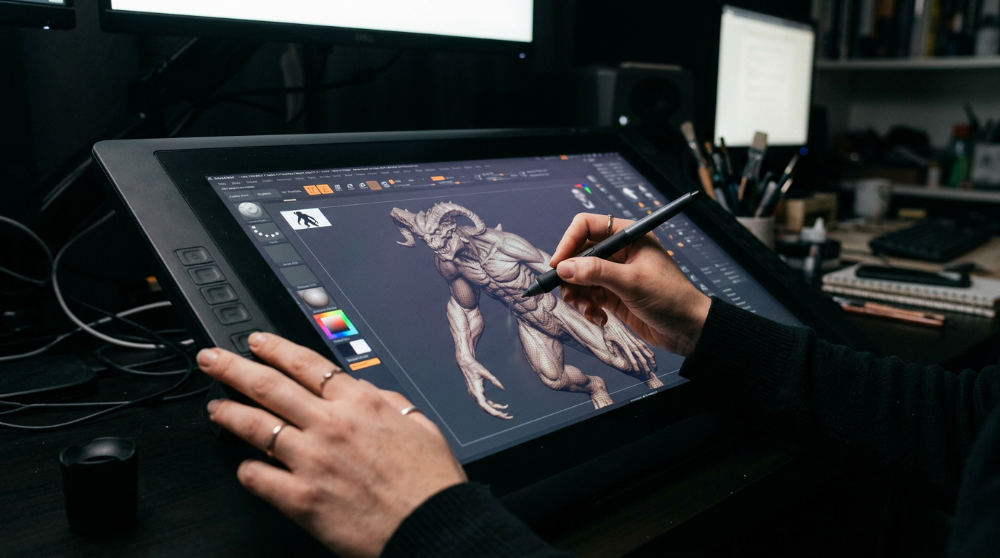
3D modeling is the process of creating a mathematical representation of an object. It is the physical foundation of your digital assets. During this stage, artists build the mesh (a collection of points and edges that form a 3D shape). A model that looks good isn’t always functional. We often use retopology to simplify complex geometry. This ensures models move smoothly without crashing the rendering engine or slowing down the animation workflow.
Once the shape is finalized, we move to texturing. This involves UV mapping, the process of projecting a 2D surface detail onto a 3D shape. It is like unwrapping a gift box to see how the flat paper fits around the three-dimensional object. This is how we add colors, specific textures, and brand-accurate materials.
Maintaining brand consistency across these assets is vital for long-term campaigns. If you are developing a recurring brand character, the modeling and texturing must be precise enough to work across various lighting setups. High-fidelity assets created during the explainer video production process can be archived and reused. They provide a long-term return on the initial investment.
Rigging and Animation: Bringing the Twist to Life in San Diego
Rigging is the process of building a digital skeleton. Without a proper rig, a model cannot be posed or moved. This stage involves placing joints and defining how the mesh deforms when those joints move. Skinning then binds the 3D mesh to these bones. As CADA notes, you cannot skin a mesh that is still changing shape, and you cannot animate a character before it has a rig.
Our animators then use keyframing or motion capture to breathe life into the assets. We ensure the movement matches the emotional tone of the brand story. A high-energy commercial might need exaggerated, snappy movements, while a professional law firm presentation requires subtle, fluid transitions. This phase is where the Pretzel Logic Twist occurs. We use logical workflows to allow for creative pivots that do not break the budget or the technical files.
When we handle animation production, we look for ways to make digital characters feel human and relatable. Whether it is a head tilt or the weight behind an action, these details transform a digital asset into a storyteller. Keeping the rigging and animation teams in constant communication ensures the creative vision is never limited by technical oversights.
Lighting and Rendering: Creating Cinematic Quality
Rendering is historically the most time-intensive stage. The computer must calculate millions of light interactions, shadows, and reflections for every single frame. This is the technical alchemy that turns a gray, geometric scene into a lush, cinematic image. Depending on the complexity of the scene, rendering even a short sequence of animation can take a significant amount of time per frame.
Lighting designers use virtual setups to mimic real-world studio environments. They place key lights, fill lights, and rim lights to highlight the model’s form. This makes the 3D scene feel tangible. In a modern Comprehensive to Animation Pipelines, we often leverage game engines like Unreal Engine for real-time rendering. This technology allows us to see lighting changes instantly, cutting down wait times and allowing for more creative experimentation.
If a client wants to see a product in a sleek, midnight-blue environment, traditional workflows might require an overnight render just to see the result. By using real-time engines, we can adjust the lighting on the fly during a review session. This ensures the final output meets the exact aesthetic requirements without wasting days of processing time.
Post-Production and National Collaboration
Compositing is the final assembly stage where backgrounds, characters, and effects merge into a single image. According to CG Spectrum, this is where all individual elements are layered together. This is also where color grading occurs, ensuring the video has a consistent look that aligns with your brand’s visual identity.
Pretzel Logic serves brands nationwide from our San Diego hub using cloud-based tools that allow for real-time collaboration. Our process enables clients in New York or Chicago to review 3D iterations as if they were sitting in our studio. High-speed data transfers and collaborative review platforms ensure that distance never compromises quality.
Great video needs a great strategy. We sometimes partner with specialized teams like InnoVision Marketing Group to ensure that digital media strategy and specific aesthetic needs, like professional food styling, align with the technical 3D output. This integrated approach ensures the animation doesn’t just look good. It performs in the market.
Navigating Technical Limits and Pipeline Leaks
The biggest risk in 3D production is a pipeline leak. This happens when poor communication between creative directors and technical animators leads to incompatible files. For example, if a model is textured before the UV mapping is finalized, the textures will appear distorted once movement begins. Keeping planning, production, and post-production under one roof is the best way to prevent these failures. We prefer full-service control because it eliminates the finger-pointing that happens when assets move between too many hands.
The 3D process is complex, but it offers massive flexibility. 3D assets can be repurposed for future marketing campaigns if the initial pipeline was built with high-fidelity, clean topology. An asset created for a television commercial today can be adapted for an augmented reality app or a social media campaign next year. This longevity makes the initial investment highly cost-effective for growing brands.
If you are ready to bring your vision to life with a logical, high-end approach, our team is ready. We combine technical precision with creative flair to tell stories that resonate. Learn more about our process by exploring our motion graphics animation guide to see how these techniques apply to different video styles.
If you have a story that needs high-end visuals, take the next step. Reach out to us at Pretzel Logic Productions to start a conversation by filling out the form at https://pretzellogicproductions.com/contact-us/. Our office is located at 5961 Kearny Villa Rd, San Diego, CA 92123.
FAQ
What are the 3 stages of a 3D animation pipeline?
The three stages are pre-production (planning, scripting, storyboarding), production (modeling, rigging, animating), and post-production (rendering, compositing, sound design).
How long does the 3D animation process take?
Production timelines for 3D animation typically vary based on complexity, ranging from several weeks for motion graphics to several months for high-end commercials.
Why is the 3D pipeline important for brands?
It ensures visual consistency, prevents technical errors that waste budget, and allows digital assets to be reused across multiple marketing channels.
Can AI be used in the 3D animation pipeline?
Yes, AI is currently used to speed up pre-visualization, automate certain rigging tasks, and assist in generating high-resolution textures.
What is the difference between 2D and 3D pipelines?
A 3D pipeline requires spatial mathematical steps like rigging and UV mapping that are not present in 2D workflows, making 3D more complex but also more versatile for asset reuse.