Last updated November 12, 2026
Post production steps in filmmaking involve a multi-stage workflow including file organization, video editing, sound design, color grading, and visual effects. This technical phase requires a dedicated window of time to ensure quality. It is the longest stage of production. It often requires twice the duration of the initial shoot to ensure broadcast-quality delivery.
Key takeaways
- Extended Timelines. Post-production typically requires a multi-week timeline for professional commercial projects to ensure a high-quality finish.
- Workflow Duration. The process is generally the longest phase of filmmaking, often doubling the length of the production shoot.
- AI Efficiency. Strategic use of AI video production can reduce turnaround time for routine masking and noise reduction tasks.
- Production Polish. Color grading and sound design are the critical factors that differentiate a basic edit from a broadcast-ready TV ad.
- Strategic Framing. A structured "Logical Collaborator" framework ensures creative twists remain grounded in brand strategy.
Prerequisites and Post-Production Resources
Before the first cut is made, you must have high-resolution raw footage, organized metadata, and a locked script or storyboard. Success in the edit suite is often determined by the quality of your pre-production planning phase. Shots are mapped out here to ensure you have the coverage needed for a compelling narrative. If the files are disorganized or the vision is unclear, the technical phase will stall before it begins.
A professional post-production setup requires significant resources. You will need professional Non-Linear Editors (NLEs) like Premiere Pro or DaVinci Resolve, plus dedicated audio workstations for complex sound mixing. The estimated time for a polished project varies depending on the complexity of motion graphics and the speed of stakeholder feedback loops.
Costs for these services are variable. Specialized tv commercials production requires higher technical overhead and more rigorous quality checks than social-first content. Because post-production is generally the longest phase of the filmmaking process, often taking twice as long as the actual shoot, budgeting for veteran editors and high-end hardware is a non-negotiable for brands seeking national-quality results. We always recommend prioritizing a veteran editor over cheap gear.
The Logical Post-Production Workflow
The post-production workflow is the sequence of technical and creative events that happens after the cameras stop rolling to transform raw files into a finished story. It is not just about cutting clips. It is about refining a message until it aligns perfectly with your brand’s identity and the "twist" that makes your content memorable.
Pretzel Logic Productions is a full-service video production house based in San Diego serving brands nationwide. We highlight the collaboration between logical workflows and high-level creative concepts to deliver results. Our team integrates contemporary tools like AI Video Production, which is the procedure of utilizing artificial intelligence tools to streamline or generate commercial video content. In the industry, AI can dramatically speed up rotoscoping or audio cleanup. This allows human creators to focus more on the storytelling.
Project requirements shift depending on your end goal. A commercial intended for a digital feed has different technical hurdles than one destined for a national broadcast. Standardized sequences maintain quality across these formats. They prevent unmanaged changes to the project plan, ensuring every frame is optimized for its specific destination.
Post-Production Requirements Comparison
The following table outlines the technical and procedural differences between local marketing content and high-stakes broadcast commercials.
| Feature | Marketing Video Production | TV Ad Production |
|---|---|---|
| Timeline | Multi-Week | Multi-Month |
| Audio Spec | Stereo / Web Standards | LUFS / Broadcast Standards |
| Color Space | Rec.709 (Digital) | Rec.2020 / P3 (Broadcast) |
| Revisions | Rapid / Social-optimized | High-rigor / Legal clearance |
1. Organize and ingest your media
Effective post production steps in filmmaking begin with transferring all raw footage to a secure RAID or cloud server and creating a redundant backup. You cannot build a beautiful house on a shaky foundation. Likewise, you cannot edit a commercial if you are hunting for lost files. Every clip should be labeled with descriptive metadata and keywords so the editor can find specific takes instantly.
For national brands, centralized file structures allow production teams to collaborate with stakeholders across different regions. By tagging clips by scene, take, and performance quality during the ingest phase, teams can minimize downtime. This organization allows post-production editing services to transition efficiently into the creative phase.
2. Assemble the rough cut
The "Assembly Cut" is the initial Video Editing stage. This is the primary process of selecting and joining shots to create a cohesive narrative. At this stage, do not worry about pretty transitions or perfect color. The goal is to ensure the story makes sense and the pacing feels right. You are essentially building the skeleton of the film to see if it stands on its own.
This is where the "Concept to Screen" workflow truly begins. We verify that the initial storyboard beats are present and functioning. We look for the emotional beats and ensure the message is clear. If a brand’s core value proposition isn’t landing in the rough cut, no amount of visual effects will save it later. It is the rawest form of the project. It provides a baseline for all future creative "twists."
3. Refine the edit into a fine cut
Once the assembly is approved, pacing is tightened and narrative "twists" are implemented. We often use non-linear storytelling techniques to surprise the viewer and boost retention. This is where the fine cut takes shape. We look for opportunities to subvert expectations, perhaps through an unexpected jump cut or a rhythmic sequence that keeps the audience leaning in.
Pretzel Logic focuses on balancing technical rigor with creative experimentation throughout this process. Once the sequence of shots is finalized and approved by the brand, the edit reaches "Picture Lock." This is a critical milestone in our TV commercial production company workflow. It means no further timing changes will occur. It allows the specialized teams for sound and color to start their work on a stable timeline.
4. Integrate motion graphics and VFX
Motion Graphics are a specific product of animated digital footage which creates the illusion of motion or rotation. In branding video production, these elements must align perfectly with your established style guide. If your brand uses a specific font and color palette, the motion elements should feel like an extension of your existing visual identity.
We also offer a specific process called Revitalization. This involves taking legacy footage, perhaps an old interview or a historical warehouse tour, and updating it with modern graphics and overlays. This breathes new life into existing assets. It makes them viable for high-end campaigns without the cost of a new shoot. For high-impact visual storytelling, you can view several premium post production examples that demonstrate how these layers transform a simple video into a cinematic experience.
5. Perform professional color grading
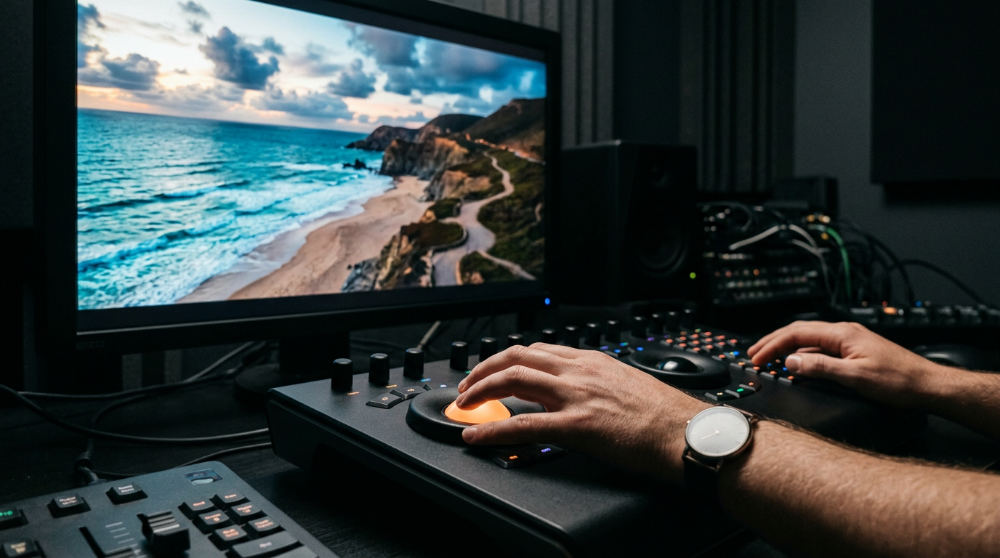
Color grading is the creative process of enhancing or altering the color of a video to evoke a specific mood or ensure consistency. Different cameras and lighting setups can create variations in skin tones or background hues. Professional grading fixes these discrepancies. It is the difference between a video that looks like "footage" and one that looks like a "film."
In professional workflows, a distinct color grade is applied to reflect the brand’s emotional tone. A great example of this is the Casino Beach Bar branding spot. Rhythmic editing and warm, vibrant color grading were used to translate the atmosphere of a physical San Diego-style location into a digital experience. Commercial projects generally adhere to broadcast-quality standards to ensure signal integrity across various screens.
6. Layer the sound design and foley
Sound design is the art of creating the auditory environment of the film, using music, voiceovers, and Foley to ground the visuals. Foley refers to the reproduction of everyday sound effects (like footsteps, the clinking of glasses, or the rustle of clothes) added in post-production to enhance realism. These layers are what make a commercial feel "expensive" and immersive.
Sound cues are strategically used to draw the viewer’s attention to specific products or emotional moments. For brands operating on a national or franchise scale, it is often helpful to consult experts like Innovisionmarketinggroup that understand how public relations and visual branding must work in harmony. The audio must resonate with the target audience’s expectations, whether it is a high-energy retail ad or a somber corporate manifesto.
7. Mix audio for final delivery
The final step is to balance the levels of all audio tracks to ensure dialogue is crisp and clear over the music and effects. Audio mixing is distinct from sound design. While design is about choosing the sounds, mixing is about their volume, frequency, and placement in the stereo or surround field. High-end productions often require multiple mixes, such as surround sound for television and standard stereo for mobile platforms.
Modern editing houses often utilize AI-assisted mastering tools to ensure consistent loudness across an entire multi-platform campaign. This prevents the jarring "volume jump" that occurs when moving from one video to the next. Once the mix is finalized and combined with the graded picture and graphics, the project is rendered out in the required formats. We produce everything from 4K broadcast files to vertical social media cuts, ready for the world to see.
Common Mistakes in Post-Production
The most frequent error brands make is rushing the timeline. When you attempt to compress the production window, you often sacrifice the fine-tuning stages like color grading and sound design that provide the "broadcast-ready" finish. Another common pitfall is failing to secure a "Picture Lock" before moving to sound and color. If you change the timing of a shot after the sound editor has finished, they must redo their work. This leads to delays and increased costs. Finally, many companies neglect file organization at the start. This leads to a "digital junk drawer" that slows down the creative process and makes future updates nearly impossible.
Frequently asked questions
What are the stages of post-production?
The process consists of editing, sound design, visual effects, color grading, and final delivery. Each stage builds upon the last, moving from structural organization to aesthetic refinement. By following a standard post production checklist, we ensure that the creative "twist" is supported by technical excellence.
How long does post production take?
Standard commercial projects typically require several weeks for a full polish. The actual duration depends on factors like the volume of motion graphics and the number of stakeholders involved in the review process. Post-production is generally twice as long as the filming phase.
Do you work with brands across the country for post-production?
Yes, Pretzel Logic Productions serves brands nationwide from our San Diego creative hub. Remote collaboration tools allow stakeholders to review edits and provide feedback, ensuring national-scale projects benefit from professional creative energy.
How does AI video production change the traditional post-production steps?
AI streamlines tedious tasks like rotoscoping, noise reduction, and initial transcription. This automation doesn’t replace the editor; rather, it allows them to spend more time on creative twists and narrative pacing rather than technical cleanup. It can notably reduce turnaround time.
Can you revitalize existing old footage during the post-production phase?
Yes, existing legacy content can be upsampled, color-corrected, and enhanced with new graphics. This process breathes new life into historical brand assets, allowing them to be integrated into modern campaigns. It is a cost-effective way to preserve brand heritage while staying current.
If you are ready to transform your raw footage into a compelling visual story that captures your audience’s attention, we are here to help. Whether you work in San Diego or run a company across the country, we can bring your vision to life with a twist by applying our professional post-production workflow to your next project. Please fill out the form to get started.
Pretzel Logic Productions 5961 Kearny Villa Rd San Diego, CA 92123