If you’re still posting photos while your competitors publish scroll-stopping video, you’re losing ground every single day. With 91% of businesses actively leveraging video in 2026, social media video production isn’t a nice-to-have — it’s the primary language your audience speaks. Yet here’s the number that should make every brand leader pause: 83% of marketers say they don’t know where to start, according to VEED’s survey of 800+ senior marketers. This is the guide for bridging that gap. Whether you’re a regional brand ready for your first campaign or a marketing director scaling video output across five platforms, you’ll leave with a clear playbook — and a framework for finding the right production partner to execute it.
Why Social Media Video Is Eating the Internet
The data isn’t subtle. 93% of marketers view video as important to their overall strategy, and 89% of businesses already use video marketing as a core pillar, per HubSpot’s video marketing statistics. Instagram, YouTube, and TikTok now top the charts for site traffic, engagement, and audience growth from video content.
But the stat that actually matters? 73% of video marketers say video is effective at reaching business goals — and short-form video delivers the highest ROI of any format, according to HubSpot’s 2024 Video Marketing Report based on 500+ marketers. Period.
You can feel the shift in every feed you scroll. Metricool analyzed over 5 million short-form videos from 582,000 accounts and found nearly 6 million short-form videos are published daily, as detailed in their 2025 State of Short-Form Video report. That’s not competition. That’s saturation. And in a saturated feed, quality is the only differentiator left.
Pretzel Logic Productions has seen this firsthand. When brands invest in professional social media video production — not the phone-on-a-tripod approach, but real cinematic craft — the engagement curve isn’t linear. It compounds. Good social media video production doesn’t just get more views. It triggers more shares, longer watch times, and a higher likelihood that a viewer converts. Video is the one content format where production value directly and measurably impacts business outcomes.
The Confidence Gap Nobody Talks About
VEED’s survey of 800+ senior marketers in the UK and US uncovered a startling disconnect. 98% of marketers say video is essential to their strategy — but only 38% feel confident creating it. More than four out of five don’t know where to start.
This isn’t a knowledge gap. It’s a capacity gap.
Most marketing teams weren’t built to produce video. They were built to write copy, design static assets, and manage campaigns. Video demands a completely different muscle: pre-production planning, cinematography, lighting, sound design, color grading, editing across multiple aspect ratios. You don’t close that gap by buying a ring light and hoping for the best. You close it by building a production pipeline — internal, outsourced, or hybrid — that matches the quality bar your audience already expects.
The Algorithm Is Already Decided
Every major social platform has rearchitected its feed around video. Instagram Reels surpassed image posts in frequency for the first time in 2024. TikTok’s entire architecture is video-native. YouTube Shorts pulls from the same gravitational center. LinkedIn added native video. Even X, the text platform, now surfaces video prominently.
This isn’t a trend cycle. It’s a platform-level bet that won’t reverse. The brands still building their social presence around static images and text posts aren’t playing a different game — they’re playing a game that’s already over.
Platform-by-Platform: What Works Where
One of the most expensive mistakes brands make with social media video production is treating every platform the same. A :15 broadcast spot does not work on TikTok. A vertical Reel does not work on LinkedIn. The platforms reward different formats, durations, and narrative structures — and your production needs to account for that before a single frame is shot.
Instagram Reels and TikTok: The Short-Form Arena
Most social platforms perform best with videos between 15 and 90 seconds, according to Hootsuite’s platform-by-platform guide. For Instagram Reels and TikTok, the sweet spot is even tighter: 15 to 60 seconds. These are hook-first platforms. If you don’t capture attention in the first 1.5 seconds, you’ve lost the viewer.
Production implications: You need punchy, vertical-first framing. Captions baked in — not auto-generated. Multiple cuts and scene changes within the first 15 seconds. Strong visual hooks. The difference between a Reel shot on a phone with decent lighting and a Reel shot with professional cinematography and color grading is the difference between “scrolled past” and “watched twice and shared.”
Consider shooting your primary footage in 4K at 16:9 with a professional crew, then cutting down platform-specific vertical versions in post. You get one production day, three months of content — Reels, TikToks, Shorts, and even paid social cutdowns — from a single shoot.
YouTube: The Long-Form Powerhouse
YouTube is where depth lives. Brand stories, case study films, product deep-dives, founder interviews — content built to be watched, not scrolled past. YouTube also feeds Shorts now, so a single production day can generate both your long-form brand film and a dozen short-form cutdowns for Shorts distribution.
For YouTube, production quality carries disproportionate weight. A poorly lit talking-head video with bad audio gets abandoned in under 10 seconds. A beautifully shot and mixed brand film gets watched to completion, linked in articles, embedded on your homepage, and used in pitch decks for years. Pretzel Logic Productions has built its reputation on exactly this kind of asset — content that does double duty as marketing and brand equity.
LinkedIn: The Professional Video Fast Track
LinkedIn video is still under-exploited. Most brands on LinkedIn post text and static images. Native video, when it appears, stands out immediately — and LinkedIn’s algorithm gives it preferential reach. The format that works best here is polished but conversational: thought leadership clips, behind-the-scenes production footage, case study summaries, client testimonial videos.
Production doesn’t need to be broadcast-grade for LinkedIn, but it cannot look sloppy. Good lighting, clean audio, and a natural delivery matter more than cinematic flourishes. Something you can capture in the same production day as your hero asset, with minimal additional setup.
Paid Social: The Spec-Driven Format
Paid social video — Facebook Ads, Instagram Ads, TikTok Spark Ads — is the most spec-sensitive format in the ecosystem. Every platform has exact requirements for resolution, aspect ratio, file size, and length, as Sprout Social’s comprehensive video specs guide lays out. Getting these wrong means your ad doesn’t run or renders poorly.
Working with a production partner who understands paid social specs from pre-production means you deliver master files that convert cleanly to every required format — no last-minute cropping disasters, no re-shoots because the safe zone was wrong. When Pretzel Logic handles a brand’s video production, every deliverable is spec’d for its destination platform before the camera rolls.
The DIY Trap: Why Most In-House Social Video Underperforms
Canva and CapCut have lowered the floor for social video production — not raised the ceiling. Yes, you can make a Reel in 20 minutes on your phone. So can everyone else. And that’s the problem.
The feed doesn’t reward effort. It rewards attention. And attention follows quality: production quality, storytelling quality, audio quality, visual quality. The bar your audience uses to judge your video isn’t the other brands in your industry. It’s the last video they watched from a creator who spent six hours editing it. Or the brand that hired a professional crew and colorist. Canva makes video creation accessible to everyone with its free video creator — and that’s exactly why the production-quality bar keeps climbing.
When a brand invests in real production — cinematography, lighting design, professional audio, color grading — the result communicates something a template never can: credibility. Authority. A brand that takes itself seriously.
What Professional Production Solves That DIY Can’t
The things that make phone-shot video feel amateurish aren’t obvious to someone who isn’t a filmmaker. But your audience feels them instinctively. Bad audio. Flat lighting. Shaky footage. A jump cut that doesn’t land. Pixelation when you scale up. Color that looks different from one scene to the next.
A professional crew fixes all of that. More importantly, they fix the thing you can’t name but your audience can: the overall sense that this video was thrown together, not crafted.
What Professional Social Media Video Production Actually Looks Like
If you’ve never worked with a production company before, the process can seem opaque. It shouldn’t be. A well-run social media video production engagement follows a clear, repeatable structure — and understanding it helps you evaluate partners and budget effectively.
Pre-Production: The Blueprint Phase
You don’t show up on shoot day and hope for the best. Pre-production is where the creative vision gets locked down: concept development, scripting, storyboarding, casting, location scouting, budget planning. This phase determines the quality ceiling for everything that follows. Cut corners here and no amount of post-production polish will save you.
Pretzel Logic’s pre-production process includes full creative strategy — not just executing a brief, but helping shape the creative direction from the start. That’s the difference between a vendor and a partner. A vendor shoots what you hand them. A partner asks why you want to shoot it and whether a different approach would land harder.
Production: Lights, Camera, Execution
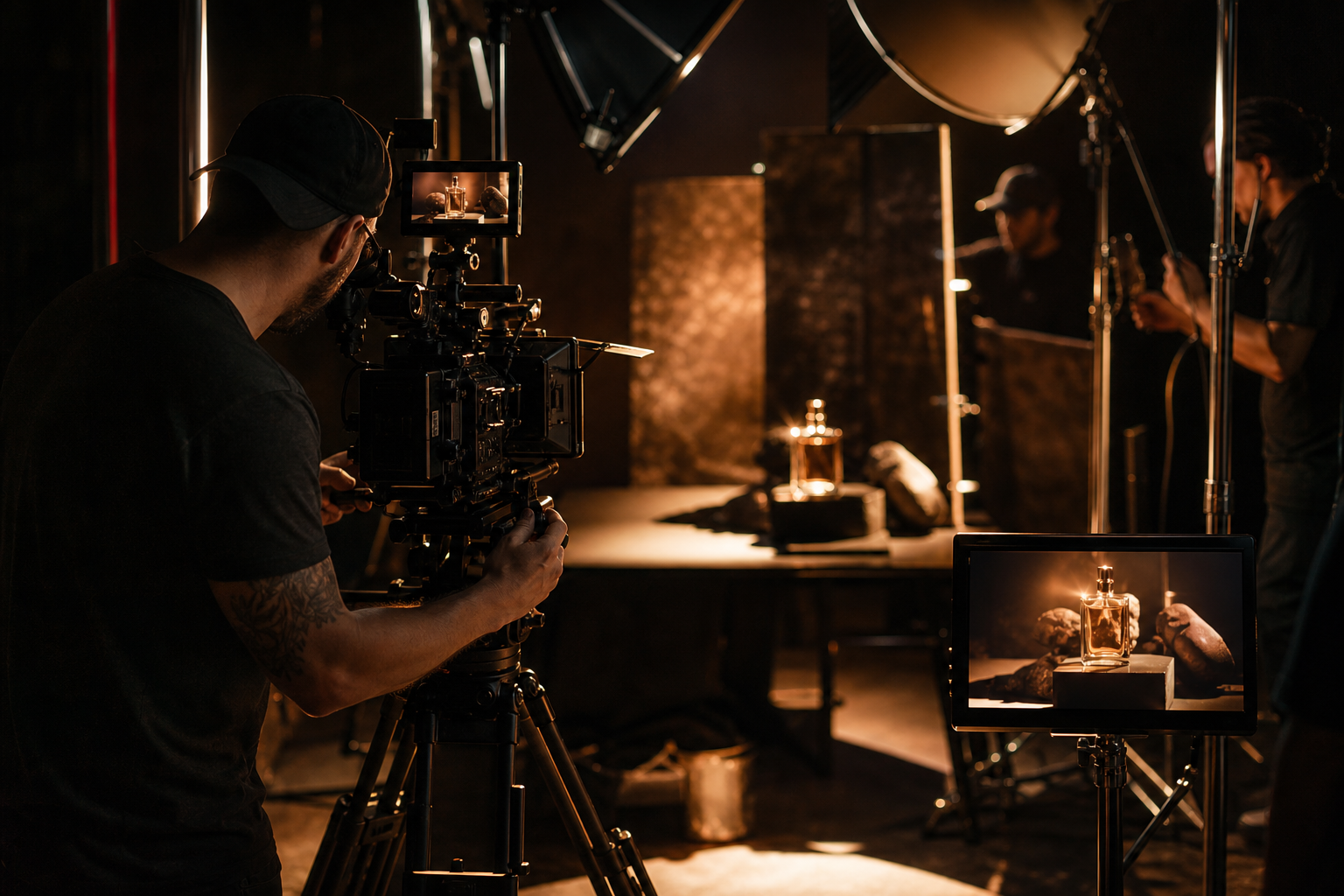
Production day is the most visible phase — and the one brands are often most nervous about. A professional set moves fast. The crew knows their roles cold. Director, cinematographer, gaffer, sound, grip — each person owns their domain. The brand team’s job on set is to provide creative feedback, not manage logistics.
One of the most efficient approaches to social media video production is shooting modularly: capture your hero footage at full cinematic quality (16:9, lit and framed for maximum impact), then grab platform-specific pickups — vertical B-roll for Reels and TikToks, close-ups for thumb-stopping hooks, alternate takes for A/B testing in paid campaigns. One production day. Content for a quarter.
Post-Production: Where the Magic Happens
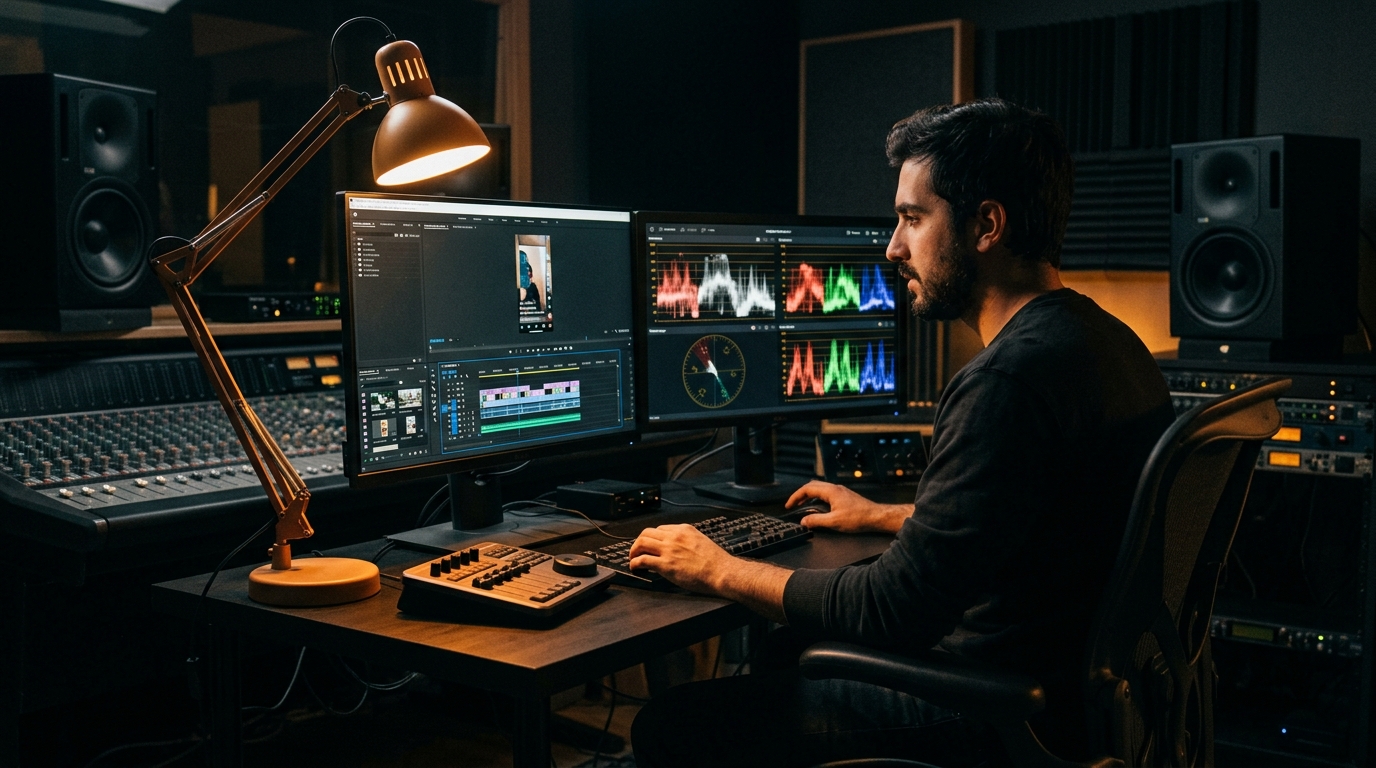
Editing, color grading, sound design, motion graphics, and final delivery — post-production is where raw footage becomes a finished film. Image Media Lab’s complete guide and Motion’s production tips underscore how much of a video’s impact lives in the post suite. The quality of your post-production determines whether your video looks like it belongs on a brand’s homepage or in someone’s forgotten drafts folder.
Color grading alone transforms flat, unprocessed footage into a cohesive visual language that matches your brand’s identity. Sound design eliminates background noise, balances levels, and adds the subtle audio cues that make video feel professional. Motion graphics add polish and emphasis. These aren’t optional extras — they separate “content” from “a brand asset.”
And here’s something most brands don’t realize: a professional post-production team can revive footage you thought was unusable. Pretzel Logic’s post-production services include footage revival — taking existing raw footage and elevating it to professional quality through grade, sound, and editing. You may already own the raw material for your best-performing social video; it just hasn’t been through the post pipeline yet.
How to Choose a Social Media Video Production Partner
Not all production companies are built the same. Some specialize in broadcast. Some do weddings. Some do corporate talking-head videos against grey backdrops. Choosing the right partner for social media video production comes down to a few specific criteria.
Look for Social-Native Thinking, Not Just Broadcast Experience
Many production companies come from a broadcast or film background. They’re great at :30 TV spots. But social video is a different animal — it’s platform-native, format-fluid, hook-driven, and often iterative across multiple versions. You want a partner who understands both worlds: the cinematic craft of professional production AND the platform-specific demands of social distribution.
Ask potential partners: “How do you approach a shoot differently if the primary destination is Instagram Reels versus YouTube?” If they don’t have a specific answer, they’re a broadcast house that will deliver broadcast files — and leave you to figure out the social cutdowns yourself.
Check the Creative Range
A partner who shoots every project the same way will make your brand look like everyone else’s. Review their portfolio. Do the videos feel distinct from each other, or do they share the same color grade, the same editing rhythm, the same shot language? The best social media video production partners adapt their visual approach to each brand’s identity rather than imposing a house style.
Evaluate Post-Production Depth
Some production companies hand off raw footage and call it done. Others handle the full post-production pipeline: editing, color, sound, motion graphics, versioning. The difference in final output quality is enormous. When you’re evaluating partners, ask explicitly: “Do you handle post-production in-house, and can I see examples of before/after color grading and sound work?”
Pretzel Logic is built for the full pipeline. From concept through final delivery, every step happens under one roof — no outsourcing, no handoff gaps, no version control chaos. The video production services and post-production suite handle everything from broadcast spots to vertical social cutdowns.
Frequently Asked Questions
How is professional social media video production priced?
Production scope varies widely — a single-day shoot with a small crew and post-production might serve a brand launching its first campaign, while a multi-day production with full creative development, casting, location work, and extensive post represents a larger investment. The most efficient approach: shoot modularly. One well-planned production day can generate assets across Instagram, TikTok, YouTube, LinkedIn, and paid social — dramatically lowering the per-asset cost compared to piecemeal shoots. Any reputable production partner builds a scope that fits your budget rather than forcing you into a package.
How long does social media video production take from start to finish?
For a typical brand campaign, plan on 2-4 weeks for pre-production (creative development, scripting, casting, location scouting), 1-3 days for principal photography, and 2-4 weeks for post-production (editing, color grading, sound design, versioning). Rush timelines are possible — but pre-production is never the place to cut corners. The quality of the planning phase determines the quality of everything that follows.
Can my existing brand footage be repurposed for social media?
Almost certainly. Raw footage from previous shoots — even footage you considered unusable — can often be revived through professional color grading, sound mixing, and re-editing into platform-optimized formats. A skilled post-production team can extract social-ready cutdowns, vertical versions, and fresh edits from your existing content library. You may already own the building blocks for your next quarter of social video.
What’s the difference between hiring a freelancer and a production company?
A freelancer brings one skillset — usually cinematography or editing. A full-service production company brings an integrated team: creative director, cinematographer, lighting, sound, post-production, motion graphics. The output quality difference is substantial because each element is handled by a specialist, not a generalist. For one-off simple videos, a freelancer may suffice. For brand-defining social media video production that needs to work across platforms, a dedicated production company delivers a level of polish and dimensional consistency that a solo operator typically cannot match.
Do I need different videos for organic social and paid ads?
Often, yes — but they can come from the same shoot. Organic social video favors storytelling and authenticity. Paid social video favors strong hooks, clear CTAs, and faster pacing. A well-planned production day captures both: hero creative that tells your brand story for organic feeds, plus hook-driven variants spec’d for paid placements. Share the paid platform requirements with your production team during pre-production and they’ll capture the right pickups to serve both channels.
What platforms should my brand prioritize for video?
Start where your audience already is. For B2B brands, LinkedIn and YouTube. For B2C, Instagram and TikTok. For broad-reach awareness, all of the above. The most efficient production strategy captures modular footage that cutdowns across every platform — so you’re not choosing one platform at the expense of others. Shoot once at full quality, version for every feed.
Your Story Deserves Better Than a Phone Camera
The data confirms what every feed already shows: social media video production is the highest-impact marketing investment available to brands in 2026. Sprout Social’s 2026 statistics and HubSpot’s trends report from 1,000+ marketers paint the same picture: the platforms reward video, audiences expect it, and the ROI is proven. But none of that matters if the video doesn’t stop the scroll.
Video that actually works — that holds attention, builds trust, and drives action — doesn’t come from a template or a DIY tool. It comes from a production team that understands your brand’s story and has the craft to tell it cinematically. At Pretzel Logic Productions, that’s exactly what we do: bring your creative vision to life with a twist, from concept through final cut, for every platform your audience lives on.