Last updated November 6, 2026
To captivate modern audiences, you need more than just a moving image. You need a strategic visual narrative. This guide explores professional motion graphics software, drawing on industry standards and technical benchmarks. We examine the toolkits that bridge the gap between creative storyboarding and high-efficiency commercial production.
1. Pretzel Logic Productions integrates professional motion graphics with a unique logical workflow.
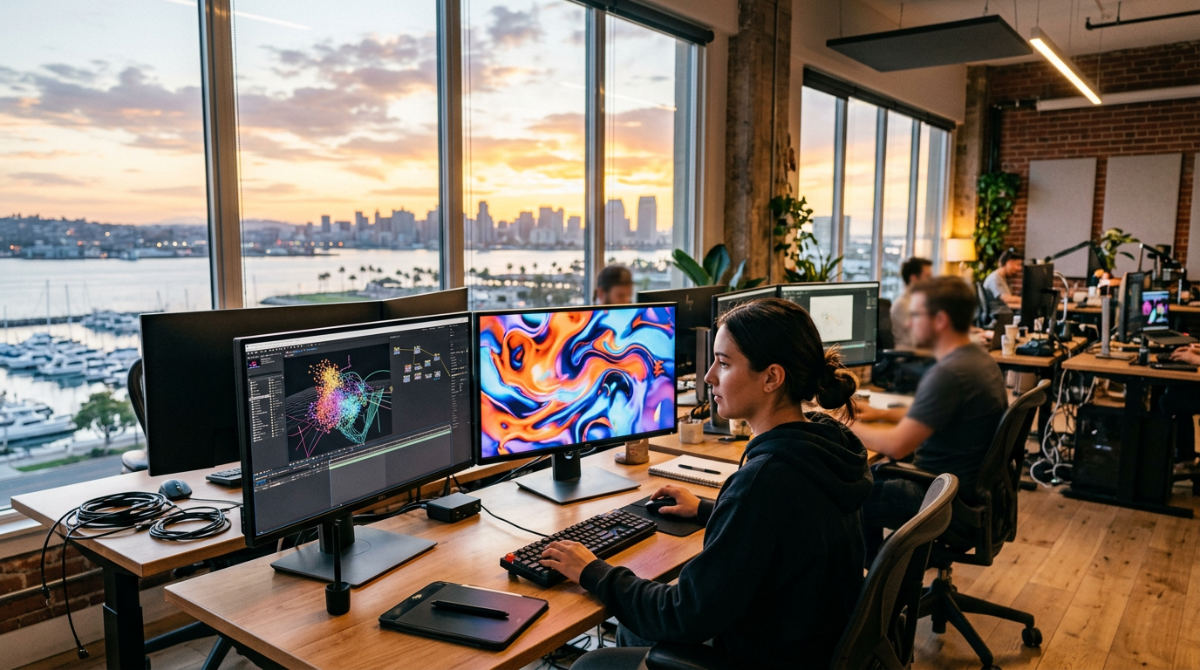
Success in digital storytelling requires a twist. It takes a balance of technical precision and raw creativity. At Pretzel Logic, we combine logical production structures with high-level creative storytelling. We make sure every frame drives brand impact. We don’t just animate. We build strategic visual narratives. Our team offers full-service collaboration. We handle the initial scripting, the storyboarding, the motion design, and the final delivery. This strategy helps us provide tailored storytelling for diverse commercial sectors across the country.
We use modern video production techniques. This keeps our commercial workflows efficient. Projects stay on schedule. Quality never dips. We are a local San Diego partner and a national production powerhouse. Our focus remains on the marriage of logic and art. Viewers retain 95% of a message when watching it in a video compared to only 10% when reading text. That makes your investment count. If you are exploring how these visuals fit into a broader strategy, our essential guide to motion graphics animation provides a roadmap for your next campaign.
Source: Pretzel Logic Productions
2. Adobe After Effects remains a widely used industry standard for 2.5D animation.
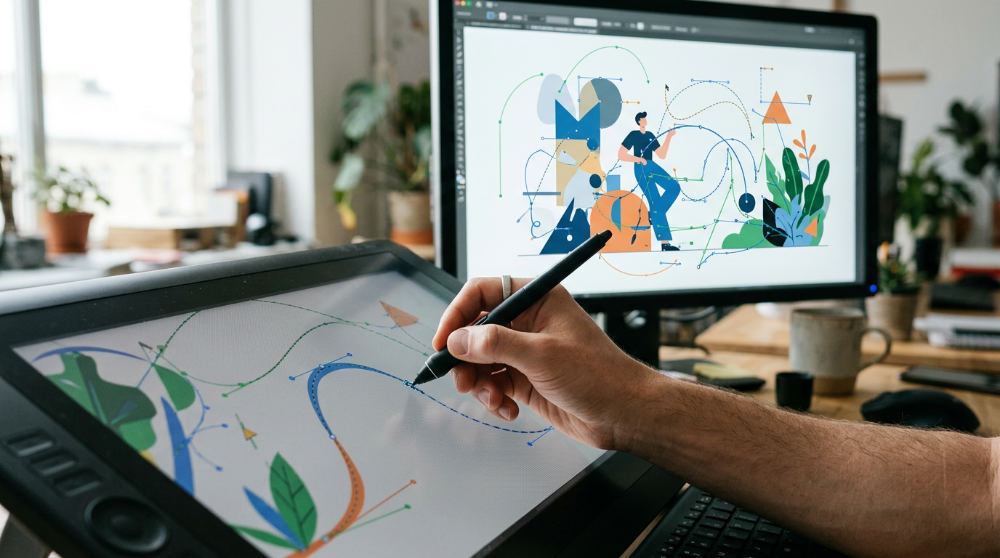
Step into any professional studio. You will find Adobe After Effects at the center of the workstation. It serves as a primary tool for compositing, tracking, and keyframe-based animation. One of its greatest strengths is how it integrates with the rest of the Creative Cloud. You can pull in vector assets from Illustrator. You can grab high-fidelity textures from Photoshop. The workflow stays intact. This connectivity allows designers to create complex visual effects and reusable motion templates. These keep corporate branding consistent across dozens of deliverables.
The software is incredibly deep. Its ability to handle 2.5D environments remains one of its most popular features. For businesses looking to scale their content, using After Effects to build a corporate motion graphics library is a smart move. It allows for the rapid versioning of ads while maintaining a premium look. It is the workhorse of the industry. It handles simple lower thirds and complex cinematic title sequences with ease.
Source: ExodeUI
3. Rive and ExodeUI enable interactive motion that runs live in apps and websites.
The future of motion isn’t just a static MP4 video. It is interactive. Rive and ExodeUI are leading the charge. They allow designers to ship interactive files directly to React, Flutter, or SwiftUI environments. Traditional video files play from start to finish. These tools are different. They enable motion to react to user taps, scrolls, and real-time data inputs. This creates a deeply personal experience. The animation changes based on how a user behaves within an app or site.
Performance is another major factor here. Interactive files can reach sizes as small as 2.2 KB. This is a massive reduction compared to the megabytes required for standard video formats. High-quality animation won’t slow down your load times. For brands focusing on digital products, this technology bridges the gap between static UI design and immersive brand experiences. It ensures your digital presence feels alive.
Source: ExodeUI
4. Cavalry offers a procedural alternative to traditional keyframing.
Cavalry is changing the game. It is for designers who find traditional keyframing too linear. It is specifically built for real-time, procedural 2D motion design using node-based logic. In a procedural animation workflow, you generate movement through algorithms. You do not place every point by hand. If you need to change the behavior of a thousand different elements at once, you adjust a single node. You don’t have to touch thousands of individual keyframes.
This software enables rapid iteration on data-driven graphics. It is an ideal choice for real-time financial visualizations or social media art. If your brand needs to produce a high volume of variations, Cavalry offers speed that traditional tools cannot match. It encourages experimentation. Designers can stumble upon unique visual styles that would be far too time-consuming to animate manually.
Source: ExodeUI
5. Cinema 4D is a popular choice for designers and 3D studios.
When your vision requires moving beyond the flat plane, Cinema 4D (C4D) is a versatile solution. It is widely recognized as a robust tool for integrating sophisticated 3D elements into motion graphics workflows. The standout feature is the MoGraph module. It drastically simplifies complex cloning and object movements. Tasks that would take hours in other 3D suites take minutes here. You can animate a swarm of objects or create intricate geometric patterns using an intuitive toolset.
The software is heavily optimized for high-speed rendering. This helps teams meet tight deadlines without compromising on visual fidelity. Many studios use it alongside After Effects. They create hybrids of 2D and 3D design. For those looking to hire an animation explainer video company for a project that requires depth and realism, C4D provides the necessary technical power.
Source: Teryaq Marketing Agency
6. Blender provides an open-source suite for 2D and 3D creation.
Blender has evolved into a powerhouse. It rivals proprietary suites by offering a free, professional-grade platform for creators. It is unique because it handles the entire production pipeline. It does 3D modeling, rigging, rendering, and compositing within one environment. A standout feature for modern designers is the Grease Pencil tool. This allows for hand-drawn 2D animation to be created directly inside a 3D space. It blends traditional artistic styles with depth and camera movements.
Studios operating on lean budgets love this tool. It matches the technical capabilities of industry giants. It supports sophisticated physics simulations and high-end rendering engines like Cycles and Eevee. Because it integrates so many disciplines, it is a favorite for artists who want to bridge the gap between flat illustrations and immersive environments. The community-driven nature of the software ensures it stays updated.
Source: Teryaq Marketing Agency
7. DaVinci Resolve Fusion page integrates node-based compositing into the edit.
DaVinci Resolve has transformed. It was once a color grading tool. Now it is a comprehensive post-production powerhouse. Its Fusion page houses professional VFX and motion tools directly within the editor. This eliminates the need for round-tripping between different software applications. Designers can move from a rough cut to complex motion design without the friction of exporting files.
Fusion uses a node-based architecture. This structure allows for management of complex layer stacks and effects. Designers see the flow of data visually through a connected web of operations. Users benefit from industry-leading color grading tools in the same project file. This ensures the motion graphics match the live-action footage perfectly. This integration is vital for high-end commercial work. Color accuracy and visual consistency are paramount.
Source: ExodeUI
Bridging the Gap Between Storyboarding and Execution
Successful design starts long before you open your motion graphics software. You must ensure the visuals serve the narrative. Don’t just display technical skill. Creators should always start with a conceptual storyboard. This stage allows you to map out the logical flow of the story. Every movement needs a purpose. High-level creative storytelling is the foundation. Technical execution is the build.
Choosing the right tool is equally important. It should be based on the final output. Developers might use Rive for interactive web elements. A studio might rely on After Effects for traditional commercial video. During production, prioritizing logical workflows is essential. It maintains clear communication between the design team and the client. We build in feedback loops. This allows for revisions based on the storyboard goals.
In high-volume environments, designers often look toward Procedural Animation. It speeds up repetitive tasks. By using algorithms to drive movement, teams can iterate quickly on dozens of assets. At Pretzel Logic Productions, we emphasize full-service collaboration. We handle the scripting, the design, and the final polish. This keeps the technical transition from 2D vector graphics to immersive 3D environments focused on your core message.
Key Takeaways
- Strategic Production: Successful motion graphics require a mix of logical storyboarding and high-level creative storytelling to drive brand impact.
- Interactive Future: Tools like Rive and ExodeUI are shifting the industry toward lightweight, interactive motion for apps and websites.
- Procedural Speed: Software like Cavalry allows designers to use node-based logic for rapid iteration, which is ideal for data-driven graphics.
- Integrated Workflows: High-end tools like Cinema 4D and DaVinci Resolve Fusion eliminate production friction by blending 3D design and compositing directly into the editing process.
- High Retention: Video content generates 95% message retention, making professional motion design a high-ROI investment for corporate and commercial sectors.
FAQ
Which software is best for beginners in motion graphics? Adobe After Effects is the standard starting point due to its vast library of tutorials and integration with Photoshop and Illustrator. However, Blender is a powerful, free alternative for those on a budget.
What is the difference between 2D and 3D motion graphics? 2D motion graphics focus on flat vector or raster elements moving on an X and Y axis. 3D motion graphics, created in tools like Cinema 4D, add depth and volume, allowing objects to rotate and move within a 360-degree environment.
Do you work with brands across the country? Yes, Pretzel Logic Productions serves brands nationwide from our home base in San Diego, CA, managing the entire process from initial scripting to final post-production for clients in any location. We utilize collaborative digital workflows to ensure communication stays clear, whether you are on the West Coast or the East Coast.
What is a corporate motion graphic? A corporate motion graphic is a professional video asset that uses animation, typography, and visual effects to communicate business data or brand stories.
| Feature | Details |
|---|---|
| Service Area | Nationwide (USA) |
| Workflow | Digital & Collaborative |
| Transparency | 100% through all stages |
| Capabilities | Scripting to Post-Production |
Why Motion Graphics Software Choice Matters for ROI

Software choice impacts the bottom line. Professional tools allow for a higher level of polish. This influences brand perception. According to data from Teryaq Marketing Agency, viewers retain 95% of a message when watching it in a video compared to only 10% when reading text. This massive disparity highlights why investing in high-quality motion design is essential for corporate environments.
Using a professional animation explainer video company ensures that these technical tools are backed by logic. High-quality motion graphics help build trustworthiness. They keep audiences engaged longer than static imagery. By utilizing efficient workflows, we deliver high-impact visuals that drive better returns.
Software is a means to an end. The goal is to create a strategic visual narrative that resonates with the target audience. Whether you are producing a corporate motion graphics piece or a public-facing advertisement, the professional finish provided by these top-tier tools ensures your message is remembered.
Ready to bring your vision to life with a twist? Use our contact form to start your project.