Last updated November 14, 2026
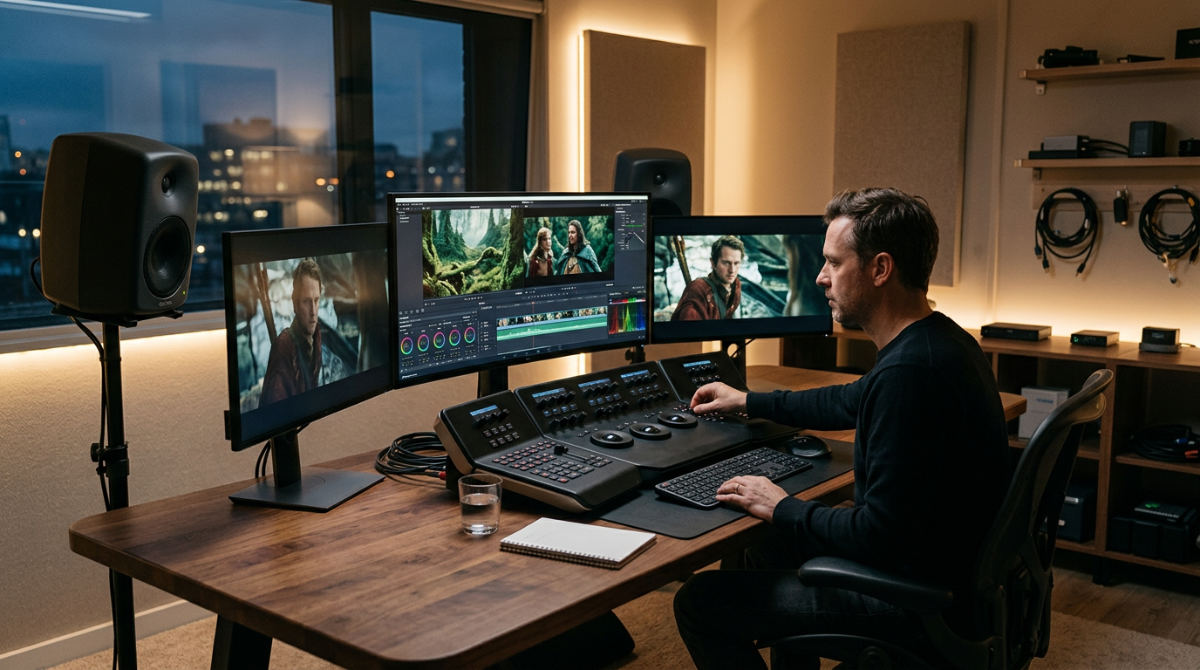
Effective post production editorial is the bridge between a raw concept and a cinematic masterpiece. This guide covers essential strategies, ranging from rhythmic montage to AI-assisted workflows, using data from CinemaSense and our own verified production frameworks to help brands navigate the final stages of high-end visual storytelling.
"Post-production is where the story is found, refined, and ultimately delivered. It is the final stage of video production encompassing editing, sound, and visual effects."
1. Develop a logical post-production workflow to eliminate creative bottlenecks.
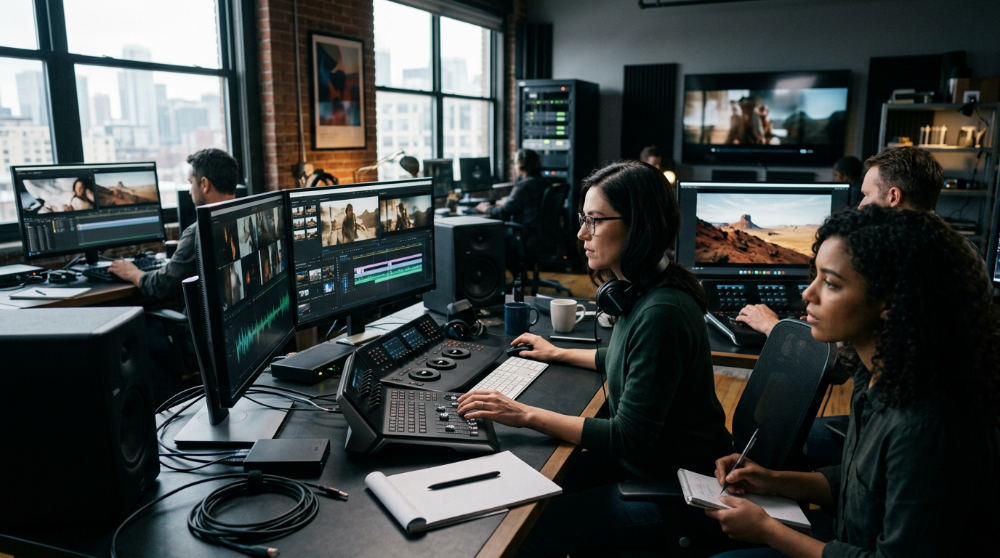
A logical workflow serves as the primary roadmap for every successful video campaign. Chaos kills creativity. To ensure a project moves from the hard drive to the screen without friction, you must standardize folder structures and file naming conventions before the first cut begins. Pretzel Logic specializes in high-quality storytelling with a logical workflow. We believe a visionary edit requires a rigid foundation. This means defining clear stages for rough cuts, fine cuts, and the final picture lock to manage stakeholder expectations and reduce revision creep.
The collaboration between editors and assistant editors is vital for maintaining technical integrity during these transitions. If data management is handled with precision, the creative team can focus entirely on the narrative arc. They won’t spend hours searching for lost assets. By treating the workflow as a logical roadmap, we ensure that every marketing video production stays on schedule. It keeps that high-end finish. This structure allows for scale. It allows for speed. Most importantly, it protects the quality of the final export.
2. Leverage AI-assisted editing tools for rapid broadcast-quality commercial iterations.
AI Video Production is a modern approach to creating commercials using artificial intelligence for faster delivery. In the current landscape, speed cannot come at the expense of soul. Many production environments now utilize these tools for initial transcriptions and rough-cut assembly to streamline the process of manual logging. This is not about replacing the editor. It is about removing the drudgery. Modern software suites allow for the implementation of AI-driven color matching for multi-camera setups, ensuring visual consistency across complex shoots instantly.
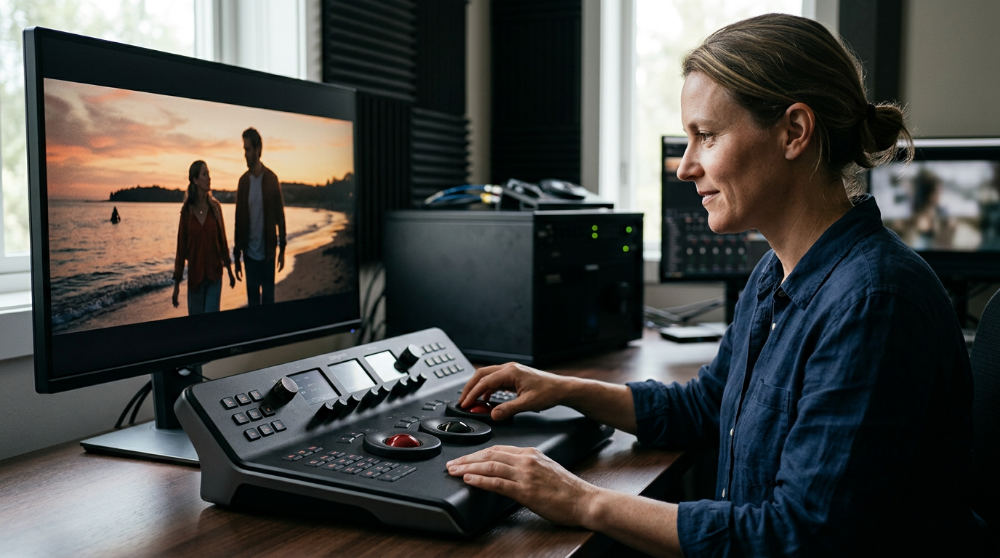
This technology is particularly effective for generating rapid variations of a single concept. It allows brands to test different audience reactions before the final delivery. You can see how these technical efficiencies translate into creative freedom by exploring our video editor post production strategies that balance logic with high-level experimentation. By automating the technical heavy lifting, editors are free to focus on the twist that makes a brand story truly memorable.
3. Structure the edit using a rhythmic montage to dictate the viewer’s emotional pace.
A rhythmic montage is the process of sequencing shots to create a specific cadence that dictates the emotional flow of the video. A great edit is felt. It is not just seen. Rhythmic editing involves aligning visual cuts with the underlying soundscape or narrative beats to create a cohesive, musical feel. It is about more than just matching a beat, as you must select points of attention to guide the viewer’s eye through complex sequences. If you want to hold engagement, you must implement shot sequences that build tension.
When we handle branding production, we look for those natural rhythms in the footage. Sometimes we intentionally break them to surprise the audience. This pacing ensures that the video does not just inform the viewer but moves them emotionally. Effective branding also relies on external factors. For instance, the strategy behind Innovisionmarketinggroup can influence how we pace content for social platforms. This coordination ensures the edit feels native to the platform where it will eventually live and breathe.
4. Incorporate custom motion graphics to simplify complex brand value propositions.
Motion Graphics are animated graphic design elements used to explain ideas and capture attention. Not every brand message can be captured through a camera lens. Sometimes, the most complex data points require a layer of abstraction to be understood. Integrating 2D or 3D animation into live-action footage allows you to highlight key statistics or abstract concepts without breaking the cinematic immersion. At Pretzel Logic, we use graphic overlays to maintain brand consistency across various social and broadcast platforms.
It is critical that all graphics follow a logical workflow that matches the video’s existing color grade. The elements should feel baked in rather than tacked on. This approach is a core part of our video marketing services. We help businesses turn dense information into easily digestible, visually stunning content. By blending animation with traditional film, we help viewers understand the specific value of a product in seconds.
5. Utilize professional color grading to establish a distinct cinematic brand identity.
Color is a silent narrator. Professional color grading goes far beyond basic correction. It is about creating a specific look that evokes the brand’s desired emotional response. Whether it is the warm, sun-drenched tones of a San Diego lifestyle spot or the cool, clinical precision of a tech firm’s corporate video, the palette must be intentional. Grading ensures consistency across diverse lighting environments captured during the filming phase, bridging the gap between disparate shots.
Applying modern grading techniques to older assets can align them with current visual standards. This makes sure your brand looks premium on any screen. As a dedicated TV commercial production company, we understand that the difference between a video and a film often lies in the final grade. It is the final polish. It tells the audience exactly how to feel about your brand before a single word of dialogue is spoken.
6. Revitalize legacy footage to extend the lifecycle of your existing media assets.
Your hard drives are likely full of high-quality assets that haven’t reached their full potential. One of the most cost-effective post production editorial strategies is to re-edit older commercial spots into high-impact social media reels or shorts. This is not just recycling. It is revitalizing. We can update on-screen text and graphics to reflect current brand standards without the massive overhead of a full reshoot. This process allows brands to maintain a frequent posting schedule while keeping production values high.
With modern software, we can also upscale and re-grade older content to match the quality of newer 4K high-definition productions. By utilizing the comprehensive post-production editing services offered at Pretzel Logic, companies can extract maximum value from their initial investments. We ensure that a great campaign from last year continues to drive conversions today. We do this by applying a fresh perspective and modern technical standards to existing assets.
7. Apply the ‘sensory point’ technique to harmonize audio and visual transitions.
The most jarring transitions happen when the eyes and ears are out of sync. To master the sensory point, editors must identify specific frames where audio cues and visual movement intersect for maximum psychological impact. This might mean timing a camera whip-pan to a specific foley sound effect. It could mean ensuring a bass drop hits exactly when a new product is revealed. This technique uses detailed sound editing to enhance the physical feel of on-screen actions.
It is also vital to balance background scores with dialogue to ensure the brand messaging remains clear without losing the atmospheric depth of the scene. When these elements are perfectly harmonized, the viewer stops noticing the edit. They start experiencing the story. This level of detail is what separates standard content from a truly immersive branding video production. Our workflow ensures that sound design is never an afterthought. It is a primary driver of the narrative.
8. Optimize the ‘Copy Point’ to ensure viewers retain your primary call-to-action.
The most critical moment in any marketing video is when the viewer is asked to take action. To maximize retention, post production editorial must prioritize the Copy Point. This involves placing essential text overlays during periods of lower visual movement to prevent cognitive overload. If the background is too busy, the audience will struggle to read the message while processing the imagery. Aligning on-screen copy with the audio script further reinforces the message.
Editors should test different durations for text appearance to find the optimal reading time for their specific target audience. A call-to-action that disappears too quickly loses its effectiveness. One that lingers too long can stall the narrative momentum. By focusing on these precise details, a production ensures that the brand’s core message is not just seen, but remembered and acted upon. This phase is crucial for converting casual viewers into active customers.
9. Design soundscapes that serve as the narrative backbone of the commercial.
Sound design is often the unsung hero of successful high-end storytelling. By layering foley and environmental sounds, editors can build a more immersive world for a product or service. This goes beyond simple background music. It involves creating a textured audio environment where every footstep or ambient hum adds to the realism. Strategic use of silence is equally powerful, as it can draw intense attention to a key visual moment or a brand logo reveal.
When selecting music, find tracks that reflect a brand’s unique personality. We always balance technical logic with creative flair. Whether for social media or nationwide tv ad production, the audio must support the emotional arc of the visuals. A well-designed soundscape ensures that the viewer is emotionally invested from the first second to the final frame, making the transition from a simple advertisement to a memorable brand experience.
10. Execute smooth dissolves and fades to transition between different brand concepts.
Transitions act as the connective tissue of a video, guiding the viewer through shifts in time or tone. Using dissolves is an effective way to indicate a lapse in time or to create a thematic connection between two distinct scenes. Applying a fade-to-black strategically allows the viewer a brief moment to process a significant emotional or narrative beat before the next segment begins. These techniques help maintain a flow without jarring the audience.
It is crucial to avoid overusing digital transitions or flashy effects that distract from the core narrative content. Every cut or fade should serve the story rather than showing off technical software capabilities. When executed with precision, these transitions create a polished, professional feel that enhances the overall production value and keeps the viewer focused on the brand’s journey. This subtlety is a key marker of professional-grade editing and high-level storytelling.
11. Integrate visual effects (VFX) that enhance rather than distract from the story.
Visual effects should be used as a tool for clarity and immersion, not just as decoration. In the post production editorial phase, VFX are often used to clean up footage by removing distracting elements from the background that were unavoidable during filming. Subtle additions, such as light leaks or lens flares, can be integrated to give the footage a modern, high-end cinematic feel that resonates with contemporary audiences.
All VFX must be grounded in the project’s internal logic to maintain a sense of realism and brand trust. If an effect feels out of place, it can break the viewer’s immersion and undermine the message. By ensuring that every digital enhancement serves the narrative, brands can achieve a sophisticated look that stands out in a crowded marketplace. This balance of technical precision and narrative focus is a hallmark of high-quality branding production.
Implementing the ‘With a Twist’ Framework in Your Edit
At Pretzel Logic Productions, we believe that the best results come from a blend of structure and spontaneity. Our approach combines rigid, logical workflows with high-level creative experimentation. This ensures that every project is both efficient and inspiring. We prevent the technical process from stifling the original vision. By following a visionary roadmap, we bridge the gap between creative ambition and technical execution, delivering results that feel both polished and innovative.
Our collaborative process allows us to integrate client feedback without sacrificing the narrative integrity of the final edit. We understand that high-end storytelling requires a delicate balance of stakeholder goals and artistic flow. By maintaining clear communication and structured revision cycles, we ensure that the brand’s voice is amplified rather than diluted during the final stages of production.
We offer San Diego scale with national reach. This means our boutique firm provides the personalized touch and agility of a local agency, but with the technical capabilities required for nationwide TV commercial production. Whether a client is a local startup or a national corporation, they receive the same level of dedicated attention and high-level production standards. This approach ensures that the final export is not just a video, but a strategic asset designed to perform across all broadcast and digital platforms.
Measuring Post-Production Success
The success of post production editorial is best measured through a combination of audience engagement data and brand sentiment analysis. By analyzing how viewers interact with the final cut, brands can determine the effectiveness of their rhythmic pacing and montage choices. High drop-off rates at specific points may indicate that the pacing was too slow or that a transition was too jarring. Conversely, high completion rates suggest that the narrative flow successfully captured and held the audience’s attention.
Tracking retention rates during key "Copy Point" text overlays is also essential for measuring message recall. If data shows that viewers are skipping past the call-to-action, the timing or placement of the graphics may need adjustment in future iterations. Plus, evaluating the impact of professional color grading through social listening tools can reveal how the visual style influences brand perception. A cinematic look often correlates with higher perceived value and brand trust among consumers.
Finally, reviewing the performance of revitalized legacy footage against new productions can help optimize future budget allocations. If re-edited shorts from previous campaigns drive significant engagement, it proves the value of a flexible and sustainable content strategy. By looking at these metrics, marketing teams can refine their post-production workflow and ensure that every dollar spent on video marketing services delivers a measurable return on investment.
Key Takeaways
- Standardize folder structures and naming conventions early to avoid creative bottlenecks.
- Use AI tools for transcription and color matching to free up time for narrative focus.
- Align visual cuts with audio beats using the "sensory point" technique for immersion.
- Repurpose legacy footage into social reels to maximize your initial production investment.
- Prioritize the "Copy Point" by placing text over low-movement backgrounds to boost CTA retention.
Frequently asked questions
What is the difference between production and post-production?
Production involves the physical filming and gathering of raw assets on location or in a studio environment. In contrast, post-production is the final stage where editing, sound design, color grading, and motion graphics are integrated. A successful campaign requires a logical bridge between the filming phase and the final export.
| Phase | Core Activity | Key Deliverable |
|---|---|---|
| Production | Filming & Asset Capture | Raw Footage |
| Post-Production | Editing & Integration | Final Master File |
Do you work with brands across the country?
Yes, while Pretzel Logic is based in San Diego, we serve corporate brands and marketing agencies across the United States. We utilize a collaborative remote workflow to maintain the personalized touch of a local agency on a national scale. Our team handles nationwide marketing video production with logical logistics.
| Scope | Reach | Primary Method |
|---|---|---|
| Local | San Diego | In-Person/Studio |
| National | United States | Remote Collaboration |
How long does post production take?
A standard commercial workflow generally encompasses the time from initial ingest to final delivery, depending on project scope. Complex projects involving heavy motion graphics or AI-assisted iterations typically require additional time. Timeline efficiency is often dictated by the clarity of the initial feedback cycles and workflow.
| Project Type | Complexity |
|---|---|
| Basic Commercial | Low to Moderate |
| Complex Campaign | High / VFX Heavy |
What is a standard post-production workflow?
The process begins with data ingest and logging to organize all raw media assets. It then follows a structured path through a rough cut, client feedback cycles, color grading, sound design, and motion graphic integration. The final step is mastering and exporting for specific platforms like TV, web, or social media.
| Step | Action | Objective |
|---|---|---|
| 1 | Ingest & Logging | Asset Organization |
| 2 | Editing & Color | Narrative & Style |
| 3 | Mastering | Platform Delivery |
We want to push your visual storytelling forward with a team that balances technical logic and creative flair. We are here to help. Whether you need a fresh perspective on a new campaign or want to revitalize your existing media, our experts can guide you through every stage of the process. Please contact the Pretzel Logic team to discuss how we can give your brand’s story the twist it deserves.
Pretzel Logic Productions 5961 Kearny Villa Rd San Diego, CA 92123