
Last updated November 6, 2026
Post production sound is the technical and creative process of manipulating, creating, and mixing audio elements after filming is complete to enhance a video’s narrative impact. In modern commercial workflows, this typically includes dialogue editing, sound design, Foley recording, music integration, and a final broadcast-ready mixdown.
Professional post production sound ensures that the auditory experience matches the visual quality, providing the emotional resonance necessary for effective brand storytelling. By following a structured audio post production workflow, teams can prevent technical errors and ensure their content meets the rigorous standards of television and digital streaming platforms.
Key takeaways
| Fact | Detail |
|---|---|
| Primary Goal | Enhancing narrative impact and emotional resonance via auditory depth. |
| Core Workflow | Dialogue editing, sound design, Foley, music, and final mixdown. |
| Time Requirement | Varies based on project length, complexity, and the depth of sound design required. |
| Technical Standard | Broadcast mixes must adhere to industry-standard loudness specifications and delivery requirements. |
| Key Roles | Dialogue Editors, Foley Artists, and Sound Designers are essential. |
| San Diego Base | Pretzel Logic Productions operates out of San Diego, CA. |
The Foundation of Professional Audio Post-Production
Audio post-production starts with the "Pretzel Twist." We use this framework to bridge technical logic and creative vision. While many see sound as a final polish, we treat it as a foundational narrative tool. Pretzel Logic Productions is a full-service video production company specializing in conceptual sound design and logical workflows that ensure every auditory element serves the brand’s message. A dedicated dialogue editor handles the heavy lifting of assembling speech. They make sure every word is crisp.
Modern studios often utilize integrated AI tools to scrub background noise and sharpen speech. We don’t use these to replace actors with robots. Instead, we use surgical tools to cut the hum of a San Diego office AC unit. We keep the warmth in the speaker’s voice. High-fidelity sound is the specific differentiator. It turns a digital ad into a cinematic event. Our sound teams plan the auditory atmosphere as early as the scripting phase. This keeps the final product cohesive.
Prerequisites, Timeframes, and Professional Investment
You need a locked picture edit. You need high-quality field recordings. You need a clear creative brief. Audio work cannot begin if visual cuts are still shifting. Every frame change forces a shift in the sound timeline. A professional sound pass for a short commercial requires several days of dedicated work. This time allows for the intricate layering of sound design for commercials. We balance brand tones with atmospheric realism.
Complex long-form corporate branded video audio editing projects require a more extensive timeline. A 10-minute documentary-style story for a local nonprofit might involve dozens of interviews and environmental textures. These need deep cleaning. Costs fluctuate based on project scale, music licensing, and studio time for voice talent. Investing in professional post-production services ensures the final result meets the expectations of audiences used to theatrical-quality audio.
1. Organize and prep the audio session
The first step is importing OMF or AAF files from the video editor. We do this to keep all original clip metadata and timing intact. It ensures every piece of audio recorded on set sits exactly where it belongs. Efficient studios label and color-code tracks. We categorize by dialogue, SFX, background, and music. This keeps the workflow logical. Proper organization prevents technical drift.
Sync the high-resolution master audio with the final picture lock. Do not skip this. Even a two-frame offset makes a speaker look like they are in a poorly dubbed movie. That kills viewer immersion. This organization is the cornerstone of our approach. No creative energy should be wasted on technical troubleshooting. By following a strict video editor post production workflow, we build the foundation for a mix that feels intentional.
2. Edit and clean the dialogue tracks
Dialogue editing requires isolating the human voice from distracting environmental noise. We strip out clicks, pops, and hums with spectral editing tools. This stage focuses on the "human" element. The message must be heard. We smooth transitions between different microphones and takes. This creates a natural flow, even if the footage was shot over several days in different California locations.
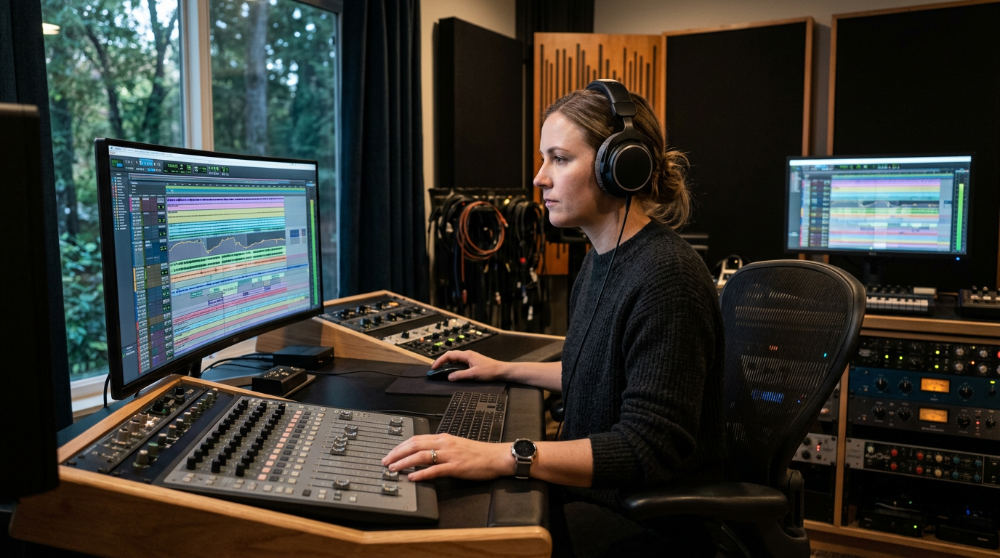
Post-production teams frequently identify segments where an ADR Recordist needs to capture lines again. The ADR Recordist is the professional responsible for re-recording dialogue to replace unusable location sound. According to Berklee Online Audio Post-Production Standards, ADR is vital for fixing technical failures or reflecting script changes. If a seagull at La Jolla Cove ruined a perfect take, ADR allows us to recapture that performance perfectly.
3. Layer custom sound design and Foley
Foley for marketing videos adds a layer of tactile reality. It helps the audience connect with the physical environment. Layering sound means bringing in a Foley Artist. This is a specialist who creates custom sound effects using physical props in a studio setting. Berklee Online defines Foley as the creation of everyday sound effects synchronized to the film. These tiny details provide the subconscious cues that tell a viewer a scene is real.
We apply sound design for video production by building unique abstract sounds. These sounds emphasize brand logos or transitions. Sound Design is the art and practice of creating sound tracks for a variety of needs. We focus on industry-specific sonics, like the sizzle in a food spot. In our high-energy casino branding spot, sound design captured the specific "vibe" of the location.
4. Compose and integrate the musical score
Integrating music involves selecting or composing tracks that hit psychological cues. Music isn’t background noise. It is a character. We edit the music to hit specific "stingers." This ensures the rhythm of the track mirrors the pacing of the edit. Emotional peaks of the video must align perfectly with the sonic crescendos of the score.
We balance the frequency range. The music should provide energy without fighting the human voice. A common mistake is letting a music track bury the dialogue. Bespoke scores beat stock music. They give the brand a unique identity. While a media management tool helps businesses manage internal subscriptions, a creative budget should prioritize original soundscapes. Original music creates an immediate, recognizable association.
5. Execute the final commercial sound mix
Commercial sound mixing balances all individual audio elements into a single, cohesive master track. It must meet technical broadcast specifications. The final mix balances all levels so dialogue stays the focal point. This is where the music, Foley, atmospheres, and voices become one wall of sound. We apply final EQ and compression so the audio holds up on mobile devices and TV speakers.
For tv commercial production, the final output must adhere to industry-mandated loudness and technical standards for broadcast. If a mix is too loud, station compressors will crush it. That causes distortion. If it is too quiet, the brand looks weak. Professional engineers often perform a final check using remote high-fidelity streaming tools. Whether you are in San Diego or New York, the technical quality of the mix should remain consistent.
Common Mistakes in Post Production Sound
Avoiding common pitfalls in audio post-production prevents costly re-works. The most common mistake is ignoring sound until the end. This leads to "thin" audio. It lacks emotional weight. If you only think about audio once the video is finished, you miss the chance to capture textures that make a story feel lived-in.
Another error is over-processing dialogue with AI. This can result in a "robotic" tone that breaks authenticity. AI is powerful, but it requires a human ear. Failing to account for the listening environment leads to mixes that shine in a studio but sound muffled on a smartphone. Most viewers watch on mobile. You must optimize for small speakers. Finally, many editors ignore the power of silence. Sometimes the absence of sound is the best tool for creating tension.
If you are ready to turn raw footage into a high-impact sensory experience, our team can lead the way. Visit us at 5961 Kearny Villa Rd, San Diego, CA 92123, to see our workflow in action. To start a conversation about your next campaign, please start your project consultation by filling out our contact form at https://pretzellogicproductions.com/contact-us/.